From Compton Streets to Cultural Architecture: Ice Cube's Hip-Hop Revolution
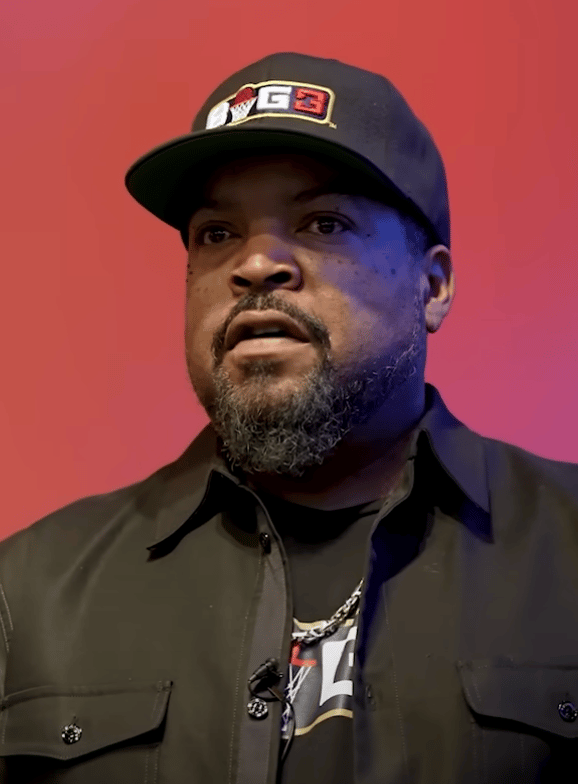
O'Shea Jackson emerged from South Central Los Angeles as one of hip-hop's most uncompromising voices, someone who transformed street journalism into cultural prophecy. Before Ice Cube became a household name through film and media, he was the primary lyricist behind N.W.A's most confrontational moments, crafting verses that didn't just document police brutality and systemic oppression—they indicted an entire power structure. His departure from the group in 1989 over financial disputes proved prescient: while his former collaborators negotiated label politics, Cube positioned himself as hip-hop's first true independent architect.
What separated Cube from his West Coast contemporaries wasn't just his willingness to engage politics directly. His pen combined prosecutorial precision with cinematic scope, constructing narrative worlds where personal grievance intersected with collective rage. Where Compton's Eazy-E delivered street tales with grim humor and Dr. Dre revolutionized production, Cube operated as hip-hop's Malcolm X figure—articulate, uncompromising, strategically confrontational. His solo debut arrived in 1990 not as a victory lap but as a declaration of artistic sovereignty.
Cube's impact extended beyond microphone dominance into genuine cultural disruption. He proved that a rapper could control their business, choose their collaborators strategically, and speak to multiple audiences without dilution. The South Central raised artist became the rare figure who could dissect institutional racism on record, then pivot to film roles that redefined Black masculinity on screen. His influence echoes through every rapper who treats their career as empire-building rather than temporary spotlight.
The Sonic Militancy of Ice Cube's Production Choices and Lyrical Warfare
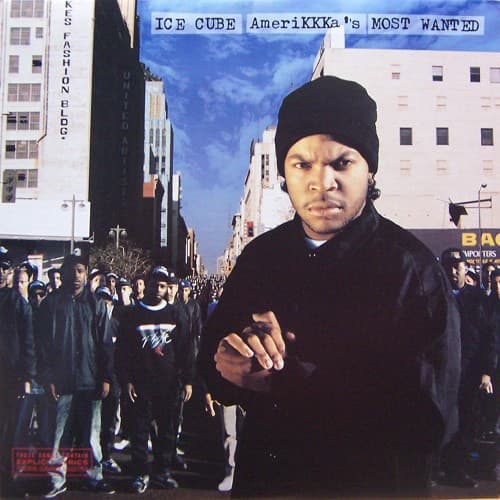
Cube's musical approach rejected the emerging G-funk smoothness that would dominate West Coast hip-hop by mid-decade. His early solo work, particularly AmeriKKKa's Most Wanted, embraced the dense, sample-heavy production aesthetics of the East Coast—a deliberate choice facilitated by his partnership with Public Enemy's production team, The Bomb Squad. The result was claustrophobic, layered chaos: sirens, vocal fragments, funk breaks, and noise collages that mirrored the psychological pressure of urban surveillance. This wasn't party music or boulevard cruising. This was the sound of systematic oppression rendered as organized sonic assault.
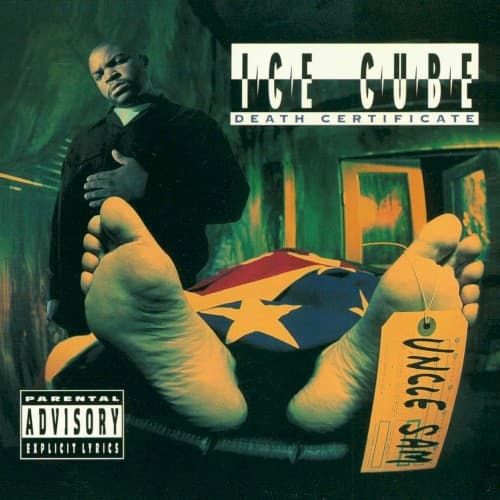
His flow evolved from the rapid-fire aggression of his N.W.A days into something more deliberate and prosecutorial by Death Certificate. Cube delivered verses like closing arguments, letting words land with physical weight. He understood pocket and rhythm intuitively, riding beats without surrendering to them, maintaining conversational clarity even when production threatened to overwhelm. His voice—that distinctive baritone carrying permanent skepticism—became an instrument of controlled fury. Listen to how he modulates tone within single verses, shifting from street-level observation to ideological declaration without breaking stride.
By the mid-90s, Cube gradually incorporated more conventional West Coast production elements while maintaining lyrical edge. His work with producers like DJ Pooh brought bass-heavy funk into conversation with his confrontational content, creating the template for socially conscious gangsta rap that artists like The Game and Kendrick Lamar would later expand. Cube proved you could make music that hit in the clubs while still dismantling power structures in the verses—a balancing act few have mastered.
Strategic Independence: Ice Cube's Evolution from Group Renegade to Solo Powerhouse
The mythology around Cube's N.W.A exit obscures the calculated business mind driving that decision. In 1989, as Straight Outta Compton redefined hip-hop's commercial possibilities, Cube recognized that his lyrical contributions weren't translating to equitable compensation. His departure wasn't impulsive rebellion—it was the first move in a chess game that would redefine artist autonomy. While former groupmates remained entangled with Ruthless Records and Jerry Heller's management, Cube headed east to collaborate with Public Enemy's production architects, a partnership that yielded AmeriKKKa's Most Wanted.
That 1990 debut remains astonishing for its refusal to compromise. Released on Priority Records, the album sold over a million copies while maintaining unfiltered political rage. Tracks like "The Nigga Ya Love to Hate" addressed his industry exile with defiant wit, while "Endangered Species" examined Black male vulnerability with rare nuance. The album's production—abrasive, sample-dense, deliberately overwhelming—positioned Cube as intellectual militant rather than gangsta caricature. Critics who expected N.W.A retreads encountered something more complex: autobiography as cultural critique, street narrative as systematic analysis.
Death Certificate arrived in 1991 as Cube's masterwork, a double album structured as "Death Side" (societal diagnosis) and "Life Side" (potential solutions). The record sparked immediate controversy—particularly "Black Korea" and its tensions with Los Angeles' Korean-American community—but its ambition was undeniable. Cube addressed Black nationalism, institutional racism, colorism, and economic exploitation with a breadth rarely attempted in mainstream hip-hop. The album went platinum while think pieces debated whether Cube was dangerous radical or necessary truth-teller. That tension fueled his mythology.
The mid-90s saw Cube successfully navigate between music and film. His screenwriting debut with Friday (1995) demonstrated narrative abilities beyond sixteen bars, creating a cultural touchstone that rivaled his musical output. Musically, albums like The Predator (1992) and Lethal Injection (1993) showed commercial ambition alongside political content, though neither matched his early masterpieces' laser focus. By this period, Cube had become more than rapper—he was multimedia mogul, proving hip-hop could generate empires beyond record sales.
His later career has been marked by strategic selectivity. While albums like War & Peace Vol. 1 (1998) and Laugh Now, Cry Later (2006) maintained his core audience, Cube's energy increasingly flowed toward film production and business ventures. His Ice Cube Entertainment company produced the Barbershop franchise, Ride Along films, and various projects that centered Black narratives in Hollywood. The rapper who once terrified suburban America became a crossover star without fundamental compromise—his screen presence still carrying that unmistakable South Central authority. Recent albums like Everythang's Corrupt (2018) proved he could still deliver politically charged content when motivated, even as his primary cultural influence shifted toward visual media.
Ice Cube's Enduring Impact: From Gangsta Rap Pioneer to Cultural Institution
Cube's influence on hip-hop's political consciousness remains unmatched among West Coast artists. While contemporaries like Snoop Dogg and Dr. Dre revolutionized sound and style, Cube demonstrated that commercial rap could maintain ideological rigor. His blueprint—independent thinking, strategic business moves, refusal to soften message for mainstream approval—became essential for artists who view their careers as long-term cultural projects rather than temporary celebrity. Kendrick Lamar's willingness to challenge systemic oppression on major label releases, Vince Staples' analytical approach to street narrative, even J. Cole's emphasis on ownership all trace back to paths Cube carved.
Beyond direct musical influence, his successful transition to film legitimized hip-hop as training ground for multimedia empires. Before Cube, rappers appeared in movies as novelties or played narrow stereotypes. His work as actor, screenwriter, and producer proved that hip-hop intellect translated across platforms. When someone like Tyler, the Creator launches successful ventures outside music, or Drake builds an entertainment conglomerate, they're following the Cube model: leverage rap credibility into broader cultural power.
The complex relationship between his radical early work and later mainstream success generates ongoing debate. Some view his Hollywood integration as betrayal of AmeriKKKa's Most Wanted's revolutionary spirit. Others recognize his later career as evolution—using crossover success to maintain Black creative control in industries historically hostile to it. That tension itself reflects Cube's nuanced legacy: he proved you could be both militant and strategic, confrontational and calculating, street and business-minded. In an era where hip-hop's billionaires face constant authenticity questions, Cube remains the figure who balanced commercial success with cultural credibility longest—even if his recent creative output can't match those incendiary early masterworks that permanently altered hip-hop's political possibilities.