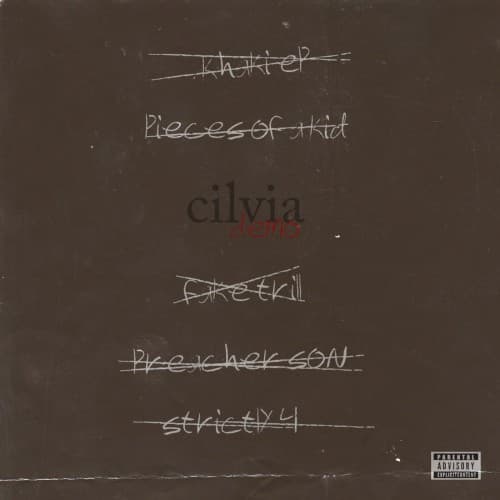
Style & Context
Influences
punk zine aesthetics, Basquiat's strikethroughs, southern folk art, cassette tape culture
Location
The scratched names suggest Chattanooga's forgotten neighborhoods where Rashad watched friends disappear to violence and addiction.
Visual Language
The cover employs deliberate amateurism that connects to southern DIY rap traditions and bedroom producer culture.
Symbols
Crossed-out words
The strikethroughs represent Rashad's self-doubt and the editing process of defining identity through elimination.
Cardboard texture
The rough surface evokes southern poverty, thrift store finds, and the unfinished demo aesthetic.
Red accent in 'cilvia'
The sole color highlight suggests a small spark of hope or anger within overwhelming uncertainty.
Where Sound Meets Image
The cover's hesitant, self-editing quality perfectly mirrors tracks like 'Hereditary' and 'Heavenly Father,' where Rashad questions his own thoughts mid-verse and leaves vocal imperfections intact. The brown monochrome matches the album's smoky, sun-faded production that blends southern soul samples with cloud rap atmospherics. Just as the strikethroughs show uncertainty, songs like 'West Savannah' and 'Menthol' document Rashad's ambivalence about success, family obligations, and self-medication. The raw texture embodies the lo-fi mixing aesthetic throughout the project.
Cilvia Demo's cover helped establish visual vocabulary for the SoundCloud and streaming era's embrace of intentional roughness over commercial polish. The cardboard aesthetic influenced subsequent southern introspective rappers who rejected flashy imagery in favor of weathered textures and handwritten elements. The strikethrough motif became a design shorthand for self-doubt and artistic process, appearing in covers and merch for artists exploring mental health themes.