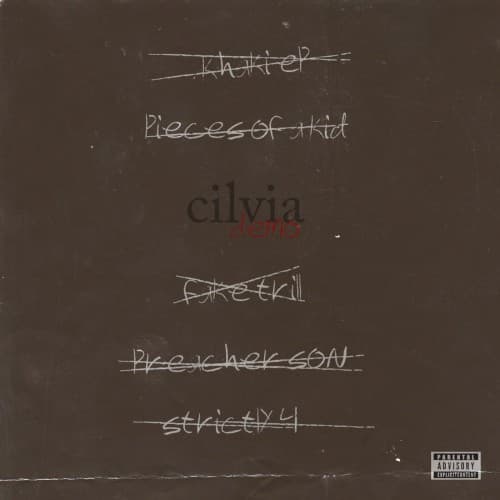
Isaiah Rashad Cilvia Demo — The Chattanooga Kid Who Slowed TDE Down
The first time Top Dawg Entertainment signed someone who rapped this slow, half the internet thought the files were corrupted. This was the label that had just put Kendrick on magazine covers and turned Schoolboy Q into a street prophet. Now here came a Tennessee kid who treated sixteen bars like they had all week to finish. Every syllable dragged its feet.
Every hook felt like waking up underwater. Cilvia Demo arrived in January 2014 when trap was starting its imperial phase and blog rap was choking on its own cleverness. Isaiah Rashad did not sound like he cared about either movement. He sounded like someone who had just survived something he could not quite name yet, recording voice memos at three in the morning because sleep was not an option.
The project carries the raw edges of a demo tape that refuses to get polished. Drums knock but never stampede. Samples float without resolution. Rashad's voice drifts between spoken confession and off-key melody, never committing fully to either.
This is southern hip-hop stripped of all the pageantry — no trunk rattle, no club records, no victory laps. Just a twenty-two-year-old from Chattanooga trying to figure out why he feels this heavy. What makes Cilvia Demo essential is not technical perfection or commercial ambition. It is the sound of someone too depressed to lie.
Rashad spends fifty minutes cataloging doubt, guilt, and chemical dependency with the matter-of-fact tone of someone reading his own medical chart. He is not asking for sympathy. He is just reporting what it feels like to be this tired this young. Why does honesty hit harder than polish?
Trunk Jazz and Chemical Haze
The production on Cilvia Demo sounds like southern rap played through a broken speaker in a college dorm at four in the morning. Chris Calor handles the bulk of the beats, crafting loops that feel deliberately unfinished — pianos that never resolve, bass lines that rumble without ever dropping, vocal samples that get chopped mid-phrase and left hanging. D. Sanders and Skhye Hutch contribute scattered tracks, but the sonic palette remains consistent: dusty, narcotic, intentionally off-balance. This is not the boom-bap resurrection happening in New York or the maximalist trap taking over Atlanta.
This is something slower and more suffocated.
The drums have weight but no urgency. Snares crack in empty rooms. Hi-hats tick like metronomes counting down to nothing. Samples pull from soul and jazz but never celebrate them — everything gets blurred, slowed, drowned in reverb until the original source becomes unrecognizable.
It is trunk music for people too sad to drive anywhere.
Rashad's delivery matches the production's defeated energy. He raps like someone who just woke up and cannot remember why he is still here. His voice cracks on hooks, drifts flat on verses, mumbles through ad-libs. Technically, he is not an elite lyricist — his rhyme schemes stay simple, his wordplay rarely ventures past straightforward metaphor.
But the honesty compensates. He catalogs depression, addiction, and survivor's guilt with the clinical detachment of someone who has already accepted these things as permanent. When he talks about pill dependency or dead friends, there is no drama, no catharsis. Just documentation.
The thematic core is chemical dependency as coping mechanism. Rashad does not glorify drugs and he does not condemn them. He reports their presence the way someone mentions the weather. Pills to sleep, weed to function, liquor to forget.
Guilt about family. Confusion about success. The persistent feeling that he does not deserve any of this. The whole project sounds like it was recorded in that grey hour before dawn when you are too wired to sleep and too exhausted to do anything productive.
Where the album stumbles is momentum. The pacing drags in the middle stretch, and a few tracks feel like sketches that needed another revision. Some hooks do not land because Rashad's melody instincts are still developing. The project needed a stronger editor — two or three tracks could have been cut without losing the emotional narrative. Can exhaustion itself become a complete aesthetic?
The Long Slow Descent
The opening stretch establishes the album's suffocated atmosphere immediately, three tracks deep before anything resembles a traditional rap song. By the time the project reaches its midpoint, Rashad has already confessed more than most rappers admit across entire careers. The sequencing does not follow typical album logic — no singles positioned for radio, no momentum-building crescendo. Instead, Cilvia Demo moves like someone flipping through old journals at random, landing on whichever page hurts most that day.
The back half continues the emotional free-fall without offering resolution or uplift. Tracks bleed into each other without clear transitions, creating the effect of one extended session rather than discrete songs. There is no third-act redemption, no moment where Rashad finds clarity or hope. The project just ends because the tape ran out.
What holds the sequencing together is tonal consistency. Every track exists in the same grey emotional register, the same narcotic haze. The album never tries to shake you awake or demand attention. It just keeps murmuring its confessions whether you are listening or not.
That monotone consistency is both the album's greatest strength and its primary flaw. The uniform bleakness creates immersive atmosphere but sacrifices dynamic range. By track ten, the emotional palette starts feeling narrow. A few moments of contrast or levity would have made the darkness hit harder.
The Blueprint for Sad Boy Rap
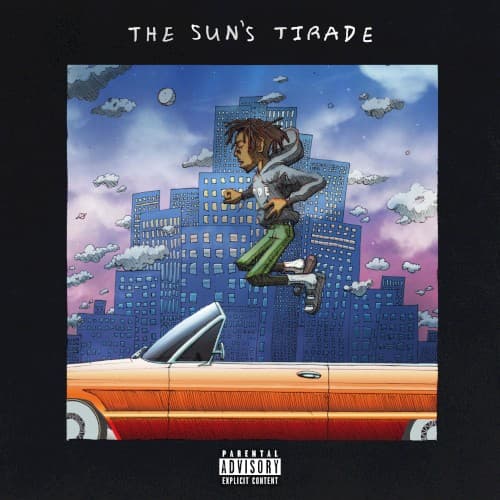
Cilvia Demo sits near the top of Isaiah Rashad's discography, the purest distillation of his aesthetic before major label expectations started shaping his choices on The Sun's Tirade. It is a better debut than most TDE artists managed, more cohesive than Schoolboy Q's early work and more focused than Jay Rock's initial output. Only Kendrick's Section.80 competes as a stronger first project from the label. This is essential listening for anyone interested in the lineage of introspective southern rap or the evolution of depression as subject matter in hip-hop.
Fans of Earl Sweatshirt's narcotic minimalism or Mick Jenkins' self-medication chronicles will find familiar territory here. It also works as a gateway for listeners skeptical of southern rap's reputation for shallow materialism. This is the anti-trap tape, proof that drawl and introspection can coexist. Casual listeners expecting bangers or club records will bounce off this immediately.
The pacing is too slow, the hooks too undercooked, the energy too depleted. This is headphone music for late nights alone, not party fuel. A decade later, Cilvia Demo has aged into a founding text for the sad boy rap wave that would dominate the second half of the 2010s. You can draw a direct line from this project to everyone who built careers on melancholy and chemical dependency — the whole SoundCloud generation of depressed twentysomethings rapping over muted loops.
Rashad got there first and did it better than most who followed. Essential tracks: Heavenly Father, West Savannah. Similar albums: Earl Sweatshirt's I Don't Like Shit I Don't Go Outside, Mick Jenkins' The Water[s], Saba's Bucket List Project. Long-term influence: Cilvia Demo proved TDE could sign outside Los Angeles and outside traditional West Coast sound, opening the door for the label's geographic expansion.
More importantly, it established the template for introspective southern rap that rejected regional stereotypes without abandoning regional identity. The Chattanooga kid who rapped too slow ended up moving faster than anyone expected.
Track Listing
Hereditary
▲The album opens with ninety seconds of scene-setting that immediately separates Cilvia Demo from every other TDE release. No aggressive posturing, no West Coast trunk rattle, just a murky loop and Rashad's voice drifting in like he is talking to himself in another room. It functions as thesis statement and warning label — if you need energy or clarity, turn back now. The production feels intentionally unfinished, like someone hit record on a demo and forgot to build it into a full song. But that half-formed quality is the point.
Webbie Flow (U Like)
▲The first full track delivers the closest thing to a banger this project will offer, and even this sounds sedated. Rashad's flow picks up minimal momentum over a beat that knocks without ever fully dropping. He catalogs romantic confusion and chemical dependency with the same flat affect someone uses to describe their morning commute. The hook barely qualifies as a hook — just a repeated question mark that never gets answered. Lyrically, he is not doing anything revolutionary, but the delivery sells the exhaustion. You believe he actually feels this heavy. The production from Chris Calor establishes the album's sonic template: southern drums drained of all aggression, samples chopped into unrecognizable fragments, everything coated in reverb and regret. This would sound right at home on a Chattanooga late-night drive with nowhere specific to go.
Cilvia Demo
●The title track commits fully to the narcotic drift, shedding the last remnants of traditional song structure. Rashad barely raps here — mostly he just murmurs half-finished thoughts over a loop that sounds like it is playing underwater. Jean Deaux contributes vocals that float somewhere between singing and sighing. This is the sound of dissociation rendered in audio form, every element blurred and delayed. The lyrics reference pill dependency and emotional numbness without drama or self-pity, just cold reporting. Some listeners will call this ambient. Others will call it unfinished. Both readings are valid. What matters is how effectively it captures the feeling of being too medicated to care about anything, including the song you are currently recording.
R.I.P. Kevin Miller
▲Rashad sharpens his focus here, delivering the most technically accomplished rapping on the first half of the album. The production gains definition without abandoning the project's hazy atmosphere — drums knock harder, the sample loop resolves into something closer to a melody. He catalogs survivor's guilt and hometown trauma with increased precision, his flow tightening into actual patterns instead of just wandering. The subject matter is heavy but the execution shows growing confidence. This is what Cilvia Demo sounds like when Rashad remembers he can actually rap. The hook still undersells itself, barely committing to its own melody, but the verses compensate. You start to hear why TDE saw potential worth developing.
Ronnie Drake
▲One of the album's clear peaks, a four-minute showcase for everything Rashad does well. The production from D. Sanders builds around a gorgeous soul sample that actually gets room to breathe instead of getting drowned in effects. Rashad's voice gains texture and urgency without sacrificing the vulnerability that defines his style. He raps about family dysfunction and generational trauma with the specificity that separates confession from cliché — actual names, actual memories, actual consequences. The storytelling here is novelistic, scenes rendered in concrete detail rather than vague emotional gestures. SZA contributes vocals on the hook that anchor the song without overwhelming it. This is the track you play for skeptics, the proof that Cilvia Demo is not just artful depression but actual craft. The closing verse ranks among Rashad's best writing, a sequence of images that trust the listener to connect dots without spelling everything out.
West Savannah
▲The album's centerpiece and its most fully realized moment. The production from Chris Calor achieves perfect tonal balance — drums that knock without aggression, a sample loop that feels both mournful and hypnotic. Rashad catalogs romantic dysfunction and chemical dependency with the kind of casual devastation that only works when the writing is this precise. Every verse contains at least one image that lodges in memory: specific pills, specific arguments, specific regrets. The hook, built around a simple repeated question, becomes genuinely affecting through sheer repetition and Rashad's defeated delivery. This is the song that made his reputation, the one that proved he was not just another TDE signee riding the label's momentum. I first heard this in a Nashville record store in 2014, the clerk playing it on repeat while rain hammered the windows outside. It sounded exactly like what heartbreak feels like at twenty-three when you are too proud to admit you need help. A decade later, it has not aged a day. Still devastating, still perfectly constructed, still the high-water mark of Rashad's entire discography.
Soliloquy
●Brief interlude that functions as emotional exhale after the intensity of West Savannah. Rashad delivers a minute of stream-of-consciousness reflection over minimal instrumentation, his voice barely above a whisper. It feels like overhearing someone's therapy session or late-night voice memo. Not a essential track on its own but crucial for pacing, giving the album room to breathe before diving back into the heaviness.
Tranquility
▼The album stumbles here, a four-minute track that never finds its center. The production feels undercooked, the hook never commits to a melody, and Rashad's verses meander without the focused storytelling that makes his best work compelling. Thematically, it covers familiar ground — drugs, depression, doubt — without adding new insight or images. This is the kind of demo-quality sketch that should have been revised or cut. It is not offensively bad, just forgettable, which might be worse. The album's momentum stalls, and it takes two tracks to recover.
Menthol
▲The bleakest track on an already dark album. Rashad documents chemical dependency and suicidal ideation with the clinical detachment of someone reading lab results. Jean Deaux returns on vocals, her voice drifting through the mix like smoke. The production is sparse to the point of skeletal — just bass, minimal drums, and a sample that sounds like it is decaying in real time. There is no catharsis here, no redemption arc, just unvarnished documentation of what depression actually feels like when you stop pretending you are okay. Some will find this too heavy, too relentlessly dark. But the honesty is remarkable. Rashad refuses to offer easy answers or false hope. He just reports the damage and keeps moving.
Modest
▼Another track that feels half-finished, the bones of a good idea that needed more development. The production has potential — a haunting loop, solid drum programming — but Rashad's performance lacks the conviction to sell it. His verses recycle themes and images from earlier tracks without adding depth. The hook barely registers. This is filler, plain and simple, the kind of demo material that belongs on a hard drive rather than a finished project. By this point in the tracklist, the album's tonal monotony becomes a liability. Everything exists in the same grey emotional register, and without standout writing or production to distinguish tracks, they start bleeding together.
Heavenly Father
▲The album's emotional climax and its most devastating achievement. Just Rashad's voice, a piano, and four minutes of unfiltered confession. No drums, no embellishment, nothing to hide behind. He addresses God, his family, himself, cycling through guilt, fear, and doubt with the kind of raw honesty that makes you feel like you are intruding on a private moment. The writing here is novelistic — specific memories, specific failures, specific people he has hurt or disappointed. His voice cracks on the hook, melody falling apart in real time, which only makes it hit harder. This is what separated Isaiah Rashad from every other introspective rapper working in 2014. He was not performing sadness for aesthetic effect. He was documenting actual depression with the unsentimental precision of someone who had stopped expecting sympathy. The song ends abruptly, mid-thought, like he could not finish the conversation. I played this on repeat the winter my grandfather died, sitting in a cold apartment in Memphis with nothing but this piano loop and Rashad's voice breaking down. It is the kind of song you can only handle in small doses because it demands too much emotional honesty in return. A decade later, it remains the most powerful track in his entire catalog, the moment where all the potential crystallized into something undeniable.
Banana
▼Jarring tonal shift after the intensity of Heavenly Father. This is the album's only attempt at something resembling a club record, and it lands awkwardly. The production has bounce and energy but feels imported from a different project entirely. Rashad's flow picks up but lacks the personality that makes his slower material work. SZA appears again, her vocals adding texture but not enough to save an underwritten song. The hook is forgettable, the verses serviceable but unremarkable. This feels like label interference, someone suggesting Cilvia Demo needed at least one track that could get radio play. It does not fit the album's suffocating atmosphere and undercuts the emotional honesty built across the previous ten tracks.
Brad Jordan
●Named after Scarface, this track aims for southern rap gravitas but settles for decent homage. The production nods to classic Houston sound without fully committing, and Rashad's performance splits the difference between introspection and street narratives without excelling at either. It is competent, occasionally compelling, but lacks the specificity that makes his best work essential. The references to Houston legends feel more like fan service than organic influence. Still, the verses contain moments of sharp writing, and the production has more muscle than most of the album. It works as palette cleanser after the experimental bleakness of the middle stretch, even if it never achieves the heights of Ronnie Drake or West Savannah.
Shot You Down
▼The album closes with a whimper instead of a statement. Schoolboy Q and Jay Rock appear for guest verses that feel obligatory, TDE label synergy rather than creative necessity. The production is solid but unremarkable, and Rashad's contributions get overshadowed by his more established labelmates. Nothing about this track feels essential or conclusive. It does not resolve the emotional narrative built across the previous fifty minutes, does not offer catharsis or closure. It just ends because the tracklist ran out. A stronger closer could have elevated the entire project. Instead, Cilvia Demo fades out on its weakest note, leaving the impression of a demo tape that needed one more round of editing before going public.