Style & Context
Influences
film noir, documentary realism, Edward Hopper's urban isolation
Location
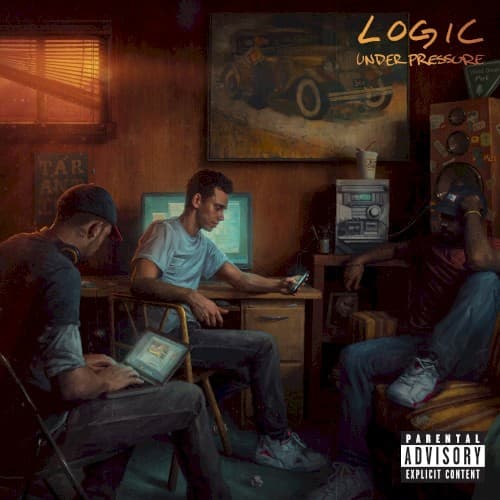
Wood paneling and modest furnishings ground this in working-class Maryland suburbs where Logic developed his craft before major label success.
Visual Language
The composition uses shallow depth of field and warm practical lighting to create painterly depth that elevates documentary realism.
Symbols
Venetian blind shadows
The striped light pattern suggests prison bars, visualizing the creative and economic pressures trapping young artists.
Three separate figures
Each person works in isolation despite physical proximity, illustrating the solitary nature of artistic creation.
Notebooks and writing implements
The analog tools emphasize pure lyricism over digital production, connecting to boom bap's pen-and-pad tradition.
Where Sound Meets Image
The cover's claustrophobic apartment setting mirrors the album's themes of economic struggle and creative ambition explored on tracks like 'Soul Food' and 'Buried Alive.' Three figures represent the album's multiple narrative perspectives as Logic examines his journey from different angles. The warm vintage tones echo the soul-sampling production and 90s boom bap drums throughout the project. The visible writing process connects to Logic's technical lyricism and storytelling focus that defined his early catalog.
This cover helped establish photography-based authenticity as a counter-trend to illustrated and graphic-heavy designs in 2010s hip-hop. The intimate creative process documentation influenced how emerging rappers visually branded their debut albums, favoring raw moments over polished personas. The design's cinematic quality anticipated Logic's later visual storytelling in music videos and the visual album format he would explore.