
From Maryland Underground to Mainstream Phenomenon
Sir Robert Bryson Hall II emerged from Gaithersburg, Maryland as Logic, a rapper whose ascent through the 2010s would spark conversations about technical skill, commercial ambition, and the price of crossover success. Before stadium tours and platinum plaques, he built his reputation through the Young Sinatra mixtape series, crafting a sound rooted in 90s boom-bap aesthetics while addressing his biracial identity and turbulent upbringing. His early work channeled influences like Nas, A Tribe Called Quest, and Wu-Tang Clan through a lens of millennial anxiety and philosophical inquiry.
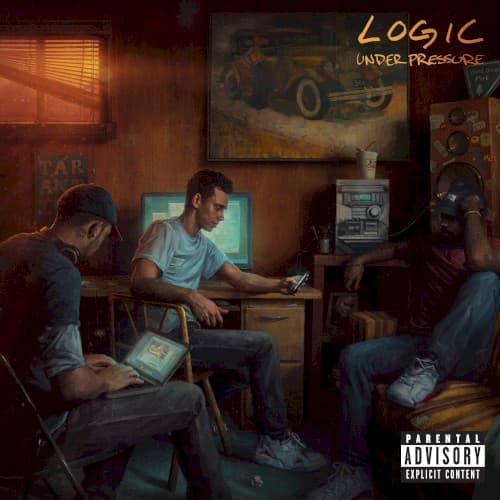
Logic's career trajectory moved faster than most independent rappers could imagine. The mixtape circuit led to a Def Jam deal, which produced Under Pressure in 2014—a debut that balanced introspective storytelling with technical gymnastics. Within four years, he'd achieved the kind of commercial penetration that eluded many of his underground peers, landing a number-one album and a song that became ubiquitous beyond hip-hop circles. Yet his journey also became a case study in how rapid success can complicate an artist's relationship with both critics and core audiences.
What makes Logic's story compelling isn't just the music—it's the tension between aspiration and reception, between technical proficiency and artistic identity. He represents a particular strand of hip-hop that prizes lyricism and flow mechanics while chasing pop-culture relevance, a balancing act that few artists manage without backlash. Whether viewed as a skilled craftsman or a polarizing figure, Logic's impact on 2010s rap remains undeniable, particularly in how he navigated the space between underground credibility and mainstream acceptance.
Technical Precision Meets Pop-Rap Accessibility
Logic's sonic identity centers on rapid-fire delivery, multi-syllabic rhyme schemes, and an ability to shift cadences mid-verse that demonstrates real technical command. His flow draws from the golden age playbook—precise internal rhymes, complex syllable stacking, breath control that allows extended runs without losing clarity. Early producers like 6ix (who would become his primary collaborator) built instrumentals that nodded to 90s East Coast production: soulful samples, crisp drums, jazzy loops that gave Logic room to showcase his verbal dexterity without overwhelming the beats.
As his career progressed, the production palette expanded considerably. The boom-bap foundation remained, but tracks began incorporating trap hi-hats, melodic hooks sung rather than rapped, and radio-friendly arrangements designed for playlist inclusion. This sonic evolution mirrored his commercial ambitions—songs like "1-800-273-8255" prioritized accessibility and message over technical showcasing, featuring sung choruses and straightforward structures that contrasted sharply with his mixtape density. The production choices reflected a deliberate pivot toward broader audiences, sometimes at the expense of the gritty aesthetic that defined his early work.
What distinguishes Logic's approach is the tension between his technical ability and his musical choices. He possesses the skills to execute intricate flows and layered wordplay, yet frequently opts for more direct, repetitive structures in his commercial work. His voice carries a conversational quality even at high speeds, making complex verses feel approachable rather than alienating. The challenge has been reconciling the underground sensibilities that built his reputation with the pop-rap instincts that expanded his reach—a reconciliation that remains incomplete across his discography.
Mixtape Acclaim, Commercial Breakthrough, and Controversial Pivots
Logic's foundation was built far from major label machinery. The Young Sinatra series—released between 2011 and 2013—established him as a serious lyrical talent within hip-hop's digital underground. These projects showcased someone studying the masters, particularly Sinatra-era sampling and Frank Sinatra's cool-swinging aesthetic filtered through boom-bap production. Tracks referenced classic albums, name-dropped legends, and positioned Logic as a student of the culture, hungry to prove his place among the greats. The regional success in Maryland and growing online buzz attracted Def Jam's attention, setting up the major label transition.
Under Pressure arrived in October 2014 as a mission statement. The album received critical praise for its cohesive narrative, production consistency, and Logic's willingness to address his difficult upbringing—growing up biracial in a household marked by addiction and instability. Songs like "Buried Alive" and the title track balanced technical rapping with genuine emotional weight, earning comparisons to Kendrick Lamar's good kid, m.A.A.d city in its thematic ambition if not its execution. The album debuted in the top five, validating the mixtape-to-mainstream pathway and establishing Logic as a commercially viable artist who could satisfy both technical rap fans and casual listeners seeking substance.
The subsequent albums revealed an artist grappling with fame's demands and his own artistic identity. The Incredible True Story (2015) pursued concept album territory with sci-fi framing, while Everybody (2017) tackled social issues and mental health, spawning the suicide prevention anthem "1-800-273-8255." That song—featuring Alessia Cara and Khalid—became Logic's commercial peak, reaching number three on the Billboard Hot 100 and generating millions of streams. Its success marked a turning point: Logic had transcended hip-hop circles entirely, becoming a pop-culture figure whose message resonated beyond traditional rap audiences. Yet this crossover success coincided with growing criticism about repetitive subject matter, perceived preachiness, and an increasing distance from the raw lyricism that defined his early work.
Confessional II (2018) and subsequent releases found Logic caught between satisfying different audience segments. Some projects leaned harder into technical showcases and hip-hop traditionalism, while others chased pop hooks and streaming-friendly arrangements. In 2020, he announced his retirement with No Pressure—a return-to-form album that referenced Under Pressure's themes and production style—only to return two years later, complicating the narrative of a definitive ending. His Def Jam tenure concluded with mixed critical reception but undeniable commercial achievements: multiple platinum certifications, sold-out tours, and a fanbase that remained intensely loyal despite the backlash from hip-hop purists and critics who felt his work had become formulaic.
Polarizing Success and the Question of Artistic Identity
Logic's legacy exists in contested territory. On one hand, he demonstrated that an independent artist could build a dedicated following through consistent mixtape releases and genuine engagement with fans, eventually translating that loyalty into mainstream success without compromising every principle. His willingness to discuss mental health, suicide prevention, and biracial identity in plainspoken terms connected with listeners who felt alienated by hip-hop's typical posturing, creating space for vulnerability in a genre that often rewards bravado over honesty.
Yet his career also illustrates the pitfalls of rapid commercial ascent and the difficulty of maintaining artistic credibility while chasing pop success. Critics and hip-hop traditionalists often dismissed his work as derivative, pointing to obvious influences worn without sufficient transformation, repetitive themes revisited across multiple projects, and a tendency toward explaining rather than showing. The "corny" label—fair or not—became attached to his public persona, complicating his relationship with the broader hip-hop community even as his sales figures proved his commercial viability. The retirement-and-return cycle further muddied his narrative, making it harder to assess his body of work as a cohesive statement.
What remains clear is Logic's impact on a generation of listeners who valued technical skill, positive messaging, and accessibility over underground credibility or critical favor. His success demonstrated the existence of a substantial audience seeking hip-hop that addressed real issues without excessive darkness or aggression, even if that approach alienated purists. Whether his discography endures beyond its moment or serves primarily as a document of 2010s crossover ambitions remains to be seen. He carved out a specific lane—technically proficient, commercially ambitious, thematically earnest—that few artists occupied with equal success, even if the lane itself became a subject of debate about hip-hop's boundaries and hip-hop's future directions.