Style & Context
Influences
Gordon Parks, Roy DeCarava, classical Renaissance portraiture, documentary realism
Location
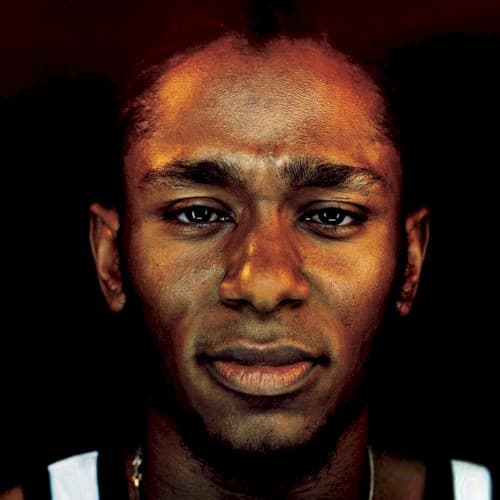
The bare presentation reflects Brooklyn's underground scene where substance trumped commercial flash and performance.
Visual Language
The chiaroscuro lighting technique borrowed from fine art photography elevates street documentation to gallery-worthy status.
Symbols
Direct, unwavering eye contact
The unblinking gaze forces viewers into a confrontation they cannot escape or dismiss casually.
Completely black background void
The absence of context or props refuses to let anything distract from the human being.
Visible skin texture and imperfections
The unretouched complexion rejects airbrushed fantasy in favor of documentary-style truth telling.
Where Sound Meets Image
The stripped-down visual perfectly mirrors the album's rejection of commercial hip-hop formulas across tracks like 'Ms. Fat Booty' and 'Mathematics.' Just as the music blends jazz samples, spoken word, and boom bap without gimmicks, the cover refuses visual tricks or props. The intimate close-up matches the album's confessional, first-person perspective, where Mos Def speaks directly to listeners about gentrification, mathematics of oppression, and personal relationships. The warm lighting echoes the album's soulful production, while the unflinching gaze captures the uncompromising social commentary throughout.
This cover helped establish minimalist portraiture as a viable alternative to the cartoon graphics and action shots dominating late-90s hip-hop packaging. Its influence appears in Kendrick Lamar's Section.80, J. Cole's various covers, and countless independent releases that chose raw intimacy over commercial gloss. The design proved that a simple, powerful photograph could communicate artistic seriousness and cultural weight, paving the way for hip-hop to be taken seriously in contexts beyond entertainment—as literature, as social commentary, as fine art worthy of museum consideration.