Style & Context
Influences
Black Panther Party imagery, social realism, protest art
Location
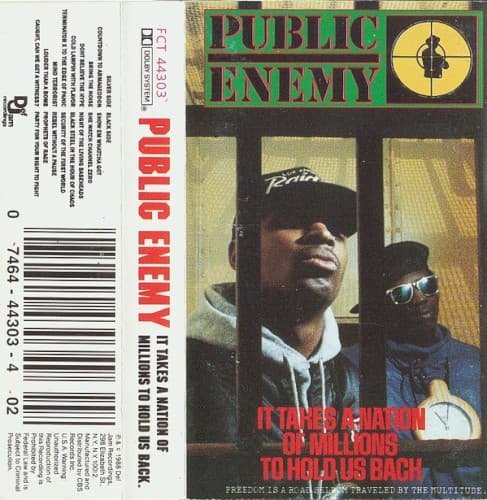
The imagery evokes the confined spaces and institutional walls prevalent in urban neighborhoods heavily impacted by mass incarceration.
Visual Language
The raw, documentary-style photography effectively captures a sense of realism, confronting viewers with the harsh realities of injustice.
Symbols
Prison Bars
The prominent iron bars represent the systemic incarceration and societal confinement faced by Black communities in America.
Flavor Flav's Clock
Flavor Flav's signature oversized clock signifies the urgency of the political and social issues Public Enemy addresses.
Target Logo
The target logo with the B-Boy in the crosshairs represents the constant scrutiny and targeting of Black youth by authority figures.
Where Sound Meets Image
The visual narrative of confinement directly reflects the album's confrontational themes of oppression and resistance, particularly evident in tracks like "Party for Your Right to Fight." Public Enemy's sonic landscape is aggressive and dense, mirroring the visual's starkness and the urgency conveyed by the men behind bars. The cover visually anchors the group's message, presenting them as voices from within a besieged community, fighting for liberation against overwhelming odds.
This cover established a strong visual template for political hip-hop, marrying stark realism with potent symbolism to deliver an unambiguous message. Its powerful depiction of incarceration continues to influence artists who address social justice, demonstrating how album art can serve as a direct tool for activism. The imagery remains a touchstone for discussions about race and justice in America.