Style & Context
Influences
Nan Goldin intimacy, evidence photography, distressed punk zine aesthetics
Location
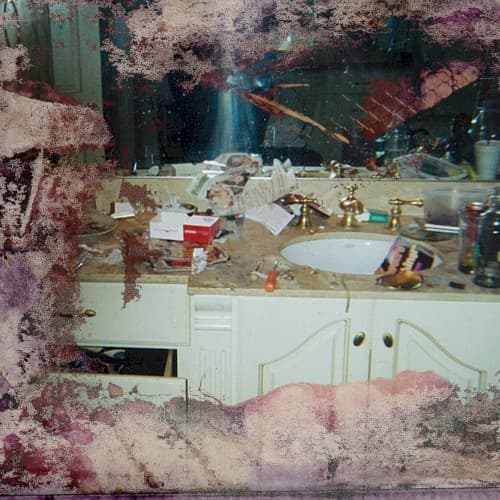
This bathroom exists in rarefied celebrity space where Houston's Newark roots and superstar reality collided with pharmaceutical demons.
Visual Language
The degradation treatment attacks the photograph like mold or chemical damage, physically manifesting destruction onto the image itself.
Symbols
Cluttered vanity surface
The accumulation of products and debris represents excess without order, wealth without peace or stability.
Coral-pink deterioration overlay
The invasive texture symbolizes how addiction corrodes everything it touches, consuming reality like chemical burn.
Mirror reflection
The visible mirror creates dual perspectives on the same destruction, forcing viewers to witness complicity.
Where Sound Meets Image
The seven-track album dissects cocaine economics with surgical precision across Kanye's dusty soul loops and minimalist drums. While Pusha's bars celebrate his past as a dealer with unmatched technical skill, this cover refuses to let that narrative exist without showing the other end of the transaction. Tracks like 'Hard Piano' glory in material success while 'If You Know You Know' details the game's mechanics — but this bathroom scene is the unspoken eighth track, the destination for every brick moved. The visual doesn't contradict the music; it completes the moral equation Pusha leaves deliberately unbalanced in his verses.
This cover reset expectations for how unflinching hip-hop artwork could be in streaming's sanitized era. The controversy proved provocative imagery still mattered when albums were primarily consumed as playlist additions. It demonstrated that spending significantly on a powerful photograph could generate more conversation than commissioned illustration, influencing how labels approached visual identity for rap projects addressing difficult subject matter.