From Virginia Beach to Hip-Hop's Last Pure Coke Rapper
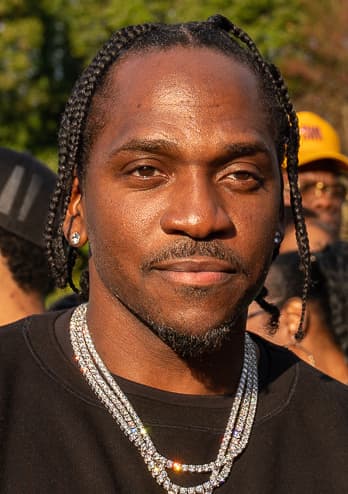
Terrence "Pusha T" Thornton emerged from Virginia Beach in the late '90s as one half of Clipse, a duo that redefined street rap's aesthetic possibilities. Alongside his brother Gene "No Malice" Thornton, Pusha helped craft a sound where minimal, eerie production met unflinchingly detailed narratives of the drug trade. What separated Clipse from their peers wasn't just Pharrell Williams' futuristic production—it was Pusha's ability to turn cocaine dealing into high art, each bar meticulously constructed with internal rhymes, vivid imagery, and an almost scientific precision.
After Clipse's commercial decline and eventual dissolution, Pusha T reinvented himself as a solo artist under Kanye West's G.O.O.D. Music imprint. This partnership proved transformative. Where many veteran rappers struggle to remain relevant, Pusha sharpened his focus, stripping away everything except his core strength: the most refined coke rap in modern hip-hop. His late-career renaissance produced two of the genre's most acclaimed albums—DAYTONA in 2018 and It's Almost Dry in 2022—both demonstrating that singular vision executed flawlessly beats trend-chasing every time.
Pusha T occupies a unique position in contemporary rap: an artist who rejected reinvention in favor of perfecting a single lane. He's the last of a dying breed, a rapper whose entire catalog explores one subject from every conceivable angle. That commitment has made him both a critical darling and a cult figure, proof that authenticity and artistic discipline can outlast commercial calculation.
Surgical Precision: The Architecture of Pusha T's Coke Rap
Pusha T's sonic identity crystallized during the Clipse era but reached its purest form in his solo work. His flow operates like a Swiss watch—every syllable placed with deliberate intent, every internal rhyme adding structural integrity. He favors short, declarative statements that pile atop minimal percussion, letting space do as much work as the words themselves. There's no wasted motion, no filler bars. Each verse functions as a self-contained architectural piece where meter, meaning, and musicality align perfectly.
Production choices reveal his understanding of contrast and negative space. The Neptunes gave Clipse those skeletal, synth-driven beats that sounded like luxury minimalism. Kanye West and collaborators like Pharrell, The Alchemist, and No I.D. later provided Pusha with soul samples chopped into anxiety-inducing loops, drums that hit like gunshots in empty rooms, and atmospheres that feel expensive and paranoid simultaneously. He gravitates toward beats that feel like frozen moments—tense, glittering, dangerous.
Vocally, Pusha operates in a controlled mid-range bark, occasionally rising to emphasize particular images but never shouting. His tone conveys authority without aggression, like a dealer who doesn't need to raise his voice because everyone already knows what he's capable of. The consistency is the point—he's not trying to show versatility because his subject matter demands a specific sonic treatment. You wouldn't paint a Rembrandt in neon colors, and Pusha T wouldn't rap about selling cocaine over bouncy, celebratory production. The marriage of content and form is absolute.
The Evolution of Pusha T: From Clipse to Solo Architect
Pusha T's career began in 1992 when he and his brother formed Clipse, though they didn't achieve widespread recognition until their 2002 debut Lord Willin'. The Neptunes-produced "Grindin'" became an underground anthem, its sparse hand-clap percussion and minimalist synth line defining a new direction for street rap. The album went gold, positioning Clipse as rising stars. But the follow-up, Hell Hath No Fury (2006), became their defining statement—a critical masterpiece that sold poorly but influenced countless producers and rappers with its abrasive, futuristic sound design.
The commercial failure of Hell Hath No Fury began Clipse's decline. Label issues with Jive Records left them in limbo. Their third album, Til the Casket Drops (2009), arrived to minimal fanfare. Gene's growing religious convictions created artistic tension—he wanted to move away from glorifying drug dealing, while Pusha saw it as their artistic truth. The duo quietly separated, with Gene becoming No Malice and pursuing conscious rap.
Pusha's solo transition in 2010, signing with Kanye West's G.O.O.D. Music, initially felt like a lateral move. His 2011 mixtape Fear of God showed promise, and his 2013 debut album My Name Is My Name delivered strong singles like "Numbers on the Boards," but it didn't feel like a reinvention. He seemed like a skilled craftsman without a clear next chapter. What changed was his willingness to go shorter, denser, more uncompromising. He stopped chasing radio play entirely.
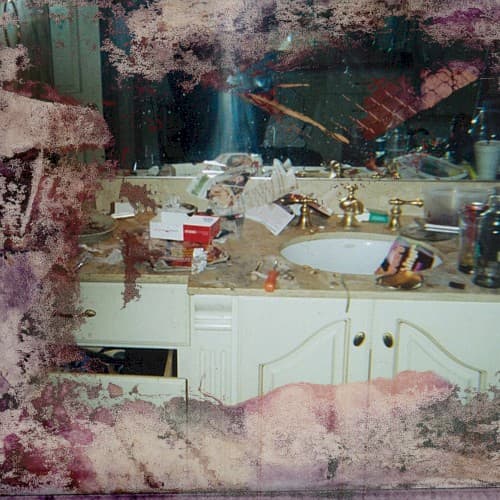
DAYTONA in 2018 represented a creative rebirth. Produced entirely by Kanye West and released as part of the Wyoming sessions, the seven-track, 21-minute album contained zero filler. Every bar landed. "The Story of Adidon," his Drake diss released during the album cycle, proved Pusha could still create cultural moments—exposing Drake's hidden child and igniting one of hip-hop's most vicious modern beefs. The album earned a 9.3 rating from critics and solidified Pusha as rap's elder statesman of purity.
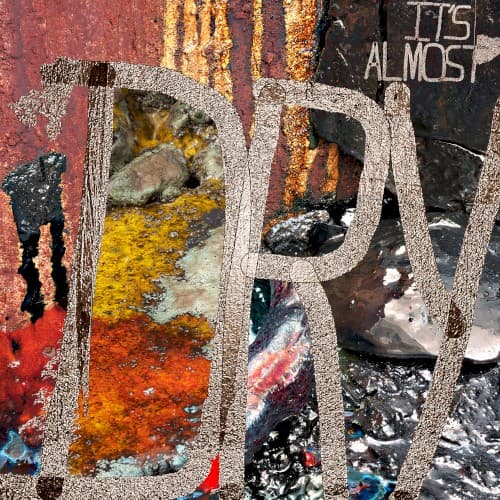
It's Almost Dry (2022) elevated that approach even further. Split between Kanye West and Pharrell production, the album felt like Pusha synthesizing his entire career—the Neptunes minimalism of his youth, the soul-loop maximalism of his G.O.O.D. Music era, and the narrative sharpness he'd honed over two decades. Tracks like "Diet Coke" and "Dreamin of the Past" demonstrated an artist at full command of his powers, uninterested in compromise. It debuted at number three on the Billboard 200, his highest chart position, proof that refusal to dilute your vision can eventually build an audience that respects exactly that.
Throughout his career, Pusha has remained one of hip-hop's most selective artists. He doesn't flood the market with releases or chase streaming numbers with bloated tracklists. Each project arrives fully formed, edited ruthlessly, and designed to reward close listening. That discipline separates him from peers who've faded into irrelevance.
Pusha T's Influence: The Last Purist in an Era of Compromise
Pusha T's legacy rests on an uncommon achievement: he proved that narrowing your focus can be a strength, not a limitation. In an era where rappers pivot between singing, trap flows, melodic experimentation, and constant reinvention, Pusha stayed exactly where he started—rapping about cocaine with unflinching detail and poetic precision. That refusal to evolve became its own form of evolution, a statement that mastery matters more than novelty.
His influence appears most clearly in the resurgence of boom-bap purism and lyrically dense street rap. Artists like Benny the Butcher, Conway the Machine, and the entire Griselda movement owe a debt to Pusha's commitment to craft over commercialism. He demonstrated that you could work with high-profile producers, maintain industry relationships, and still create uncompromising art. His approach validated the idea that some artists shouldn't bend toward the mainstream—the mainstream should come to them.
Culturally, Pusha T represents hip-hop's institutional memory. He's a living bridge between the Neptunes era of the early 2000s and the current landscape of algorithm-driven consumption. His beef with Drake—a mogul who embodies pop-rap's dominance—felt symbolic: the last true street rapper standing up to the genre's most successful crossover act. Winning that battle, at least in the eyes of purists, cemented his position as hip-hop's conscience, the artist who won't let the culture forget where it came from. His legacy is integrity, precision, and the stubborn belief that doing one thing perfectly beats doing ten things adequately.