Style & Context
Influences
Kehinde Wiley's ornate portraiture, Afrofuturism, baroque floral still life paintings
Location
The cover speaks to Southern Black communities where Rapsody roots her work, honoring matriarchal wisdom and childhood protection.
Visual Language
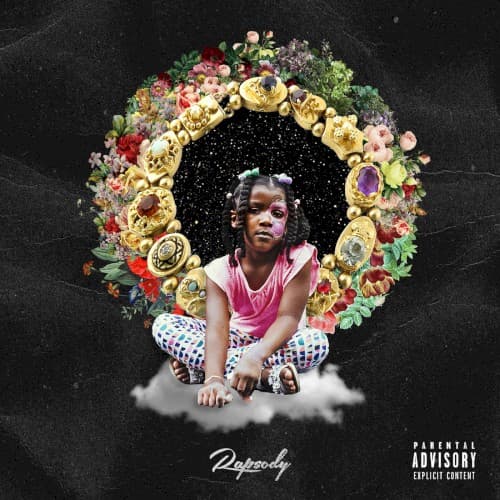
The layered composition merges documentary photography with fantastical digital elements to create a mythological portrait of everyday Blackness.
Symbols
Floral wreath crown
The circular arrangement of roses and golden flowers creates a halo effect that positions Black girlhood as divine and worthy of worship.
Cloud platform
The ethereal cloud beneath her feet elevates her above earthly concerns, suggesting ancestral elevation and spiritual protection.
Starfield background
The cosmic setting places this young girl within infinite possibility, rejecting limited narratives about Black futures.
Where Sound Meets Image
This visual perfectly captures the album's dedication to Black women and girls across generations. The innocence and regality of the central figure mirrors Rapsody's lyrical commitment to uplifting narratives about Black femininity beyond stereotypes. The ornate wreath suggests the layered complexity of the bars inside, each flower another metaphor. The cloud and stars connect to tracks exploring elevation through knowledge and the vastness of Black women's interior lives. Where conscious rap often centers masculine struggle, this cover boldly declares that a young girl's contemplation matters enough to be the portal into the music.
This cover helped shift hip-hop visual language toward celebrating Black childhood as a subject worthy of baroque treatment. The wreath motif has appeared in subsequent conscious rap releases, establishing floral crowns as shorthand for honoring Black life beyond trauma narratives. Its influence extends to how female rappers frame their album art, proving commercial viability for covers that center tenderness over toughness and youth over sexualization.