The Rise of Hip-Hop's Most Uncompromising Lyricist
Rapsody emerged from Snow Hill, North Carolina, carrying the weight of a lyrical tradition that seemed endangered by the mid-2010s. Where mainstream hip-hop increasingly favored melodic repetition and minimal wordplay, she doubled down on intricate rhyme schemes, historical references, and conceptual depth that demanded repeated listens. Her partnership with producer 9th Wonder became the foundation for a career built on patient craftsmanship rather than viral moments.
She first gained attention through features on 9th Wonder projects and the Jamla Records collective, but her 2012 mixtape "The Idea of Beautiful" announced a fully formed artistic vision. By the time "Laila's Wisdom" arrived in 2017, Rapsody had refined an approach that felt both classicist and contemporary—rooted in the dense lyricism of Black Thought and Pharoahe Monch while addressing modern complexities of Black womanhood, systemic racism, and artistic integrity.
What distinguishes her career is the refusal to compromise. While peers adjusted their sound for playlist algorithms, Rapsody committed to boom-bap foundations, literary wordplay, and albums structured as cohesive statements. She represents a lineage stretching from Queen Latifah through Lauryn Hill to present day, proving commercial viability wasn't a prerequisite for cultural relevance. Her Grammy nominations and critical acclaim arrived without altering her core identity.
Precision Lyricism Over Boom-Bap Soul
Rapsody's technical approach centers on multisyllabic rhyme patterns that rarely sacrifice meaning for cleverness. She constructs verses like architectural blueprints—every bar connects to the larger thematic structure, every metaphor serves the song's conceptual purpose. Her flow alternates between measured, conversational cadences and rapid-fire sequences that showcase breath control and rhythmic complexity. She doesn't chase trends in delivery; her vocal presence remains grounded, direct, and purposeful.
The sonic landscape she inhabits is inseparable from 9th Wonder's production aesthetic. His sample-based beats—built on dusty soul loops, jazz fragments, and boom-bap drum programming—provide the perfect canvas for her dense lyricism. Where some producers might overwhelm the vocals with layers, 9th Wonder's restraint allows Rapsody's words to remain the focal point. This musical symbiosis recalls classic producer-MC partnerships like DJ Premier and Guru, or Pete Rock and CL Smooth.
Her subject matter navigates personal history, social commentary, and hip-hop's internal politics without didacticism. She addresses colorism, gender dynamics in rap, Black excellence, and self-doubt with the same care she applies to technical execution. Songs function as both entertainment and education, but never feel like lectures. The music rewards close listening—references to Nina Simone, James Baldwin, and Malcolm X exist alongside contemporary observations about streaming culture and industry gatekeeping. This balance between intellectual depth and street credibility defines her singular position in modern hip-hop.
From Jamla Collective Member to Solo Visionary
Rapsody's journey began in earnest when she connected with 9th Wonder during her time at North Carolina Central University. The legendary producer, fresh off his work with Little Brother and his contributions to Jay-Z's "The Black Album," recognized her potential immediately. She became part of the Jamla Records family, appearing on label compilations and honing her craft alongside other North Carolina talents. These early years provided apprenticeship—learning how to construct albums, navigate features, and develop a distinct voice within a crowded landscape.
"The Idea of Beautiful" in 2012 served as her proper introduction, a mixtape that showcased her ability to carry full projects. The warm reception led to increased visibility, including a memorable appearance on Kendrick Lamar's "To Pimp a Butterfly" track "Complexion (A Zulu Love)," which exposed her to a broader audience. That collaboration proved significant—not just for the platform it provided, but for the artistic kinship it suggested. Both artists shared a commitment to conscious content without sacrificing technical prowess.
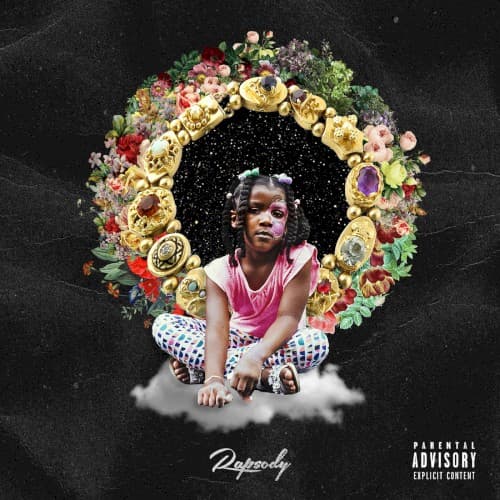
Her 2017 album "Laila's Wisdom" represented a creative breakthrough. Named after her late grandmother, the project balanced personal reflection with sharp social commentary across tracks like "Sassy" and "OooWee." Each song title referenced a influential Black woman—Tyra, Oprah, Whitney—creating a conceptual framework that honored legacy while asserting her own place in that lineage. The album earned widespread critical praise and a Grammy nomination for Best Rap Album, a rare achievement for an independent female artist working outside mainstream formulas. With a rating of 8.7, "Laila's Wisdom" confirmed what underground heads already knew: Rapsody operated at an elite technical level.
She followed with "Eve" in 2019, an even more ambitious concept album where every track title referenced a influential Black woman throughout history—Michelle Obama, Oprah Winfrey, Serena Williams, Nina Simone, Phylicia Rashad among others. The album's structure provided a framework for examining different facets of Black female experience while showcasing Rapsody's versatility. Features from J. Cole, Anderson .Paak, GZA, and D'Angelo elevated the project's profile. "Eve" earned two Grammy nominations, including Best Rap Album and Best Rap Performance for the track "Afeni" featuring PJ Morton.
Throughout this period, Rapsody navigated an industry that consistently undervalues female MCs, particularly those working in traditional hip-hop lanes. She avoided the pressure to adopt pop sensibilities or rely on sexuality for attention, instead doubling down on bars. Her live performances reinforced this commitment—no elaborate production, just microphone mastery and stage presence. Collaborations with artists like Anderson .Paak, Black Thought, Cordae, and Erykah Badu demonstrated her respect among peers, even as radio play remained limited.
The challenge of her career has been maintaining momentum without compromising artistic vision. In an era where TikTok virality drives success, Rapsody represents an alternative path—slower growth, deeper fan connection, and longevity built on respect rather than hype cycles. Her 2020s output continues this trajectory, prioritizing quality and substance over quantity. She remains one of the few artists carrying forward the lyrical complexity that defined hip-hop's golden era while addressing contemporary realities.
Redefining What Female Excellence Means in Hip-Hop
Rapsody's significance extends beyond her own discography. She exists as living proof that technical excellence and commercial viability, while not always aligned, can coexist. Her career provides a blueprint for artists unwilling to compromise—slow, steady growth through undeniable skill. In an industry that often sidelines female rappers after initial buzz, she's built a sustainable career through consistency and craft.
Her influence on younger female MCs is already evident. Artists like Tierra Whack, Noname, and Little Simz operate in a landscape Rapsody helped shape, one where women can be complex, intellectual, and uncompromising without apology. She normalized the idea that female rappers don't need to fit into predetermined boxes—sex symbol, conscious rapper, pop crossover—but can simply be exceptional at their craft. That shift in perception represents a quiet revolution.
What makes her legacy particularly vital is the timing. She emerged during hip-hop's most fragmented era, when algorithmic playlists and streaming metrics increasingly dictated artistic direction. By succeeding on her own terms, she demonstrated that alternative paths still exist for those willing to commit. Her Grammy nominations without major label machinery or viral moments proved institutions were watching, even if mainstream radio wasn't. Future generations will study her career as an example of artistic integrity rewarded, a counternarrative to the industry's typical demands for compromise.