Style & Context
Influences
Underground comix, Tijuana bibles, R. Crumb, street art, blaxploitation posters
Location
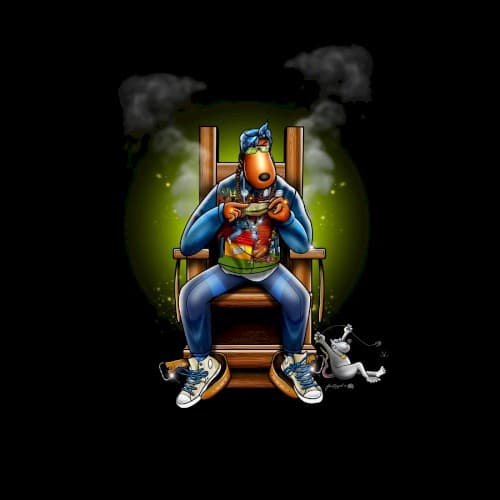
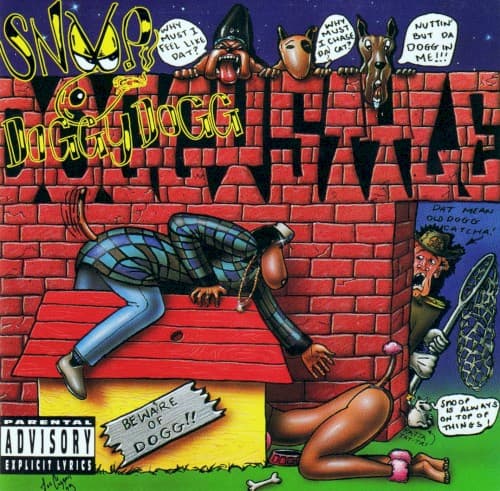
Long Beach's laid-back beach culture collides with South Central's hard realities in this cartoon rendering of California street life.
Visual Language
The cartoon style borrowed from adult underground comics to create a visual buffer that made controversial content more palatable to retailers and consumers.
Symbols
Dog-headed characters
The canine transformations literalize Snoop's nickname while creating distance from direct human representation of controversial content.
Brick wall backdrop
This urban architectural element signifies the West Coast street environment while functioning as a literal and figurative barrier to mainstream respectability.
Speech bubble commentary
The comic book dialogue balloons frame the explicit imagery as illustrated fiction rather than photographic documentation of actual behavior.
Where Sound Meets Image
The playful cartoon violence mirrors the album's smooth G-funk production that made brutal lyrical content sound melodic and accessible. The exaggerated illustrations match Snoop's laid-back drawl delivering explicit narratives over Dr. Dre's synthesizer-heavy beats. The comic book aesthetic reflects songs like 'Murder Was The Case' and 'Serial Killa' that treat violence as vivid storytelling rather than documentary realism, while the sexual imagery directly connects to tracks like 'Ain't No Fun' that sparked controversy for their treatment of women.
This cover established cartoon illustration as a viable alternative to photography for explicit hip-hop content, influencing everyone from Redman to Tyler, The Creator. The approach of using humor and illustration to package controversial material became a template for navigating corporate retail restrictions while maintaining street credibility. The cover's notoriety ensured it remained a cultural reference point for debates about hip-hop imagery and censorship for decades.