Style & Context
Influences
actual booking photography, documentary realism, mugshot archives
Location
The cover embodies Compton's reality where police documentation serves as regular life milestone rather than exceptional crisis moment.
Visual Language
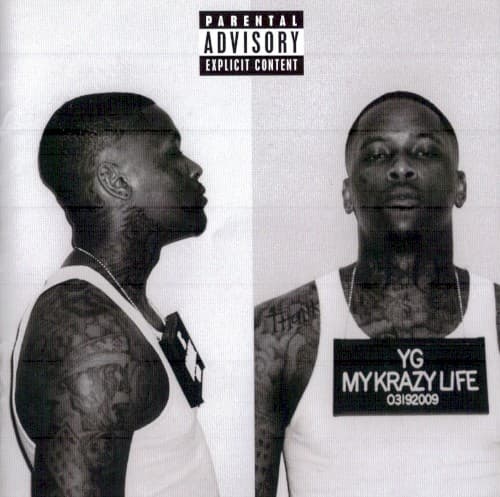
The composition deliberately replicates institutional photography protocols to create uncomfortable authenticity that rejects artistic manipulation entirely.
Symbols
Booking number 03192009
The date stamps the image with documentary authenticity while potentially marking a significant arrest in the artist's timeline.
Profile and frontal poses
This dual-angle format mirrors actual police photography protocols, positioning the viewer as institutional authority examining evidence.
Visible tattoos across neck and torso
The body becomes a canvas documenting gang affiliation, street credibility, and lived experience within California's gang culture.
Where Sound Meets Image
The cover's institutional documentation perfectly mirrors My Krazy Life's narrative structure, which unfolds as day-in-the-life chronicle of Compton street existence. Songs like 'BPT' and 'My Hitta' detail the interactions with police that inevitably lead to moments like this photographed encounter. The stark visual presentation matches the album's production aesthetic—DJ Mustard's minimalist ratchet beats that strip West Coast funk down to skeletal essentials, rejecting ornamentation just as this cover rejects visual polish.
This cover helped establish the documentary-style aesthetic that would define West Coast street rap's 2010s revival, influencing artists to embrace unvarnished visual documentation over stylized imagery. The design's refusal to glamorize incarceration—presenting it instead as bureaucratic routine—offered more honest representation of how the criminal justice system processes young Black men as administrative data. Its impact extends beyond hip-hop into broader conversations about mugshot culture and how institutional photography shapes public perception.