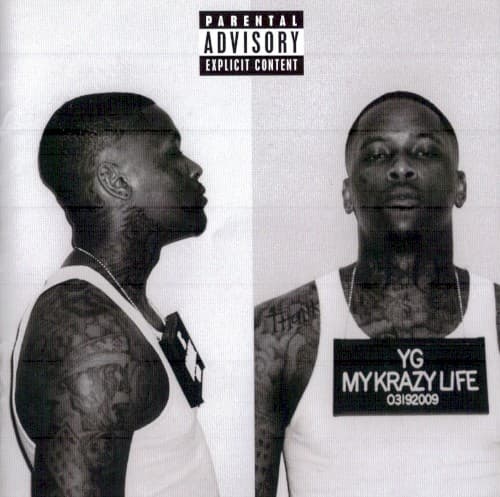
YG My Krazy Life — When Compton Found Its Voice Again
You cannot fake twenty-four hours in Compton. YG understood this before he recorded a single bar for this album. Every song here moves on West Coast time — not the clock on your phone but the rhythm of a city that wakes up slow and stays alert all night. This is not nostalgia rap trying to resurrect the nineties.
This is what Bompton sounded like in 2014, when DJ Mustard's ratchet beats owned every car stereo from Rosecrans to the 91 freeway and the younger generation finally had a sound that belonged to them instead of their parents. The album plays like a day-in-the-life crime film you can bump in traffic. It opens with his mother's voice warning him about the streets and closes seventeen tracks later with him still out there, still moving, still breathing. The structure is not accidental.
YG built this thing like a movie because that is how you survive telling gang stories in 2014 without getting your project shelved or your shows canceled. Frame it as art and suddenly the industry lets you say what documentaries only whisper about. What makes My Krazy Life work where other concept albums collapse is how little YG explains. He never stops to translate slang or justify decisions.
The album assumes you either know or you will figure it out. That confidence separates this from every other West Coast debut of the decade. Is he asking for your approval or just letting you ride shotgun? He is letting you ride shotgun.
Ratchet Beats and Blood Walks
DJ Mustard produced eleven of these seventeen tracks and his fingerprints are everywhere — the stiff drum programming, the skeletal synth lines, the basslines that hit like hydraulics bottoming out. This is minimalist gang music. No live instrumentation, no sample flips from seventies soul records, no Dre-style layering. Just 808s, snares and a producer who understood that less groove means more space for YG's blunt delivery to dominate.
Mustard's ratchet sound was already bubbling through the clubs when this album dropped, but My Krazy Life is what proved the aesthetic could carry a full-length narrative without feeling like a compilation of singles.
YG raps with the deadpan tone of someone describing their commute. His flow rarely changes speed or inflection, which should make the album monotonous but instead creates this hypnotic effect where every bar feels like testimony. He is not performing for you. He is just talking.
When he details home invasions or explains gang hierarchies, the lack of theatrics makes it hit harder. You believe him because he sounds bored saying it, like this is Tuesday. Lyrically the album lives in contradictions. YG loves his woman and cheats on her in the same verse.
He thanks God and plans robberies back to back. He mourns friends and threatens enemies without pausing to process either emotion. That moral ambiguity is the point. This is not a redemption narrative or a cautionary tale.
It is a survival log. The album's one clear weakness is the feature overload on the back half — too many guest verses that disrupt the solo narrative YG spent twelve tracks building. When Drake shows up it feels like the label demanding a crossover moment instead of letting the album breathe on its own terms.
The album's sonic palette is Compton in HD. No jazz samples, no funk nostalgia, no callbacks to the nineties. This is digital street rap that sounds like it was mixed on laptop speakers because that is where most people first heard it — on YouTube rips and SoundCloud links before the official release. Mustard's production strips West Coast rap down to its most functional elements.
Does it knock in the car? Does it work at the function? If yes, the track stays. Everything else is decoration.
A Day That Never Ends
The album moves like real time even though it clearly does not. You cannot fit twenty-four hours into fifty-four minutes, but YG sequences the thing so the emotional clock keeps ticking. The opening stretch establishes location and routine — his mother's warning, the neighborhood roll call, the party. By the time you hit the middle section the mood darkens.
The crimes get more detailed, the stakes rise, the paranoia creeps in. This is when the album earns its concept. You are not just hearing songs anymore, you are watching someone make worse decisions as the night goes on.
The back half falters slightly because YG tries to close too many threads at once. The thank-you-to-God interlude feels like he is hedging his bets with older listeners, and the remix tacked on at the end breaks the narrative spell the album worked so hard to cast. But even the weaker sequencing choices make sense if you think of this as a real day in someone's life — days do not end cleanly, they just stop when you fall asleep or the sun comes up. The momentum sag in the final stretch mirrors exhaustion.
You have been riding with YG for an hour and now you are both tired. What holds the album together is YG's refusal to break character. He never zooms out for a meta-commentary verse. He never winks at the camera.
From the first skit to the last bar he stays inside the perspective of someone living this life in present tense, and that commitment is what makes the sequencing work even when individual tracks feel like they could be reordered. The arc is not about tracks, it is about mood, and the mood is consistent: this is Compton, this is Tuesday, this is every day.
The Blueprint for West Coast Rap's Second Act
This is YG's best album and he knows it. Everything he has released since has been a negotiation with the sound and structure he nailed here. Still Brazy came close by doubling down on the political rage, but it lacked the tightness and the narrative spine. Stay Dangerous and My Life 4Hunnid wandered into pop-rap crossover territory that diluted what made his debut special.
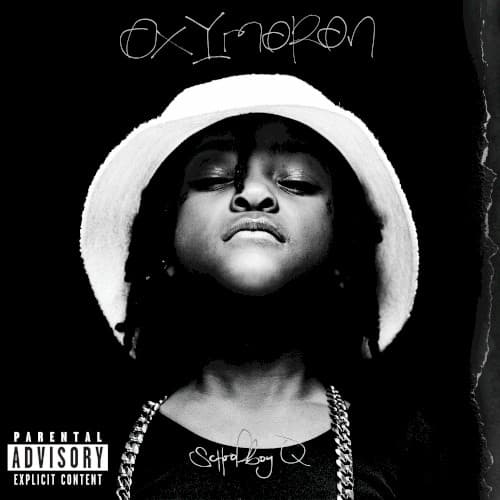
My Krazy Life remains the high-water mark because YG had not yet figured out how to monetize his story — he was still just telling it. This album belongs in the top tier of 2010s West Coast rap alongside Kendrick's good kid, m.A.A.d city and ScHoolboy Q's Oxymoron. It is not as ambitious as Kendrick's album and not as polished as Q's major label statement, but it is the most uncompromising of the three. YG made no concessions to crossover audiences.
He made a Compton gang album that happened to go gold. If you grew up anywhere near Los Angeles in the 2010s, this album soundtracked real life. If you did not, it still works as a front-to-back listen because the production and sequencing carry you through even when the references fly over your head.
New listeners should start with the title track and the run from Meet the Flockers through Do It To Ya — that is where the album shows its full range. Fans of this record should immediately check out Mozzy's discography, especially 1 Up Top Ahk and Spiritual Conversations, for that same matter-of-fact West Coast street narration. DJ Mustard's Cold Summer is essential listening for understanding the production blueprint. And for context on where YG fits in Compton's lineage, revisit The Game's The Documentary to hear what West Coast gangsta rap sounded like before the ratchet era took over.
My Krazy Life aged perfectly because it never tried to sound timeless — it just documented a specific moment so accurately that the moment became permanent.
Track Listing
Momma Speech Intro
●YG's mother delivers a voicemail warning about the streets while police sirens wail in the distance. It lasts forty seconds and sets the emotional stakes before a single beat drops. Her voice is exhausted, not angry — she has had this conversation before and knows it will not change anything. The siren placement is heavy-handed but effective. This is the last moment of maternal concern before YG disappears into the next sixteen tracks.
BPT
▲The album's true opening and the mission statement. Mustard builds the beat around a two-note synth stab and a snare that sounds like someone slapping a wooden desk. YG raps the entire track in the same flat register, naming neighborhoods and setting boundaries like he is drawing a map for outsiders. The hook is a phone number you should not call. No wasted motion, no melodrama, just pure geographic claim-staking. This is what Bompton sounds like when it introduces itself without asking permission. The lack of bass in the verses makes the hook hit harder when the 808s finally drop. By the time the track ends you understand the rules of engagement for the next hour.
I Just Wanna Party
▲The first glimpse of YG trying to have fun before the album's darker second half. Mustard flips the tempo slightly and adds a brighter synth line, but the drums stay rigid. YG's delivery loosens up just enough to remind you he is twenty-three years old and not always in survival mode. The hook is basic — he just wants to party and ignore the consequences — but the verses undercut that by listing all the drama waiting outside the club. Jeezy's feature adds veteran credibility without overwhelming YG's perspective. This is the album's most accessible moment, the one that could work on radio without feeling like a concession. It is not deep, but it is not supposed to be. Sometimes you just want to party.
Left, Right
▲Mustard turns the minimalism into a flex. The beat is just a bassline and a handclap for most of the track, and somehow that emptiness makes it knock harder than anything else on the album. DJ Quik shows up and immediately raises the technical bar with his verse — his flow switches three times in thirty seconds while YG stays locked into his monotone cadence. It is a strange pairing that works because Quik respects the aesthetic instead of trying to upstage it. The directional hook is absurd if you think about it for more than five seconds, but in the car with the windows down it makes perfect sense. This is ratchet music at its most refined, which is to say it is still raw but nothing is out of place.
Bicken Back Being Bool
▲The slang showcase. YG replaces every hard C with a B to signal his gang affiliation, which turns the entire song into a linguistic exercise that should be annoying but somehow is not. Mustard keeps the production skeletal — just drums and a bass note that hits every four bars. The hook is instantly memorable even if you have no idea what half the words mean. This is YG at his most playful, turning street vernacular into a flex that works because he commits to it fully. No explanation, no translation, just three minutes of substitution cipher rap that became a West Coast anthem. The song has zero depth and does not need any. It is a vibe, not a sermon.
Meet the Flockers
●The most controversial track on the album and the one that almost got YG canceled before cancellation was a mainstream concept. He describes home invasion tactics in step-by-step detail, explaining which neighborhoods to target and what time of day to hit them. The beat is ominous — low-end rumble and a synth line that sounds like a warning siren slowed to half speed. YG raps it like a training manual, no emotion, just instruction. It is deeply uncomfortable and that is the point. This is not glorification, it is documentation. The bridge shifts perspective to the victims and the aftermath, but most listeners only remember the first two verses. The track works as art and fails as PR. It is the moment where YG's refusal to sanitize his stories becomes a liability, but removing it would have gutted the album's thesis. Crime is not a metaphor here, it is the subject.
My Nigga
▲The inescapable single and the track that made YG a household name. Mustard builds the beat around a descending synth line and a snare roll that feels like it is tumbling down stairs. Jeezy and Rich Homie Quan show up and both understand the assignment — keep it minimal, let the hook breathe, do not overthink it. The song is hypnotic in its repetition. YG says almost nothing across three verses but the way he says it makes every bar feel important. This is West Coast ratchet music crossing over to the mainstream without compromise. The hook is six words and a ad-lib, and that simplicity is what made it work everywhere from strip clubs to suburban house parties. It has been overplayed to death but it still hits when the 808s drop.
Do It To Ya
●YG attempts a sex jam and mostly pulls it off by refusing to make it romantic. The production is still Mustard's trademark stiffness — no slow-jam smoothness, just hard drums and a synth line that could work at a strip club or a backyard function. TeeFLii handles the sung hook and his voice adds the only softness on the entire track. YG's verses are direct without being crude, walking the line between explicitness and innuendo. It is not a great song but it works as a palette cleanser before the album's emotional back half. You need a breather after "Meet the Flockers" and this provides it without killing momentum.
Me & My Bitch
▲YG's version of a love song, which means it is still mostly about him. The beat is warmer than anything else on the album — Mustard adds a Rhodes piano line that almost sounds soulful, almost. YG raps about loyalty and codependency in the same breath, describing a relationship where his woman holds him down during the crimes and the fallout. Tory Lanez sings the hook before he became a tabloid headline, and his melodies give the track commercial appeal without softening YG's perspective. The song works because YG sounds genuinely affectionate even when he is describing dysfunction. This is not a healthy relationship but it is a real one, and that honesty makes it more compelling than a traditional R&B duet would have been.
Who Do You Love
●Drake shows up and immediately shifts the album's energy. His verse is fine but it feels like it belongs on a different project — too polished, too introspective, too Toronto for an album that has spent forty minutes in Compton. YG holds his own and the beat is solid, but this is the moment where the label's crossover ambitions become obvious. The song worked as a single and probably moved units, but in the album's narrative flow it is a speed bump. You are watching YG navigate his neighborhood and suddenly Drake is talking about trust issues in the music industry. It is not a bad song, it is just the wrong song in the wrong place.
Really Be (Smokin N Drinkin)
▲Kendrick Lamar appears and nearly steals the entire album. His verse is a masterclass in breath control and perspective shifts — he raps from three different viewpoints in under sixty seconds while YG maintains his monotone approach. The contrast is stark but it works because Kendrick respects the assignment and does not try to out-rap the song itself. Mustard keeps the production sparse, just 808s and a synth stab that hits every eight bars. The hook is a simple chant that sounds like something you would hear at a house party at two in the morning. This is the album's creative peak, the moment where YG's aesthetic meets elite-level technical skill and neither side compromises.
1AM
●The album's emotional low point and the track where consequences start catching up. YG reflects on friends in jail and friends in graves, listing names without explaining who they were or how they died. The beat is the darkest on the album — no synth melodies, just bass and a kick drum that sounds like a slow heartbeat. YG's delivery stays flat but you can hear the exhaustion underneath. This is not a moment of revelation or growth, just fatigue. The song has no hook, just two long verses that feel like a journal entry he recorded at one in the morning because he could not sleep. It is one of the most honest moments on the album and also one of the least replayable.
Thank God (Interlude)
●Thirty-five seconds of YG thanking God for survival. It feels obligatory, like someone told him the album needed a spiritual moment to balance the crime narratives. His delivery lacks conviction — he is saying the right words but you can tell his mind is elsewhere. The interlude does not add anything to the album's arc and mostly functions as a buffer before the final stretch. Skippable.
Sorry Momma
▲YG apologizes to his mother for the life he has chosen while making it clear he is not changing course. The beat is somber, built around a minor-key piano loop and slower drums that give YG space to stretch his cadence slightly. He lists the ways he has disappointed her — the arrests, the friends she warned him about, the nights she did not know if he was alive — but he frames it as inevitability rather than regret. The song is effective because YG sounds genuinely sorry without sounding like he is asking for forgiveness. He knows what he put her through and he knows he will probably do it again. That tension is what makes the track work.
When I Was Gone
●YG reflects on incarceration and the paranoia that comes from knowing people switched sides while he was locked up. The production stays minimal but Mustard adds a minor-key synth line that gives the track a haunted feel. YG's verses are specific about the details — who visited, who did not, who sent money, who disappeared. He is not angry, just observant, taking notes on who is real and who is not. The song drags slightly in the second verse where the point has already been made, but it is an essential piece of the album's narrative. You cannot tell a day-in-the-life story without acknowledging that some days last months.
Bompton
▲The album's thesis statement arrives near the end. YG spells out his neighborhood letter by letter, replacing every C with a B, and the effect is both ridiculous and powerful. The beat is pure Mustard minimalism — just an 808 bassline and a snare, no melody, no decoration. YG lists everyone who put Compton on the map, from the eighties to now, staking his claim as the next in line. The track works as a victory lap and a challenge. He is saying this is where I am from and this is what I represent, and if you do not understand that then you do not understand the album. It is chest-beating without apology, and after sixteen tracks of storytelling he has earned the right to flex.
My Nigga (remix)
●The remix adds Lil Wayne, Meek Mill, Nicki Minaj and Rich Homie Quan to an already overloaded posse cut. Everyone does their job competently but the track feels like a label decision rather than an artistic one. It breaks the spell the album built and turns the closer into a radio play for streams. Wayne's verse is solid, Meek brings energy, Nicki handles her sixteen bars professionally, but none of it matters because the original version already accomplished what it needed to. This is the bonus track you skip once you have heard it twice. It does not ruin the album but it does not enhance it either.