YG: Compton's Voice in Modern West Coast Hip-Hop
When YG emerged from Compton in the early 2010s, West Coast hip-hop needed a transfusion. The region's golden era felt like history, its signature sound diluted by trend-chasing and industry drift. YG, born Keenon Daequan Ray Jackson in 1990, arrived with something the coast had been missing: unapologetic street authenticity paired with club-ready production that didn't compromise its edge. His breakout single "Toot It and Boot It" in 2010 suggested a party rapper, but that was misdirection. YG was building toward something sharper.
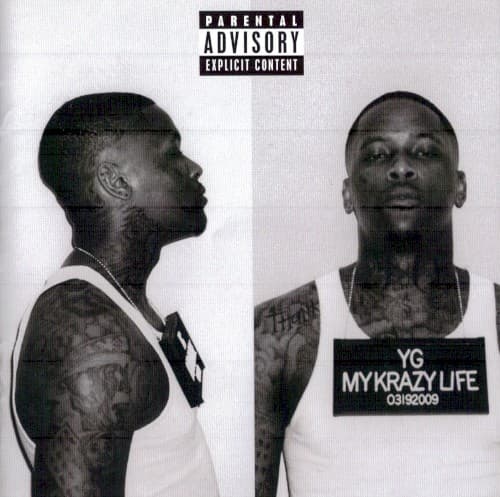
His 2014 debut album My Krazy Life delivered on that promise with surgical precision. Produced almost entirely by DJ Mustard, the album captured Compton's reality through a sonic lens that felt simultaneously nostalgic and futuristic. YG wasn't trying to recreate the G-funk era or chase East Coast respect. He was documenting his environment with journalistic clarity, street economics and survival instincts rendered in ratchet beats and tightly controlled storytelling. The album earned an 8.7 rating for its coherent vision and cultural specificity.
What separates YG from revivalist acts is his refusal to treat West Coast rap as museum piece. He understands the lineage—Ice Cube's confrontational politics, Snoop Dogg's laid-back menace, The Game's emotional rawness—but filters it through contemporary Compton. His music sounds like now, not then. That temporal honesty, combined with street credibility that never reads as performance, established him as Compton's most important voice since Kendrick Lamar took a more expansive artistic path.
Ratchet Minimalism: YG's Sonic Blueprint and Lyrical Approach
YG's sound is built on strategic reduction. Working primarily with DJ Mustard during his creative peak, he embraced a production aesthetic that stripped West Coast hip-hop down to its skeletal elements: snapping snares, minimalist synth lines, spare basslines that hit like body shots. Mustard's "ratchet" sound—named for its raw, unpolished energy—became YG's signature canvas. Where G-funk layered Parliament samples and melodic synths, this approach favored space and rhythm. The production creates room for YG's voice to operate as both narrator and participant, delivering lines with a conversational directness that makes listeners feel like passengers in his passenger seat.
His flow prioritizes clarity over complexity. YG doesn't rely on technical pyrotechnics or rapid-fire delivery. Instead, he uses measured pacing, strategic repetition, and rhythmic emphasis that makes every word land with intent. Phrases become hooks through sheer force of delivery rather than melodic embellishment. When he repeats "I'm a gangbanger, that's what I do" on My Krazy Life's opening track, it's not braggadocio—it's statement of fact, delivered with the weight of someone who understands the consequences.
Lyrically, YG operates as a street documentarian. His verses catalog the economic realities of his environment: robbery as employment, gang affiliation as family structure, violence as business dispute resolution. But he's not glorifying or moralizing. His tone is matter-of-fact, almost ethnographic. He'll detail a house party on one track and a robbery on the next with the same narrative distance, letting context create meaning. This approach gives his music an uncomfortable honesty that separates it from performative gangster rap. You're not watching a movie. You're hearing testimony.
Cultural Impact: YG's Role in West Coast Hip-Hop's Modern Identity
YG's significance extends beyond his discography. He's part of a small cohort of artists—alongside Kendrick Lamar, Vince Staples, and the late Nipsey Hussle—who redefined West Coast hip-hop for the 2010s without relying on nostalgia. While Kendrick took the artistic high road and Vince pursued experimental intellectualism, YG held down the street perspective with uncompromising focus. His music provided a through-line from Ice Cube's confrontational realism to contemporary Compton, proving that gangsta rap could remain relevant without becoming parody or museum piece.
The DJ Mustard production partnership influenced an entire generation of West Coast producers and artists. That minimalist, rhythm-forward approach became the region's dominant sound for nearly half a decade, heard in everyone from Ty Dolla Sign to Schoolboy Q's more ratchet-leaning moments. YG demonstrated that West Coast hip-hop didn't need to sound like 1995 to feel authentically West Coast. The region could have a contemporary sound rooted in its own traditions rather than borrowed aesthetics from Atlanta or New York.
Beyond music, YG became a cultural figure representing Compton's ongoing realities. His visibility during the Black Lives Matter era, particularly through "FDT," showed street rappers engaging politically without abandoning their core identity. The track's viral success proved that explicit political messaging could coexist with gang affiliation and street credibility. YG's evolution from pure street documentation to politically conscious street documentation reflects hip-hop's broader maturation, where artists can hold multiple truths simultaneously without being accused of contradiction. His legacy is still being written, but his role in keeping West Coast hip-hop's street perspective vital and contemporary is already secure.