Style & Context
Influences
crime scene photography, warehouse catalogs, '70s Blaxploitation movie posters
Location
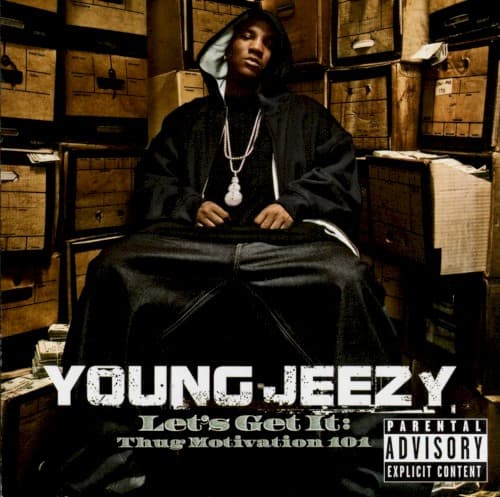
The storage facility setting could exist in any American city's industrial zone where trap economics operate.
Visual Language
The composition borrows from evidence documentation aesthetics, lending authenticity to Jeezy's street reporter persona.
Symbols
Stacked cardboard boxes
The surrounding walls of inventory visualize both product and the systematic organization required for street operations.
Seated throne position
Jeezy's centered, elevated posture claims kingship over the trap economy he's documenting throughout the album.
All-black clothing
The monochrome wardrobe signals both street camouflage and the somber reality behind motivational trap anthems.
Where Sound Meets Image
The storage room filled with boxes mirrors the album's obsessive inventory of trap life across tracks like 'Trap Star' and 'And Then What.' Jeezy's seated position reflects the album's dual nature as both hustler's manual and motivational tape for those trapped in the game. The stark lighting matches the album's cold, minimal production style that defined trap's sonic signature. Songs about moving weight find their visual equivalent in walls of packaged product, making the cover function as both album art and mission statement.
This cover established trap music's visual language of unvarnished street documentation that dominated hip-hop aesthetics for the next decade. The warehouse setting became shorthand for authenticity, spawned countless imitations, and proved album covers could tell complete narratives without typical rap signifiers like cars or jewelry. It influenced how street rappers positioned themselves as reporters rather than fantasists, prioritizing environmental truth over aspirational imagery.