Young Jeezy Thug Motivation 101 — The Trap Gave Birth to a Franchise
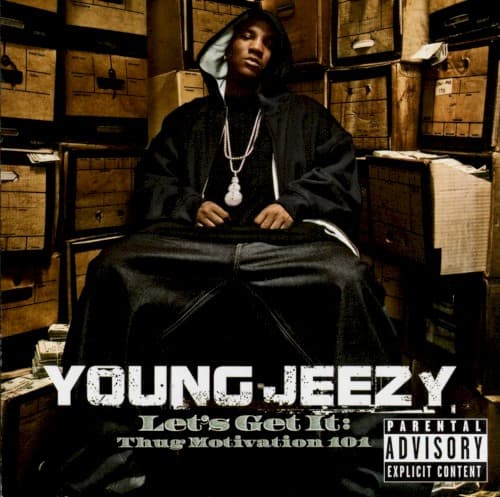
No debut in Southern rap history has ever moved this much product while being this honest about exactly what it was selling. Jeezy arrived with an advertisement for himself, his lifestyle, and his corner of Atlanta, and somehow the honesty made it mythical. The game had trap music before this album, but it didn't have a trap star who could package the grind like a corporate expansion plan. This is the sound of ambition wrapped in ice and served cold.
The Snowman voice became a logo. The ad-libs became a brand. The motivational speaker angle turned corner boys into entrepreneurs, and the album became required listening from college dorm rooms to county lockup.
It hit because it felt both aspirational and real, like Jeezy was narrating a documentary about his own come-up while it was still happening. Def Jam was betting on the South to reshape mainstream rap in the mid-2000s, and Jeezy delivered the blueprint with his eyes on the scoreboard. He wasn't trying to be the best rapper alive, and that's exactly why it worked.
Could anyone else have made trap music feel this widescreen without sounding like they were trying too hard?
The album doesn't beg for respect — it assumes you already know what time it is. It moves like someone who spent too many nights waiting for re-up calls to waste a single bar on cleverness that doesn't convert. Every hook is a mission statement. Every verse is a progress report.
Jeezy sounds like he's rapping to the people who are still out there, not the ones who made it out already.
The Voice That Turned Snowflakes Into Monuments
Jeezy's voice is the gravitational center of this album, and everything else orbits around that growl. It's coarse, impatient, and somehow motivational even when he's describing felonies. He doesn't have the technical wizardry of his Atlanta peers, but he has something more useful for this specific mission — conviction. Every syllable lands like he's closing a deal.
The production comes from Shawty Redd, Mannie Fresh, and Drumma Boy, among others, and they all understand the assignment. The beats are hard, minimal, and built for car stereos with aftermarket subs. Shawty Redd's work on multiple tracks establishes the sonic palette: synth stabs that sound like air raid warnings, drums that hit like industrial machinery, bass that vibrates through concrete. Mannie Fresh brings a slightly more polished touch, but even his contributions stay gritty.
The album sounds expensive and raw at the same time, like new money still smelling like old work.
Lyrically, Jeezy is a trap documentarian. He's not writing fiction, and he's not trying to impress backpackers. The subject matter is narrow — moving weight, dodging charges, counting money, motivating the block — but the focus makes it sharper. He frames the trap as a business, himself as the CEO, and the album as a shareholder meeting.
The repetition is intentional.
When you're building a brand, you hammer the message until it sticks. The album isn't flawless. Some tracks feel redundant, and a few hooks rely too heavily on the same formulas. The back half drags slightly, and there are moments where Jeezy's limited technical range becomes a ceiling.
But those flaws don't collapse the structure — they just mean the album is excellent instead of untouchable. What holds it together is the consistency of vision. Every song reinforces the same mythology, and by the end, you believe it. What more could you ask from a debut that was never trying to be anything other than what it is?
The Slow Burn That Never Stops Cooking
The album opens with a manifesto and never really lets you forget what you're listening to. It's front-loaded with anthems, and the first five tracks establish dominance before most albums even find their footing. The sequencing is smart — early momentum, mid-album consolidation, late stretch that coasts on the goodwill already banked. The pacing doesn't rush.
Jeezy knows how to let a beat breathe, how to build tension with repetition, how to make the hook feel inevitable. The first stretch is a victory lap that hasn't happened yet, pure confidence disguised as reporting. The middle section slows the tempo slightly, lets a few introspective moments creep in, but never loses the thread. Even the quieter tracks still sound like they're being played in a parking lot at 2 a.m.
The back half introduces a few more guests and a few more reflective moments, but the energy never fully dissipates. By the time you reach the closing tracks, the album has already made its case three times over. The sequencing works because Jeezy understands momentum better than most debut artists. He's not trying to show range — he's trying to build a monument.
One block at a time.
The Album That Made Trap Music a Religion
This is the best album Jeezy ever made, and it's not particularly close. Nothing in his discography has this kind of focus, this level of hunger, this much cultural weight. He's made solid projects since, but he's spent two decades trying to recapture what came naturally here.
The album works for anyone who wants to hear trap music at its most unapologetic, anyone who grew up in the South during the 2000s, anyone who believes motivation can come from the gutter. It's not for listeners who need lyrical acrobatics or conceptual depth. Jeezy is a one-lane artist on this album, and if you don't like that lane, you won't enjoy the ride. But if you meet him where he is, it's one of the most complete trap albums ever made.
The album has aged well. It still sounds current because every trap artist since has borrowed from this template. The influence runs through Future, through Gucci, through the entire Atlanta pipeline that followed. Essential tracks include the opening run, the Akon collaboration, and anything Shawty Redd touched.
If you like this, try Gucci Mane's Trap House, T.I.'s Trap Muzik, or Clipse's Hell Hath No Fury. The long-term influence is plain — this is the album that proved trap music could sell millions without compromising its regional identity. Jeezy turned the trap into a franchise, and every album since is a regional branch. The Snowman melted, but the blueprint stayed frozen.
Track Listing
Thug Motivation 101
▲The album opens with a mission statement so direct it doubles as a thesis. Jeezy's voice enters over a menacing Shawty Redd beat, all synth stabs and bass that sounds like it's coming from underneath the concrete. He's not rapping — he's preaching. The hook is simple, repetitive, and effective, designed to be chanted in crowds. The production is sparse, leaving space for Jeezy's voice to dominate. It's a perfect introduction because it sets the tone without showing off. No guests, no gimmicks, just a man explaining exactly what you're about to hear for the next hour. The track works because it sounds like Jeezy believes every word, and belief is contagious.
Standing Ovation
▲Shawty Redd returns with another trunk-rattling beat, slightly more uptempo than the opener. Jeezy sounds hungrier here, barking through verses about moving weight and earning respect the hard way. The hook is built for arenas, even though the subject matter is built for back alleys. The production is clean but aggressive, with hi-hats that snap and bass that punches. It's one of the album's most quotable tracks, packed with one-liners that became hood mantras. The sequencing is smart — this is the victory lap before the fight is over, and it works because Jeezy never sounds like he's joking.
Gangsta Music
▲The tempo slows down, and the tone shifts toward something darker. Drumma Boy's production is more atmospheric here, with eerie synth lines and a bassline that feels like a slow march. Jeezy's delivery matches the mood — less celebratory, more menacing. The hook is minimalist, just a repeated phrase that drills into your head. The verses are packed with vivid imagery, street-level detail that feels like firsthand reporting. It's one of the album's most cinematic moments, and it works because Jeezy understands how to match his voice to the production. The track doesn't need a big hook or a catchy melody — it just needs to sound dangerous, and it does.
Let's Get It / Sky's the Limit
▲The title track arrives with a celebratory energy, built on a soaring synth loop and drums that hit like a marching band. Jeezy sounds triumphant here, rapping about success like it's already guaranteed. The hook is anthemic, designed for crowds and car stereos. The production is slightly more polished than the earlier tracks, but it still sounds raw enough to fit the aesthetic. The verses are packed with motivational bars, the kind that get quoted in Instagram captions and gym playlists. It's one of the album's most accessible tracks, a crossover moment that doesn't feel like a compromise. The energy is infectious, and Jeezy sells it with the kind of confidence that only comes from someone who's already made it out.
And Then What
▲Mannie Fresh takes over production duties, and the sound shifts toward something more playful without losing the edge. The beat bounces, the bass knocks, and Jeezy rides it with a flow that's looser than usual. The hook is simple and effective, built on call-and-response energy. Mannie's influence is obvious — this sounds like something that could've appeared on a Cash Money album, but Jeezy's voice keeps it grounded in Atlanta. The verses are less focused on storytelling and more focused on flex, but the track works because the production is so infectious. It's one of the album's most fun moments, a brief respite from the darkness without breaking the mood entirely.
Go Crazy
●Lil Jon and Jeezy finally connect on wax, and the result is exactly what you'd expect — crunk energy meets trap grit. The beat is chaotic, built on stabbing synths and drums that sound like they're collapsing on themselves. Jeezy matches the energy with a more aggressive flow, barking through verses about moving recklessly. The hook is designed for clubs, and it works in that context, but it's one of the album's more disposable moments. The track feels like a concession to radio and club DJs, and while it's effective, it doesn't have the depth of the album's best moments. Still, it's hard to deny the energy, and Jeezy commits fully.
Last of a Dying Breed
▲The album slows down again, and Jeezy gets slightly more introspective. The production is somber, with minor-key synths and a bassline that feels heavy. He's rapping about survival, about outlasting the competition, about being the last man standing. The hook is haunting, and the verses are packed with vivid detail about the cost of the lifestyle he's been celebrating. It's one of the album's most emotionally resonant tracks, a moment of vulnerability that feels earned. Jeezy doesn't apologize, but he acknowledges the toll, and that honesty makes the track hit harder.
My Hood
▲A regional anthem that feels like a love letter to Macon, Georgia, and the broader Southern trap ecosystem. The production is mid-tempo, built on rolling synths and crisp drums. Jeezy's rapping about home, about loyalty, about the people who were there before the fame. The hook is simple and effective, designed to be shouted in unison. The verses are filled with local references and street-level detail that won't mean much to outsiders but will resonate deeply with anyone who grew up in similar environments. It's a moment of grounding, a reminder that all the success and all the motivation come from a specific place with specific people. The track works because Jeezy never loses sight of where he started.
Bottom of the Map
●A posse cut that feels like a Southern hip-hop summit. The production is simple and hard-hitting, giving space for each guest to make their mark. Jeezy holds his own, but the track is more about regional solidarity than individual dominance. It's a celebration of the South's takeover of mainstream rap, and every verse reinforces that narrative. The hook is repetitive but effective, and the energy never dips. It's not one of the album's most essential tracks, but it serves its purpose — a reminder that Jeezy isn't operating in isolation, that he's part of a larger movement reshaping the culture.
Get Ya Mind Right
▲Shawty Redd returns with another menacing beat, and Jeezy uses it as a platform for more motivational trap talk. The hook is built around a simple command, and the verses are packed with instructions for how to think like a hustler. The production is sparse, leaving room for Jeezy's voice to dominate. It's one of the album's most focused tracks, a perfect distillation of the thug motivation concept. The track doesn't reinvent anything, but it doesn't need to — it just needs to hit hard, and it does. Jeezy sounds locked in, and the conviction in his voice makes every bar land.
Trap Star
▲One of the album's most essential tracks, built on a hypnotic Shawty Redd beat that sounds like a slow descent into the underworld. The synths are eerie, the bass is overwhelming, and Jeezy's voice cuts through like a saw blade. He's rapping about the trap with the kind of detail that only comes from experience — the waiting, the paranoia, the small victories, the constant threat. The hook is minimalist, just a repeated phrase that becomes a mantra. The verses are vivid and unflinching, painting a picture of a lifestyle that's equal parts hustle and survival. It's one of the album's darkest moments, and it's all the more powerful for it. Jeezy doesn't glorify or apologize — he just reports, and the honesty is devastating.
Bang
●The production here is slightly more experimental, with distorted synths and off-kilter drums that create a sense of unease. Jeezy's flow is more aggressive, almost frantic, matching the chaotic energy of the beat. The hook is abrasive, built on repetition and volume rather than melody. It's one of the album's more polarizing tracks — the production is harsh enough to turn some listeners off, but it's also one of the most sonically interesting moments. Jeezy sounds unhinged here, pushing his voice to the edge of his range. It's not a track that will get radio play, but it's a reminder that the album isn't trying to please everyone.
Don't Get Caught
▲A cautionary tale wrapped in a mid-tempo banger. The production is cleaner than some of the earlier tracks, with a more polished sound that suggests this was aimed at radio. Jeezy's rapping about the consequences of the lifestyle he's been celebrating, warning against sloppiness and disloyalty. The hook is effective, built on a simple warning that lands with weight. The verses are packed with practical advice, the kind of street wisdom that feels earned rather than performed. It's one of the album's more balanced tracks, acknowledging the risks without undermining the mythology. Jeezy sounds like an older brother here, and the tone shift works.
Soul Survivor
▲The album's biggest crossover moment, built on an Akon hook that's impossible to forget. The production is glossy by the album's standards, with a soaring synth melody and drums that hit cleanly. Jeezy's verses are more polished here, focused on triumph rather than struggle. The hook is massive, designed for arenas and award shows, and it works perfectly. Akon's voice adds a layer of melodic accessibility that the rest of the album mostly avoids, and the contrast makes the track stand out. It's the song that introduced Jeezy to a wider audience, and it's easy to see why — it's anthemic, emotional, and impossible to ignore. The track doesn't feel like a compromise because Jeezy's voice is still front and center, still unmistakably trap even when the production is reaching for pop appeal.
Trap or Die
▲The title says everything. This is Jeezy at his most unapologetic, rapping over a menacing Drumma Boy beat that sounds like a heart monitor in a hospital for hustlers. The hook is blunt, the verses are vivid, and the energy is relentless. He's not offering alternatives or escape routes — this is a manifesto for people who are already in too deep. The production is sparse, just enough to support Jeezy's voice without overwhelming it. It's one of the album's most essential tracks, a perfect encapsulation of the thug motivation philosophy. The track doesn't waste time on nuance — it just hits you over the head with the central thesis and dares you to argue.
Tear It Up
▼Filler. The production is generic, and Jeezy sounds like he's going through the motions. The hook is forgettable, and the verses don't offer anything that hasn't already been said better earlier on the album. It's not offensively bad, but it's the kind of track that gets skipped after the first few listens. The album would've been stronger without it.
That's How Ya Feel
▼Another mid-album sag. The production is decent, but the track lacks the urgency and focus of the album's best moments. Jeezy sounds tired here, like he's running out of ways to say the same things. The hook is weak, and the verses meander. It's not a disaster, but it's the kind of track that makes you check how many songs are left. The album's length starts to show here, and this track doesn't help.
Talk to Em
●A slight rebound. The production is stronger here, with a more dynamic beat that gives Jeezy something to work with. He sounds more engaged, more focused, like he's found a second wind. The hook is simple but effective, and the verses have more bite than the previous few tracks. It's not one of the album's highlights, but it's solid enough to keep the momentum from completely collapsing. Jeezy's charisma carries it across the finish line.
Air Forces
●The album closes with a lighter touch, a track about sneakers that feels almost whimsical compared to everything that came before. The production is playful, built on a bouncy beat that sounds like it was designed for summer cookouts. Jeezy's rapping about Nike Air Force 1s, and the verses are packed with humor and regional pride. It's a strange way to end an album this intense, but it works as a palate cleanser. The track doesn't pretend to be more than it is — it's just a fun, goofy moment that reminds you Jeezy can do more than bark about bricks. The album ends on a surprisingly light note, and the tonal shift is welcome after seventy minutes of unrelenting trap theology.