From Atlanta Streets to Trap Music Blueprint: Jeezy's Defining Voice
When Jeezy emerged from Atlanta's Bowen Homes housing projects in the mid-2000s, he didn't just bring street narratives to mainstream hip-hop — he crystallized an entire sonic movement. Born Jay Wayne Jenkins in 1977, the artist who would become synonymous with the Snowman persona transformed trap music from regional curiosity into commercial juggernaut, creating a template that dozens of artists would follow for the next two decades.
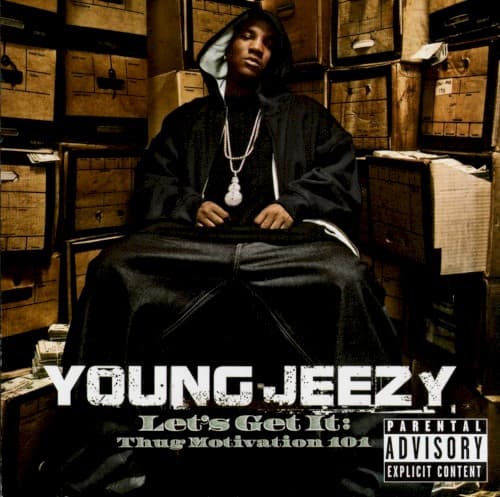
His 2005 major-label debut Let's Get It: Thug Motivation 101 arrived at a pivotal moment when Southern hip-hop was claiming dominance from coastal centers of power. Jeezy's gravelly delivery and motivational street anthems resonated far beyond Atlanta, speaking to hustlers, strivers, and anyone navigating America's economic margins. The album's impact was immediate and undeniable — it debuted at number two on the Billboard 200 and established Jeezy as trap's most visible ambassador.
What separated Jeezy from countless other street rappers was his ability to frame struggle as inspiration rather than resignation. His music acknowledged the grind's harsh realities while maintaining an almost spiritual belief in upward mobility. That duality — gritty authenticity paired with aspirational energy — became his signature, influencing everyone from Future to Young Thug while cementing his position as one of Atlanta's most important cultural exports.
Snowman Aesthetics: Minimalist Beats and Maximum Impact
Jeezy's sonic identity rests on stark minimalism. Where many rappers chase sonic density, he built his career on space — cavernous 808s, skeletal synth patterns, and trap hi-hats that rattle like distant machine-gun fire. This approach, pioneered through collaborations with producers like Shawty Redd and Drumma Boy, created an atmosphere of tense anticipation. The beats don't compete with Jeezy's voice; they frame it, providing just enough rhythmic foundation for his trademark ad-libs and battle-tested maxims to land with full force.
Vocally, Jeezy's instrument is immediately recognizable — a raspy, weathered bark that sounds like it's been aged in bourbon and exhaust fumes. He doesn't possess technical virtuosity or complex rhyme schemes. His flow is blunt, direct, almost conversational at times. But that apparent simplicity masks strategic brilliance. Every syllable carries weight. His delivery creates urgency even on slower tracks, and his ad-libs — the iconic "YEAHHH," the Snowman calls — function as punctuation marks that drive home the music's emotional core.
Production-wise, Jeezy gravitated toward collaborators who understood restraint. Shawty Redd's work on Thug Motivation 101 established the template: booming low-end, hypnotic melodic loops, and just enough negative space for Jeezy's presence to dominate. Later partnerships with Drumma Boy, The Runners, and eventually Kanye West showed his willingness to evolve while maintaining core elements. Even when working with high-profile producers, Jeezy's voice remained the focal point, never buried beneath ornate arrangements.
Building an Empire: Jeezy's Two-Decade Run from Trap Hustler to Elder Statesman
Jeezy's path to prominence began in Atlanta's underground during the early 2000s, initially recording under the name Lil J before adopting Young Jeezy. His breakthrough came with the independent release Thug Motivation 101 in 2005, distributed through Def Jam after his Corporate Thugz Entertainment imprint secured major-label backing. The album's lead single "Soul Survivor," featuring Akon, became inescapable that summer, but deeper cuts like "Trap or Die" and "And Then What" showcased his ability to balance radio appeal with street credibility.
The commercial success was staggering. Thug Motivation 101 moved over 170,000 copies in its first week and eventually achieved multi-platinum status. More importantly, it established Jeezy's persona: the motivational street philosopher, equally comfortable discussing cocaine distribution logistics and the psychological toll of poverty. Critics occasionally dismissed his work as repetitive or one-dimensional, but his core audience understood the nuance beneath the surface — these weren't just drug dealer chronicles but survival manuals wrapped in trunk-rattling production.
Jeezy maintained momentum through the late 2000s with The Inspiration (2006) and The Recession (2008), both commercial successes that refined rather than reinvented his formula. The Recession, released during America's economic collapse, felt particularly resonant — tracks like "My President" (featuring Nas) captured the optimism of Obama's election while acknowledging the material struggles his base audience faced daily. His ability to connect street narratives with broader American anxieties kept him relevant as the trap sound he helped popularize began fragmenting into countless subgenres.
The 2010s brought evolution and challenges. Jeezy dropped the "Young" from his name in 2014, signaling a maturation process reflected in albums like Seen It All: The Autobiography (2014), which featured introspective moments alongside his trademark motivational anthems. His willingness to address his own growth — acknowledging past mistakes, discussing therapy, wrestling with mortality — added depth to a catalog that skeptics had written off as one-note. Later projects like Church in These Streets (2015) and Pressure (2017) showed an artist grappling with relevance in a landscape he helped create but no longer dominated.
His collaborative relationships shaped his sound's evolution significantly. Beyond his core Atlanta production team, Jeezy worked with Jay-Z on "Go Crazy," appeared on Kanye West's "Amazing," and traded verses with T.I., Gucci Mane (despite their infamous rivalry), and Rick Ross. These partnerships demonstrated his adaptability — he could hold his own alongside polished East Coast lyricists or match energy with newer trap stars without compromising his identity. The 2020 Verzuz battle against Gucci Mane, which ended in reconciliation, became a cultural moment that transcended music, showcasing Jeezy's growth and willingness to publicly process old wounds.
The Snowman's Long Shadow: Jeezy's Indelible Mark on Hip-Hop's Sound and Ethos
Jeezy's influence on contemporary hip-hop cannot be overstated. He didn't invent trap music — pioneers like T.I. and Three 6 Mafia laid groundwork before him — but he popularized its aesthetic nationwide and established its thematic vocabulary. The motivational drug-dealer anthem, the "trap or die" mentality, the fusion of street struggle with aspirational imagery: these became trap music's core elements largely because Jeezy executed them so compellingly. Listen to Future's early work, Young Thug's ad-lib patterns, or 21 Savage's stoic delivery, and Jeezy's DNA is audible.
Beyond sonic influence, Jeezy represented a cultural shift in hip-hop's power dynamics. His success confirmed Atlanta's position as the genre's new creative center, paving the way for the city's total dominance in the 2010s and beyond. He proved that Southern artists didn't need coastal co-signs to achieve mainstream success, and that regional authenticity could translate into national commercial viability. His independent hustle mentality — building Corporate Thugz Entertainment before securing major-label distribution — became a blueprint for artist autonomy that younger generations continue following.
Jeezy's legacy also extends beyond music into cultural entrepreneurship and activism. His public evolution from street figure to business mogul to political advocate reflects hip-hop's broader maturation. When he discusses real estate investments, mental health awareness, or criminal justice reform, he speaks with the authority of someone who lived every narrative he once rapped about. That authenticity — never abandoned, only deepened — ensures his voice remains relevant even as trap music splinters into forms he might not recognize. The Snowman's blueprint endures because it was never just about sound; it was about survival, transformation, and the relentless pursuit of something better.