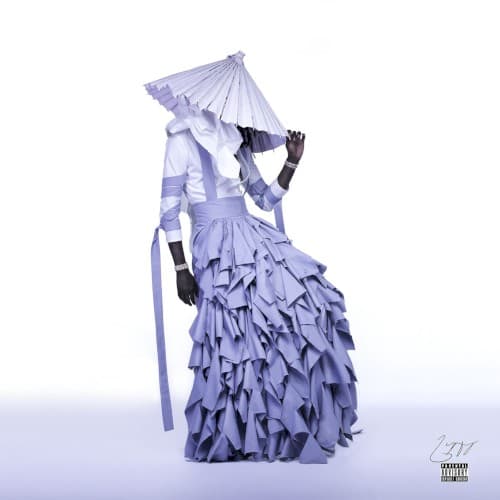
Style & Context
Influences
Alexander McQueen editorials, Japanese traditional dress, avant-garde fashion photography
Location
This wasn't Zone 6 streetwear but a deliberate provocation against Atlanta trap's hyper-masculine visual language.
Visual Language
The clinical white backdrop isolates the subject like a museum specimen, demanding examination without distraction.
Symbols
Concealed face beneath parasol
The hidden identity represents Thug's rejection of traditional rap persona construction and authenticity politics.
Ruffled gown tiers
Each cascading layer mirrors the vocal layering techniques that define Thug's melodic trap productions.
Black gloves on pale fabric
The stark contrast signals duality between street credibility and high fashion experimentation throughout his career.
Where Sound Meets Image
The gender-fluid imagery directly parallels Thug's vocal approach across JEFFERY's ten tracks, where he slides between singing and rapping, masculine and feminine vocal registers, aggression and vulnerability. Songs like 'Harambe' and 'Pick Up The Phone' showcase his range-shifting technique that mirrors the cover's boundary-crossing aesthetic. The dress's elaborate construction reflects the album's dense production layers, where Metro Boomin and London on da Track build ornate sonic backdrops for Thug's experimentalism. Just as viewers must look past the gown to see the artist, listeners must move beyond trap conventions to appreciate his melodic innovations.
This cover redefined acceptable hip-hop imagery for mainstream artists, proving controversial visuals could coexist with commercial success and critical respect. It paved the way for Lil Uzi Vert's gender-fluid fashion, Playboi Carti's punk aesthetics, and Young Thug's own continued experimentation. The image circulated widely on social media, generating debate that ultimately expanded hip-hop's visual vocabulary beyond the predictable luxury car and jewelry formulas.