The Album That Made Bulletproof Vests a Marketing Tool
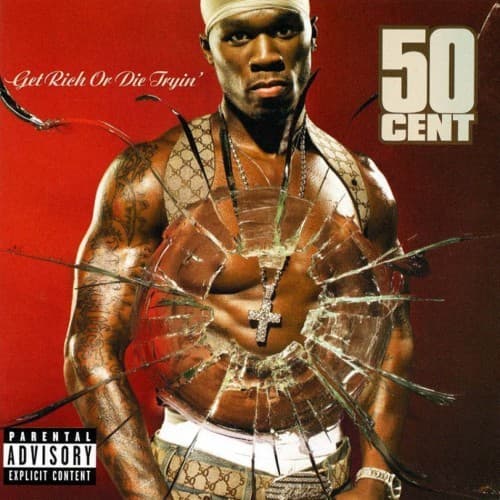
When Curtis Jackson walked into a New York recording studio in 2002, he carried more than ambition—he carried nine bullet wounds and a reputation that had already killed lesser careers. Get Rich or Die Tryin' arrived in February 2003 as the most anticipated rap debut since Eminem's own breakthrough, backed by Dr. Dre's production muscle and Eminem's credibility stamp at a moment when authenticity sold records and 50 Cent had authenticity to spare. The album moved 872,000 copies in its first week, announcing not just a new star but a shift in rap's center of gravity back toward New York street narratives wrapped in radio-ready hooks.
What separated this debut from the countless gangsta rap projects flooding early 2000s shelves was its refusal to choose between commercial appeal and street credibility. While peers struggled to balance club records with hardcore content, 50 Cent made that tension his brand identity—a hustler who survived assassination attempts now chasing Billboard dominance with the same focus he once applied to corner economics. Dr. Dre's West Coast production sensibility collided with 50's Queens drug dealer perspective, creating a sonic hybrid that felt simultaneously menacing and inevitable, dark and magnetic.
The album's release coincided with hip-hop's transition from the shiny suit era into something grittier yet more polished. Southern crunk was rising, ringtone rap was gestating, and New York needed a commercial victor who could compete nationally without abandoning the city's storytelling tradition. 50 Cent delivered exactly that—a project that satisfied street audiences hungry for authentic narratives while crafting hooks infectious enough to dominate suburban car stereos and frat house parties alike.
Street Narratives Meet Surgical Pop Construction
The production architecture here represents a masterclass in commercial accessibility without sonic compromise. Dr. Dre handles the board for key tracks, bringing his signature layered synth work and bottom-heavy drums that make every bassline feel physically imposing. On In da Club, the minimalist keyboard melody becomes hypnotic through repetition, while the drum pattern—simple to the point of skeletal—creates space for 50's conversational flow to command attention. Eminem's production on Patiently Waiting showcases darker, more claustrophobic energy, with murky strings and aggressive percussion that matches the track's confrontational lyrical content. The sonic palette across Get Rich or Die Tryin' favors restraint over excess, allowing 50's delivery to remain the constant focus rather than competing with overbuilt instrumentals.
Lyrically, 50 Cent operates within a narrow thematic range but executes with remarkable precision. His subject matter rarely strays from street economics, violence, romantic encounters, and the psychological toll of survival—but the specificity of his storytelling elevates familiar themes. On Many Men (Wish Death), he processes genuine trauma through vivid imagery, turning a near-death experience into meditative reflection over haunting piano chords. The hook's repetition—"Many men wish death upon me"—functions less as boast and more as psychological burden made audible. This willingness to expose vulnerability within hardcore narratives adds emotional weight that separates the album from purely aspirational gangsta rap.
The commercial instincts here are exceptional. 21 Questions introduces romantic vulnerability through R&B inflections courtesy of Nate Dogg, creating radio accessibility without feeling compromised. P.I.M.P. builds an instantly memorable hook around a single word, delivered with just enough melodic variation to lodge permanently in listener consciousness. 50's understanding of repetition as commercial tool—not artistic weakness—allows him to construct earworms that function equally well as club anthems and retail soundtrack material. His flow throughout the album favors conversational cadence over technical pyrotechnics, prioritizing clarity and quotability over complex rhyme schemes.
What gives the album lasting power beyond its commercial dominance is its embodiment of early 2000s hip-hop industry dynamics. This was the final moment when major label machinery, superstar producer involvement, and strategic artist development could still manufacture a phenomenon of this scale. Eminem's co-sign provided cultural permission for white suburban audiences to embrace 50's narratives, while the G-Unit affiliation offered street credibility and crew dynamics that felt authentic. The album captures hip-hop at a crossroads—still rooted in regional identity and lyrical storytelling, but increasingly engineered for cross-demographic appeal and maximum commercial impact.
The sequencing demonstrates unusual patience for a debut album. Rather than frontloading every potential single, the tracklist allows breathing room between high-energy moments. Heat and Blood Hound provide mid-album intensity without demanding radio consideration, while Gotta Make It to Heaven introduces introspective spiritual questioning near the project's conclusion. This dynamic range prevents listener fatigue across seventy-plus minutes, though the extended runtime does reveal occasional redundancy in lyrical themes as the album progresses into its final third.
The Tracks That Defined a Generation's Club Experience
In da Club remains one of hip-hop's most recognizable opening salvos—the keyboard riff alone triggers instant recognition two decades later. Dr. Dre's production strips everything nonessential, leaving only hypnotic melody, punchy drums, and 50's effortlessly quotable delivery. The track's genius lies in its simplicity; there are no complex metaphors, no technical showcases, just pure concentrated charisma packaged for maximum replay value. It became ubiquitous not through complexity but through undeniable effectiveness, the kind of song that sounds fresh on first listen and remains engaging after hundreds of plays.
Many Men (Wish Death) stands as the album's emotional centerpiece, where 50's street narratives gain psychological depth. The piano-driven production creates space for vulnerability rare in gangsta rap, and his delivery shifts from confident aggression to something closer to survivor's reflection. Lines examining the paranoia of constant threat feel genuine rather than performative, offering listeners access to the mental cost of the lifestyle he otherwise glamorizes. The track demonstrates that 50's greatest strength isn't technical skill but emotional authenticity within his limited thematic scope.
Patiently Waiting showcases the Eminem partnership at its most effective. Eminem's verse provides technical fireworks and multi-syllabic wordplay, while 50's more straightforward approach creates productive contrast. The dark, aggressive production suits both artists' energy, and the track functions as thesis statement for their creative chemistry—Eminem's technical genius complementing 50's street credibility and commercial instincts. Wanksta, originally released as mixtape material, earns its album inclusion through its dismissive hook and aggressive energy, becoming a cultural touchpoint for dismissing authenticity pretenders.
The Blueprint for Commercial Gangsta Rap's Last Golden Moment
Get Rich or Die Tryin' succeeds as both commercial phenomenon and artistic statement because 50 Cent understood something fundamental: authenticity and calculation aren't opposites. His willingness to craft radio-friendly hooks didn't diminish his street narratives; it amplified them, bringing genuine experiences to audiences who might never encounter them otherwise. The album's influence extended beyond sales figures into industry strategy—every major label spent the next half-decade searching for their own 50 Cent, a street artist who could deliver both credibility and crossover appeal with equal effectiveness.
The project's weaknesses emerge primarily in its extended runtime and occasional thematic repetition. By the time listeners reach the final tracks, 50's lyrical perspective has been thoroughly established, and additional variations on familiar themes offer diminishing returns. The inclusion of both original P.I.M.P. and its remix feels unnecessary, and certain mid-album tracks blur together upon repeated listens. A tighter fifteen-track version might have achieved even greater artistic impact, though commercial considerations likely demanded the expanded tracklist.
Twenty years later, Get Rich or Die Tryin' stands as a landmark in hip-hop's commercial evolution—the last debut album to achieve this level of cultural saturation through traditional industry mechanics before streaming fractured the monoculture. It proved that street narratives could dominate mainstream consciousness without artistic compromise, that gangsta rap still had commercial viability in the early 2000s, and that the right combination of artist charisma, superstar production, and strategic positioning could still manufacture a phenomenon. 50 Cent never quite recaptured this album's magic, but few artists ever achieve it once.
Track Listing
Intro
A cinematic opening that sets the album's tone through news report samples and atmospheric production. The track establishes 50's narrative as media event, positioning his survival story and street credibility before a single verse drops. It functions as theatrical curtain-raising rather than musical statement, priming listeners for the mythology that follows.
What Up Gangsta
An aggressive scene-setter that announces 50's arrival with confrontational energy and menacing production. The track establishes his vocal presence—conversational yet commanding—over stripped-down drums and sparse melody. It serves as thesis statement for the album's street perspective, prioritizing intimidation and territorial assertion over lyrical complexity or commercial accessibility.
Patiently Waiting
The Eminem collaboration showcases productive artistic tension between technical virtuosity and street directness. Eminem's verse delivers multi-syllabic wordplay and complex rhyme schemes, while 50's approach favors clarity and quotable aggression. The dark, claustrophobic production from Eminem creates urgency that suits both artists' confrontational energy, making this the album's most effective posse cut.
Many Men (Wish Death)
The album's emotional core, where 50 processes genuine trauma through vivid storytelling over haunting piano production. His delivery shifts from typical bravado toward something closer to psychological reflection, examining the paranoia and burden of surviving assassination attempts. The repetitive hook transforms from boast into mantra, revealing vulnerability rare in gangsta rap's typically invincible posturing.
In da Club
Dr. Dre's minimalist production genius creates one of hip-hop's most recognizable tracks through pure restraint. The hypnotic keyboard riff and skeletal drum pattern allow 50's conversational flow maximum prominence, while the instantly quotable hook demonstrates his understanding of repetition as commercial weapon. It became culturally ubiquitous through undeniable effectiveness rather than complexity, defining both the album and 50's career.
High All the Time
A Tony Yayo collaboration that explores drug use through celebratory rather than cautionary lens. The production favors atmospheric synths and mid-tempo groove, creating space for both artists' conversational delivery. While thematically familiar within hip-hop's substance-focused tradition, the track provides sonic variety within the album's broader aggressive energy, functioning as brief respite before returning to confrontational material.
Heat
An aggressive, no-compromises street track that refuses radio consideration in favor of pure intensity. The production emphasizes raw drums and menacing bass, while 50's delivery maintains unwavering hostile energy throughout. It demonstrates his willingness to balance commercial tracks with harder material aimed at core street audiences, preventing the album from feeling too calculated or crossover-focused despite its pop ambitions.
If I Can't
Built around the Pete Rodriguez sample that provides instant melodic familiarity, this track layers 50's threatening lyrics over unexpectedly bright instrumentation. The contrast between cheerful musical backdrop and violent lyrical content creates productive tension, while the simple hook demonstrates his talent for repetitive phrases that lodge in listener memory. It showcases his ability to transform recognizable samples into commercial gangsta rap without diluting either element.
Blood Hound
Young Buck's contribution adds crew dynamics and regional variation to the album's predominantly 50-centric perspective. The aggressive production and confrontational lyrics maintain the project's threatening energy while introducing different vocal texture. As a G-Unit showcase, it functions to establish the collective's presence and commercial viability, though it lacks the memorable hooks that define the album's strongest individual moments.
Back Down
A diss track maintaining the album's confrontational posture through specific targeting and aggressive delivery. The production favors hard-hitting drums and sparse melodic elements, keeping focus on 50's verbal attacks. While effective within its confrontational context, the track feels most relevant to hip-hop insiders familiar with the beef dynamics, offering less universal appeal than the project's more broadly accessible material.
P.I.M.P.
A masterclass in hook construction that transforms a single word into instantly memorable anthem through minimal melodic variation and strategic repetition. The production's understated funk groove and sparse instrumentation create pocket for 50's laid-back delivery, while the lifestyle braggadocio connects to hip-hop's aspirational tradition. It became a cultural phenomenon through pure simplicity, demonstrating that commercial impact requires memorability over complexity.
Like My Style
A track examining 50's appeal and magnetic personality through confident braggadocio over mid-tempo production. While thematically familiar—self-celebration is hip-hop's foundational subject—the execution maintains the album's conversational accessibility. It functions as brief interlude between higher-intensity moments, providing dynamic variation without demanding immediate attention or radio consideration.
Poor Lil Rich
A brief examination of wealth's complications and the psychological adjustment from street poverty to commercial success. The production remains relatively sparse, keeping focus on 50's lyrical perspective as he processes rapid financial transformation. While not among the album's most memorable tracks, it adds thematic depth by acknowledging that commercial success introduces new pressures rather than resolving all struggles.
21 Questions
The Nate Dogg collaboration introduces romantic vulnerability through R&B-influenced production and melodic sensibility. The track demonstrates 50's range beyond pure aggression, crafting radio-friendly material that showcases different emotional territory while maintaining his conversational delivery style. It proved crucial for demographic expansion, offering entry point for listeners resistant to harder material while avoiding the artistic compromise that might alienate core audiences.
Don't Push Me
An Eminem and Lloyd Banks collaboration that returns to confrontational energy after the softer 21 Questions. The production emphasizes darkness and tension, while three distinct vocal perspectives create dynamic variation. Eminem's contribution again provides technical complexity alongside 50's street directness and Banks's crew loyalty, making this an effective G-Unit showcase that balances individual talents without losing cohesive energy.
Gotta Make It to Heaven
A surprisingly introspective closer that introduces spiritual questioning rare in gangsta rap's typically secular worldview. The production incorporates gospel-influenced elements, while 50's lyrics examine mortality and consequences with unusual vulnerability. It provides thematic balance to the album's dominant materialism and violence, suggesting self-awareness about the lifestyle he otherwise celebrates throughout the project.
Wanksta
Originally released as mixtape material before the album's completion, this track earned inclusion through its dismissive hook and cultural resonance. The production emphasizes aggressive drums and confrontational energy, while 50's lyrics target authenticity pretenders with memorable phrasing. It became slang shorthand for fakeness, demonstrating his ability to coin terminology that transcended hip-hop into broader cultural vocabulary.
U Not Like Me
A late-album assertion of individuality and superior status through competitive braggadocio. The production maintains aggressive energy without introducing new sonic territory, while 50's delivery emphasizes the differences between himself and competitors. By this point in the tracklist, the thematic repetition becomes noticeable—this territory has been thoroughly covered—though the execution remains competent.
Life's on the Line
A intense examination of constant danger and survival psychology through detailed street narrative. The production creates menacing atmosphere through minor-key melodies and hard drums, while 50's lyrics provide specific rather than generic descriptions of violence and threat. It functions as thesis statement for the authenticity that differentiates him from studio gangsters, grounding his persona in documented reality.
P.I.M.P. (remix)
The Snoop Dogg, Lloyd Banks, and G-Unit remix extends the original's commercial success through West Coast credibility and crew showcase. While Snoop's laid-back delivery provides West Coast flavor and the additional verses maintain energy, the inclusion of both versions feels redundant within the album context. It serves commercial and political purposes—strengthening industry relationships and G-Unit's profile—more than artistic necessity.