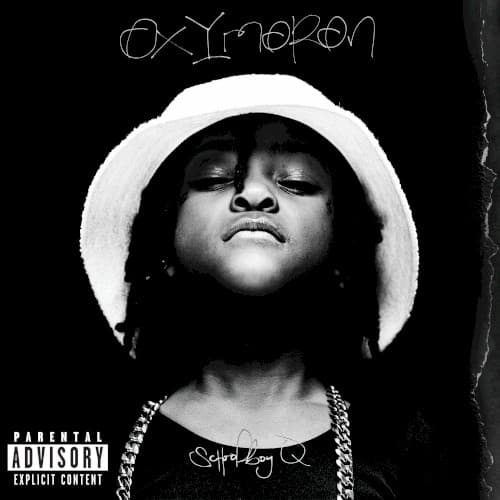
ScHoolboy Q Oxymoron — The Figg Side Finally Goes Mainstream
Remove the cocaine references from West Coast gangsta rap and the whole genre collapses. ScHoolboy Q understood this when he built Oxymoron around the pharmaceutical grade product that was flooding South Central in the early 2010s. The album title is not clever wordplay — it is the exact chemical reality of being a Black man in America who survived the crack epidemic only to watch prescription pills destroy the same streets all over again.
This is the album where Top Dawg Entertainment stopped being a regional phenomenon and became a commercial force. Kendrick had already broken through with good kid m.A.A.d city, but Q brought something different to the mainstream conversation. Where Kendrick was the conscious narrator, Q was the participant who refused to apologize.
The question Oxymoron poses is simple: can you make a platinum album about gang life without sanitizing the violence or romanticizing the trauma?
Q answered by delivering the hardest album TDE had released up to that point, then watched it debut at number one. Twelve tracks, fifty minutes, zero filler. The West Coast had not sounded this confident about its own darkness since DJ Quik was running Compton in the nineties.
This was not boom bap nostalgia or experimental abstraction. This was bucket hats and red flags and production that hit like a lowrider suspension bottoming out on Figueroa.
When Trap Beats Met Figg Side Reality
The production on Oxymoron sounds like South Central if South Central had moved to Atlanta for a year then came back home. Tyler, The Creator and THC handle the drugged-out minimalism. Nez & Rio bring the trunk rattle. Pharrell shows up to remind everyone he invented half the sounds these younger producers are borrowing.
The album refuses to commit to one sonic palette, which should feel scattered but instead captures the contradictions Q was living.
The 808s knock harder than anything West Coast rap had embraced in years. That southern influence is hard to argue with — Q was watching what Gucci and Future were doing with trap production and asking why California rappers were still trying to sound like 1995. But the album never sounds like regional cosplay.
The gang references are too specific, the geographic markers too precise. You cannot fake knowing what Hoover Street feels like at two in the morning.
Q's voice carries the entire project. The gravel in his delivery, the way he chops syllables mid-word, the ad-libs that sound like threats. He is not the most technical rapper in the TDE camp, but he might be the most intense. When he talks about moving weight or catching cases, it does not sound like performance.
It sounds like testimony.
The weakness is the feature selection. Some of the guest verses feel like label concessions rather than artistic choices. The album is strongest when Q is alone with the beat, letting his voice do the work without outside validation. And while the subject matter is uncompromising, the album occasionally leans too hard into shock value when understatement would cut deeper.
But these are minor complaints about an album that succeeds at being exactly what it set out to be — a gangsta rap record that refuses to wink at the camera?
Fifty Minutes of Controlled Chaos
The album opens with immediate confrontation and never lets the tension drop. The first stretch establishes Q as a narrator who will not soften his perspective for mainstream consumption. By the time the project reaches its middle section, the production has shifted from minimalist menace to something more experimental, more willing to let silence do the work.
The sequencing is deliberate. Party tracks placed next to confessionals. Threats followed by vulnerability. The album breathes in a way that most gangsta rap projects do not — it knows when to punch and when to pull back.
The pacing never drags. Even the slower tempo cuts maintain momentum through sheer tonal darkness.
The back half is where Oxymoron separates itself from the regional competition. Other West Coast albums from this era front-loaded their best material. Q saved some of his hardest performances for the closing stretch. The final run of tracks contains no weak moments, no obvious skips.
The album ends without resolution, which feels appropriate for a project about contradictions that cannot be reconciled.
What makes the sequencing work is the refusal to offer easy catharsis. There is no redemption arc, no moment where Q steps back and condemns the lifestyle he is documenting. The album trusts the listener to understand that presenting reality without moralizing is its own form of commentary. That confidence in the audience is rare in commercial hip-hop.
The Album That Proved TDE Could Do Blockbusters
This is the second-best album in ScHoolboy Q's catalog, just behind the rawness of Habits & Contradictions but ahead of everything that came after. It is the sound of an artist reaching mainstream success without compromising the regionalism that made him compelling. For fans who came up on West Coast mob music, this is essential. For listeners who think gangsta rap died in the nineties, this is the correction.
The album aged well because it never chased trends. The trap influence could have dated the production, but Q was smart enough to use those sounds as seasoning rather than foundation. A decade later, Oxymoron still sounds like South Central.
It still feels dangerous. It still refuses to apologize.
Who should avoid this: Anyone looking for conceptual complexity or lyrical acrobatics. Anyone uncomfortable with unfiltered gang content. This is not a thinking-man's rap album. It is a feeling-man's rap album, and the feeling is paranoia cut with adrenaline.
Standout tracks to start with: the opening statement sets the tone immediately, the Kendrick collaboration remains the catchiest entry point, and the closing anthem is still the most replayable song Q has ever recorded. For deeper cuts, the Mike Will Made-It production and the THC-produced confessional show Q's range.
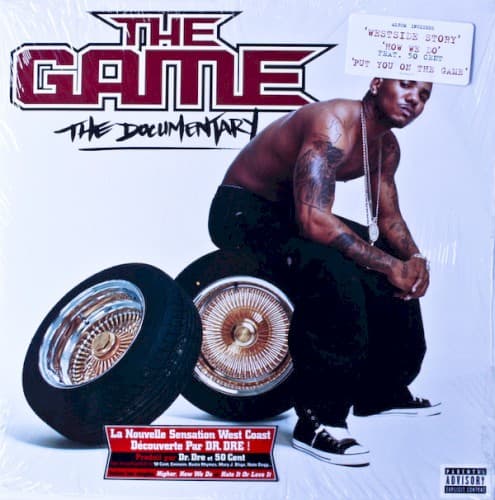
Similar albums: if you want more TDE darkness, check out Jay Rock's output from this era. If you want West Coast gangsta rap that balances violence with introspection, revisit The Game's first two albums. If you want to hear where Q took this sound next, Blank Face LP goes even harder but loses some of the replay value.
The long-term influence is still unfolding. Oxymoron proved that West Coast rappers did not need to abandon their regional identity to compete commercially. It showed TDE could deliver blockbuster albums beyond Kendrick. And it reminded the industry that gangsta rap still had an audience if you were willing to commit fully to the aesthetic.
This is the album that built the template for West Coast trap — a subgenre that would dominate Los Angeles rap for the rest of the decade.
Track Listing
Gangsta
▲Tyler, The Creator produces the opening shot and it sounds like panic attack minimalism. A pitched vocal loop, almost no drums for the first thirty seconds, then the bass drops and Q starts rapping like he has something to prove. The first verse is all geographic specificity — Figueroa references, Hoover Street callouts, the kind of hyper-local gang talk that only makes sense if you know the blocks. This is not a welcoming introduction. It is a warning label. The hook is barely a hook, just Q repeating the title over that drowning synth line. As an album opener it does exactly what it needs to do: establishes that this project will not code-switch for crossover appeal. The production is skeletal enough to let Q's voice do all the heavy lifting, and his delivery here is hungrier than anywhere else on the album. No wasted bars, no filler, just fifty seconds of pure confrontation before the beat even fully kicks in.
Los Awesome
●This is the victory lap placed too early in the tracklist. The Nez & Rio production is pure trunk rattle, 808s bouncing off the subwoofer with that syrupy West Coast swing. Jay Rock shows up for a verse that hits harder than the rest of the song, which is both a compliment to Rock and a slight against Q for getting outshined on his own album. The content is pure flexing — cars, women, drugs, the standard rap success metrics. It works as a palate cleanser after the darkness of the opener, but it is the most forgettable cut in the first half. The hook is catchy enough for radio play, which might have been the point. This sounds like a label decision, a song designed to prove Q could make party records. He can, but they are never his most interesting work. Still knocks in the car, which is the lowest bar a West Coast rap song can clear.
Collard Greens
▲The Kendrick Lamar collaboration that became the album's commercial peak and remains the most replayable song in Q's entire catalog. The THC production is a masterclass in negative space — a lazy synth line, minimal drums, and a bass line that sounds like it was recorded underwater. Q takes the first verse and immediately establishes the vibe: pharmaceutical talk, casual misogyny, the kind of content that should not work as a crossover hit but somehow did. Then Kendrick shows up and steals the entire song with a verse that is technically superior but never overshadows Q's vision. The chemistry between them is undeniable. They sound like actual friends, not label-mandated collaborators. The hook is deceptively simple, just the two of them trading the title phrase back and forth, but it lodges in your brain for weeks. This is the song that proved Q could make hits without sacrificing his aesthetic. A decade later it still sounds fresh, still gets played at functions, still holds up as one of the best TDE collaborations ever recorded.
What They Want
●2 Chainz shows up and does exactly what you expect him to do — punchlines about wealth, ad-libs that sound like dog barks, the full Atlanta showman routine. The production is harder than most 2 Chainz features get, though, which keeps the song from floating away into pure novelty. Q holds his own on the verses, matching 2 Chainz's energy without trying to out-flex him. The hook is repetitive in the way that works for strip clubs and nowhere else. This is a solid middle-of-the-album cut that benefits from low expectations. It will not change anyone's opinion of Q as an artist, but it serves its purpose as a tempo shift. The beat slaps hard enough to justify the feature budget.
Hoover Street
▲This is where the album gets uncomfortable in the best way. The production is ominous, a creeping synth line and drums that sound like footsteps in an empty parking garage. Q uses the entire track to detail gang life with documentary-level specificity. He names streets, describes violent incidents without glorification or condemnation, lets the content speak for itself. The second verse contains some of his most technically impressive rapping on the album — internal rhyme schemes that never sacrifice clarity for complexity. No hook, just three minutes of storytelling over a beat that never resolves its tension. This is the kind of song that reminds you Q is a better rapper than he gets credit for. The track works because it refuses to offer easy answers. There is no moral at the end, no moment where Q steps outside the narrative to condemn or celebrate. He just presents the reality and trusts the listener to process it.
Studio
▼The BJ the Chicago Kid feature is the worst creative decision on the album. The sung hook sounds like a bad R&B demo from 2009, all melisma and zero soul. The production tries for smoothness but lands on boring. Q's verses are fine — content about studio sessions and industry politics — but they are fighting against a hook that kills all momentum. This is the most skippable track in the project. It sounds like someone told Q he needed a radio-friendly R&B crossover and he delivered the bare minimum to satisfy the requirement. The beat lacks texture, the arrangement feels like a template, and the whole song evaporates from memory minutes after it ends. Even Q sounds bored on his own track.
Prescription / Oxymoron
▲The two-part title track that serves as the album's thematic centerpiece. The first half is produced by Swiff D and sounds like codeine in audio form — slow, thick, menacing. Q uses the space to detail drug dealing with clinical precision, no romanticism, just the transactional reality of moving pills in a city still recovering from the crack era. Then the beat switches for the second half and Sounwave brings in a completely different energy — faster tempo, brighter synths, the same content delivered with different urgency. The duality is the point. The track is called Oxymoron because Q is rapping about contradictions he cannot reconcile: the money versus the consequences, the loyalty versus the violence, the survival versus the cost. This is the moment where the album title stops being a pun and becomes a mission statement. Some of Q's most introspective writing lives here, buried inside a track that most casual listeners probably skipped. That is the paradox of Oxymoron — its best moments are also its most challenging.
The Purge
▲Mike Will Made-It and Tyler, The Creator co-produce a track that sounds like a horror movie soundtrack if horror movies took place in South Central. The bass is oppressive, the synths sound like sirens, and Q raps like he is trying to out-violence the beat. Tyler contributes a verse that matches the energy without trying to steal the spotlight. The content is pure aggression — threats, gang politics, the kind of material that reminds you this is a gangsta rap album first and everything else second. The hook is minimal, just Q repeating a two-word phrase over and over until it stops sounding like language and starts sounding like ritual. This is the hardest song on the album, the one designed to remind listeners that Q has not gone soft just because he signed to Interscope. It works. The track is exhausting in the best way, three and a half minutes of unrelenting darkness with no comic relief and no apologies.
Blind Threats
▲Raekwon shows up for a feature that feels like a co-sign from the previous generation. The production is the most overtly East Coast moment on the album — grimy drums, a soul sample that sounds like it was lifted from a Wu-Tang B-side. Q and Rae trade verses and the chemistry is surprisingly strong. Rae does not phone it in, and Q rises to the challenge of sharing a track with a legend. The content is standard mafioso talk — money, power, respect — but both rappers deliver it with enough conviction to avoid cliché. The hook is sung by some uncredited voice and it is the weakest part of the track, but the verses carry enough weight to compensate. This is a solid album cut that serves as a bridge between West Coast and East Coast aesthetics without betraying either region.
Hell of a Night
▲The party record that actually works. The production is bright, almost cheerful, with a synth line that sounds like a carousel. Q raps about exactly what the title promises — a night of excess, women, drugs, all the standard rap hedonism. But the delivery saves it from feeling generic. Q sounds like he is genuinely having fun, which is rare on an album this dark. The hook is infectious, the kind of thing that gets stuck in your head against your will. This is the song designed for summer playlists and late-night drives, and it succeeds at that modest goal. Not every song needs to be a statement. Sometimes you just need three minutes of uncomplicated enjoyment, and Hell of a Night delivers exactly that.
Break the Bank
▲Alchemist produces a beat that sounds like minimalist menace. Just a piano loop, some scattered percussion, and bass that drops so hard it makes your speakers rattle. Q uses the instrumental to deliver one of his most technically impressive performances on the album. The flow switches multiple times per verse, the rhyme schemes are dense without being showy, and the content balances drug talk with introspection. This is Q at his most focused, no wasted words, every bar serving a purpose. The hook is barely a hook, just Q repeating a phrase with different inflection each time. The track benefits from having no features, no distractions, just Q and one of the best producers in hip-hop history locked in for three and a half minutes. This is the kind of song that reminds you Q is a legitimate rapper, not just a personality with good beat selection.
Man of the Year
▲The Nez & Rio production on the closer is triumphant in a way that feels earned rather than manufactured. Horns that sound like a victory march, drums that punch without overwhelming, and a tempo that keeps the energy high without tipping into aggression. Q delivers his most confident performance on the album, rapping about success without the paranoia that colors most of the project. The hook is anthemic, the kind of thing designed for arenas and festival stages. This is the song that proved Q could close an album without descending into darkness or cheap sentimentality. It sounds like a celebration without ignoring the violence and trauma that got him here. The track has aged into the most iconic moment in Q's career, the song casual fans know even if they have never heard the full album. As a closer it works perfectly — it provides resolution without betraying the tone of everything that came before. You finish Oxymoron feeling like you survived something, and Man of the Year is the exhale.