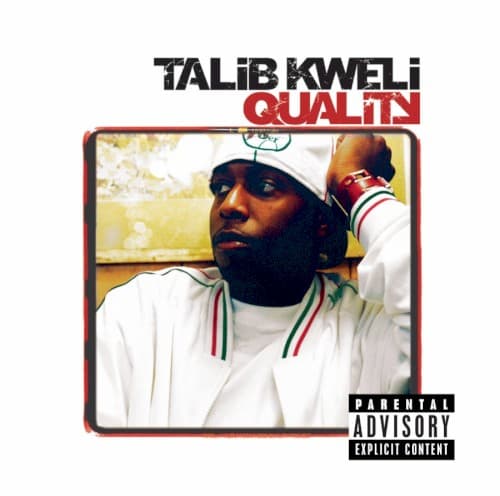
Talib Kweli Quality — The Blueprint for Surviving the Backpack Rap Collapse
Every best-album list from the early 2000s starts the same fight: does this belong in the conversation with the era's commercial giants, or does underground credibility hold it back? Quality arrived when the bubble was already bursting. Rawkus Records, the independent powerhouse that helped birth conscious rap's commercial moment, was hemorrhaging money.
The audience that embraced Black Star and championed lyrical substance on college radio was splintering. Hip-hop's center of gravity had shifted south. Crunk ruled the clubs, and the boom-bap purists who built the underground were losing the culture war they thought they'd already won.
Kweli understood what many of his peers refused to accept: survival required evolution without surrender. This album threads a needle most backpack rappers couldn't find with both hands. It honors the tradition — the jazz samples, the sociopolitical weight, the verbal gymnastics — while acknowledging that music this principled can still knock in a Honda Civic. You can hear the tension in the sequencing, the way street records sit next to introspective meditations, the way pop ambition coexists with underground purity.
He wasn't trying to crossover. He was trying to expand what conscious rap could sound like when it stopped apologizing for wanting to be heard. That's the editorial angle here: Quality represents the last moment when underground hip-hop believed it could compete commercially without compromising artistically.
The album that came closest to proving the believers right.
When the Underground Stopped Whispering to Itself
Quality sounds like the entire Rawkus roster poured their energy into one final statement. The production roster reads like a who's who of the underground's golden era: Hi-Tek anchors the sound with his signature soulful loops, while DJ Quik brings West Coast bounce, Kanye West contributes pre-College Dropout orchestral soul, and Ayatollah adds raw New York grit. The sonic palette refuses to settle into one lane. You get dusty breakbeats, lush strings, trunk-rattling bass, gospel choirs, and jazz piano — sometimes within the same three-track stretch.
Hi-Tek deserves particular credit for understanding that socially conscious rap doesn't have to sound like a college lecture. His production across the album is warm but weighty, accessible but never pandering. The drums hit hard enough for clubs while leaving space for Kweli's dense wordplay to breathe. When DJ Quik shows up, he imports a California smoothness that never felt native to New York underground rap but somehow fits here, creating bridges between coasts that acts like The Roots were also exploring during this era.
Kweli's flow is technically impeccable but occasionally too perfect. Every syllable lands where it should, every internal rhyme scheme clicks into place, every metaphor carries three layers of meaning.
Which is both the album's greatest strength and its occasional weakness. There are moments where the writing feels more like an exhibition of skill than genuine emotional release. When he loosens up — when he lets the joy or anger spill out unfiltered — the album elevates beyond technical mastery into something that actually moves you.
Lyrically, he's navigating the same territory he's always occupied: systemic oppression, romantic complexity, artistic integrity, community responsibility. The themes feel earned, not performed. He's writing from lived experience in gentrifying Brooklyn, from watching the music industry chew up and spit out artists who refuse to play the game. The political content never becomes didactic because it's embedded in personal narrative.
But here's the flaw: the album is too long.
Fifteen tracks dilutes the impact. Three or four cuts could disappear without diminishing the statement. The back half drags in places where tighter editing would've elevated the entire project. It's the classic underground rapper problem — trying to prove you can do everything, when sometimes doing less with more focus hits harder?
The Journey from Struggle Anthem to Self-Questioning
The opening stretch establishes the album's thesis in three movements. You get the mission statement, the lyrical flex, and then the crossover moment that actually crossed over. That sequencing is intentional — it says we're serious artists who can rap circles around your favorites, but we're also trying to reach people beyond the converted. The transition from underground credibility into broader appeal happens so smoothly you don't notice the shift until you're already there.
The middle section is where the album's emotional range opens up. Kweli moves from righteous anger to romantic vulnerability to cultural celebration, often within the same four-minute span. The production shifts match the emotional register.
When he's contemplating violence and systemic failure, the beats get darker, more claustrophobic. When he's celebrating Black joy or chasing romantic connection, the sound opens up into something approaching radio-friendly without ever fully compromising.
The back half is where the pacing falters. Too many similar tempos, too much thematic overlap. The album starts to feel like it's making the same points in slightly different ways. Which is a shame because buried in that closing run are some genuinely affecting moments — introspective tracks that find Kweli questioning his own certainties, dedications that honor the ancestors without making them feel like museum pieces.
But even when the momentum dips, the craftsmanship never does. Every verse is meticulously constructed, every hook serves a purpose, every feature adds something distinct. The sequencing may drag, but the individual songs rarely disappoint.
The Last Pure Shot Underground Hip-Hop Ever Took
In Kweli's discography, Quality sits near the peak. It's not quite Black Star — nothing he's done has matched that chemistry with Mos Def — but it's the strongest solo statement of his career. The album that proved he could carry a full-length without a partner, that his vision extended beyond boom-bap purism into something more expansive and ambitious.
This album is essential for anyone who cares about hip-hop's relationship with activism, for listeners who want substance without sacrificing sonics, for fans who believe rap can be both intellectually rigorous and emotionally resonant. It's not for casual listeners looking for easy hooks or mindless bangers. You have to meet Kweli halfway. But if you're willing to engage with the ideas and the wordplay, the rewards are substantial.
The album has aged remarkably well. The production choices that felt slightly left-of-center in 2002 now sound prescient. The socially conscious content that some critics dismissed as preachy now reads as prophetic given the next two decades of American politics.
The romantic vulnerability that felt like a risk for a conscious rapper now seems ahead of its time. Quality captured underground hip-hop at its creative and commercial peak — the moment right before the industry stopped believing these artists could sell records.
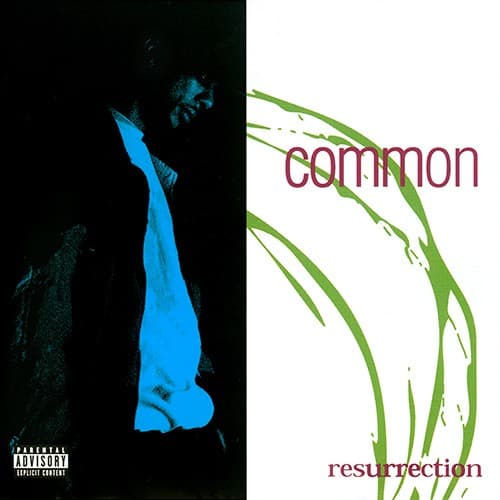
Essential tracks: Get By remains the defining anthem, but Rush and Shock Body highlight his technical abilities at their sharpest. For similar albums, check Blackalicious's Blazing Arrow, Common's Electric Circus, and Little Brother's The Listening — records that tried to expand conscious rap's sonic palette during the same era. Long-term influence: every rapper who's tried to balance artistic integrity with mainstream ambition has been walking the path Kweli mapped here. The album didn't change hip-hop's trajectory, but it proved that underground credibility and broad appeal didn't have to be mutually exclusive.
Quality is the album that almost changed the game.
Track Listing
Keynote Speaker
▲Kweli opens with a manifesto over a minimal, horn-driven loop that refuses to coddle the listener. He's declaring his intentions, establishing his credentials, and challenging anyone who thinks conscious rap can't compete with street records. The production is sparse but commanding — just enough bass to rattle the trunk, just enough melody to keep it soulful. His flow is sharp and combative, every line packed with internal rhymes and cultural references. It's a statement of purpose that says we're here to raise the bar, and if you can't keep up, that's your problem. Smart opener.
Rush
▲This is Kweli at peak technical execution. Hi-Tek builds a propulsive loop that sounds like a heartbeat accelerating, and Kweli matches the tempo with a flow that never breaks stride for three verses. The wordplay is virtuosic without being showy — he's threading needles between syllables while making social commentary about hip-hop's commercial pressures and artistic compromises. The hook is minimalist but effective. What makes this track stand out is the urgency. He sounds genuinely angry about the state of the culture, and that anger translates into kinetic energy. One of the album's best pure rap performances.
Get By
▲The crossover moment that actually crossed over, and it's easy to see why. Kanye's beat flips Nina Simone's "Sinnerman" into a jubilant, uplifting loop that feels like Sunday morning at a Black church. The genius is that Kweli doesn't water down his message to reach a broader audience — he's still rapping about economic struggle, systemic inequality, and the daily grind of working-class survival. But the production is so warm, so affirming, that the heaviness of the content never weighs the song down. The hook is anthemic without being corny. This became the song that introduced millions of people to conscious rap, and it still holds up because it never compromises. It's the rare political rap song that makes you feel hopeful instead of beaten down. Essential.
Shock Body
▲DJ Quik brings West Coast bounce to a Brooklyn rapper, and the culture clash works perfectly. The beat is funky and loose, with a bass line that forces movement, but Kweli's flow remains technically precise. He's flexing here — showing that he can ride any style of production without losing his identity. The track functions as a palate cleanser after the emotional weight of "Get By," reminding listeners that this album isn't all protest songs and heavy concepts. It's a vibe record, and it slaps. Not deep, just effective.
Gun Music
▲The darkest moment on the album, and Kweli doesn't flinch from the ugliness he's depicting. The production is sparse and menacing — just drums, bass, and a haunting string sample that sounds like a threat. He's detailing the cycle of violence that traps young men in neighborhoods where survival often requires carrying a weapon. No moralizing, no easy answers, just brutal honesty about what systemic neglect produces. The verses are uncomfortable to sit with because they refuse to offer redemption or escape. This is Kweli at his most unflinching, and it's one of the album's most powerful statements.
Waitin' for the DJ
▲A love letter to hip-hop itself, structured around the anticipation of hearing that one perfect song on the radio or at the club. The production is nostalgic and warm, with a sample that evokes the golden era of turntablism. Kweli sounds genuinely joyful here, which is a rare mode for him. He's celebrating the culture without the weight of political commentary, just pure appreciation for the music that shaped his life. The hook is simple and infectious. It's a necessary breather after the heaviness of "Gun Music," and it serves as a reminder that conscious rap can celebrate joy without losing credibility.
Joy
●Kweli explores romantic love with the same lyrical precision he brings to political commentary. The production is lush and soulful, with a sample that sounds like it was pulled from a 1970s slow jam. He's vulnerable here in ways that feel risky for a rapper who built his reputation on intellectual rigor. Talking about emotional intimacy, commitment, and the complexities of maintaining a relationship while navigating a career in music. The writing is strong, but the hook feels slightly underdeveloped. Still, the emotional honesty elevates this above typical rap love songs.
Talk to You (Lil Darlin')
●Another attempt at blending romance with hip-hop credibility. The production is smooth and jazzy, with a sample that feels like late-night conversation over wine. Kweli's trying to strike a balance between attraction and respect, between desire and emotional connection. The concept is solid, but the execution feels a little safe. The hook doesn't quite land with the impact it needs, and the verses, while well-written, don't reveal anything we haven't heard before. It's a decent track that suffers from being sandwiched between stronger material.
Guerrilla Monsoon Rap
●Kweli teams with Kool G Rap for a lyrical showcase that feels like a throwback to mid-90s New York street rap. The production is raw and aggressive, just drums and a looped horn stab. Both rappers are flexing technical skill, trading verses that prioritize wordplay and metaphor over narrative or emotional depth. It's impressive from a craft perspective, but it doesn't advance the album's thematic arc. Feels like Kweli proving he can hang with the legends, which is admirable but not particularly necessary at this point in his career.
Put It in the Air
●The mandatory weed song that every conscious rapper seems obligated to include. The production is hazy and laid-back, designed for smoking sessions. Kweli and his guests trade verses about marijuana as creative fuel, cultural connector, and simple pleasure. It's fun and loose, but it also feels out of place on an album that spent most of its runtime grappling with serious themes. The track doesn't offend, but it doesn't add much either.
The Proud
▲Kweli celebrates Blackness with unapologetic pride, delivering verses about cultural identity, historical resilience, and community strength. The production is grand and cinematic, with horns and strings that give the track an almost regal quality. He's at his most affirming here, rejecting the deficit narratives that dominate mainstream discussions of Black life and instead centering achievement, creativity, and survival. The energy is high, the message is clear, and the execution is strong. One of the album's most uplifting moments.
Where Do We Go (dedicated to Weldon Irvine)
▲A tribute to jazz pianist and composer Weldon Irvine, who took his own life in 2002. The track is somber and reflective, with Kweli grappling with loss, mental health, and the pressures that creative artists face. The production is mournful, built around a melancholy piano loop. Kweli's writing is sensitive and thoughtful, avoiding easy platitudes and instead sitting with the complexity of grief. It's one of the album's most emotionally raw moments, and the dedication feels earned rather than performative. Heavy but necessary.
Stand to the Side
●A posse cut that brings together underground rap talent for a lyrical exhibition. The production is sturdy but unremarkable, just a platform for the rappers to showcase their skills. The verses are solid, but the track suffers from a lack of thematic cohesion. Everyone's rapping well, but no one's saying anything particularly memorable. It feels like an obligatory inclusion, the kind of track that pads the runtime without advancing the album's vision.
Good to You
●Kweli returns to romantic themes with a track that tries to be both seductive and respectful. The production is smooth and inviting, with a sample that sounds like a quiet storm radio dedication. He's writing about desire and commitment, trying to present himself as a partner who values emotional connection as much as physical attraction. The sentiment is admirable, but the execution feels a little stiff. The verses are well-crafted but lack spontaneity, like he's writing a thesis on healthy relationships instead of expressing genuine emotion.
Won't You Stay
▼The album closes with Kweli pleading for a lover to remain, but the desperation feels forced. The production is gentle and unobtrusive, just keys and a slow drum pattern. His verses are technically proficient but emotionally distant — he's describing longing without making you feel it. After seventy-plus minutes of dense lyricism and heavy themes, the album needed either a triumphant closer or a genuinely vulnerable moment. This track offers neither, just a competent but forgettable fade-out. Weak ending to an otherwise strong album.