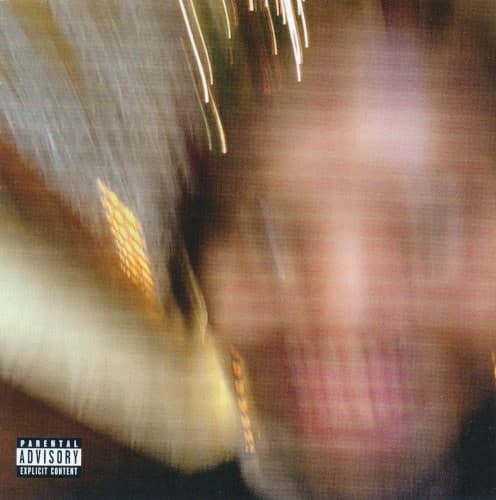
Earl Sweatshirt Some Rap Songs — The Sound of a Mind Folding In on Itself
Play the first three tracks back to back and try to name another album that hits that hard that fast. The disorientation is immediate and deliberate. Samples chop and stutter like damaged VHS tapes. Drums hit off-center.
Earl's voice sits low in the mix, almost buried, forcing you to lean in. This is not background music. This is not playlist fodder. This is twenty-four minutes of someone turning grief into texture.
Earl Sweatshirt returned from three years of near-silence with an album that sounds like it was recorded underwater. His father had died. His uncle Hugh Masekela, the South African jazz legend, had died months later. Some Rap Songs arrived not as a statement but as a document of processing loss in real time.
The album refuses to explain itself. It does not offer catharsis or closure. It offers only the sound of someone trying to breathe through concrete.
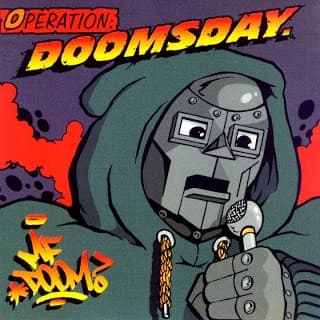
Where does this album sit in the lineage of grief records in hip-hop? Somewhere between the raw confessional weight of The Diary and the impressionistic fragmentation of Madvillainy. But Earl went further. He stripped away hooks, choruses, conventional song structure.
What remains is pure interiority. The production, handled almost entirely by Earl under various aliases, borrows from his mother's old jazz records and warps them into something unrecognizable. Hugh Masekela's horn melodies become ghosts. Samples never resolve.
Loops end mid-phrase. The album sounds like memory itself — fractured, looping, unreliable. This is the album that split Earl's fanbase in half. Some listeners heard a work of grief and abstraction.
Others heard an unfinished sketch collection. Both camps are right. Some Rap Songs is not an easy listen. It is not meant to be.
Grief Coded Into Static and Dust
The production on Some Rap Songs does not sound like anything else that dropped in 2018. While the rest of rap chased hard 808s and melodic trap beats, Earl locked himself in a room with a sampler and a crate of his mother's vinyl. The result is a sonic palette that feels like it was excavated from a basement flood. Samples are pitched down until they become unrecognizable.
Drums are compressed until they sound like they are hitting through a pillow. Earl produced nearly every track himself, often under the aliases randomblackdude and DJ Blackpower. The only outside producers are Navy Blue, MAVI, and Sage Elsesser, all close collaborators who understand Earl's vision of minimalism as emotional architecture.
The sample sources are deeply personal. Hugh Masekela appears throughout, his trumpet lines chopped and reversed until they become texture rather than melody. Earl's mother, a law professor and poet, provided spoken word that weaves through the album like a voice from another room.
The production philosophy is rooted in J Dilla's work on Donuts, but where Dilla's loops had warmth, Earl's have coldness. The beats feel incomplete on purpose. They do not resolve. They just stop.
Lyrically, Earl operates in fragments. He does not tell linear stories. He delivers images — his father's absence, his own depression, Los Angeles streets at night, the weight of expectations. His flow is conversational, almost mumbled, as if he is rapping to himself rather than to an audience.
Multisyllabic rhyme schemes appear and disappear without fanfare. Internal rhymes land so subtly you might miss them on first listen. When he raps about his father, he does not explain or contextualize. He just states facts in a monotone and moves on.
The vocal delivery is the most polarizing element. Earl buries his voice in the mix, refusing to project or perform. He sounds exhausted.
He sounds like someone who does not want to be heard but knows he has to speak anyway. There is no bravado here. No flex. No hooks designed to stick in your head.
This is anti-commercial rap, the kind of music that actively repels casual listeners, placing it alongside other abstract hip-hop records that prioritize vision over accessibility.
The album's biggest weakness is its inaccessibility. At twenty-four minutes, it is lean, but the density makes it feel longer. New listeners will bounce off this immediately. Even longtime Earl fans who loved his earlier work might struggle.
How do you make an album this abstract connect with an audience? The beats are too abstract, the vocals too buried, the structure too fragmented. Some Rap Songs demands patience and multiple listens to unlock. That is both its power and its flaw.
A Listening Experience That Refuses Momentum
The album does not build. It does not crescendo. It moves laterally, one heavy moment after another, refusing to give the listener a foothold.
The first stretch establishes the tone immediately — disorienting, claustrophobic, unrelenting. By the time the middle section arrives, the listener is either fully submerged or completely lost. There is no middle ground. The pacing is deliberate.
Earl designed this album to be consumed in one sitting, twenty-four minutes straight, no skips. Listening to individual tracks feels incomplete, like reading a single page torn from a diary.
The back half does not offer resolution. If anything, it doubles down. The emotional weight gets heavier. The production gets sparser.
The album ends abruptly, mid-thought, as if Earl simply ran out of words. That abruptness is the point. Grief does not resolve neatly. It just stops, or it loops, or it lingers.
Some Rap Songs mirrors that structure. The sequencing is not about peaks and valleys. It is about sustained pressure, track after track, until the silence at the end feels like a release.
What holds the album together is texture. The dusty samples, the muffled drums, the low vocal mix — these choices create a sonic cohesion that makes the album feel like a single unbroken thought. The flow between tracks is seamless. One song bleeds into the next without pause.
Earl uses the album format the way some producers use a mixtape, as a continuous sonic document rather than a collection of discrete songs. That approach rewards focused listening but punishes passive consumption. This is not background music. This is music that demands full attention or nothing at all.
The Album That Rewrote Earl's Blueprint
Some Rap Songs sits near the top of Earl Sweatshirt's discography, second only to I Don't Like Shit, I Don't Go Outside in terms of raw emotional impact. It is his most experimental work, his most personal, and his most divisive. This is not an album for new listeners.
If you have never heard Earl before, start with Doris. Come to Some Rap Songs only after you understand where he came from. But for longtime fans, this album is essential. It represents a complete reinvention of his sound and a blueprint for the wave of lo-fi, sample-based underground rap that followed.
The album has aged well. In 2018, it sounded alien. In 2025, it sounds prophetic. The lo-fi production style Earl pioneered here has been adopted by an entire generation of underground rappers.
Navy Blue, MAVI, Pink Siifu, and Maxo all trace their sound back to this record. Some Rap Songs proved that commercial viability and artistic integrity do not have to be in conversation. Earl made the album he needed to make, on his own terms, and the culture adjusted to meet him.
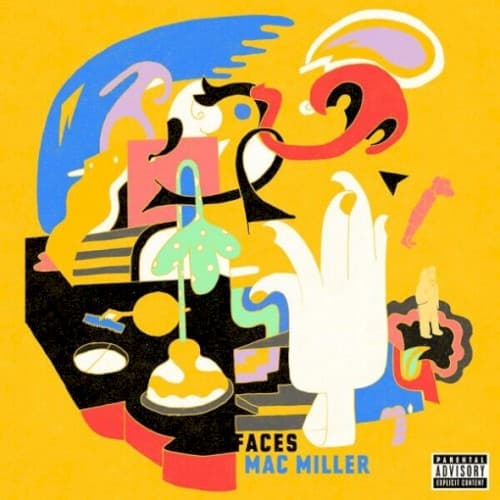
For discovery, the essential tracks are Nowhere2go and The Mint. If you connect with those, dive into the full project. Similar albums worth exploring include Armand Hammer's Paraffin, billy woods' Hiding Places, Mac Miller's Faces, and MIKE's tears of joy. All share Some Rap Songs' commitment to abstraction and emotional density.
Long-term, this album's influence will be felt for decades. It opened a door for a new kind of rap music, one that prioritizes interiority over performance, texture over melody, fragmentation over clarity.
Some Rap Songs is not an easy album to love. But once it clicks, it does not let go. It is the sound of someone refusing to perform grief for an audience, choosing instead to document it as honestly as possible. That honesty is what makes it unforgettable.
Track Listing
Shattered Dreams
▲The album opens with a sample that sounds like it is being played through a broken speaker. Earl's voice enters buried in the mix, almost inaudible, rapping about his father's death in fragments. The beat is skeletal — just a dusty loop and a kick drum that hits off-center. No hook. No build. Just Earl processing loss in real time. The production, handled by Earl himself, sets the template for the entire album: lo-fi, claustrophobic, unrelenting. This is not an invitation. This is a warning. The track ends abruptly after ninety seconds, cutting off mid-thought. That abruptness becomes the album's signature move.
Red Water
▲A Hugh Masekela trumpet sample warps and repeats as Earl raps about his uncle's death and his own depression. The flow is conversational, almost mumbled, as if he is talking to himself rather than performing. He paraphrases lines about feeling disconnected from his own body, about waking up and not recognizing the person in the mirror. The production is even sparser than the opener — just the horn loop and a faint kick. No snare. No hi-hats. The vocal delivery is flat, exhausted, the sound of someone too tired to project. This is the song that best encapsulates the album's approach to grief: no catharsis, no release, just documentation.
Cold Summers
▲The beat switches up slightly here, adding a chopped vocal sample that sounds like a choir recorded in a tunnel. Earl's flow tightens, packing more syllables into each bar without speeding up. He raps about Los Angeles summers, about feeling cold even in the heat, about carrying his father's absence everywhere. The internal rhyme scheme is dense but subtle — slant rhymes and assonance that never call attention to themselves. The production, credited to Earl under the alias randomblackdude, layers texture on texture until the beat feels like it is collapsing inward. The track ends with the sample glitching out, stuttering, then silence.
Nowhere2go
▲This was the lead single, the closest thing to a traditional rap song on the album. The beat has a recognizable structure — a repeating piano loop, a steady kick and snare, a bassline that actually moves. Earl's flow is more aggressive here, more projected, as if he is trying to convince himself he still knows how to perform. The hook is minimal but memorable: a single repeated phrase about having nowhere to run. The production is still lo-fi, still dusty, but slightly more accessible than the surrounding tracks. This is the song that proved Earl could still write a single without compromising his vision. It stands out not because it is better, but because it offers a brief moment of clarity in an album designed to disorient.
December 24
▲Earl's mother speaks. Her voice is calm, measured, reading a passage about loss and survival. No beat. No drums. Just her words and a faint ambient hum in the background. The track lasts barely a minute. It functions as a palate cleanser, a moment of stillness before the album dives back into density. Her presence throughout the album is crucial — she grounds Earl's abstraction in something tangible, something real. This interlude is not filler. It is the album's emotional center, the moment where the grief becomes generational.
Ontheway!
●Back to the beats. A chopped soul sample loops endlessly as Earl raps about forward motion, about trying to move past trauma without actually processing it. The flow is staccato, clipped, each line ending abruptly as if he is running out of breath. The exclamation point in the title is ironic — there is no energy here, no momentum, just the feeling of trudging forward because stopping would be worse. The production, handled by Earl and Sage Elsesser, adds subtle percussion that never quite locks into a groove. The track ends with the sample collapsing into static.
The Mint
▲Navy Blue's production on this track is the closest the album comes to traditional boom bap. A jazz sample loops cleanly, the drums hit on beat, and Earl sounds almost relaxed. He trades bars with Navy Blue, both of them rapping about survival, about making it through another day. The chemistry is natural — they sound like they are in the same room, passing the mic back and forth. Earl's verse is the most technically impressive on the album, packed with internal rhymes and multisyllabic patterns that land effortlessly. The hook is simple, almost a throwaway, but it sticks. This is the track that works as a standalone single, the one you can play for someone who has never heard Earl and they might actually get it.
The Bends
●The beat is a warped vocal sample and nothing else. No drums. No bassline. Just voices pitched down until they sound inhuman. Earl raps about pressure, about bending under the weight of expectations and grief. His delivery is the most monotone on the album, almost robotic, as if he has detached completely from the words he is saying. The lack of percussion makes the track feel unmoored, floating, like a dream sequence in a film. It lasts barely over a minute. Some listeners will hear this as experimental brilliance. Others will hear it as an unfinished idea. Both readings are valid.
Loosie
●A throwaway. The beat is a simple loop, the bars are offhand observations about daily life, and the whole thing feels like it was recorded in one take and left as is. Earl sounds almost bored, as if he is freestyling to pass time rather than crafting a song. The production is minimal even by this album's standards — just a sample and a faint kick. The track ends after ninety seconds. It does not add much to the album's narrative, but it does not hurt it either. It just exists, a loosie in the truest sense.
Azucar
▲MAVI's production here is warmer than anything else on the album. A soulful vocal sample loops over soft drums, creating a brief moment of lightness. Earl raps about his grandmother, about sugar, about small comforts in the middle of grief. His flow is looser, more melodic, almost sung in places. The title means sugar in Spanish, and the track functions as the album's sweetest moment — not happy, but tender. The production allows space for Earl's voice to breathe, lifting it slightly in the mix. This is the track that proves Earl can do warmth without sacrificing honesty. It ends too soon, fading out just as it finds its groove.
Eclipse
●Back to the claustrophobia. A dense sample loops as Earl raps about being overshadowed, about living in his father's legacy, about trying to step out from under the weight of expectations. The flow is rapid-fire, almost anxious, as if he is trying to get everything out before the beat stops. The production is chaotic — multiple samples layered on top of each other, drums that do not quite sync, bass that rumbles underneath without a clear pattern. It is the album's most overwhelming moment, the point where the density becomes almost unbearable. That is the intent. Earl is not making this easy.
Veins
▲A brief interlude. Earl's mother speaks again, her voice steady and calm, reading another passage about survival and legacy. No music. Just her words. The track lasts thirty seconds. It serves as a breather before the final stretch, a moment of clarity before the album closes. Her presence reminds the listener that this is not just Earl's grief — it is inherited, generational, passed down through bloodlines. The interlude is not dramatic. It does not need to be.
Playing Possum
▲The penultimate track. A chopped vocal sample repeats as Earl raps about pretending to be fine, about performing normalcy while falling apart internally. The flow is fragmented, lines cutting off mid-thought, as if he cannot finish a complete idea. The production is stripped down to almost nothing — just the sample and a faint kick. Earl's voice is the quietest it has been on the album, almost a whisper. The track functions as the album's emotional low point, the moment where the exhaustion becomes too heavy to carry. It ends without resolution, just stops.
Peanut
▲A memory. Earl raps about childhood, about his father, about small moments that feel enormous in hindsight. The beat is softer here, a gentle loop that does not demand attention. His flow is nostalgic without being sentimental, describing scenes without over-explaining them. The production allows space for the words to land. This is the closest the album comes to a traditional narrative track, and it works because Earl does not force it. He just describes what he remembers and lets the listener fill in the rest. The track fades out slowly, the sample decaying into silence.
Riot!
▲The album ends with chaos. A distorted sample loops as Earl delivers his final bars, rapping about upheaval, about burning everything down to start over. The production is the most aggressive on the album — drums that actually hit hard, bass that rattles, samples that clash and collide. Earl's flow is forceful, almost shouted, as if he is trying to break through the fog that has covered the entire album. The exclamation point in the title is earned. This is not a peaceful ending. This is a refusal to go quietly. The track cuts off abruptly, no fade, no resolution, just silence. That silence is louder than anything that came before it.