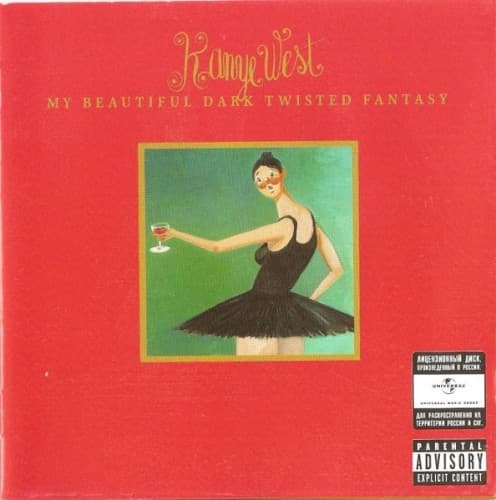
Kanye West My Beautiful Dark Twisted Fantasy — The Exile Album That Refused to Apologize
Remove this album from the timeline and half the rappers who dominated the next decade lose their blueprint. Nobody talks about the nine-month exile in Hawaii. Nobody mentions the thirty engineers cycling through studio sessions while Kanye played the same loop for six hours straight. The narrative always starts with the VMAs incident and ends with redemption, as if those twelve months of international humiliation were just setup for a comeback story. But this album is not an apology. It is forty-eight minutes of someone realizing that the entire world hating you unlocks a freedom most artists never access.
The industry wanted contrition. Radio expected singles designed to rebuild a shattered public image. Instead Kanye shipped an album where the first voice you hear is Nicki Minaj playing a fantasy girlfriend before the beat even drops. Where a song about his own character assassination features him rapping over strings that sound like a Broadway musical drowning in its own excess. The absence of commercial calculation is the point. When you have already lost everything that matters in pop culture, you stop designing songs for people who will never forgive you anyway.
This album arrived at the exact moment hip-hop was splitting into two futures. Drake was about to make vulnerability the new currency. Trap production was preparing to flatten every regional sound into 808 slides and hi-hat rolls. And here came Kanye with orchestras, prog-rock guitars, and King Crimson samples, building monuments when everyone else was learning to build memes. The gap between this album and what dominated radio in late 2010 was so wide it felt like a time traveler had landed with blueprints from a decade that had not happened yet.
Does an album this obsessed with its own creator's persecution complex deserve to be called one of the greatest rap albums ever made? That question misses the achievement. Kanye turned his exile into the organizing principle, let his worst impulses guide the sequencing, and somehow built something that sounds more ambitious now than it did thirteen years ago. This is not the best hip-hop album of the 2010s because it redeemed his career. It is the best because it refused redemption entirely.
The Sound of Burning Money on Purpose
The production philosophy is simple: if one choir sounds good, use three. If one guitar solo works, add two more. Rick Rubin was not involved yet, so nobody was around to tell Kanye that less might communicate more. Mike Dean spent months layering strings that appear for eight bars then vanish. RZA showed up to work on one track, listened to the sessions, and reportedly just shook his head at the excess. The album cost over three million dollars to make, and you hear every cent fighting for space in the mix.
The maximalism is not indulgence for its own sake. It is the sound of someone who knows the world is waiting for him to fail and decides to make that failure as expensive as possible. When the strings swell on certain songs, they do not complement the drums—they threaten to bury them. The orchestration is hostile. This is not boom bap. This is not trap. This is prog-rock's sense of scale applied to rap by someone who spent six months in Hawaii with an unlimited budget and no label executive brave enough to say no.
Lyrically, Kanye is at his most honest about being insufferable. He raps about being too famous to function, too hated to hide, too talented to ignore. The self-awareness does not make the narcissism easier to digest. It makes it worse, because he knows exactly what he sounds like and decides to be that person anyway. On some tracks he is genuinely funny about his own awfulness. On others he is just awful. The difference between those two modes is often a single bar.
The features function as confirmation that Kanye's Rolodex in 2010 was unmatched. Nicki Minaj delivers one of the best rap verses of her career. Jay-Z shows up for three minutes and sounds hungrier than he had in years. Rick Ross contributes a verse so effortlessly commanding it reframes an entire song. But the album's flaw is also its defining trait: it is exhausting by design. Some stretches feel like Kanye daring you to keep listening, testing whether you will stay for the victory lap or bail before the closing sermon. The pacing assumes you have the endurance to match his ambition. Not every listener does.
The Architecture of Emotional Collapse
The sequencing is a slow-motion spiral from fantasy into self-destruction, then back to defiance. The first stretch establishes grandeur through sheer accumulation—more voices, more instruments, more guests. The album does not start with a single; it starts with a mission statement backed by a children's choir. By the time you reach the middle section, the production has shed some of its decorative excess and the focus narrows to Kanye's actual rapping, which is sharper and more technical than his previous two albums allowed him to be.
The back half is where the album either earns its reputation or collapses under its own weight, depending on your tolerance for extended outros and comedic interludes that age like milk. One song stretches past nine minutes and spends two of them on a Chris Rock sketch that was barely funny in 2010. Another track ends with a spoken-word piece that feels like Kanye workshopping a TED Talk about consumerism while high. The pacing in this section is deliberate—it wants you to sit with discomfort, to experience the same emotional exhaustion Kanye is documenting. But deliberate does not always mean effective.
The closing run tries to rebuild some sense of hope, but the album is too smart to sell you a clean resolution. The emotional arc is not redemption. It is survival. The final moments do not offer answers. They offer a question about who makes it through the collapse and who gets left behind. The album ends the way it started: with Kanye convinced he is the most important person in his own story, and somehow making that solipsism sound like the only honest position left.
The Album That Made Egotism Sound Like Bravery
This sits at the top of Kanye West's artistic evolution, and the gap between this and everything else he made is measurable in ambition alone. The College Dropout had better cohesion. 808s and Heartbreak had more influence on the decade's sound. But no other Kanye album attempts this much and lands this often. The failures are loud and obvious—the skits, the endless outros, the moments where Kanye mistakes length for depth. But the highs are so undeniable that the flaws feel like part of the structure, not accidents.
Who should listen: fans of maximalist production, anyone interested in how rap can absorb orchestral scale without losing its center, listeners who want to hear an artist work at the absolute peak of his technical and creative powers. Who might not enjoy it: people who prefer albums that respect their time, anyone exhausted by Kanye's persona, listeners who think nine-minute songs with comedy skits are a war crime.
This album aged better than almost anything else from 2010 because it was already out of step with its own era. The production choices that seemed excessive then now sound like the last time a rap album was allowed to be this expensive and this uncompromising. The influence is everywhere—Frank Ocean's channel ORANGE takes cues from the song structures, Kendrick Lamar's good kid m.A.A.d city borrows the narrative ambition, Travis Scott's entire sonic palette is built on the maximalism Kanye normalized here.
Essential tracks: Dark Fantasy, Gorgeous, Devil in a New Dress, Runaway. For listeners exploring Kanye's catalog, the natural next step is 808s and Heartbreak to understand where the vulnerability came from, or Late Registration to hear Kanye when he still cared about making radio-friendly singles. Fans of the orchestral production should try Clipse's Hell Hath No Fury for Neptunes-era maximalism or Pusha T's Daytona for Mike Dean's later work.
This is what happens when an artist decides that public humiliation is just expensive fuel. Kanye spent three million dollars making an album that sounds like it cost ten, and somehow convinced the world that his exile was the most important cultural event of 2010. He was right.
Track Listing
Dark Fantasy
▲Nicki Minaj opens the album as a fantasy girlfriend before Kanye even starts rapping, and the whole first minute is just orchestral buildup with no drums. When the beat finally drops, it is built on layers of strings, a children's choir, and Kanye delivering bars about his return from exile like a king reclaiming a throne nobody wants him to have. The sequencing choice to start here instead of with something designed for radio is the first signal that this album will not apologize for existing. The outro with the choir chanting feels less like a song ending and more like a coronation. The confidence required to open with this much pageantry after a year of international humiliation is borderline sociopathic. And it works.
Gorgeous
▲Kid Cudi hums over a guitar loop that sounds like it was lifted from a prog-rock deep cut nobody was supposed to sample, and then Kanye delivers some of his best technical rapping in years. The writing is sharp—bars about the fashion industry, the criminal justice system, and his own egotism all crashing into each other without a clear thesis. Raekwon shows up for a verse that reminds you how good Wu-Tang members sound over unconventional production. The song never builds to a traditional hook; it just cycles through verses and lets the guitar carry the emotional weight. This is Kanye at his most focused as a pure rapper, before he decides that rapping is less interesting than building soundscapes. The line about choking a South Park writer has aged like expired milk, but the rest holds.
Power
▲The drums hit like a stadium entrance theme, and Kanye raps about being hated by everyone who used to love him. The production samples King Crimson's 21st Century Schizoid Man, which is either genius or the most pretentious choice imaginable depending on your tolerance for prog-rock in hip-hop. The song was designed to be a single, and it works as one, but it also functions as the thesis statement for the entire album: Kanye knows he is insufferable, and he has decided that being insufferable with orchestral strings is better than being insufferable with 808s. The hook is just Kanye yelling the same line over and over, and somehow it does not get old. This was the first song that made people think he might survive the exile. It is also the most conventional song on the album, which tells you how unconventional the rest is.
All of the Lights (interlude)
●Fifty seconds of strings and piano with no drums and no rapping. This exists solely to set up the next song, and it does not need to be its own track. Sequencing choice or filler? Hard to tell. The orchestration is pretty, but pretty does not mean necessary.
All of the Lights
▲Every pop star Kanye knew in 2010 is on the hook, and the result sounds like a musical theater number designed to destroy car speakers. Rihanna is in there somewhere, but so are Elton John and Alicia Keys, and the whole thing is mixed so bright it almost distorts. The song is about a man losing custody of his daughter after an abusive relationship, which is a heavy subject for something that sounds this triumphant. The tension between the lyrical content and the maximalist production is what makes this compelling instead of just loud. The music video reportedly triggered seizures because it used too many flashing lights, which is the most on-brand Kanye West fact imaginable. This was the second single, and it should not have worked as one, but it did because Kanye was still bulletproof in 2010 if the song was good enough. This was good enough.
Monster
▲Nicki Minaj out-raps everyone on this song and it is not close. Jay-Z sleepwalks through his verse like he is collecting a check. Rick Ross sounds commanding but writes nothing memorable. Bon Iver is on the hook for some reason, doing his best wounded-falsetto impression. And then Nicki comes in doing multiple voices, switching flows mid-verse, and delivering one of the most technically impressive rap performances of the decade. I heard this verse for the first time in a basement in Crown Heights, winter 2010, and the entire room stopped talking when her section started. She was still a year away from Pink Friday, and this verse is what made people believe she could actually rap at the highest level. Kanye's verse is fine. The production is big and dumb in the best way. But this song exists in hip-hop history because Nicki Minaj decided to treat it like an audition for the throne.
So Appalled
▲The beat is minimal and claustrophobic compared to everything else on the album, and it gives Kanye space to actually rap instead of just orchestrating chaos. Jay-Z and Pusha T both show up and sound engaged, which is not guaranteed when you are the fourth and fifth rapper on a posse cut. Cyhi the Prynce delivers a verse that proves he should have had a bigger career. RZA is credited as a producer, and you can hear the Wu-Tang influence in the drums, which feel stripped-down and deliberate. The song is too long—six and a half minutes for a track with no real hook is a test of patience—but the rapping is good enough that the length works. This is the best pure rap song on the album, and it is also the least ambitious, which tells you something about Kanye's priorities in 2010. He was more interested in building monuments than writing tight verses.
Devil in a New Dress
▲Mike Dean's guitar solo in the outro lasts almost a minute and sounds like it belongs on a classic rock album, not a rap song. Rick Ross delivers one of the best guest verses of his career, rapping about luxury and recklessness with the kind of ease that makes flexing sound like philosophy. The production is built on soul samples and live instrumentation, and it is the warmest-sounding song on the album. Kanye's verse is solid but not exceptional—he is outshined by his own beat and by Ross, which happens more than once on this album. The song works because it gives the listener a break from the maximalism without sacrificing the sense of scale. This is the track I come back to most often, because it feels like Kanye remembered that sometimes less is more, and then immediately forgot that lesson on the next song.
Runaway
▲Nine minutes long. The first five are brilliant. The last four are Kanye running his voice through a vocoder and making sounds that are either deeply emotional or deeply annoying depending on your tolerance for extended outros. The piano loop is simple and hypnotic, and Pusha T delivers a verse about toxic relationships that is one of the most honest moments on the album. Kanye spends his verses admitting he is a bad partner, a worse friend, and probably unsalvageable as a human being. The self-awareness does not make the behavior better, but it makes the song compelling. The toast to douchebags and assholes is either a moment of solidarity or a cry for help. Probably both. The vocoder section at the end is Kanye trying to express something he does not have words for, and whether it works is entirely subjective. I think it does. I also understand why people hit skip at the six-minute mark.
Hell of a Life
●The production sounds like a European rave collapsed into a strip club and Kanye decided to rap about marrying a porn star over the wreckage. The song is funny in a bleak way, and the self-destruction feels intentional rather than accidental. The hook is catchy in a way that makes you feel bad for singing along. The drums are relentless and the synths are harsh, and the whole thing sounds like Kanye trying to make a party song for people who hate parties. It is not a standout, but it is not filler either. It is just Kanye working through his worst impulses in real time and hoping the beat is good enough that you will forgive him. The beat is good enough.
Blame Game
▼The first half is Kanye rapping about a failed relationship over a John Legend sample, and it is genuinely affecting. The second half is a Chris Rock comedy sketch about infidelity that was barely funny in 2010 and has aged like meat left in the sun. The tonal whiplash between the two sections is jarring, and not in a way that feels intentional. The sketch goes on for two full minutes, and it kills any emotional momentum the song built. I have never met anyone who defends the Chris Rock section. I have met people who skip this song entirely because they do not want to deal with it. The sequencing decision to place this after Runaway and Hell of a Life is baffling. The album's pacing collapses here, and it takes the next track to rebuild it.
Lost in the World
●Bon Iver is all over the hook, and the song builds slowly from a minimal opening into a full orchestral climax with drums that sound like they were recorded in a canyon. The production is dense and layered, and it sounds like Kanye trying to create a sense of hope after forty minutes of emotional collapse. The outro features a choir and spoken-word vocals that feel like Kanye workshopping a commencement speech. The song is pretty, and it works as a penultimate track, but it also feels like Kanye is trying too hard to manufacture a sense of uplift. The ambition is admirable. The execution is about seventy percent there.
Who Will Survive in America
●Gil Scott-Heron delivers a spoken-word piece over minimal instrumentation, and the whole thing lasts two minutes. It is not a song. It is a statement, and whether it is a profound one or a pretentious one is entirely up to you. The album ends with a question instead of an answer, which is the correct choice. After everything that came before this, a clean resolution would have felt dishonest. This is Kanye refusing to tie a bow on his own mess, and that refusal is the final flex.