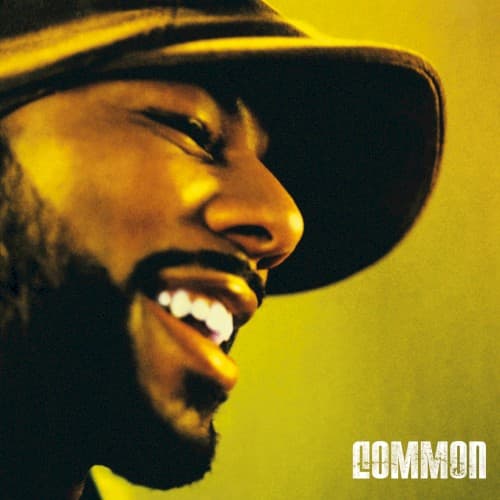
Common Be — The Album That Brought Soul Rap Back From Exile
No other conscious rapper has ever sounded this comfortable admitting he doesn't have all the answers. Common had spent a decade building a reputation as one of hip-hop's leading intellectuals, the guy who could drop Afrocentric wisdom and jazz references with equal ease. Then he walked into Kanye West's studio and set fire to all that mythology. What emerged was something rarer than another preachy backpack manifesto: an album about living with doubt, fumbling through relationships, and still loving Chicago even when Chicago stops loving you back.
The mid-2000s marked a strange transitional moment for conscious rap. Talib Kweli was struggling to match his underground credibility with commercial success. Mos Def was drifting toward rock experiments. The Roots were still three years away from becoming Jimmy Fallon's house band.
Common himself was coming off Electric Circus, an album so experimental it alienated his core fanbase and failed to find a new one. Labels were convinced that thoughtful rap couldn't move units. Radio programmers treated substance like a disease. Into this vacuum stepped Kanye West, fresh off The College Dropout, with a beat CD and an idea: what if conscious rap stopped trying to educate and started trying to connect?
This is the sound of two Chicago kids gambling everything on sincerity.
When Kanye Gave Up the Chipmunk Souls
Kanye West produced nine of these eleven tracks, but this doesn't sound like The College Dropout part two. The chipmunk soul had peaked. The sped-up samples that defined early Kanye were already becoming a cliché, showing up on every regional rap album from Houston to Harlem.
Here he strips the sound down to its emotional core: warm basslines, live drums courtesy of Jay Dee, and soul samples played at their original speed. No gimmicks. No vocal tricks. Just the raw material of Black music history arranged with surgical precision.
The production philosophy mirrors Common's lyrical approach. He's rapping about the same South Side neighborhoods he's been repping since 1992, but the perspective has shifted. Where his earlier work positioned him as a teacher or a prophet, here he's just another resident trying to make sense of the block.
On tracks built around recognizable samples from Curtis Mayfield and Bobby Caldwell, his flow relaxes into conversational cadences that feel closer to spoken word than traditional battle rap. He's comfortable enough to let the beat breathe, to pause mid-verse, to admit confusion instead of projecting certainty. But doesn't that vulnerability risk undermining the very authority that made him a leader in the first place?
But the album isn't flawless.
The last third drags slightly as Common tries to cover too much thematic ground in too little time. Some tracks feel like sketches instead of finished paintings. And while the live instrumentation adds warmth, it occasionally robs the production of the grit that made his earlier work feel urgent.
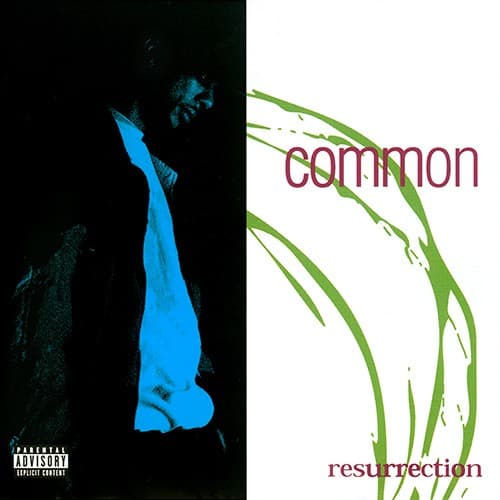
This is comfort food hip-hop, which means it sometimes lacks the hunger that made Resurrection such a raw experience.
The vocal delivery reveals an artist who finally stopped trying to prove he belonged in the cipher. Common's voice sits lower in the mix than on previous albums, blending with the production instead of dominating it. He's discovered that authority doesn't require volume. The restraint makes the moments when he does raise his voice—confronting police brutality, mourning friends lost to the streets—land with exponentially more force.
The Album That Remembers South Side Summers
The sequencing moves like a hot Chicago day, starting with morning optimism and ending in late-night reflection. The opening stretch establishes the album's thesis: conscious rap doesn't need to preach to have a point of view. Common sets the table without overloading listeners with dense concepts or abstract philosophy. He's talking directly to his city, his community, his own contradictions.
The middle section is where the album earns its reputation. Here the production reaches peak minimalism, stripping away everything except bass, drums, and soul. Common's storytelling becomes more novelistic, zooming into specific characters and moments instead of painting broad social commentary.
The pacing slows deliberately, forcing listeners to sit with uncomfortable truths about relationships, religion, and self-deception. It's the most vulnerable stretch of music Common had recorded to that point in his career.
The back half shifts toward celebration and communal uplift, but the energy dips noticeably. The album peaks early and struggles to maintain momentum once the conceptual heavy lifting is complete. By the time the final tracks arrive, Common is reaching for grand statements about humanity and purpose that feel disconnected from the intimate character studies that made the earlier songs so compelling.
The closer attempts to tie everything together thematically, but it's solving problems the album never really posed. The last twenty minutes feel like an artist trying to justify his own sincerity instead of just living in it.
The Last Great Chicago Album Before Drill Changed Everything
This sits comfortably in the top three Common albums, right behind Resurrection and probably ahead of Like Water for Chocolate depending on your tolerance for Soulquarians maximalism. It's the most complete artistic statement he ever made, the rare conscious rap album that never feels like homework. The Kanye West production elevates every track, but Common deserves equal credit for knowing when to get out of the way and let the music speak.
New listeners should start here. If you bounced off Common's earlier work because the Afrocentric consciousness felt performative or preachy, this is the album that strips away the posturing and reveals the human being underneath. Fans of Kanye's early production will find his best full-length work outside his own discography. And anyone who grew up in an American city that hip-hop mythology tends to overlook will recognize the specificity of place that makes this album so geographically rooted.
The album aged beautifully because it never relied on contemporary trends. The soul samples were timeless in 2005 and remain timeless now. Common's lyrical content avoided the political hot takes and name-drops that date so many conscious rap albums from this era. What felt fresh two decades ago—a thoughtful rapper admitting doubt, confusion, and romantic failure—still feels refreshing today in an era when hip-hop masculinity has only grown more performatively invulnerable.
Similar listeners should explore Kanye West's Late Registration for the expanded version of this production style, Little Brother's The Minstrel Show for more mid-2000s conscious rap that avoids preachiness, and Phonte's Charity Starts at Home for another veteran rapper learning to write about ordinary life with extraordinary empathy. The album's influence runs through everything Drake ever attempted emotionally, every Chance the Rapper bar about Chicago, every introspective rapper who realized vulnerability could be a strength instead of a weakness.
This is what conscious rap sounds like when it stops performing consciousness and starts performing humanity.
Track Listing
Be (intro)
▲The beat is just a bassline and some quiet keys, barely there, like Kanye forgot to finish the track. Common enters whispering instead of announcing, treating the opening moments like a private confession instead of a grand statement. He's talking about existence, purpose, and presence, but the tone is conversational, almost tentative. The hook—if you can call it that—is a question, not an answer. Most rap albums open with a flex or a mission statement. This one opens with uncertainty, and that choice defines everything that follows.
The Corner
▲This is the best anti-drug song hip-hop ever produced, and it achieves that status by refusing to moralize. The Last Poets sample grounds the track in Black radical history, but Common doesn't position himself as a teacher standing outside the community. He's describing the corner from the inside, cataloging how crack changed neighborhood economics and family structures without resorting to after-school-special language. The details are devastating: the girl who started using at thirteen, the man selling to feed his own habit, the grandmother raising kids her daughter abandoned. Kanye's drums hit like a slow heartbeat. The storytelling is so specific to Chicago that it becomes universal. No other track in Common's catalog demonstrates this level of empathy for people trapped in impossible circumstances.
GO!
▲John Mayer plays guitar on this, which should be corny but somehow isn't. The track moves faster than anything else on the album, and Common uses the tempo to deliver a career victory lap without sounding arrogant. He's rapping about ambition, but the context is escaping the corner, not flexing wealth. Kanye loops a Donny Hathaway sample underneath Mayer's guitar line, creating this strange hybrid of soul, rock, and boom-bap that probably shouldn't work but absolutely does. The second verse shifts into motivational speaker mode, which occasionally tips toward corny, but Common's delivery is so locked in that he sells it. This is the album's commercial bid, the track designed for radio spins it never quite received.
Faithful
▲John Legend and Bilal trade vocals on the hook while Common raps about a man tempted to cheat on his partner. The storytelling is uncomfortable because Common doesn't present the protagonist as a villain—he presents him as human, weak, rationalizing, exactly the kind of man who would betray trust and then feel bad about it later. The production is the warmest on the album, all Rhodes keys and soft drums, which creates a cognitive dissonance with the lyrical content. Kanye understands that the prettiest music can frame the ugliest confessions. The track doubles as a meditation on faith in general: faith in relationships, faith in God, faith in yourself to do better tomorrow. But it refuses to offer easy redemption. The man in the song is still deciding whether to walk through that door or turn around.
Testify
●Common writes from three perspectives—the defendant, the lawyer, and the judge—telling the story of a murder trial in reverse. You don't learn until the final verse that the defendant killed his girlfriend's lover, and that detail recontextualizes everything that came before. The structure is brilliant, the execution slightly clunky. Common's character voices aren't distinct enough to pull off the narrative conceit without confusion. Kanye's production is stark, just a piano loop and drums, giving Common maximum space to tell the story. The hook is minimal, almost an afterthought. This is the album's most conceptually ambitious track, and it works better on paper than on headphones. But you respect the ambition even when the execution wobbles.
Love Is…
▲A four-minute definition of love that somehow avoids Hallmark sentimentality. Common raps about love as action, not feeling, grounding the abstraction in concrete examples: love is listening, love is sacrifice, love is showing up when it's inconvenient. The Anita Baker sample gives the track an early-90s quiet storm feel, warm and enveloping, almost too smooth. This is adult contemporary hip-hop, the kind of track you could play at a wedding reception without raising eyebrows. It's also the album's most earnest moment, which makes it polarizing. Some listeners will hear sincerity. Others will hear corniness. Both readings are valid. The track works because Common commits fully to the sentiment without irony or hedging.
Chi‐City
▲The Jay Dee drums hit harder than anything else on the album, boom-bap in its purest form, the kind of beat that makes you bob your head involuntarily. Common name-drops Chicago landmarks for three verses, turning the track into a love letter to the South Side. The hook is just the city's nickname repeated over and over, which should be boring but becomes hypnotic. Lyrically this is slight—just neighborhood appreciation without much depth—but the energy is infectious. The simplicity is the point. After an album of heavy themes and dense storytelling, Common just wants to celebrate home. It's filler in the best sense: a necessary breath before the final stretch.
The Food (live)
●A Kanye West beat from 2000 performed live with a full band, which gives the track a loose, jam-session feel that contrasts with the rest of the album's studio precision. Common raps about hip-hop as nourishment, culture as sustenance, the usual metaphors about feeding the community. The live instrumentation adds warmth but robs the beat of its punch. This version lacks the urgency of the original. It's included presumably to showcase musicianship and to give the album a concert vibe, but it disrupts the flow. The crowd noise feels tacked on, like they recorded the track in an empty room and added applause in post-production. It's not bad, just unnecessary, the kind of track you skip on repeat listens.
Real People
●A meditation on authenticity that occasionally veers into self-righteousness. Common catalogs what real people do—real people struggle, real people sacrifice, real people stay true to themselves—and the message is sincere but the delivery feels didactic. The production is understated, just keys and light percussion, almost too minimal. The track needed more sonic personality to offset the preachiness of the lyrics. This is conscious rap's eternal problem: how do you advocate for authenticity without sounding like you're lecturing your audience? Common doesn't solve that problem here. The track works as a thesis statement but fails as a listening experience. You respect the message more than you enjoy the song.
They Say
▲Kanye speeds up a Bobby Caldwell sample and builds a track about dealing with critics, doubters, and the media. Common responds to every accusation ever leveled at conscious rap: that it's preachy, that it's out of touch, that it doesn't sell. He's not defensive—he's matter-of-fact, acknowledging the criticisms without conceding the argument. The hook is massive, Kanye and John Legend trading lines over a soaring soul loop. This is the album's second-best song, the moment where Common most successfully merges accessibility with substance. The production is lush without being cluttered. The writing is clever without being dense. Everything clicks. If radio had been willing to take a chance, this could have been a hit.
It's Your World, Parts 1 & 2
●A six-minute suite that attempts to tie the album's themes together while also serving as a call to action for listeners to take ownership of their lives and communities. Part 1 is introspective, Common reflecting on his own journey and responsibilities. Part 2 shifts into motivational mode, urging the audience to create change instead of waiting for someone else to do it. The production swells with strings and layered vocals, aiming for an epic feel that doesn't quite land. The track is well-intentioned but overlong, stretching a simple message past its natural endpoint. By the time it fades out, you've already absorbed the point. The album would have been stronger ending with the previous track's momentum rather than this extended meditation. It's a noble closer that asks too much patience from the listener.