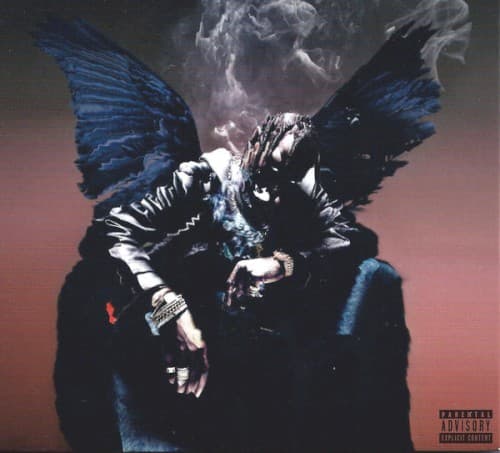
Travis Scott Birds in the Trap Sing McKnight — The Album That Chose the Party Over the Vision
This is the album where Travis Scott proved he could sell out arenas and still sound like he was recording in a spacecraft. No other sophomore release has been this conflicted about its own success. Birds arrived when La Flame was already too big to fail but still hungry enough to pretend otherwise. The sound is lush, expensive, auto-tuned into oblivion.
The energy is restless.
Listen to the first half and you hear someone refining the psychedelic trap blueprint from Rodeo. Listen to the second half and you hear someone chasing playlist adds. That tension defines the album. Travis wanted to expand his cult following into something stadium-sized without losing the kids who discovered him through SoundCloud rips.
He mostly succeeded. But the cracks show. What does it mean when the interludes feel more committed than some of the full songs? Birds proved Travis could craft hits while also proving he was starting to trust the formula more than the madness.
The Sound of Someone Trying to Keep the Chaos Organized
Mike Dean and Travis built this album like a theme park — thrilling rides surrounded by expensive landscaping. The production layers reverb over more reverb, turning ad-libs into atmospheric events. Synthesizers float and dissolve. 808s hit with physics-defying weight.
The whole sonic palette feels engineered for festival speakers and luxury car systems simultaneously.
Travis leaned into the Auto-Tune here harder than ever before. His voice becomes another instrument, stretched and distorted until the lyrics almost do not matter. That works when the production is doing the storytelling. It becomes a crutch when the songs lack direction.
The album's best moments come when the beat feels like it might collapse under its own weight but holds together through sheer momentum.
Lyrically this is Travis at his most abstract and his most repetitive. He raps about fame, excess, paranoia, women. The themes blur together. Occasionally a line cuts through — references to his Houston roots, his rise, his skepticism about everyone around him.
But too often he defaults to vibes over substance. The features do not always help. Some elevate the tracks. Others feel like insurance policies.
The weaknesses are obvious. The back half drags. Several songs feel undercooked, like sketches that got released because the tracklist needed filler. Travis was chasing a sound here, but he had not yet figured out how to sustain it across fourteen tracks.
Parts of this album aged beautifully. Other parts aged like expensive streetwear that only looked good for one season. Could he have trimmed the fat and delivered something tighter?
The Ride That Peaks Early and Never Recovers
The opening stretch is merciless. You get three tracks that feel like Travis is still defending the throne he barely claimed. The production is dense and disorienting in the best way. Then the energy shifts.
The middle section introduces melodic interludes and slower tempos. Some of it works. Some of it feels like Travis trying to prove he can do more than rage. The album never regains the momentum from those first few songs.
By the time you reach the back half, the sequencing starts to feel arbitrary. Songs bleed into each other without building toward anything. A few late-album highlights appear, but they feel isolated. The pacing suggests Travis and his team were not sure how to end this thing.
What saves the album is the production consistency. Even the weaker tracks sound expensive. Mike Dean's synth work holds everything together. But sequencing matters, and Birds feels like two different albums stitched together — one made for the cult, one made for the charts.
The Album That Made Travis a Star and Almost Trapped Him
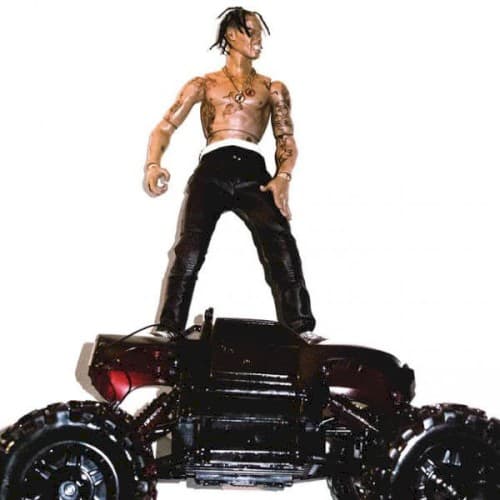
In Travis Scott's discography, Birds sits right in the middle. It is better than everything he released after Astroworld but not as daring as Rodeo. This is the album where he learned how to make hits without losing his identity. It is also the album where he started relying on formulas that would eventually wear thin.
Who should listen? Fans who want to hear Travis at his most polished before the sound became predictable. People who care about Mike Dean's synth wizardry. Anyone studying how psychedelic trap evolved from underground phenomenon to festival staple.
Skip this if you need sharp lyricism or cohesive storytelling. Travis was never that guy, and Birds does not pretend otherwise.
The album aged well in some ways, poorly in others. The production still sounds futuristic. The vocal effects still feel immersive. But the songwriting feels thin compared to what other artists were doing in 2016.
Travis built a lane here. He just did not push it far enough. You listen to Birds now and hear an artist who was still figuring out how much weirdness the mainstream would tolerate. The answer turned out to be: not as much as Rodeo demanded, but more than most rappers were offering.
That middle ground made him a superstar. It also made this album feel safe.
Essential tracks: the ends, coordinate, goosebumps. Similar listens: Future's EVOL, Kanye West's The Life of Pablo, Kid Cudi's Passion Pain & Demon Slayin'. Long-term influence: every melodic trap artist who followed studied this album's reverb-drenched atmosphere and emotional detachment.
Track Listing
the ends
▲Andre 3000 appears over swirling synths that sound like they are being played backward through a broken speaker. Travis opens the album in full paranoia mode, voice drenched in Auto-Tune, rapping about enemies and excess. Three Stacks delivers one of his rare guest verses with the precision of someone who does not waste studio time. The beat switches halfway through, a Mike Dean specialty — strings collapse into bass, the tempo shifts, and Travis pivots from reflection to aggression. This is Travis at his most ambitious. The production is layered like a film score. The mood is tense and hypnotic. You hear an artist trying to prove the debut was not a fluke. This is the blueprint for everything that follows on the album. It also might be the peak.
way back
▲A James Blake sample gets chopped and stretched until it barely resembles the original. The beat feels like it is dissolving in real time. Travis rides it with a flow that prioritizes rhythm over clarity. Kid Cudi hums in the background, adding texture without stealing the spotlight. This is Travis doing what he does best — turning melancholy into a vibe. The hook is simple and sticky. The verses meander but never lose momentum. Lyrically it is more mood than message. Travis references his come-up, his skepticism about people around him, his refusal to slow down. The production carries the song. Mike Dean's synths shimmer and fade. This sounds like a fever dream set in a luxury hotel suite. Still hits.
coordinate
●Blac Youngsta shows up and almost derails the entire track within thirty seconds. His verse is chaotic in a way that does not match the album's atmosphere. Travis recovers with a hypnotic hook and production that feels like it is being transmitted from underwater. The beat is minimal — bass, hi-hats, a ghostly melody that loops without resolution. This is Travis in his bag, voice layered and distant, ad-libs doing half the work. The song does not build toward anything. It just exists as a vibe. That works for the first two minutes. By the end it feels like a sketch that needed another verse or a bridge. The production is strong enough to carry it, but this is one of the album's more forgettable moments despite a solid foundation.
through the late night
▲Kid Cudi returns, and suddenly the album remembers what made Rodeo special. This is the best collaboration between the two artists on the project. The production is vast and cinematic — strings, synths, drums that hit like thunder. Travis and Cudi trade verses and harmonies, their voices blending into something larger than either could create alone. The song builds slowly, adding layers until the final minute feels like an emotional release. I heard this at a festival in 2017, and the crowd response was volcanic. People knew every word. Cudi's influence on Travis is obvious here. The melancholy, the spacey production, the refusal to conform to traditional song structure. This is what Birds sounds like when Travis stops chasing hits and trusts his instincts. One of the album's three essential tracks.
beibs in the trap
▼NAV arrives with the charisma of someone reading their verse off a teleprompter. His monotone delivery sucks energy out of the track before Travis even gets a chance to salvage it. The beat is decent — eerie keys, minimal drums, a looping melody that feels hypnotic in isolation. But NAV is an anchor here. Travis does what he can on the hook, voice processed into oblivion, but the song never recovers. This was a radio push that did not work. It aged poorly. The title is clever. The execution is not. You skip this on every relisten and the album flows better without it. A rare misstep in sequencing. This should have been left in the vault or reworked without the feature.
sdp interlude
▲Cassie delivers a haunting vocal over minimal production. No drums, just synths and her voice, looped and layered until it feels like a ghost singing from another room. This is thirty seconds of pure atmosphere. Travis does not appear. He does not need to. The interlude works as a palate cleanser, a moment to breathe before the album shifts gears again. Some listeners dismiss interludes as filler. This one earns its place. It is more emotionally direct than half the full songs on the album. Mike Dean understood the assignment here — create a moment, not a track. It works. You do not skip it. You let it wash over you and wonder why Travis did not lean into this kind of restraint more often.
sweet sweet
●The beat is lush and expensive, dripping with reverb and layered vocals. Travis floats over it, barely rapping, mostly vibing. The hook is infectious. The verses are forgettable. This is Travis in full melodic mode, prioritizing feeling over substance. It works for a few listens, then starts to feel hollow. The production does all the heavy lifting. Without Mike Dean's synth work, this would be a skip. With it, the song functions as a solid mid-album vibe — nothing special, nothing offensive. It does not add much to the album's narrative. It does not take anything away either. It just exists, pretty and empty, like expensive furniture in a house no one lives in.
outside
▲21 Savage pulls up sounding like he recorded his verse in a walk-in freezer. His delivery is cold, unbothered, menacing in a way that contrasts with Travis's more manic energy. The beat is sparse — bass, hi-hats, a distant melody that never fully develops. This is one of the album's darker moments. Travis raps about paranoia, enemies, the cost of fame. 21 reinforces the mood with bars about violence and mistrust. The song does not overstay its welcome. It hits its mark and exits. Not a standout, but a solid album cut. The chemistry between the two works. They sound like they are operating on the same frequency. This is what Birds needed more of — focused, purposeful tracks that trust the beat and the energy instead of reaching for radio play.
goosebumps
▲Kendrick Lamar shows up and reminds everyone what a real verse sounds like. His flow is surgical, chopping through the beat with precision while Travis coasts on the hook. The production is immaculate — eerie keys, booming bass, a melody that feels like it is rising and falling at the same time. This became Travis's biggest hit at the time for a reason. The hook is undeniable. Kendrick's verse is a masterclass. Travis knew exactly what he was doing here — pair his atmospheric strengths with a feature who could bring technical firepower. I was working at a record store when this dropped, and we played it thirty times a day for two months straight. Customers never complained. The song holds up. It is the album's commercial peak and one of its artistic highlights. Kendrick elevates everything he touches, and Travis was smart enough to give him space.
first take
▼Bryson Tiller arrives sounding half-asleep. His verse is fine but forgettable, delivered with the energy of someone who showed up to the session out of obligation. The beat is smooth, R&B-leaning, a departure from the harder trap production that dominates the album. Travis tries to match the vibe, but his melodic instincts do not fit this kind of restrained, slow-burning track. The song drags. It feels like an attempt to diversify the album's sound that did not quite work. This is filler. You feel it the moment the beat drops. Nothing here is offensive, but nothing here is memorable either. Skip.
pick up the phone
▲Young Thug and Quavo turn this into a posse cut that somehow works despite Travis barely showing up. Thug's verse is chaotic and melodic, his voice stretching syllables until they lose meaning and become pure sound. Quavo delivers a hook that burrows into your brain and refuses to leave. Travis contributes ad-libs and a short verse that feels like an afterthought. This was already a hit before the album dropped. It had been circulating online for months, building hype and demand. The final version feels rushed, like they knew they had something but did not bother refining it. That rawness works in its favor. The song is infectious, messy, and endlessly replayable. It does not fit the album's moody atmosphere, but that does not matter. This is a moment, not a track.
lose
▼The beat is pretty. Travis sounds disinterested. He is going through the motions here, delivering a performance that feels like it was recorded in one take and never revisited. The production tries to carry the song with lush synths and a hypnotic loop, but there is nothing underneath. No hook strong enough to justify the runtime. No verse memorable enough to save it. This is Birds at its most disposable. You forget the song exists until it starts playing, then you remember why you forgot it. Late-album filler that exposes the tracklist's bloat.
guidance
▼K. Forest provides a smooth R&B hook that feels like it belongs on a completely different album. The vibe is mellow, introspective, almost too polished for the chaos Travis usually thrives in. He delivers a decent verse, but the song never finds its footing. It exists in a strange middle ground — too slow to be a banger, too generic to be a standout ballad. The production is clean but unmemorable. This feels like a track that made the album because someone thought it would appeal to a wider audience. It did not. Skip.
wonderful
▲The Weeknd closes the album with a feature that almost rescues the back half. His voice floats over dreamy production, adding a layer of polish and emotion that Travis's Auto-Tuned delivery cannot match. The beat is gorgeous — shimmering synths, subtle bass, a melody that feels like it is fading into sunrise. Travis sounds more engaged here than he has in several tracks. The Weeknd's hook is effortless, the kind of thing he could record in his sleep and still make sound special. This is not a perfect closer, but it is a strong one. The song does not resolve the album's tension or provide a narrative conclusion. It just offers a moment of beauty before the silence. After a stretch of forgettable tracks, this reminds you why Travis can be special when he cares enough to try.