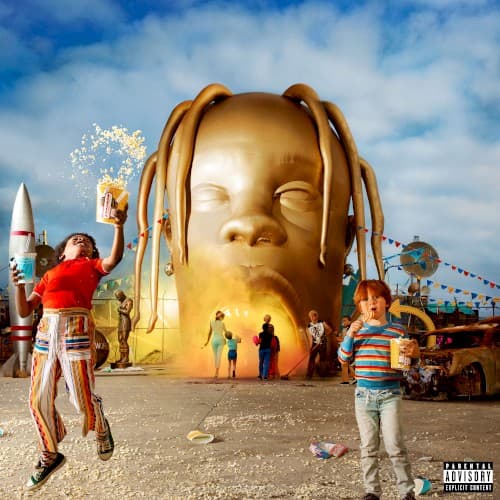
Travis Scott ASTROWORLD — The Amusement Park That Ate Houston Whole
Every best-album list from the late 2010s starts the same fight: does this belong at one or two? The argument usually splits along generational lines. Older heads point to the bloat, the guest overload, the moments where spectacle drowns songwriting.
Younger listeners counter that the spectacle IS the songwriting, that Travis turned maximalism into an art form when everyone else was chasing minimalist Drake beats. Both sides have a point. What neither can deny is that ASTROWORLD changed what a blockbuster rap album could sound like in the streaming era.
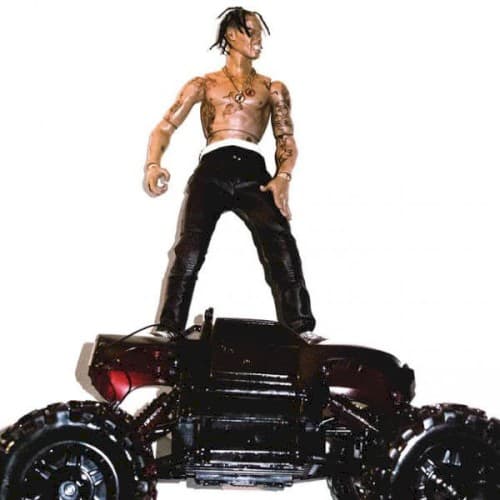
The album arrived after two years of delays, label drama, and Scott teasing a project named after the demolished Houston theme park that haunted his childhood. By August 2018, he had become something bigger than a rapper — a brand architect, a festival curator, a Nike collaborator. The pressure was crushing. Rodeo had the underground respect.
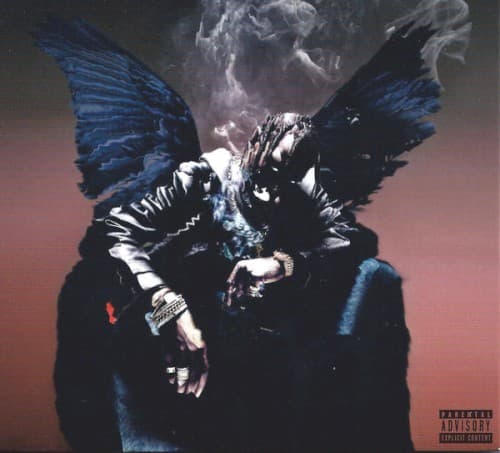
Birds in the Trap Sing McKnight had the commercial proof. ASTROWORLD needed both, plus a cultural moment big enough to justify the hype cycle. It delivered. Fifty-eight minutes of psychedelic trap that sounded like a theme park designed by Mike Dean and mixed inside a haunted house.
This is Travis at his most confident and his most conflicted. The production reaches heights he has never matched since. The sequencing stumbles. The features sometimes steal the show.
Funhouse Mirrors and Million-Dollar Samples
The sonic palette pulls from everywhere. Tame Impala psych-rock loops. Chopped-and-screwed DJ Screw tributes. John Mayer guitar riffs.
Stevie Wonder harmonica. Mike Dean synths that sound like they were recorded inside a fever dream. Travis has always been a curator more than a traditional rapper, but here the curation reaches a new level of ambition. He is not just borrowing sounds — he is warping them, stretching them, turning them into something that exists only in his version of Houston.
Mike Dean and Travis himself handle the bulk of the production, with assists from Tay Keith, Frank Dukes, and a small army of co-producers. The philosophy is controlled chaos. Beats twist mid-song. Tempos shift without warning.
Auto-Tune distorts into alien registers. The result is an album that sounds expensive and unhinged at the same time. You can hear the budget in every reverb tail, but you can also hear the recklessness in every vocal take.
Lyrically, Travis remains more vibe architect than storyteller. He paints in images — theme parks, drugs, fame, Houston nostalgia — but rarely develops them beyond impressionistic sketches. His strength has never been bars. His strength is atmosphere, the way his voice becomes another instrument in the mix.
When he locks into a flow, it works. When he does not, the features cover for him. The vocal delivery leans heavy on melodic Auto-Tune runs and ad-lib hooks. Travis understood early that in the streaming era, the hook is the entire song.
Verses exist to build tension. Choruses exist to be clipped and shared. He structures almost every track around this logic, which makes the album instantly digestible but occasionally exhausting. By the back half, the formula starts to show its seams.
The biggest flaw is the bloat. Seventeen tracks is too many. The album would have been sharper at thirteen. There are moments where the pacing drags, where a good idea gets stretched past its breaking point.
Travis has never been great at editing himself, and ASTROWORLD suffers for it. But even the weaker tracks sound immaculate. The floor on this album is still higher than the ceiling on most trap records from that year. Can any album this ambitious avoid some degree of excess?
Riding the Rails Through the Haunted House
The first stretch is overwhelming in the best way. The album opens with a slow ascent, builds momentum through the early chaos, then never fully lets go of the tension. Travis structures the listening experience like a theme park visit — the initial rush, the disorienting middle section where everything blurs together, the quiet moment before the final drop. He understands sequencing as an emotional arc, not just a playlist.
The middle section is where the pacing wobbles. Too many ideas compete for attention. The album tries to be a psychedelic journey and a radio takeover at the same time, and the two goals do not always align. Some tracks feel like they were sequenced for playlist performance rather than album flow.
The transitions lose their sharpness. The momentum scatters. The back half recovers by leaning into the quieter, more reflective mode. Travis pulls back the chaos and lets the production breathe.
The final stretch plays like the comedown after the high, which makes narrative sense but also means the album ends on a whisper rather than a statement. It is a bold choice. Whether it works depends on how patient you are willing to be.
What holds the arc together is the production consistency. Even when the sequencing stumbles, the sonic world never breaks. Every track sounds like it belongs to the same universe. Mike Dean deserves immense credit for that.
The Ride That Refuses to End
In Travis Scott's discography, ASTROWORLD sits at the peak. Rodeo has the hunger. Birds has the hits. Utopia has the budget.
But ASTROWORLD is the one where ambition, execution, and cultural timing aligned. It is the album that turned Travis from a rapper into a phenomenon, the one that proved he could deliver on the hype without completely collapsing under its weight.
Who should listen? Anyone interested in how trap evolved in the late 2010s. Fans of Kanye's maximalist production. Listeners who treat albums as immersive experiences rather than background noise.
This is not a casual listen. It demands attention, rewards patience, and punishes multitasking. Who might not enjoy it? Purists who value bars over atmosphere.
Listeners allergic to Auto-Tune. Anyone looking for tight, focused songwriting. Travis has never been a traditional rapper, and ASTROWORLD is his least traditional album. If you need clear narratives and quotable verses, this will frustrate you.
How has it aged? Remarkably well for a blockbuster trap album. The production still sounds futuristic. The features have not dated poorly.
The cultural moment it captured — Houston nostalgia, psychedelic trap, festival culture as identity — remains relevant. If anything, the album sounds more influential now than it did on release. You can hear its DNA in everyone from Don Toliver to Playboi Carti to the entire rage rap movement.
Essential tracks to start with: STARGAZING for the dramatic ambition, SICKO MODE for the chaotic energy, STOP TRYING TO BE GOD for the psychedelic detour. Similar albums worth exploring: Kanye West - Yeezus for maximalist experimentation, Kid Cudi - Man on the Moon for spacey introspection, Future - DS2 for Atlanta trap excellence.
Long-term influence: ASTROWORLD rewrote the rules for blockbuster rap albums in the streaming era. It proved you could make a psychedelic, fifty-eight-minute experience album and still dominate playlists. It turned Travis Scott into the blueprint for every rapper trying to build a universe instead of just dropping songs. The theme park never reopened, but the ride never stopped.
Track Listing
STARGAZING
▲The production feels like falling through a wormhole. Travis and Mike Dean build the track in three distinct movements — the drowsy opening with its warped vocal samples, the explosive beat switch that sounds like a roller coaster dropping, the final chaotic stretch where everything collapses into noise. It is Travis at his most ambitious as a composer, treating a rap song like a prog-rock suite. His flow on the first half is hypnotic, almost whispered, before he switches to full aggression after the beat drops. The Kid Cudi influence bleeds through every bar. The track sets the tone for the entire album: cinematic, chaotic, expensive. As an opener, it is perfect. As a song, it occasionally gets lost in its own ambition. But the risk-taking alone makes it essential.
CAROUSEL
▲Mike Dean's distorted synths and Frank Dukes' drums create a disorienting fairground atmosphere. Travis rides the beat with a flow that feels purposefully off-kilter, matching the carnival chaos. Frank Ocean's hook is the best moment on the album — his voice cuts through the noise with a melody that sounds both nostalgic and alien. The chemistry between Travis and Frank is undeniable. They understand how to occupy the same sonic space without competing. The production is dense, almost oppressive, but it works. The track feels like stumbling through a funhouse at 3 AM. The only flaw is that it ends too soon. At two minutes forty, it feels like an idea that needed another verse to fully develop.
SICKO MODE
▲This is the one that broke the internet. Three beat switches, three completely different songs stitched together with pure audacity. Tay Keith, Hit-Boy, and Mike Dean co-produce, and the result sounds like nothing else on mainstream radio. Travis opens with a Houston flex, Drake drops the most quotable verse of his 2018, then the beat flips into a menacing Tay Keith stomp. The structure is insane. Most rappers would have split this into three separate tracks. Travis turned it into a single, and somehow it worked. The sequencing is perfect. The transitions are jarring but intentional. Drake outshines Travis on his own album, which should be a problem but somehow is not. The track is a monument to controlled chaos. It aged into a cultural artifact. Whether you love it or find it exhausting, you cannot ignore it.
R.I.P. SCREW
▲Travis pays tribute to DJ Screw with chopped-and-screwed production and Swae Lee on the hook. The beat is hypnotic, all warped vocals and slowed-down drums. Swae Lee's melody is infectious, one of the catchiest moments on the album. Travis sounds genuinely reverent here, not just name-dropping Houston legends for credibility. The flow is locked in. The vibe is immaculate. The only issue is that the track feels slightly too polished for a Screw tribute — the rough edges have been sanded down in favor of mainstream appeal. But as a crossover between Houston tradition and modern trap, it works. The track proves Travis can honor his influences without sounding like a museum curator.
STOP TRYING TO BE GOD
▲The weirdest song Travis Scott has ever made. Stevie Wonder plays harmonica. Kid Cudi hums in the background. James Blake co-produces. Philip Bailey from Earth, Wind & Fire sings the outro. The whole thing sounds like a psychedelic gospel session recorded in outer space. Travis barely raps — he floats over the beat, half-singing, half-confessing. The lyrics are vague, more spiritual posturing than genuine introspection, but the atmosphere is undeniable. The harmonica solo is absurd and beautiful. The production is lush, patient, completely out of step with everything else in trap music. This is Travis at his most experimental, chasing a vibe instead of a hit. It does not always work. The pacing drags. But the ambition alone makes it one of the album's most memorable moments.
NO BYSTANDERS
●Sheck Wes and Juice WRLD join Travis for a mosh-pit anthem. The production is stripped-down compared to the rest of the album — just drums, bass, and distorted vocals. Sheck Wes yells his way through the chorus with zero subtlety. Juice WRLD adds a melodic verse that feels out of place but somehow works. Travis sounds more energized here than anywhere else on the album. The track is pure festival fuel, designed to make crowds lose their minds. As an album cut, it feels slightly out of place. The minimalism clashes with the maximalist production around it. But as a moment of controlled chaos, it delivers exactly what it promises.
SKELETONS
▲Tame Impala's Kevin Parker co-produces and The Weeknd delivers one of his best guest verses in years. The beat is dreamy, almost shoegaze-influenced, with layers of reverb-drenched synths and distorted drums. Travis opens with a sung verse that sounds like he is drowning in the mix. The Weeknd takes over and elevates the entire track with a vocal performance that is equal parts haunting and catchy. Pharrell adds ad-libs that feel unnecessary but do not ruin the vibe. The production is gorgeous. Mike Dean and Travis create a sonic world that feels like a bad trip turned beautiful. The track is one of the album's quietest moments, but also one of its most affecting. It proves Travis works best when he leans into atmosphere instead of trying to out-rap anyone.
WAKE UP
●The Weeknd returns for a full collaboration. The production is hazy, almost narcotic, with pitched-down vocals and sluggish drums. The Weeknd handles the hook and a verse, and his presence dominates the track. Travis adds a verse that feels like an afterthought. The chemistry is there, but the song never fully takes off. It feels like a leftover from a Weeknd album that Travis borrowed for sequencing purposes. The vibe is immaculate, but the songwriting is thin. By this point in the album, the melodic Auto-Tune formula is starting to wear thin. The track is beautiful but forgettable.
5% TINT
●Travis rides a minimal beat with nothing but bass and hi-hats. No features. No distractions. Just him and a hypnotic loop. The flow is locked in, the delivery confident. The lyrics are typical Travis flexing — cars, women, drugs — but the minimalism makes it work. The production restraint is refreshing after the chaos of the first half. Mike Dean lets the beat breathe, and Travis fills the space without overloading it. The track is short, focused, and effective. It is not a standout, but it is a necessary palate cleanser before the album dives back into maximalism.
NC‐17
▲21 Savage and Metro Boomin co-produce. The beat is dark, ominous, built around a menacing piano loop. Travis and 21 Savage trade verses, and the chemistry is undeniable. 21's deadpan delivery contrasts perfectly with Travis's melodic Auto-Tune runs. The track feels like classic Metro Boomin trap, which makes it slightly out of place on ASTROWORLD but also a welcome return to straightforward songwriting. No beat switches. No psych-rock samples. Just two rappers and a cold beat. It is one of the album's more traditionally structured songs, and it works because of that simplicity.
ASTROTHUNDER
●John Mayer plays guitar. Thundercat contributes bass. The production is lush, jazzy, completely divorced from trap conventions. Travis sings more than he raps, his voice drenched in reverb and Auto-Tune. The lyrics are vague, impressionistic, more about feeling than meaning. The track is gorgeous. It is also slight. At two minutes twenty, it feels like an interlude stretched into a full song. The atmosphere is undeniable, but the lack of structure makes it feel incomplete. As a transition piece, it works. As a standalone track, it feels undercooked.
YOSEMITE
●Gunna and Nav join Travis for a melodic trap cut. The production is bright, almost tropical, built around a fluttering flute sample. Gunna delivers a solid verse in his signature slithery flow. Nav sounds out of place, his nasal delivery clashing with the lush production. Travis holds the track together with a catchy hook and a confident verse. The beat is one of the album's most immediately appealing, but the execution feels uneven. Nav's verse drags the energy down. Gunna's verse lifts it back up. The track is fun but forgettable, the kind of song that works in playlists but disappears on the album.
CAN'T SAY
▲Don Toliver makes his major-label debut with a hook that launched his entire career. His voice is smooth, melodic, perfectly suited for the dreamy production. Travis delivers one of his strongest vocal performances on the album, fully committing to the sung-rap style. The beat is hazy, nocturnal, built around shimmering synths and minimal drums. The track is one of the album's most cohesive moments, where the production, the performances, and the vibe all align. It is also proof that Travis has an ear for talent — Don Toliver went from unknown to star off the strength of this one hook.
WHO? WHAT!
●Quavo and Takeoff join Travis for a Migos reunion. The production is chaotic, built around a distorted sample and frantic drums. Travis and the Migos trade verses in their signature ad-lib-heavy style. The energy is high, but the songwriting is thin. The track feels like it was designed for live performances rather than repeated listens. By this point in the album, the maximalism is starting to feel exhausting. The beat switch midway through adds some variety, but it is not enough to make the track memorable. It is fine. It is also skippable.
BUTTERFLY EFFECT
●One of the album's biggest commercial hits, released as a single a year before ASTROWORLD dropped. The beat is hypnotic, built around a looping sample and minimal drums. Travis rides the pocket with a flow that sounds effortless. The hook is instantly catchy. The production is restrained compared to the rest of the album, which makes it feel slightly out of place in the tracklist. As a single, it is perfect. As an album cut, it disrupts the flow. The placement this late in the tracklist feels like a concession to commercial pressures rather than artistic intent.
HOUSTONFORNICATION
▲Travis reflects on fame, Houston, and the cost of success over a melancholic beat. The production is sparse, almost skeletal, with muted drums and ghostly synths. Travis sounds more introspective here than anywhere else on the album. The flow is relaxed, conversational. The lyrics are still vague, but there is genuine emotion underneath the Auto-Tune. The track is one of the album's quietest moments, and it works as a penultimate comedown. It is not flashy. It is not a hit. But it is proof that Travis can do introspection when he wants to.
COFFEE BEAN
▲The album closes with Travis alone over a minimal guitar loop. No features. No beat switches. Just him reflecting on a failed relationship and the pressures of fame. The production is bare, almost lo-fi, which makes it the starkest track on the album. Travis sounds vulnerable, singing more than rapping, his voice unprocessed compared to the rest of ASTROWORLD. The lyrics are the most direct he gets — naming his ex, admitting mistakes, expressing regret. It is a bold way to end a blockbuster album. Most rappers would have closed with a victory lap. Travis chose confession. The track is slight, but its placement makes it powerful. The amusement park closes. The lights go out. You are left alone with your thoughts.