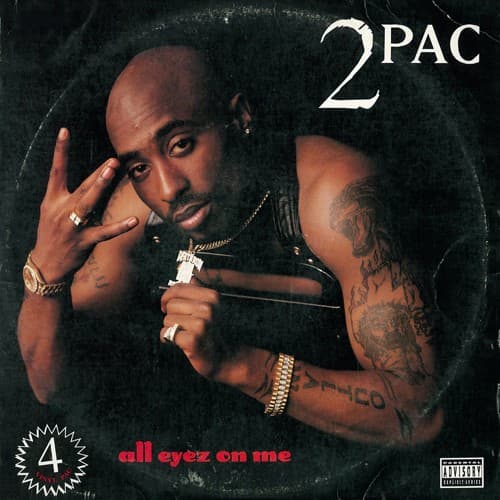
2Pac All Eyez on Me — The Album That Refused to Play It Safe
Play the first three tracks back to back and try to name another album that announces its freedom that loudly. From Dre's militant drums on the opener to the reckless hedonism of "All Bout U" to the paranoid swagger of "Skandalouz," these opening minutes sound like a man burning every bridge he ever crossed. This is not the introspective Pac from Me Against the World. This is not the conscious rapper who questioned the system. This is twenty-seven songs of a man who decided that caution was a luxury he could no longer afford.
Death Row released this album three months after Pac walked out of Clinton Correctional Facility. Suge Knight had posted his bail, and the price was total commitment to the Death Row sound. Dre, Daz Dillinger, Johnny J, and DJ Pooh shaped the production into a sun-baked G-Funk monument that prioritized groove over grit. The Bomb Squad's dense chaos was gone. Digital Underground's playfulness was gone. What remained was synthesizers, live bass, and West Coast optimism filtered through the worldview of someone who had survived multiple shootings and a prison sentence before turning twenty-five.
The double album format gave Pac room to contradict himself without apology. He celebrates women on one track and degrades them three songs later. He mourns dead friends and then brags about outliving his enemies. He questions God's plan and then thanks God for his blessings within the same disc. The album does not try to reconcile these tensions. It simply presents them as the reality of living under constant threat while the world watches your every move.
Critics at the time called it bloated. They wanted a single disc. They wanted the focused anger of his earlier work. They got twenty-seven tracks because Pac had twenty-seven things to say, and Death Row had the commercial power to let him say all of it. The album debged at number one and sold five million copies in its first two months. Radio played the singles. The streets played everything else. And Pac spent the rest of 1996 living exactly the way this album promised he would, cementing 2Pac's legendary career.
When the West Coast Took Over Everything
The production here is California at its most unapologetic. Dre appears on six tracks and his influence saturates the rest. The drums knock harder than anything on The Chronic, but the melodies are smoother, more expensive. Daz Dillinger and DJ Pooh pull from funk and soul without the rawness of East Coast sampling. Everything sounds like it was recorded in a mansion with the windows open. Even the darkest moments carry a shine that East Coast fans dismissed as soft but West Coast riders understood as confidence.
Johnny J produced five tracks and his work stands apart from the G-Funk blueprint. His beats feel more urgent, more claustrophobic. When Dre gives Pac space to breathe, Johnny J boxes him in. The contrast keeps the album from sinking into a single texture. Pac adjusts his delivery depending on the producer. Over Dre's funk he floats. Over Johnny J's tension he attacks. The vocal performance across twenty-seven tracks never feels lazy, even when the writing does.
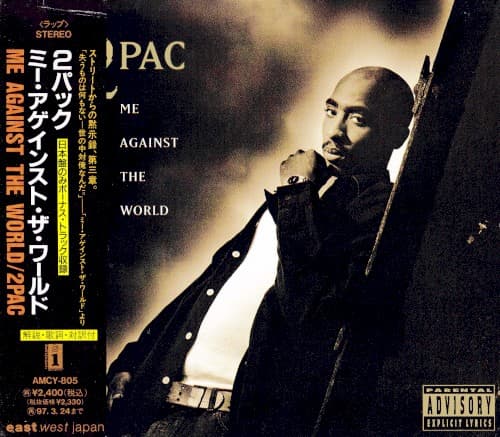
Lyrically this is Pac at his most contradictory and least apologetic. The introspection that defined Me Against the World shows up in flashes but never dominates. He spends more time celebrating excess than questioning it. The Thug Life philosophy becomes less of a survival strategy and more of a brand. He name-checks Hennessy and weed with the frequency of product placement. The women in these songs exist primarily as conquests or burdens. The sensitivity that made "Dear Mama" resonate is present but buried under layers of performance.
The album's greatest weakness is its length. Twenty-seven tracks is too many for any artist to maintain quality across. At least six songs feel like filler designed to justify the double-disc format. Some tracks repeat the same themes with diminishing returns. Pac's charisma carries weaker material further than it should go, but even charisma has limits. A ruthless editor could have cut this to sixteen tracks and created an untouchable classic. Instead we have an essential album with unavoidable dead weight.
But the ambition matters. Pac was not trying to make a perfect album. He was trying to make a document of everything he was at that moment. The contradictions are not flaws. They are the point. You cannot understand 2Pac by listening to his best twelve songs. You have to hear the twenty-seven.
The Journey Through Twenty-Seven Stops
The album's sequencing works in waves rather than a straight narrative. The first disc opens with aggression and closes with accessibility. The second disc mirrors that structure but with darker undertones. The third and fourth discs abandon careful construction entirely and throw everything at the wall. Some of it sticks. Some of it does not. The momentum never fully dies because Pac's energy level rarely dips, but the listener's attention becomes harder to hold as the runtime stretches past ninety minutes.
The front half is stronger than the back. The first eight tracks establish the album's thesis with clarity and force. By the third disc the focus begins to blur. Songs start to blend into each other. The production remains polished but the surprises disappear. Pac starts repeating ideas he already expressed better earlier in the album. The sequencing stops feeling intentional and starts feeling like tracks were arranged by mood rather than narrative flow.
But even when the album sags it never fully collapses. Just when attention starts to drift, a standout track arrives to reset the energy. The pacing is uneven but never boring. The problem is not that the album is too long. The problem is that it is too long for what it is trying to say. Pac had enough material for a masterpiece and enough ambition to overshoot it. The result is something messier and more human than perfection would have allowed.
The Last Great Statement Before Everything Changed
This is the second-best album in Pac's discography. Me Against the World remains his most complete artistic statement, but All Eyez on Me is his most culturally dominant. It outsold everything he released before it and defined how the world remembers him. The Pac most people picture when they hear his name is the Pac from this album, not the introspective poet from earlier work. That shift is both the album's triumph and its tragedy.
Casual fans should start here because this is the sound that made Pac a legend. Deep listeners might prefer Me Against the World or even parts of The Don Killuminati, but this album is the entry point. It contains his biggest hits, his most quotable lines, and his most accessible production. If you only listen to one 2Pac album this is the one that will explain why he mattered.
The album aged better than it had any right to. The G-Funk production that critics called dated in 1996 now sounds classic. The excess that felt overwhelming at the time now feels like a honest document of Death Row's peak. The contradictions that confused listeners then now read as complexity. Pac's refusal to sand down his rough edges gives the album a rawness that more polished projects from that era lack. Flaws and all, this is the sound of an artist who knew he was running out of time and refused to waste a single moment playing it safe.
Track Listing
Ambitionz az a Ridah
▲Dre's drums hit like a declaration of war. The piano stabs refuse to stay in the background. Pac opens with the most memorable first line of his career and never lets up. The flow is relentless, every bar designed to remind you that he survived what should have killed him. This is not a song about ambition. This is a song about what happens when ambition becomes the only thing keeping you alive. The hook is simple but effective. The verses are dense with threats and flexes. No wasted motion. No second verse that fails to match the first. Just three minutes of Pac announcing that prison did not break him and freedom will not calm him down.
All Bout U
●The Snoop and Nate Dogg feature turns this into a Death Row posse cut. Dre and Dat Nigga Daz handle the production with a bounce that sounds effortless. Pac's verses are reckless and dismissive, treating women like conquests rather than people. The hook is catchy enough to make radio. The content is too explicit for daylight. This is the album's first sign that Pac is not interested in the introspection that made Me Against the World resonate. He is here to party and flex and ignore consequences. The beat is strong enough to carry weaker lyrics. Pac's charisma makes lines that should sound dated feel energetic. This is not his best work but it sets the tone for the excess that follows.
Skandalouz
●Nate Dogg's hook is smoother than the track deserves. The production by Daz and Hurt-M-Badd feels more expensive than the first two tracks, all synth strings and West Coast shimmer. Pac's verses are paranoid, obsessed with women who might be setting him up or leaking information to enemies. The storytelling is sharp but the misogyny is exhausting. This is the third track in a row where women exist only as threats or pleasures. The song works as a mood piece but adds little to the album's larger statement. It is well-made filler, the kind of track that sounds good in the moment but leaves no lasting impression.
Got My Mind Made Up
▲Redman, Method Man, Inspectah Deck, and Kurupt turn this into the album's only true East Coast crossover. Daz and Dre's production leans darker than the album's opening stretch, giving the Wu-Tang features room to operate in their element. Pac holds his own but does not dominate the way he does on the rest of the album. The verses are solid across the board. Redman brings chaos. Method Man brings precision. Deck delivers the best sixteen bars on the track. Kurupt closes with West Coast energy. The song works because it does not try to force everyone into the same style. Each rapper sounds like themselves. The result is one of the album's most dynamic moments, proof that Pac could share space without disappearing.
How Do U Want It
▲Johnny J flips a Quincy Jones sample into the album's smoothest moment. K-Ci and JoJo's hook is pure R&B luxury. Pac's verses are explicit but playful, the rare moment where his sexuality feels more like charm than aggression. Richie Rich adds a verse that does not hurt the song but does not elevate it either. This became one of the album's biggest singles because it is the most accessible track in the first half. Radio could play the clean version without losing the vibe. The production is expensive and inviting. The hook is undeniable. Pac sounds relaxed, like he is enjoying himself instead of proving a point. This is not deep but it does not need to be. Sometimes a song just needs to feel good, and this one does.
2 of Amerikaz Most Wanted
▲Snoop and Pac over a Dat Nigga Daz beat is Death Row at full power. The piano loop is instantly recognizable. The drums knock without overwhelming the groove. Both rappers sound comfortable, trading verses about survival and enemies without forcing tension into the chemistry. Snoop's laid-back flow contrasts perfectly with Pac's intensity. The hook is simple and effective. The verses are quotable without trying too hard. This is one of the album's most replayable tracks because it does not demand anything from the listener. It just rides. No wasted bars. No weak moments. Just two of the era's biggest stars doing what they do best over a beat that refuses to age.
No More Pain
▲Daz and Hurt-M-Badd's production is heavy and ominous, the first track on the second disc that feels genuinely dark. Pac's verses are defiant, addressing critics and enemies with equal contempt. The hook is repetitive but effective, hammering the central idea until it sticks. The song works as a mission statement for the second half of the album. Pac is done explaining himself. He is done seeking understanding. He is simply stating his reality and daring anyone to challenge it. The beat is strong enough to carry the weight of the lyrics. Pac's delivery is forceful without tipping into shouting. This is not one of the album's standout tracks but it serves its purpose in the sequencing, resetting the tone after the accessibility of the first disc's closer.
Heartz of Men
▲The beat is minimal and menacing, just bass and drums and a lurking synth line. Pac's verses are introspective for the first time since the album's opening stretch, questioning loyalty and mortality without offering easy answers. The hook is haunting. The production by Hurt-M-Badd, D-Flow Production Squad, and Daz feels unfinished in the best way, leaving space for Pac's voice to dominate. This is one of the album's quietest moments and one of its most effective. Pac sounds like he is talking to himself rather than performing for an audience. The paranoia is palpable. The vulnerability is real. If the entire album maintained this balance between confidence and doubt it would be untouchable.
Life Goes On
▲Johnny J's production is mournful and beautiful, built around a sample that sounds like a eulogy. Pac's verses are elegiac, mourning dead friends with a resignation that feels earned rather than performed. The hook is one of the album's most memorable, simple and devastating. This is the album's emotional center, the moment where Pac stops flexing and starts grieving. The verses are full of specific names and memories, giving the song weight that generic mourning could never achieve. Pac's delivery is restrained, letting the lyrics carry the emotion without overselling it. This is the best song on the second disc and one of the best on the entire album, proof that Pac's greatest strength was always his ability to be brutally honest about pain.
Only God Can Judge Me
▲Rappin' 4-Tay's hook is perfect for the song's defiant tone. Daz, Hurt-M-Badd, and Reg's production is lighter than the previous track, giving Pac room to push back against critics and doubters with energy rather than sadness. The verses are defensive but not desperate, Pac arguing that his flaws are between him and God and nobody else has the authority to condemn him. The song works as a counterpoint to "Life Goes On," moving from grief to defiance without losing emotional weight. This became one of the album's most quoted tracks because the central idea is universal. Everyone wants permission to be flawed without judgment. Pac gives voice to that desire with conviction that makes the argument feel righteous.
Tradin' War Stories
●C-Bo, Storm, and Richie Rich join Pac for a posse cut built around combat metaphors and street survival. The production by Hurt-M-Badd, Daz, and Dj Bobcat is solid but unremarkable. The features are competent but none of them match Pac's energy. The song is too long and too repetitive, retreading themes the album already covered better elsewhere. C-Bo's verse is the strongest of the guest spots but even he cannot elevate the track beyond filler status. This is the kind of song that makes the album's length feel indulgent. It is not bad but it is not necessary. Cut this and the album improves without losing anything essential.
California Love (rmx)
▲Dre's remix with Roger Troutman's talk-box hook is one of the most recognizable rap songs ever made. The original appeared on Pac's previous album but this version belongs here, capturing Death Row's commercial dominance at its peak. Dre's beat is anthemic and joyful, built to fill stadiums and radio stations simultaneously. Pac's verses are celebratory without depth, pure California pride with no complication. Dre's own verse is serviceable. The hook is undeniable. This song is not the album's best work but it is the album's most important cultural artifact, the track that made Pac a crossover star and cemented his place in mainstream consciousness. It has aged into a classic despite being more spectacle than substance.
I Ain't Mad at Cha
▲Danny Boy's sung hook is the album's most soulful moment. Daz's production is warm and reflective, built around a sample that sounds like nostalgia itself. Pac's verses are generous and forgiving, addressing old friends who took different paths without bitterness or judgment. This is the rarest version of Pac, the one who assumes good intentions and offers grace. The storytelling is specific and moving, full of details that make the relationships feel real. The second verse about a friend who found religion is one of Pac's most empathetic performances. This song works because it does not try to be clever or aggressive. It is just honest. The music video, released after Pac's death, turned the song into an elegy for the artist himself, adding layers of meaning that were not there on release but feel inevitable now.
What'z Ya Phone #
▼This is filler. The beat is generic. The hook is forgettable. Pac's verses are shallow, treating the entire song like a joke that stops being funny after the first minute. The concept is thin. The execution is lazy. Nothing about this song justifies its inclusion on a double album already struggling with length. Skip it.
Can't C Me
▲George Clinton's vocal sample gives the track a funk foundation that Dre exploits perfectly. Pac's verses are boastful and dismissive, aimed at critics who cannot understand his life or choices. The hook is repetitive but effective. The production is layered and expensive, one of the album's most polished beats. Pac sounds confident without sounding desperate to prove anything. This is the third disc's strongest opening track, resetting energy after the previous disc's emotional depth. The song does not break new ground but it executes its simple concept with precision. Dre's hand in the production is obvious and welcome. This is the kind of track that reminds you why Death Row dominated West Coast rap in the mid-90s.
Shorty Wanna Be a Thug
●The narrative concept is strong but the execution feels rushed. Pac tells the story of a young woman drawn to street life with detail and empathy, but the verses are too short to develop the character fully. The hook is weak. The beat by Hurt-M-Badd and Daz is solid but unremarkable. This song needed more time in the writing process. The skeleton of something powerful is here but the final product feels like a demo that should have been revised before recording. It is not bad enough to skip but not strong enough to remember.
Holla at Me
●This is pure West Coast bounce, Daz's production all funk bass and bright synths. Pac's verses are generic flexing, hitting familiar themes without adding new perspective. The hook is catchy but shallow. The song works as a mood piece, something to play at a party or in a car with the windows down. It does not work as a meaningful addition to the album's statement. This is the kind of track that proves Pac's charisma could carry mediocre material further than it deserved to go. Any other rapper would sound forgettable over this beat. Pac sounds engaged. That is enough to make the song listenable but not enough to make it essential.
Wonda Why They Call U Bytch
●The song's title is confrontational but the verses are more complicated than the hook suggests. Pac addresses a specific woman whose choices led to a destructive life, mixing judgment with something approaching sympathy. The production by Hurt-M-Badd, Daz, and Dj Bobcat is dark and heavy, matching the song's serious tone. The storytelling is detailed and uncomfortable, refusing to soften the harsh realities it describes. This is not an easy song to defend. The language is brutal and the perspective is judgmental. But it is also one of Pac's most honest examinations of the cycles that trap people in poverty and violence. The song does not offer solutions. It just describes the problem with unflinching clarity. Whether that makes it valuable or merely cruel depends on the listener.
When We Ride
▲Outlawz make their album debut here and none of them embarrass themselves, though none of them elevate the track either. The beat is militant and driving, Daz's drums pushing the song forward with relentless energy. Pac's verses are aggressive and direct, aimed at enemies with specific threats rather than vague posturing. The hook is simple and effective. The song works as a showcase for the Outlawz without giving them too much responsibility. Pac remains the center of attention even when he is sharing space. This is not a standout but it is solid, proof that Pac's crew could hold their own on a Death Row record even if they could not match his intensity.
Thug Passion
▼The concept is ridiculous. The execution is worse. Dramacydal, Jewell, and Storm join Pac for a song about mixing Alizé and Cristal that feels like a bad commercial. The beat is too smooth for the aggressive lyrics. The hook is embarrassing. Pac's verses are the weakest on the album, full of lines that sound like rough drafts. This song exists only to fill space. It adds nothing. Skip it without guilt.
Picture Me Rollin'
▲Danny Boy's hook is haunting and defiant, setting the tone for one of the album's hardest tracks. CPO and Syke join Pac for verses that are uniformly strong, each rapper bringing intensity without trying to outshine the others. Daz's production is menacing and sparse, just drums and bass and a lurking synth line that never resolves. Pac's verses are vicious, aimed at Biggie and Bad Boy with threats that feel genuinely dangerous. This song aged into a historical document of the East Coast-West Coast beef, capturing the paranoia and aggression that defined that moment. The energy never dips. The beat never softens. This is one of the album's most focused moments, proof that Pac was at his best when he had a clear target.
Check Out Time
▼Kurupt and Syke join Pac for a posse cut that sounds exhausted before it starts. The beat is generic. The verses are forgettable. The hook barely registers. This is the moment where the album's length becomes indefensible. There is no reason for this song to exist. It does not advance a theme. It does not showcase a new sound. It just fills space on a fourth disc that should not exist. Cut this and the six songs that follow and you improve the album's legacy without losing anything essential.
Ratha Be Ya Nigga
●Richie Rich's hook is smooth but the song is shallow. The beat is pleasant but unremarkable. Pac's verses are generic romantic posturing, hitting the same notes as "How Do U Want It" without the charm or the strong production. This is filler that sounds competent but adds nothing to the album's statement. It is the kind of track that disappears from memory immediately after it ends.
All Eyez on Me
▲The title track arrives too late in the album to function as a thesis statement. Syke's production is solid, built around a menacing loop and hard drums. Pac's verses are strong, addressing the constant surveillance and judgment that comes with fame. The hook is effective. But the song's placement on the fourth disc means most listeners are already exhausted by the time it arrives. This should have been on the first disc, establishing the album's central theme early instead of burying it under hours of filler. The song is good. The sequencing is a failure.
Run tha Streetz
▼Storm, Nancy Fletcher, and Michel'le join Pac for a track that aims for anthemic and lands on generic. The beat is too busy. The hook is too cluttered. Pac's verses are competent but uninspired. The features add nothing. This is the album's final stretch and the fatigue is undeniable. Even Pac sounds like he is phoning it in, delivering bars that hit familiar themes without bringing new energy or perspective. Skip it and move to the closing tracks.
Ain't Hard 2 Find
▲E-40, B-Legit, C-Bo, and Richie Rich join Pac for the album's final posse cut. The beat by Daz, Hurt-M-Badd, and Dj Bobcat is energetic and chaotic, giving each rapper space to showcase their regional style. E-40 delivers the best guest verse on the album, his Bay Area flow and slang adding texture the West Coast G-Funk lacks. B-Legit and C-Bo hold their own. Pac's verses are strong, matching the energy of his features without trying to dominate. This is the album's final standout, a reminder that Pac's greatest strength was his ability to collaborate without disappearing. If the album ended here it would leave a stronger final impression.
Heaven Ain't Hard 2 Find
▲Daz's production is smooth and inviting, built around a melodic loop that sounds like resolution. Pac's verses are surprisingly tender, addressing a woman with respect and desire without the aggression that dominates most of the album. The hook is simple and effective. The song works as a closer because it offers a glimpse of the Pac who existed outside the Thug Life persona, the version who could be vulnerable and hopeful without feeling like he was performing. It does not erase the misogyny that saturates the previous twenty-six tracks, but it complicates it. The album ends on a human note rather than a defiant one, and that choice makes the entire journey feel more honest.