The Business-Minded Architects of Funk-Driven Hip-Hop
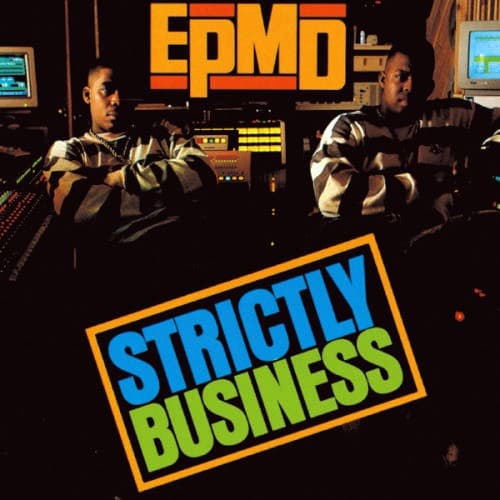
EPMD—Erick and Parrish Making Dollars—arrived in 1988 with a fully formed aesthetic that would influence hip-hop production for decades. The Long Island duo of Erick Sermon and Parrish Smith didn't chase trends or attempt radio-friendly compromises. Instead, they built their sound around deep funk breaks, minimal arrangements, and a relentless focus on the business of rap itself. Their debut album Strictly Business introduced a template: slow-burning grooves, conversational delivery, and an unapologetic emphasis on financial success as the ultimate measure of artistic achievement.
While peers were experimenting with jazz fusion or aggressive battle rap, EPMD carved out territory defined by restraint and groove. Sermon's production drew heavily from forgotten funk 45s and obscure soul cuts, layering sparse drums over bass-heavy loops. The duo's vocal approach matched this minimalism—neither MC pushed technical boundaries or delivered rapid-fire flows. Instead, they perfected a laid-back, almost monotone style that prioritized clarity and confidence over pyrotechnics. This deliberate understatement became their signature, influencing everyone from West Coast G-funk architects to contemporary boom-bap revivalists.
Their impact extended beyond their own recordings. Through the Hit Squad collective, EPMD launched the careers of Redman, Keith Murray, and Das EFX, establishing themselves as talent cultivators and industry strategists. The group's emphasis on ownership, roster-building, and long-term career planning anticipated the entrepreneurial turn hip-hop would take in the late 1990s and 2000s.
Funk Minimalism and the Art of Restraint
EPMD's sonic identity rests on a foundation of deep-crate funk sampling and deliberate sonic sparseness. Erick Sermon's production aesthetic favored monolithic basslines pulled from 1970s funk and soul records, often leaving vast space around the central groove. Tracks rarely featured more than three or four elements—drums, bass, a melodic fragment, perhaps a horn stab. This minimalism created hypnotic, head-nodding rhythms that never rushed or overwhelmed the listener. The production breathed, allowing each element room to resonate.
The duo's vocal delivery reinforced this restraint. Neither Sermon nor Smith employed complex rhyme schemes or acrobatic flows. Their voices occupied a narrow tonal range, often approaching spoken-word monotone. Yet this flatness served a purpose—it created contrast against the funk grooves, positioning the MCs as cool observers rather than aggressive competitors. Lines landed with weight precisely because they weren't oversold. The conversational cadence made business talk and street narratives feel equally matter-of-fact, as if success were inevitable rather than aspirational.
Sermon's sample choices became legendary among producers. He favored obscure breaks over obvious sources, digging for forgotten Kool & the Gang B-sides and regional soul records that hadn't been mined by other beatmakers. The result was a sound that felt both familiar and fresh—undeniably rooted in funk tradition yet distinct from contemporaries. This approach influenced countless producers who learned that innovation could come from restraint as much as complexity, that a perfectly placed bass loop could carry an entire track without embellishment.
From Brentwood Beginnings to Hit Squad Empire
Erick Sermon and Parrish Smith met in Brentwood, Long Island, during the mid-1980s, forming EPMD as hip-hop's golden age began taking shape. Their 1988 debut Strictly Business arrived without major label support or radio buzz, yet became an instant classic through word-of-mouth and club play. The title track's sampling of Eric Clapton's "I Shot the Sheriff" demonstrated Sermon's unconventional ear, transforming a rock-reggae hybrid into a menacing hip-hop foundation. "You Gots to Chill" showcased their laid-back flow over a Zapp interpolation, while deeper cuts revealed a duo completely comfortable in their aesthetic lane.
The album's success established EPMD as East Coast fixtures during an era dominated by Public Enemy's political urgency and Run-DMC's rock fusion. Rather than compete directly, they offered an alternative—hip-hop as entrepreneurial manual rather than revolutionary pamphlet. Follow-up albums Unfinished Business and Business as Usual refined the formula without drastically altering it, each release delivering variations on the funk-driven template. The duo understood their strengths and played to them, releasing albums that felt like sequels rather than reinventions.
By 1992's Business Never Personal, EPMD had built the Hit Squad into a formidable crew. Redman's kinetic energy provided contrast to the duo's calm delivery, while Das EFX's stuttering flow pattern offered stylistic innovation within EPMD's sonic framework. The collective approach created a self-sustaining ecosystem—EPMD albums featured Hit Squad guests, solo albums featured EPMD production, and tours showcased the full roster. This business model anticipated the label-as-movement approach that would define Bad Boy, No Limit, and Roc-A-Fella.
The duo's initial split in 1993 seemed to confirm hip-hop's volatility, yet their 1997 reunion for Back in Business proved their sound retained cultural currency. Later albums like Out of Business and We Mean Business maintained the core aesthetic while acknowledging contemporary production trends. EPMD never chased relevance through radical reinvention—they simply waited for hip-hop to cycle back toward the boom-bap fundamentals they'd always represented.
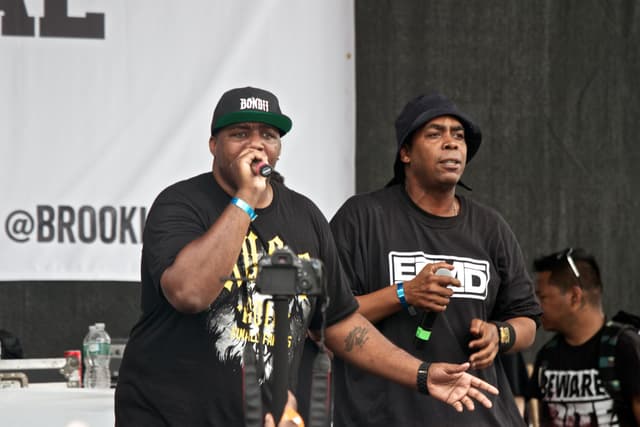
Their sporadic activity since 2000 has cemented their status as elder statesmen rather than active hitmakers. Festival appearances and occasional singles remind audiences of their influence without attempting to dominate modern charts. This approach preserves their legacy—they're remembered for perfecting a specific sound during a specific era, not for desperate late-career pivots.
The Blueprint for Business Rap and Boom-Bap Production
EPMD's influence operates on multiple levels simultaneously. Most obviously, their production aesthetic became a cornerstone of 1990s East Coast hip-hop. The minimalist funk approach, the emphasis on bass and drums over melodic complexity, the preference for obscure samples—these became boom-bap essentials. Producers from DJ Premier to Pete Rock absorbed these lessons, even when developing their own distinct styles. The idea that a great beat could rest on a single perfectly chosen loop traces directly back to Sermon's production philosophy.
Their business-focused lyrical content anticipated hip-hop's entrepreneurial turn by nearly a decade. While 1980s rap celebrated partying, sociopolitical awareness, or battle supremacy, EPMD made financial success the explicit goal. Lines about getting paid, building empires, and treating rap as career rather than art form felt almost heretical in an era that valued authenticity over commercialism. Yet by the late 1990s, this mindset had become hip-hop orthodoxy. Every mogul-rapper who launched clothing lines, liquor brands, or media companies walked a path EPMD had mapped.
The Hit Squad model influenced how artists approached roster-building and collective identity. Rather than simply featuring friends on albums, EPMD created a structured development system—identifying talent, providing production support, facilitating label deals, and maintaining creative control. This professionalized approach to crew management became standard practice for successful hip-hop entrepreneurs.
Contemporary boom-bap revivalists draw heavily from EPMD's catalog, sampling their samples and emulating their unhurried flow patterns. The duo's work proves that innovation doesn't require complexity, that restraint can be as powerful as excess, and that longevity comes from perfecting a signature sound rather than chasing trends. Their discography remains essential listening for understanding how hip-hop production evolved from the 1980s into the 1990s golden age.