Brooklyn's Underground Architects: Black Moon's Foundation in East Coast Hip-Hop
Black Moon emerged from Brooklyn in 1992 as the founding pillar of what would become the Boot Camp Clik collective, bringing a stripped-down, bass-heavy aesthetic that rejected the commercial polish creeping into early-90s hip-hop. The group's core — emcee Buckshot, DJ Evil Dee, and producer 5ft Accelerator — built their reputation on skeletal beats, grimy atmosphere, and street-level storytelling that felt like transmitted dispatches from the concrete itself. Their debut single "Who Got Da Props?" announced their arrival with confrontational energy and minimalist production that became their signature.
What separated Black Moon from their New York contemporaries was their commitment to a sound that felt deliberately austere. While other acts chased radio-friendly hooks or jazz-sampling sophistication, Black Moon stripped hip-hop down to its foundational elements: drums, bass, and uncompromising lyricism. This aesthetic choice positioned them as torchbearers for listeners craving authenticity over accessibility, establishing a blueprint that would influence underground hip-hop for decades.
Their influence extended beyond their own releases. As the nucleus of Boot Camp Clik — which grew to include Smif-N-Wessun, Heltah Skeltah, and O.G.C. — Black Moon helped shape an entire movement within Brooklyn's hip-hop ecosystem. The collective's DIY ethos and family structure offered an alternative model to traditional label systems, creating space for artists who valued creative control over commercial compromise.
Stripped-Down Boom Bap: Black Moon's Minimalist Production Philosophy
The Black Moon sound operates on deliberate scarcity. Evil Dee and 5ft Accelerator, collectively known as Da Beatminerz, crafted instrumentals that favored space over density, allowing each element maximum impact. Their productions typically center on hard-hitting kick drums, crisp snares, and deep basslines with minimal melodic embellishment. When samples appear, they're often chopped to fragments — vocal stabs, horn hits, or piano notes used as percussive accents rather than looping melodies. This approach created a claustrophobic, basement-level atmosphere that matched the street narratives being delivered.
Buckshot's delivery style complements this sonic minimalism perfectly. His flow emphasizes clarity and directness, avoiding the acrobatic wordplay or rapid-fire cadences favored by some peers. Instead, he constructs verses with methodical precision, his voice carrying a calm menace that draws listeners into the narrative rather than overwhelming them with technical display. The chemistry between Buckshot's measured approach and Da Beatminerz's stark production creates a hypnotic effect — tracks that sound deceptively simple on first listen reveal subtle complexities through repeated exposure.
The group's commitment to this aesthetic never wavered, even as hip-hop's sonic landscape shifted dramatically through the mid-90s and beyond. While others incorporated live instrumentation, synthesizers, or polished studio techniques, Black Moon maintained their raw production values. This consistency became both their strength and limitation — they remained beloved by purists while struggling to expand beyond their core audience. The uncompromising nature of their sound ensured they'd never achieve mainstream breakthrough, but it also guaranteed their work would age remarkably well, sounding as potent decades later as it did upon release.
From Underground Legends to Boot Camp Generals: Black Moon's Trajectory
Black Moon's story begins in the Bucktown section of Brooklyn, where Buckshot (Kenyatta Blake) connected with Evil Dee (Dewgarde Holmes) and his brother Mr. Walt, who would become central to Da Beatminerz production team. The group's formation coincided with Brooklyn's emergence from the shadow of other New York boroughs, as local artists began asserting their own distinct identity separate from the Bronx's pioneering legacy or Queens' commercial success.
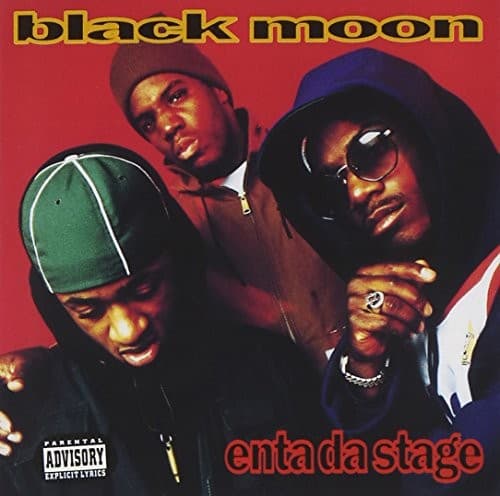
Their 1993 debut "Enta da Stage" arrived as a seismic event in underground circles. Released on Nervous Records, the album rejected every commercial concession, delivering unfiltered street perspective over brutally minimal production. Tracks like "I Got Cha Opin" and "Buck Em Down" became instant underground classics, their stripped-down intensity offering stark contrast to the increasingly polished productions dominating radio. The album didn't chart significantly, but its impact rippled through the culture — here was proof that hip-hop could still sound dangerous, that accessibility wasn't mandatory, that the underground could thrive on its own terms.
The success of "Enta da Stage" enabled the expansion of Boot Camp Clik, with Black Moon serving as elder statesmen to newer additions. Throughout the mid-90s, the collective released a series of albums that built a parallel hip-hop universe — one where commercial viability took backseat to artistic integrity and family loyalty. Black Moon remained active within this structure, appearing on numerous collaborative projects and helping establish the collective's distinctive identity. This period represented the group's creative peak, as they balanced their own releases with their role as Boot Camp's foundational unit.
Their 1999 sophomore album "War Zone" arrived after a six-year gap, finding the group adapting to hip-hop's evolution while maintaining their core aesthetic. The album incorporated slightly more polished production techniques while retaining the raw energy of their debut. Though it didn't recapture "Enta da Stage"'s revolutionary impact, it demonstrated their ability to evolve without compromising. The extended absence between albums became a pattern — Black Moon operated on their own timeline, releasing music when inspiration struck rather than adhering to industry expectations.
The 2000s saw diminishing returns commercially but strengthened legacy status. Their 2003 album "Total Eclipse" and 2005's "Alter the Chemistry" found them still committed to their original vision, even as hip-hop moved toward glossier Southern-influenced production and pop crossover attempts. These later releases functioned more as communiqués to devoted fans than bids for relevance, which paradoxically enhanced their underground credibility. By operating outside industry cycles, Black Moon maintained artistic freedom while accepting limited commercial reach.
The group's activity decreased significantly after 2006, with members pursuing individual projects and production work. Buckshot's solo career expanded, while Da Beatminerz became sought-after producers for artists seeking that authentic boom-bap sound. Though Black Moon never officially disbanded, their active period effectively concluded, leaving behind a concentrated discography that prioritized quality over quantity. Their intermittent activity and refusal to chase trends ultimately strengthened their reputation — they remained uncompromised, a rare achievement in hip-hop's commercially driven landscape.
The Underground Blueprint: Black Moon's Enduring Influence on Independent Hip-Hop
Black Moon's significance transcends their modest commercial footprint. They proved underground hip-hop could sustain itself economically and culturally without mainstream validation, establishing a blueprint for independent artists that remains relevant decades later. Their success — measured not in platinum plaques but in sustained influence and devoted following — demonstrated alternative pathways to hip-hop longevity. Every artist who's chosen authenticity over accessibility, substance over shine, owes something to Black Moon's example.
The Boot Camp Clik model they pioneered influenced hip-hop's collective structure permanently. Groups from Hieroglyphics to Odd Future borrowed elements of their approach: family-based membership, DIY distribution, collective identity balanced with individual projects, and fierce independence from major label interference. Black Moon showed that loyalty and creative control could coexist with professional success, that collectives could function as both artistic and economic units. This organizational innovation may ultimately represent their most lasting contribution beyond the music itself.
Their sonic fingerprint remains audible throughout contemporary boom-bap revivalism. Artists like Griselda Records' roster, Joey Bada$$ and Pro Era, and countless independent producers cite Black Moon's minimalist aesthetic as foundational influence. That raw, unadorned approach to production — the emphasis on drums and bass, the rejection of unnecessary embellishment, the embrace of lo-fi grit — cycles back into fashion periodically as new generations discover that sometimes less delivers more. "Enta da Stage" functions as a masterclass in stripped-down hip-hop construction, its lessons absorbed by producers seeking to recapture that elemental power. The album stands alongside landmarks from Wu-Tang Clan and Mobb Deep as essential documentation of 90s New York's underground Renaissance, a reminder that hip-hop's most potent expressions often emerge from shadows rather than spotlights.