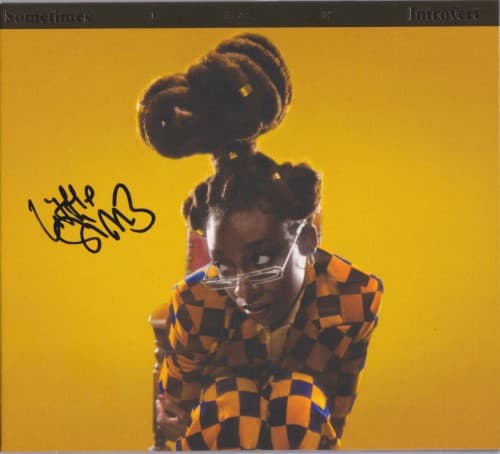
From North London to Global Stages
Little Simz emerged from the independent underground of North London as one of the most technically gifted rappers of her generation. Born Simbiatu Abiola Abisola Ajikawo in 1994, she built her career without major label support for years, releasing mixtapes and EPs that circulated through word-of-mouth recommendations and grassroots touring. Her approach to hip-hop borrows from the storytelling traditions of golden era New York rap while filtering everything through a distinctly British lens. Where many UK rappers lean into grime's aggressive tempos or drill's minimalist production, Simz carved a lane that blends boom-bap sensibilities with orchestral ambition. Her music tackles identity, self-doubt, family dynamics, and the pressures of being a Black woman in an industry that rarely makes room for complexity. By the time Sometimes I Might Be Introvert arrived in 2021, she had already proven that artistic independence and commercial recognition are not mutually exclusive. That album became her defining statement, earning a Mercury Prize and establishing her as a voice that transcends geographic boundaries.
Lyrical Precision Meets Cinematic Production
What separates Little Simz from her contemporaries is the balance between vulnerability and technical control. Her flow shifts between rapid-fire multi-syllabic patterns and slower, more deliberate phrasing depending on what each song demands. She does not rely on a single cadence or vocal trick. Producers like Inflo have been central to shaping her sonic palette, layering live strings, jazz piano, and Afrobeat percussion underneath her bars. The production on her best work feels more like film scoring than conventional hip-hop beatmaking. Lyrically, Simz writes with a novelist's attention to detail. She constructs entire narratives within verses, building scenes rather than stacking punchlines. This approach echoes the storytelling depth found in albums like Illmatic, where every bar serves a larger purpose. Her pen game draws comparisons to artists like Kendrick Lamar for its ability to weave personal confession into broader cultural commentary without losing either thread. She raps about growing up in Islington with the same specificity that Kendrick brings to Compton, turning local geography into universal experience.
Building an Empire on Her Own Terms
Simz released her first mixtape at fifteen and spent the next decade grinding through a music industry that did not know what to do with a young Black British woman who refused to compromise her vision. Her early project Blank Canvas showed raw potential, and by E.D.G.E. she was attracting critical attention beyond the UK. The 2015 debut album A Curious Tale of Trials + Persons announced her arrival as a serious album artist, even if mainstream audiences had not caught up yet. Stillness in Wonderland followed in 2016, a concept album that demonstrated her willingness to take risks. The real turning point came with Grey Area in 2019. That album sharpened everything, earning a Mercury Prize nomination and opening doors internationally. Simz started selling out venues across Europe and North America, building a touring reputation that rivaled rappers with ten times her budget. Sometimes I Might Be Introvert in 2021 was the full realization of her artistic ambitions. A 19-track album with orchestral interludes, it balanced grand thematic scope with intimate personal revelation. The Mercury Prize win confirmed what her fans already knew. Her 2022 release No Thank You stripped things back, proving she could pivot between maximalist and minimalist approaches without losing her identity.
Redefining What a Rapper Can Be
Little Simz represents something significant for both UK hip-hop and the broader rap landscape. She proved that a British rapper could compete at the highest level of lyricism without adopting American accents or abandoning local references. Her success opened pathways for a generation of UK artists who saw that there was space for rap music that did not fit neatly into grime, drill, or pop-rap categories. Beyond geography, Simz challenged the gender dynamics of hip-hop without ever reducing herself to a token. She did not market herself as a female rapper but simply as a rapper, letting the music speak with such authority that the distinction became irrelevant. Her independent approach to career management also set a template. In an era where artists rush to sign major deals, Simz demonstrated that patience, consistent output, and artistic integrity could build a sustainable career. The depth of her catalog at a relatively young age puts her in conversation with artists like J. Cole, who similarly valued album craft over singles culture. For aspiring rappers in London, Lagos, and everywhere between, Simz made the path visible.