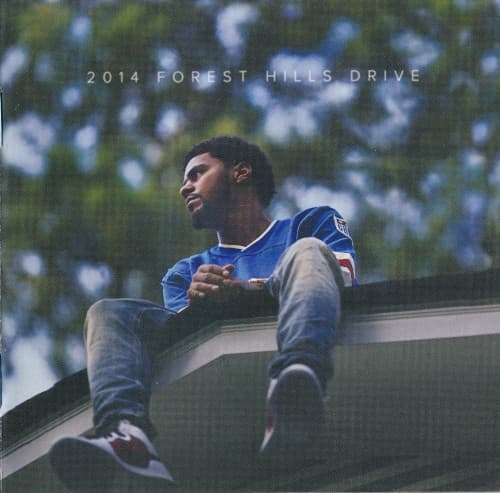
J. Cole 2014 Forest Hills Drive — The Gamble That Proved Everyone Wrong
Strip away every feature, every guest verse safety net, and find out if you can hold an audience for fifty-two minutes alone. That is what Cole bet on here, and the industry whispered he was crazy. Radio wanted hooks. Streaming wanted names. He gave them neither and went platinum anyway. This album is what happens when a rapper stops chasing what works and starts trusting what matters.
The title references the Fayetteville address where Cole grew up, the house his mother rented while he dreamed about escaping North Carolina. He bought that house years later and recorded this entire album inside it. Every room carried a memory. Every corner held a version of himself he had already left behind. You can hear that weight in the production, the way certain songs feel like they are searching for something that already disappeared.
What makes an album autobiographical without making it boring? Cole solved that problem by writing about universal experiences through specific details, following Illmatic's storytelling blueprint of grounding confession in concrete imagery. First sexual encounter. High school insecurity. The gap between who you were and who you pretended to be. He never preaches. He just remembers out loud and trusts you to see yourself in it. The gamble was whether honesty could compete with hype. The answer came back louder than anyone expected.
The Sound of Looking Back Without Flinching
Cole produced every track himself, and the result sounds like a man sitting at a piano trying to figure out what went wrong and what went right. The soul samples feel lived-in rather than flashy, recalling the warm production aesthetic of The College Dropout without the orchestral maximalism. The drums knock but never dominate. The bass lines groove without overwhelming the vocals. This is not trying to be the hardest album of 2014. It is trying to be the most honest.
The production philosophy leans on warmth. Dusty Wurlitzer keys, vocal loops that feel like they came from a record your parents owned, bass that rumbles low and steady. Cole built these beats to give his voice space. He does not yell much. He does not need to. His delivery shifts between conversational and urgent, switching lanes without warning. Some verses feel like he is talking to you at a kitchen table. Others feel like he is arguing with himself in a mirror.
Lyrically he writes about class anxiety, sexual inexperience, survivor guilt, and the distance between where he came from and where he landed. He name-drops the street he grew up on, the girl he liked in high school, the friends who did not make it out. The specificity makes it work. He never hides behind metaphor when a concrete detail will do the job better.
But the album drags in the middle. Two or three tracks overstay their welcome, running past five minutes when four would have hit harder. Cole sometimes chooses explanation over implication, spelling out lessons that would land better left unsaid, a tendency less pronounced on Born Sinner but resurfacing here. The lack of features gives the project cohesion but also exposes moments where a second voice might have added necessary tension. When an album runs this long on one perspective, even a strong perspective, the pace sags.
Still, the vocal performance carries weight. Cole raps like someone who spent years perfecting technique and finally decided to stop showing off. The flows feel natural. The punchlines land without begging for applause. He sounds comfortable, and that comfort makes the confessional moments hit harder. You believe him because he is not trying to convince you.
The Journey From Adolescence to Acceptance
The album opens with scene-setting and builds toward self-awareness, moving chronologically through Cole's life from high school to the present. The first stretch establishes youth and uncertainty. The middle section confronts fame and its contradictions. The back half wrestles with gratitude and guilt. The sequencing mirrors the emotional arc of growing up and realizing you cannot go back.
Early on, the pacing moves quickly, each song sliding into the next without pause. The production stays warm, the tempos stay mid, and Cole's voice stays centered. Around the halfway point the album shifts. The beats get harder. The subject matter darkens. Cole stops reminiscing and starts interrogating himself. The momentum picks up just as the subject matter gets heavier, and the contrast works.
Then the final stretch slows down again. The production turns softer. The drums thin out. Cole stops rapping about the past and starts rapping about perspective. The songs get quieter, more reflective, less concerned with proving anything. By the time the album ends, it feels like the journey was always headed toward acceptance rather than triumph. The arc does not resolve cleanly. It just stops trying to fight what already happened.
The sequencing stumbles once. One cut in the second half feels like it belongs elsewhere, breaking the emotional build with a tonal shift that does not quite fit. But the album recovers quickly, and the closing run more than compensates. The final three tracks form a thematic unit that justifies everything that came before it.
The Album That Redefined What Platinum Could Mean
In Cole's discography this sits near the top. It does not have the raw hunger of his earlier work or the experimental ambition of what came after, but it has something neither of those projects fully achieved: clarity. He knew exactly what he wanted to say and said it without distraction. For fans who value storytelling over spectacle, this is his most complete statement.
Who should listen: anyone who grew up working-class and made it out, anyone who wonders if success was worth the distance it created, anyone tired of hearing rappers flex without saying anything. Who might skip it: listeners who need constant energy shifts, fans of maximalist production, anyone allergic to introspection. This album rewards patience. It does not grab you in thirty seconds. It earns you over fifty minutes.
It aged well. The lack of trends means nothing here sounds dated. No trap ad-libs to cringe at later, no 2014 slang that died in 2015, no features that overshadow the main artist. The album exists outside its moment, which is rare for a project this commercially successful. A decade from now it will still sound like this: one man, one house, one story.
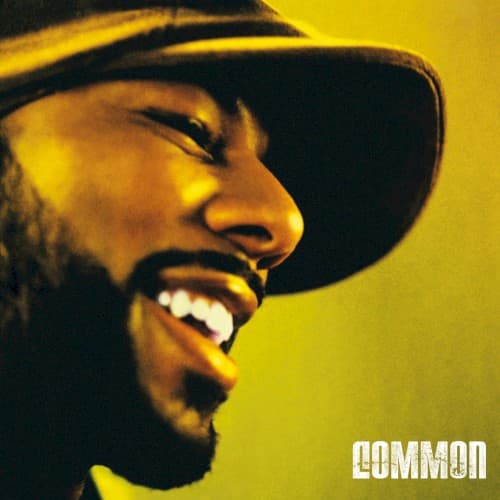
Essential tracks to start with: No Role Modelz for the anthem, Wet Dreamz for the storytelling, Love Yourz for the thesis statement. Similar albums to explore: Kendrick Lamar's Section.80 for the coming-of-age narrative, which shares DNA with good kid, m.A.A.d city, Nas' Illmatic for the autobiographical focus, Common's Be for the soulful introspection. Long-term influence: this album proved platinum was possible without features, without radio singles, without compromise. Every artist who went independent after 2014 studied this blueprint.
The kids who grew up in houses like the one on Forest Hills Drive heard themselves in this music and realized their stories mattered too.
Track Listing
Intro
▲Eighty seconds of scene-setting. Cole walks through the house where he grew up, describing the rooms and the memories they hold. No drums, just a looped vocal sample and his voice. It functions as a thesis statement, establishing the album's autobiographical framework without overstaying its welcome. Short enough to work as an intro, substantive enough to justify its existence.
January 28th
▲The first full track opens with a soulful sample and a confession: Cole admits he almost quit rap. The production feels like sunrise, hopeful but uncertain. He raps about doubt, about watching peers blow up while he stayed underground, about the moment he decided to keep going. The hook is minimal, just a repeated phrase over the loop. The verses move quickly, each bar building momentum. This works as an opening statement because it establishes vulnerability before confidence. Cole is not posturing. He is explaining how he got here, and the honesty makes everything that follows feel earned. The beat never switches, never adds layers, just holds steady while Cole works through his anxieties. It is a strong start, though the song could have been thirty seconds shorter without losing impact.
Wet Dreamz
▲This is the most ambitious storytelling on the album. Cole narrates his first sexual experience with the detail and humor of a comedian working out a bit. The beat is playful, bouncing on a piano loop that matches the nervous energy of the story. He raps from the perspective of a high school kid pretending to have experience he does not have, lying to a girl who is also lying about her experience. The verses are packed with specifics: the Rough Ryders shirt, the nervousness, the fumbling. The punchline lands in the final verse when both characters admit they were virgins. What makes this work is Cole's willingness to be unheroic. He does not rewrite history to make himself look cool. He just tells the truth and lets the awkwardness speak for itself. The production stays light, never overwhelming the narrative. It is one of the best pure storytelling tracks in his catalog, and it connects because everyone remembers being that kid.
03' Adolescence
●A two-part track that shifts halfway through. The first half is introspective, Cole rapping over a somber piano loop about a friend who got caught up in the streets. The second half switches to a harder beat and a more aggressive flow. He raps about the choices that separate people, the randomness of who makes it out and who does not. The beat switch works because it mirrors the thematic split: before and after, innocence and consequence. The storytelling is strong, but the song runs long. At over five minutes, it starts to feel like two separate ideas that could have been trimmed or split into two tracks. Still, the emotional weight carries it. Cole sounds genuinely conflicted, wrestling with guilt over escaping while others did not.
A Tale of 2 Citiez
▲The hardest beat on the album. Heavy drums, a menacing bass line, and Cole rapping about the duality of his life: the hood he came from and the industry he entered. The hook is simple but effective, repeating the central contrast without overexplaining. The verses are dense, packed with internal rhymes and multi-syllabic patterns. He name-drops Fayetteville, describes the block, contrasts it with the Hollywood parties he now attends. The production is peak mid-2010s Cole, balancing boom-bap influence with modern low-end. This is the track that proved he could still rap hard when he wanted to. The only weakness is the outro, which drags slightly, but the first three minutes are relentless. It is one of the most replayable cuts here.
Fire Squad
●Cole takes aim at the industry, calling out cultural appropriation and the commodification of Black music. The production is aggressive, built on a looped vocal sample and pounding drums. He raps about white artists profiting from Black culture, about the Grammys ignoring hip-hop, about the hypocrisy of mainstream acceptance. The verses are sharp, the anger feels genuine, and the message is clear. But the execution is heavy-handed. Cole spells out his points with less subtlety than usual, and the song suffers for it. The hook is repetitive without being catchy. The beat is strong, but it does not evolve. This is an important song thematically, but it is not one of the most compelling listens on the album. It feels like a statement Cole felt obligated to make rather than a track he was excited to create.
St. Tropez
●A flex track that does not quite fit the album's tone. Cole raps about success, about travel, about the perks of fame. The production is smooth, built on a jazz-influenced sample, but the subject matter feels disconnected from the introspective narrative the album has been building. The verses are technically solid, but they lack the emotional weight of the surrounding tracks. This is the moment where the album sags. It is not a bad song, but it feels like filler, a detour that does not advance the story or deepen the themes. Skippable.
G.O.M.D.
▲Get Off My Dick. Cole responds to critics, to doubters, to anyone questioning his place in the game. The beat is hard, driven by a hypnotic loop and Cole's most aggressive delivery on the album. He raps with the confidence of someone who no longer cares about approval. The verses are confrontational, the hook is blunt, and the energy is sustained from start to finish. This is the moment where Cole stops being reflective and starts being defiant. The contrast works. After an album full of introspection, the aggression feels earned rather than forced. The production is minimal, just a loop and drums, which keeps the focus on Cole's voice. It is one of the strongest performances here, even if the subject matter is less substantive than earlier tracks.
No Role Modelz
▲The song that defined the album in the public imagination. Built on a sample of Don't Save Her by Project Pat, the track became an anthem for self-sufficiency and the rejection of false idols. The production is infectious, the hook is undeniable, and the verses balance humor with social commentary. Cole raps about groupies, about the entertainment industry, about the impossibility of finding role models in a culture built on spectacle. The storytelling in the second verse about Paula, a stripper he knew in college, is some of the best character work on the album. The song is catchy without being shallow, substantive without being preachy. It became a cultural moment, the kind of track that plays at parties and also gets quoted in think pieces. The only weakness is that its success overshadowed the rest of the album, making it harder for casual listeners to engage with the deeper cuts. But that is not the song's fault. It is just that good.
Hello
●A downtempo cut about loneliness and the cost of fame. The production is sparse, just a piano loop and minimal drums. Cole raps about missed connections, about the people he lost touch with, about the isolation that comes with success. The verses are introspective, the hook is melancholic, and the mood is heavy. It works as a comedown after the aggression and energy of the previous tracks. The storytelling is less detailed here, more impressionistic, which gives the song a dreamlike quality. It is not one of the most memorable tracks, but it serves an important role in the album's emotional arc. The production could have been more dynamic, and the song runs slightly long, but the sentiment is genuine.
Apparently
▲Cole addresses his mother, apologizing for the distance fame created and reflecting on the sacrifices she made. The production is warm, built on a soulful sample and steady drums. The verses are packed with gratitude and guilt, Cole acknowledging that his success came at a cost to the people who raised him. The hook is simple and effective, a repeated apology that grows in weight with each repetition. This is one of the most emotionally direct tracks on the album, and it works because Cole does not hide behind metaphor. He just says what he needs to say. The production supports the lyrics without overwhelming them, and Cole's vocal delivery is restrained, which makes the emotion land harder. It is a strong penultimate track, setting up the album's final statement.
Love Yourz
▲The thesis statement. Cole raps about contentment, about the impossibility of happiness if you are always chasing more. The production is uplifting, built on a bright piano loop and layered vocals. The hook is direct: no such thing as a life that is better than yours. The verses expand on that idea, Cole reflecting on his own journey and the realization that success did not bring the fulfillment he expected. This is the moment where the album's themes crystallize. Everything before this was buildup. This is the payoff. The production is lush without being overly complex, and Cole's delivery is confident without being preachy. He sounds like someone who learned the lesson the hard way and wants to save you the trouble. It is the strongest closing track he has written, and it justifies the entire album. The only minor issue is that the message is stated so clearly it leaves little room for interpretation, but that directness is also what makes it resonate with so many listeners.
Note to Self
●A hidden track that plays after silence. Cole freestyles over a minimal beat, reflecting on the album, his career, and his mindset. It feels like an exhale, a moment of spontaneity after a meticulously crafted project. The verses are loose, less polished than the rest of the album, which gives them a rawness the main tracks sometimes lack. It does not add much thematically, but it provides a sense of closure, a reminder that the artist behind the album is still figuring things out. It is a nice bonus for listeners who stick around, but skipping it does not diminish the album experience.