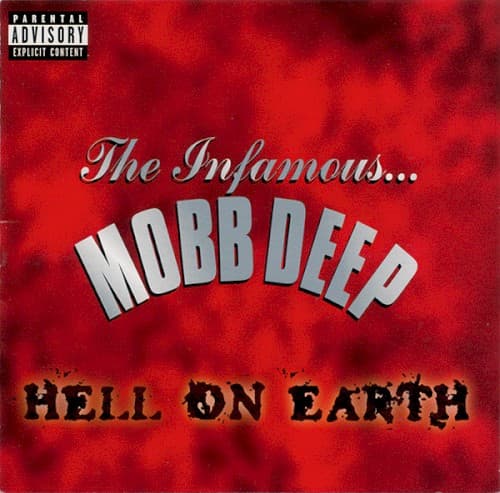
Mobb Deep Hell on Earth — When Paranoia Became Religion
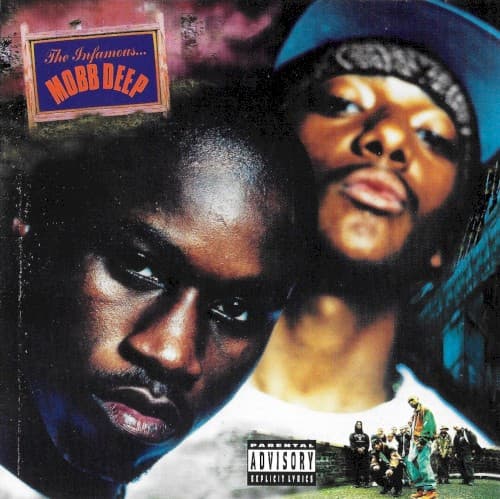
No other rap album has weaponized dread this effectively. Hell on Earth sounds like twenty-five winters compressed into forty-seven minutes, every kick drum a door getting kicked in, every piano note a window view of something you were not supposed to see. This is not music designed to comfort. Havoc and Prodigy built this album as a survival manual for a New York that does not exist anymore, a city where every block had its own Cold War and every corner required tactical planning. The Infamous introduced Mobb Deep as masters of claustrophobia. Hell on Earth perfected it. Where their 1995 breakthrough felt like watching predators stalk prey, this follow-up feels like being the prey. The production got colder. The raps got meaner. The paranoia metastasized from artistic choice into structural law. Nothing on this album trusts you. Every song assumes you are either police, competition, or bait. Havoc's production strips away anything resembling warmth. The pianos sound like they were recorded in abandoned project stairwells. The drums hit with the flatness of concrete. The bass does not rumble — it looms. This is boom bap drained of all romanticism, all nostalgia, all hope. What makes Hell on Earth essential is not just the sound but the absolute commitment to a worldview. Prodigy and Havoc never break character, never offer relief, never gesture toward redemption. From the first bar to the last, this album maintains a single temperature: freezing. Does that make it exhausting? Yes. Does that make it brilliant? Also yes.
The Sound of Windows Frosted Over
Havoc produced nearly the entire album himself, and the result sounds like a man who spent months in a basement perfecting one feeling: cold. The pianos on Hell on Earth do not play melodies — they haunt. Every loop feels minor-key even when it is not, every sample choice deliberately depressive. The drums refuse to swing. They land with the mechanical precision of a metronome counting down to something terrible. Where The Infamous had moments of swing and groove, Hell on Earth eliminates them. This is not music to nod your head to. This is music that nods at you. Prodigy's delivery reached its most controlled here. He does not raise his voice. He does not speed up. He speaks every line like he is giving testimony in a courtroom where the jury already convicted him. The monotone becomes hypnotic. His voice carries the flatness of someone who stopped being surprised by violence years ago. Havoc matches him bar for bar, his nasal tone cutting through the murk like headlights through fog. The chemistry between them feels telepathic — they finish each other's threats. Lyrically, this album operates on two levels: tactical and spiritual. The tactical level covers the usual Mobb territory — guns, money, survival codes, payback. The spiritual level is where Hell on Earth separates itself. Prodigy in particular treats street life like a religion with its own martyrs, commandments, and apocalypse. He references death constantly but never fears it. He anticipates it. The album's biggest flaw? Its relentless bleakness. Hell on Earth offers no variation in mood, no moments of levity, no breathing room. By the back half, the unrelenting grimness starts to feel monotonous. The production palette, while effective, recycles the same sonic tricks — ominous piano, muted horns, spare drums — until the songs blur together. For casual listeners, this album demands too much. For believers, that commitment to a single vision is exactly the point.
Forty-Seven Minutes in the Freezer
The album opens with its thesis already proven and never softens. The first stretch establishes the tone so effectively that the rest of the record becomes variations on a theme rather than new arguments. Animal Instinct through Bloodsport functions as a cold open, three songs that announce exactly what kind of winter you are entering. The middle section is where the album gets its most hypnotic. The sequencing here feels less like a tracklist and more like a descent, each song pulling you deeper into the ice. The momentum never accelerates. It just sinks. By the time you reach the back half, the album has trained you to accept its worldview. The paranoia feels normal. The violence feels logical. The coldness feels appropriate. What Hell on Earth lacks in dynamic range, it compensates for with suffocating consistency. This is not an album that builds to a climax. It starts at the climax and holds it for forty-seven minutes. The sequencing reflects that choice — no peaks, no valleys, just one long plateau of dread. Some albums are journeys. This one is a trap.
The Gospel According to Queensbridge
Hell on Earth ranks second in Mobb Deep's discography, which means it is still better than ninety percent of what New York rap produced in the nineties. It does not have the discovery factor of The Infamous, but it perfects everything that album introduced. This is Mobb Deep at their most uncompromising, their most technically refined, their most spiritually committed to the void. Who should listen? Fans of unfiltered boom bap, anyone studying East Coast production aesthetics, anyone who wants to understand what New York rap sounded like before it tried to sound happy. Who might bounce off it? Listeners looking for variety, anyone who needs dynamic shifts to stay engaged, anyone allergic to bleakness. How has it aged? Better than expected. While some nineties rap albums sound dated by their optimism or aggression, Hell on Earth aged into a historical artifact. It sounds exactly like what it was — the last gasp of a New York that gentrification would erase within a decade. The production holds up because Havoc avoided gimmicks. The raps hold up because Prodigy and Havoc never leaned on slang or references that would expire. Essential tracks include Drop a Gem on 'em for its piano stabs, Hell on Earth (Front Lines) for its title-track authority, and G.O.D., Part III for its distillation of the album's worldview into four minutes. Similar albums worth exploring: Tragedy Khadafi's Saga of a Hoodlum for similar Queensbridge paranoia, Capone-N-Noreaga's The War Report for another frozen New York landscape, CNN's debut builds on what Mobb Deep mastered here. Long-term influence? Hell on Earth codified the dark boom bap aesthetic that would define underground East Coast rap for the next decade. Every cold piano loop, every monotone threat, every album that chose dread over bravado borrowed from this template. Hell on Earth is not the greatest Mobb Deep album, but it might be their coldest.
Track Listing
Animal Instinct
▲The album opens with Prodigy already in survival mode, his voice flat and factual as he catalogs threats and calculates responses. Havoc's production strips everything down to piano stabs and a drum pattern that sounds like it was programmed in a walk-in freezer. No intro, no buildup, just immediate immersion in the coldest water. The hook barely qualifies as a hook — it is more like a mantra repeated until you believe it. This is Mobb Deep announcing that Hell on Earth will offer no warmth, no entry ramp, no orientation period. You are either already fluent in this language or you are tourist. The song works as a mission statement, but it also reveals the album's central limitation: when you start this cold, you have nowhere colder to go.
Drop a Gem on 'em
▲I first heard this track in a Flatbush basement in 1997, someone's older brother playing it on repeat while we passed around a blunt nobody should have been smoking. The piano loop hit different in that context — menacing but also hypnotic, the kind of beat that makes you stare at a wall and think about consequences. Prodigy's verse here might be his most technically refined on the entire album. He does not waste a single bar on filler or setup. Every line either threatens, warns, or indicts. Havoc matches him with a verse that sounds exhausted and wired at the same time, his voice cutting through the mix like a box cutter through cardboard. The song title promises wisdom, and the track delivers it in the form of street scripture. This is one of the album's most replayable moments because the production loop never gets stale and both verses reward close attention.
Bloodsport
▲The drums on this one land heavier than anywhere else on the album, each kick sounding like furniture getting dragged across hardwood. Havoc's production builds around a horn sample that feels more ominous than triumphant, a funeral march for someone who is not dead yet. Prodigy's delivery here gets more aggressive than usual, his voice rising just slightly above his typical monotone to emphasize certain threats. The song title references violence as entertainment, and the lyrics lean into that framing — this is not murder as necessity but as sport, as craft, as performance. It ranks among the album's more visceral moments, proof that Mobb Deep could still access rage even when their default mode was cold calculation.
Extortion
●Havoc and Prodigy trade verses about monetary violence, each bar treating robbery as business rather than crime. The production feels slightly more uptempo than the surrounding tracks, which gives the song a rare sense of forward motion on an album that mostly prefers to stare and wait. The piano loop here sounds almost playful compared to the rest of Hell on Earth, though that might just be relativity — calling anything on this album playful is like calling a meat locker warm because it is not a cryogenic chamber. Method Man and Raekwon appear here, and their verses inject just enough Wu-Tang energy to shift the song's center of gravity. Rae in particular sounds more animated than either Mobb member, his voice rising and falling where Prodigy and Havoc stay flat. The feature verses highlight the album's central weakness: when everyone sounds the same temperature, the monotony becomes numbing.
More Trife Life
●Big Noyd shows up sounding exactly like Prodigy, which either proves the Queensbridge water supply was contaminated or confirms that Mobb Deep's aesthetic was so strong it erased individuality. The production here recycles the same elements — minor-key piano, muted drums, bass that hovers rather than knocks — that defined the previous four tracks. Noyd's verse works as a continuation rather than a disruption, his threats delivered with the same flatness, the same tactical precision, the same refusal to acknowledge joy. The song title references the original Trife Life from The Infamous, but this version feels less hungry and more resigned. It is competent Mobb Deep formula execution, which means it is better than most rap albums' best songs, but it also reveals how the album's commitment to consistency becomes a structural trap.
Man Down
●This might be the album's most claustrophobic moment, the production so sparse it feels like Havoc deleted half the elements and decided the empty space worked better. The drums barely register. The piano sounds like it was recorded three rooms away. Prodigy and Havoc trade verses about retaliation, their voices so close in tone and cadence that distinguishing who is rapping becomes difficult without checking the liner notes. The song works as an exercise in minimalism, proof that Mobb Deep could strip boom bap down to its skeletal components and still make it function. But it also highlights the album's redundancy. By track six, Hell on Earth has made its point three times over. What comes next feels less like development and more like repetition.
Can't Get Enough of It
▼Skip.
Nighttime Vultures
▲The title alone does more work than half the hooks on this album. Havoc's production here builds around a string sample that sounds stolen from a horror film score, all tension and no release. Prodigy's verse catalogs nocturnal predation with the detachment of a nature documentary narrator. Havoc follows with a verse that mirrors the structure but darkens the implications. The song functions as a mission statement for the album's second act, a reminder that Hell on Earth operates on circadian rhythms where daylight does not exist. The production's reliance on strings gives the track a slightly different texture than the piano-heavy songs surrounding it, which makes it one of the album's more memorable moments even though it follows the same thematic blueprint.
G.O.D., Part III
▲Part three of a trilogy that started on The Infamous, and the song title does not stand for God — it stands for Guns On Deck or Guerrillas On Da, depending on which liner notes you believe. Regardless, this track distills the entire album's worldview into four minutes. Prodigy's verse here might be his most apocalyptic, every line treating violence as inevitable rather than optional. Havoc's production stays minimal, just drums and a bass loop that sounds like a heartbeat recorded underwater. The song has no hook in the traditional sense, just a repeated phrase that functions more like punctuation than chorus. This is Mobb Deep at their most uncompromising, their most lyrically dense, their most sonically oppressive. It rewards repeat listens but also exhausts them. By the tenth spin, the weight becomes too much.
Get Dealt With
●Another threat catalog, another minor-key piano loop, another pair of verses delivered in the same monotone that defined the previous nine songs. At this point in the album, the redundancy is not a flaw — it is the aesthetic choice. Hell on Earth wants you numb. It wants you accepting that this is the only temperature, the only mood, the only worldview that matters. The song works on its own terms but contributes to the album's suffocating consistency. Casual listeners will skip it. Believers will nod along.
Hell on Earth (Front Lines)
▲The title track arrives two-thirds through the album, which is either bold sequencing or proof that Mobb Deep did not care about traditional album structure. The production here gets slightly more layered than usual, horns and strings competing with the piano for space in the mix. Prodigy and Havoc both sound more urgent than they have in several tracks, their voices rising just enough to signal that this song carries extra weight. The lyrics treat the album title as both metaphor and reality — the streets are hell, the earth is hell, existence is hell, and the front lines are wherever you happen to be standing. Rakim shows up for a verse that reminds you that New York rap used to sound different, his voice smoother and his cadence more musical than anything Mobb Deep attempts. His appearance highlights what Hell on Earth sacrifices for consistency: dynamics. The song ranks among the album's essential tracks, but mostly because the title demands it.
Give It Up Fast
●A robbery anthem that treats stickup work as routine labor, the lyrics delivered with the enthusiasm of someone filling out tax forms. The production stays locked into the album's established palette, which by track twelve feels less like commitment and more like creative limitation. The song works as another data point proving Mobb Deep's technical skill, but it does not offer anything the previous eleven tracks have not already established. Competent, cold, redundant.
Still Shinin'
●The penultimate track gestures toward resilience, the title suggesting survival despite the odds. But the production and delivery stay as bleak as everything that came before, which undercuts the supposed message. Prodigy and Havoc rap about still being here, still being relevant, still being dangerous, but they deliver those claims with the same lifeless tone they used to describe murders and robberies. The song works as a thesis statement for Mobb Deep's entire aesthetic — even triumph sounds like defeat when you refuse to modulate. Still Shinin' is solid craft executed within a formula that has already exhausted itself.
Apostle's Warning
●The album closes with a nine-minute posse cut that functions more as epilogue than climax. Havoc and Prodigy anchor the track, but verses from Infamous Mobb members stretch the runtime until the song stops feeling like a song and starts feeling like a cypher. The production stays minimal, just drums and a bass loop that could have been lifted from any other track on the album. By the time the ninth minute arrives, Hell on Earth has overstayed its welcome. The song is not bad — none of the verses embarrass themselves — but it highlights the album's central weakness. When you build an entire album around one mood, one tempo, one temperature, length becomes the enemy. Apostle's Warning would work as a three-minute closer. At nine minutes, it feels like Mobb Deep forgot how to end the album and just let the tape run.