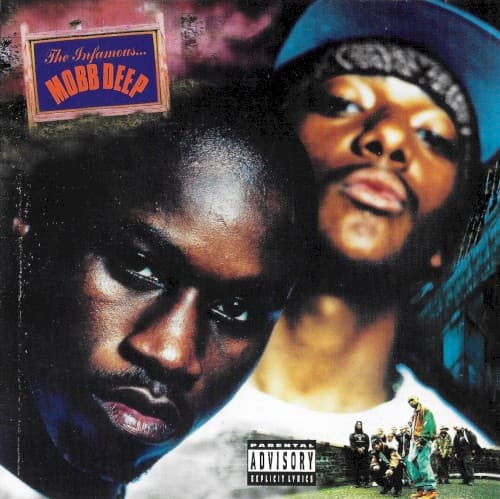
Mobb Deep The Infamous — When Queensbridge Finally Spoke for Itself
No other debut has been this ruthless about its own survival instinct. This is forty-one minutes of two kids from Queensbridge explaining exactly what happens when the rest of the world stops paying attention to your neighborhood. Prodigy and Havoc did not arrive with a marketing plan or a crossover single. They arrived with dust on the drums and murder in the sequencing.
East Coast rap was losing the war in early 1995. G-funk had conquered radio. Death Row was printing money. New York had answers, but most of them sounded defensive or nostalgic. Then Havoc locked himself in a basement with an SP-1200 and started sampling piano loops that sounded like they were recorded in abandoned project stairwells. Prodigy wrote like someone who had been cataloging grudges since sixth grade. Together they made an album so cold it required no explanation.
What separated this from every other street record that year?
It refused to justify itself. There are no skits explaining the block. No interludes with news reports or movie dialogue setting the scene. Just beat after beat of minimalist loops, dead-eyed threats, and two voices that sound like they have been awake for three days straight. The Infamous does not ask for your empathy. It does not even ask for your attention. It simply exists, fully formed, with the confidence of something that has already outlived you.
The Sound of Survival With No Exit Strategy
Havoc built these beats like someone constructing traps. Sparse piano loops, kicks that hit below the ribs, snares that crack like frozen branches. He stripped out everything that was not essential. No horns. No funk breaks. No wasted motion. Every sound serves the paranoia. When a bass note drops on Survival of the Fittest it does not just anchor the track — it confirms that something bad is about to happen.
The production philosophy here is deprivation. Havoc was not chasing radio. He was not trying to out-funk the West Coast. He was making beats for people who walked through Queensbridge after dark and understood that silence can be more threatening than noise. The loops feel unfinished on purpose, like the song might stop at any moment and leave you alone with your thoughts. Q-Tip contributed to two tracks and brought a slightly warmer touch, but even his work on Drink Away the Pain feels shadowed by regret.
Prodigy's writing operates on two levels: the immediate threat and the slow burn of resentment. He does not waste bars on scene-setting. He assumes you already know the block, the cops, the friends who turned into enemies. His delivery is flat affect with flashes of venom. He never raises his voice to make a point. The monotone is the point. Havoc matches him with a gruffer tone, providing the muscle to Prodigy's icepick precision. Together they sound like the last two people still awake in a city that gave up on them years ago.
Is there a weakness? The album's refusal to offer variation becomes its own limitation. A few tracks blur together in the middle stretch. Temperature's Rising and Trife Life cover similar thematic ground without distinct enough production to separate them. The Infamous demands full attention or it starts to feel like a loop of dread. But that monotone aesthetic is also what makes it bulletproof against trends. Nothing here has aged because nothing here was ever trying to sound contemporary.
The Long Walk Through Queensbridge at 3 AM
The sequencing mirrors the experience of walking through the projects after midnight: every corner could be the last one. The Infamous opens with The Start of Your Ending, which functions as both a warning and a mission statement, then transitions through a brief prelude into Survival of the Fittest, the moment the album announces itself as something genuinely dangerous. From there the pacing never lets up. Eye for an Eye extends the threat. Give Up the Goods confirms it. By the time you reach the middle section, the album has trained you to expect no relief.
The back half tightens the noose. Up North Trip through Cradle to the Grave represents the darkest stretch, where even the few guest appearances feel like temporary distractions before the inevitable return to isolation. Then Shook Ones Pt. II lands near the end, not as a climax but as a confirmation of everything that came before it. Placing the most famous song second-to-last was a power move: it says the album does not need that track to justify itself. Party Over closes the record with the same energy it started with — no resolution, no catharsis, just the understanding that tomorrow will be the same as today.
The flow of this album is suffocating by design. There are no breathers, no moments of triumph, no club tracks to break the tension. It is the sound of two people describing their environment in real time with no expectation that anyone will help them leave it. The sequencing does not build toward hope. It builds toward acceptance.
The Album That Defined East Coast Rap's Second Act
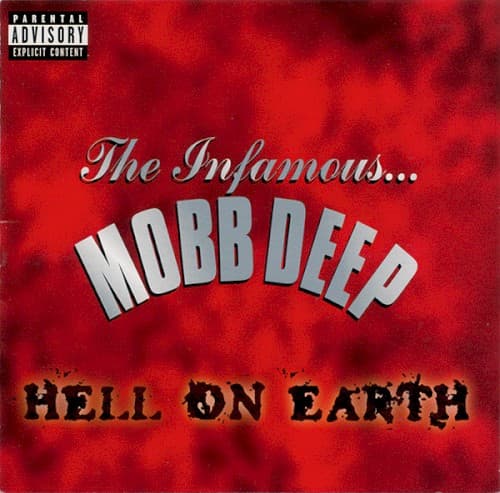
This is the best album Mobb Deep ever made, and it is not close. Hell on Earth came close to matching it, but The Infamous has something that record lacks: the hunger of a debut and the focus of artists who know this might be their only shot. Within Mobb Deep's discography this sits at the top, untouchable, the purest distillation of what they were capable of before expectations, budgets, and label pressure entered the equation.
Who should listen? Anyone interested in production minimalism, anyone studying how to write about violence without glorifying it, anyone curious why Queensbridge became synonymous with a specific strain of New York rap. Who might not enjoy it? Listeners looking for lyrical variety, dynamic range, or anything resembling optimism. This is not background music. It is a record that demands you sit with it and accept its worldview for forty-one minutes.
How has it aged? Flawlessly. The production choices that sounded stark in 1995 now sound prophetic. Trap music would eventually adopt this same skeletal minimalism. UK grime would borrow the claustrophobic loops. Griselda would build an entire aesthetic around the same refusal to add unnecessary elements. The Infamous planted a flag that still stands.
Essential tracks for new listeners: Survival of the Fittest, Shook Ones Pt. II, Give Up the Goods. If those three do not pull you in, the rest will not either. Similar albums: Nas Illmatic, Raekwon Only Built 4 Cuban Linx, Ready to Die — all 1994-1995 New York classics, but none this cold. Long-term influence: every street rapper who prioritized atmosphere over aggression owes something to this album. It proved you could make a menacing record without yelling.
Two decades later, this remains the sound of New York with its back against the wall and no interest in explaining itself to outsiders.
Track Listing
The Start of Your Ending (41st Side)
▲The mission statement. Havoc's loop is just a piano phrase and a kick, but the space between the notes does all the work. Prodigy opens with "to all the killers and the hundred dollar billers" and immediately establishes who this album is for and who it is against. His threat is not hypothetical — it is documentation. Havoc's verse is gruffer, more direct, the enforcer to Prodigy's strategist. The production feels unfinished, like Havoc recorded it and decided it did not need another layer. That restraint is what makes it work. No hook, no breakdown, just two and a half minutes of explaining what happens if you test them. The 41st Side reference roots the track in Queensbridge geography, a reminder that this is not abstract posturing. This is reporting.
[The Infamous Prelude]
●Forty-five seconds of scene-setting. Havoc and Prodigy trade phrases over a stripped loop, no drums, just ambient dread. It functions as a breath before the storm, a moment to prepare the listener for what comes next. Effective but not essential — you could skip it and lose nothing structural. The vocal delivery is flat, almost conversational, which makes the transition into Survival of the Fittest hit harder.
Survival of the Fittest
▲This is the track that announced Mobb Deep as a problem. Havoc's beat is a horror movie — dissonant piano stabs, a bassline that feels like it is stalking you, drums that snap with mechanical precision. Prodigy's opening verse is one of the coldest in 90s rap: "there's a war going on outside no man is safe from." He is not dramatizing. He is stating terms. His internal rhyme schemes are deceptively complex, but the delivery is so matter-of-fact that you do not notice the technique until the third listen. Havoc's verse matches the energy but adds more explicit violence, more direct threats. The hook is minimal — just the title phrase repeated — but it lodges in your brain because everything around it is so stark. The beat never resolves. It just loops, creating a sense of inevitable conflict with no resolution. This track became a blueprint for how to make a street record without leaning on funk or soul samples. It is all minor keys and negative space, and it has not aged a day since 1995. If you play this for someone who has never heard Mobb Deep and they do not react, they are not your audience.
Eye for an Eye (Your Beef Is Mines)
▲Nas and Raekwon show up, and the track becomes a posse cut without losing Mobb Deep's aesthetic. Havoc's beat is another skeletal loop, piano and bass, nothing wasted. Prodigy opens and sets the tone: revenge is not emotional, it is procedural. Nas delivers one of his coldest guest verses, matching the song's energy without trying to outshine anyone. Raekwon brings his mafioso imagery, slightly more cinematic than the other verses but still grounded in threat. The chemistry here is what makes it work. All four rappers understand the assignment: no punchlines, no flexing, just descriptions of violence as routine. Havoc's verse near the end is the anchor, reminding you whose album this is. The beat's refusal to build or climax keeps the tension consistent. This is one of the most successful posse cuts of the 90s because no one tries to steal the track. Everyone serves the song. The title is literal — this is about loyalty and retaliation, not metaphor.
[Just Step Prelude]
●Another interlude, this one even shorter. Thirty seconds of Havoc and Prodigy trading threats over a muted loop. It sets up Give Up the Goods but does not add much beyond mood. Effective as a transition but skippable on repeat listens.
Give Up the Goods (Just Step)
▲Big Noyd guests, and the beat is one of the album's most aggressive. Havoc uses a choppier loop, faster drums, more urgency. This is the closest the album gets to traditional East Coast boom bap, but even here the production is stripped down compared to what DJ Premier or Pete Rock were doing at the time. Big Noyd's verse is solid — he matches the intensity without trying to compete — but Prodigy's verse is the standout. His flow here is faster than usual, more insistent, like he is running through the verse before the beat can catch up. Havoc's verse near the end brings the temperature back down, his gruffer delivery contrasting with Prodigy's sharper cadence. The hook is minimal, just the phrase "give up the goods" repeated with slight variations. The track works because it offers a slight shift in energy without abandoning the album's overall aesthetic. It is more kinetic than menacing, but the menace is still present in every bar.
Temperature's Rising
●Crystal Johnson handles the sung hook, and the track experiments with a slightly warmer sound. The beat has more melodic elements, a string sample that adds a layer of melancholy. Prodigy and Havoc both write about betrayal, but the focus is more on the emotional fallout than the retaliation. This is one of the album's few moments where vulnerability slips through, even if the verses still catalog threats. The problem is that the hook does not fully integrate with the verses. Johnson's singing is fine, but it feels imported from a different album. The track is not bad, but it disrupts the album's flow. Coming after the intensity of Give Up the Goods, the shift in tone feels like a retreat rather than a progression. Still, Havoc's production keeps it grounded, and Prodigy's verse in the second half pulls it back toward the album's core aesthetic.
Up North Trip
▲I heard this for the first time in a car headed upstate in 1996, windows down, late spring, and the beat felt like watching the city disappear in the rearview. Havoc's production here is minimal even by his standards — just a bass pulse, a faint vocal sample, and drums that sound like they were recorded in a stairwell. Prodigy's writing is about incarceration, the inevitability of the system swallowing you, the long ride upstate to a prison facility. His delivery is exhausted, like he has watched this happen too many times to be surprised. Havoc's verse is shorter, more resigned, confirming that this is not a hypothetical. The track has no hook, no structural variation, just two verses and an outro. That lack of ornamentation makes it one of the album's most effective pieces. It sounds like documentation, not performance. The beat never builds or resolves. It just ends, which is the point.
Trife Life
●Another track about survival, but this one covers similar ground to earlier songs without a distinct enough beat to justify the repetition. Havoc's loop is competent but forgettable, and the verses, while solid, do not add much that Survival of the Fittest and Eye for an Eye did not already say. Big Noyd appears again, and his verse is fine, but the track as a whole feels like filler. It is not bad, but on an album this focused, it stands out as one of the few moments where the momentum stalls. Skip this on a first listen and you will miss nothing essential.
Q.U. – Hectic
▲The beat has a slightly faster tempo, a more urgent energy, and the verses reflect that shift. This is Mobb Deep at their most kinetic, trading bars with a speed that contrasts with the album's usual pacing. Prodigy's flow here is more aggressive, less measured, like he is trying to get everything out before the beat ends. Havoc matches the energy with a verse that packs more threats per bar than almost anything else on the album. The hook is minimal, just the phrase "it's the Q.U." repeated, referencing Queensbridge. The track works because it offers a burst of adrenaline in the middle of an otherwise suffocating album. It is not the best song here, but it serves a structural purpose: it reminds you that Mobb Deep can switch gears without abandoning their aesthetic. The production is rawer, less polished, which gives it a live-wire quality that a few other tracks lack.
Right Back at You
▲Ghostface Killah and Raekwon both guest, and the track becomes a showcase for Wu-Tang's chemistry with Mobb Deep. Havoc's beat is another minor-key loop, piano and bass, no frills. Prodigy opens with a verse that sets the tone, then steps aside to let the Wu handle the middle. Ghostface's verse is chaotic and vivid, his usual stream-of-consciousness style adding a jolt of unpredictability to the album's otherwise controlled aesthetic. Raekwon's verse is more measured, mafioso imagery delivered with his signature smoothness. Havoc closes the track with a verse that reclaims the energy, reminding you whose album this is. The chemistry between all four rappers is seamless. No one tries to dominate. The track works because it expands the album's world without diluting its focus. This is one of the few moments where the guest appearances enhance rather than distract. It also served as a bridge between Mobb Deep and Wu-Tang's fanbases, reinforcing the alliance between Queensbridge and Staten Island during the mid-90s East Coast resurgence.
[The Grave Prelude]
●The longest interlude on the album, nearly a minute of scene-setting with no drums. Havoc and Prodigy trade bars over a muted piano loop, building tension before Cradle to the Grave. It is more effective than the earlier interludes because it functions as a tonal shift, signaling that the back half of the album is about to get even darker. Still skippable on repeat listens, but it serves its purpose.
Cradle to the Grave
▲The bleakest track on the album. Havoc's beat is slow, almost dragging, with a piano loop that sounds like it is playing in an empty room. Prodigy's writing here is about the inevitability of death, the understanding that the streets do not offer an exit. His delivery is even flatter than usual, drained of all affect, like he is reading a coroner's report. Havoc's verse matches the tone, both rappers sounding like they have accepted their fate. The hook is minimal, just the title phrase, and the track has no moments of levity or relief. It is oppressive, exhausting, and one of the most honest depictions of street fatalism in 90s rap. This is not glamorization. This is resignation. The beat never builds. It just loops, suffocating, until it ends. Not an easy listen, but an essential one for understanding what Mobb Deep was trying to communicate.
Drink Away the Pain (Situations)
▲Q-Tip produced this, and you can hear his influence immediately — the beat has more warmth, a slight swing, a melodic hook that offers the album's only moment of something resembling comfort. Prodigy and Havoc both write about using alcohol to numb the reality of their environment, and the verses are more reflective than aggressive. This is the closest the album gets to introspection without threat. The Q-Tip production works because it does not try to overpower Mobb Deep's aesthetic. It complements it, offering a brief reprieve before the final two tracks. The sung hook is understated, blending into the beat rather than dominating it. This is one of the few tracks on the album that could have worked on radio with the right edit, but even here the subject matter is too dark for mainstream play. It is a strong track, but it is also the album's clearest outlier. That is not a flaw — it is a necessary palate cleanser before the closing stretch.
Shook Ones, Pt. II
▲The most famous song on the album, and the reason is simple: it is perfect. Havoc's beat is the gold standard for 90s minimalism — a piano loop that sounds like it is being played in a haunted apartment, a bassline that drops like a body, drums that crack with surgical precision. Prodigy's first verse is one of the greatest in rap history, every bar written with absolute clarity and zero wasted motion. "I got you stuck off the realness" is not a boast. It is a diagnosis. Havoc's verse is equally strong, his delivery rougher but no less precise. The hook is minimal, just the phrase "shook ones" repeated with slight variations, but it has become one of the most iconic refrains in hip-hop. The beat never changes. It never builds. It does not need to. The loop is hypnotic, the verses are airtight, and the song has no structural weaknesses. It has been sampled, referenced, and homaged for three decades, and it still sounds as menacing as it did in 1995. Placing it near the end of the album rather than at the front was a flex: this record does not need to lead with its strongest hand. It can wait.
Party Over
▲The album closes with the same energy it opened with: no resolution, no catharsis, just the understanding that the cycle continues. Havoc's beat is another skeletal loop, and the verses are both about the end of the night, the moment when the party stops and reality returns. Big Noyd appears for a final verse, and all three rappers sound exhausted but vigilant, like they know they have to stay awake a few more hours. The hook samples Scarface's "Now I Feel Ya," a nod to one of the South's most respected street rappers, and it works as both homage and reinforcement of Mobb Deep's place in the lineage. The track does not try to be an epic closer. It does not try to summarize the album or offer a final statement. It just ends, which is the most honest way this album could have concluded. The beat fades out, and you are left with the same feeling you had at the start: the understanding that nothing has changed and nothing will.