Style & Context
Influences
Film noir, superhero cinema, occult imagery, Travis Scott's Astroworld aesthetics
Location
Atlanta's producer-driven empire building continues as Metro positions himself as both architect and star of his constructed universe.
Visual Language
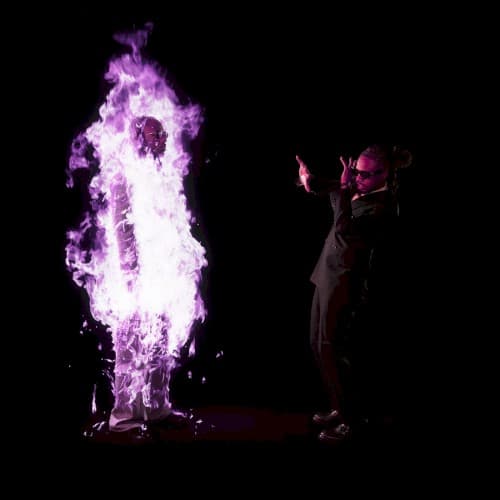
The technical precision required to capture flame movement while maintaining the figure's silhouette shows cinematic ambition matching Metro's expanded creative role.
Symbols
Purple flame
The unnatural fire represents Metro's alchemical production process, transforming raw beats into something supernatural and dangerous.
Solitary figure facing fire
The lone stance captures the producer's journey from behind-the-scenes architect to solo artist confronting his own spotlight.
Hand gesture toward flames
The reaching motion suggests both summoning dark forces and attempting to control powers that threaten to consume him.
Where Sound Meets Image
The purple fire mirrors the album's production style—familiar trap elements transformed into something more experimental and eerie. The solitary figure reflects Metro's choice to limit features, letting his beats carry narrative weight. The cover's theatrical darkness aligns with tracks exploring betrayal, paranoia, and the costs of success. The supernatural imagery connects to guest verses from artists like Future and Young Thug exploring altered states and moral ambiguity.
This cover helped cement the visual language for producer-led projects in the streaming era, where beatmakers need iconic imagery to compete with rapper-fronted albums. The purple flame has become shorthand for Metro's dark aesthetic, spawning countless social media edits and bootleg merch. The image proves producers can create compelling solo album art without relying on collaborator cameos or studio equipment cliches.