The Architect Behind Trap's Modern Blueprint
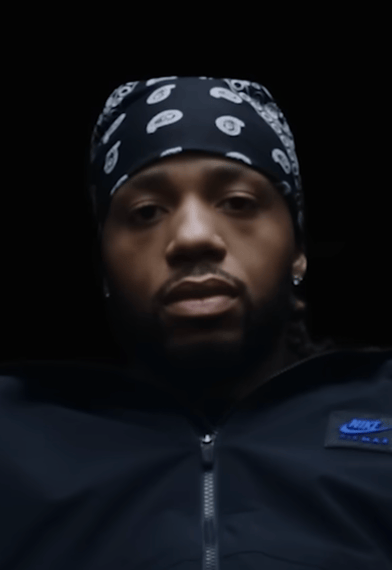
When Metro Boomin's producer tag drops—"Metro Boomin want some more, nigga"—it signals something specific: dark, cinematic trap that sounds like a heist movie score designed for strip clubs and luxury sedans. Born Leland Tyler Wayne in St. Louis in 1993, Metro moved to Atlanta as a teenager and became the most influential hip-hop producer of the 2010s without ever stepping in front of the microphone. His ascent parallels trap's evolution from regional subgenre to global pop language, and he played architect as much as anyone.
Metro's significance extends beyond beat-making. He helped establish the modern producer-as-curator model, executive producing full artist projects and hosting collaborative albums that function as cultural events. His work with Future, 21 Savage, and Travis Scott defined an era's sonic palette—ominous 808s, haunting melodies, vast negative space that makes every element feel intentional. Unlike producers who chase trends, Metro created the template others now copy.
His influence permeates contemporary hip-hop so thoroughly that distinguishing Metro's direct impact from the ambient sound he popularized becomes difficult. The brooding minimalism, the emphasis on mood over complexity, the way trap production now prizes atmosphere as much as rhythm—Metro Boomin didn't invent these approaches, but he perfected and popularized them at scale. He turned regional Atlanta aesthetics into the international sound of hip-hop's streaming era.
Cinematic Minimalism and the Metro Sound
Metro Boomin's production philosophy centers on restraint and drama. Where earlier trap producers layered sounds densely, Metro strips elements back, letting 808s rumble in vast negative space while sparse melodic elements—often eerie piano lines, synthetic strings, or filtered vocal samples—create cinematic tension. His beats feel like they're composed for scenes, not just verses. The space between sounds matters as much as the sounds themselves.
His tag library tells its own story about modern production: those instantly recognizable vocal drops became branding in an era when producers emerged as stars. Metro understood that in streaming culture, sonic signatures function like logos. His production consistently favors minor keys, slow-burning tempos between 130-150 BPM, and 808 bass patterns that hit with physical impact. He constructs instrumentals that rappers can inhabit multiple ways—melodic crooning, rapid-fire flows, or talk-rap all work over Metro's beats because he leaves room.
The technical execution looks deceptively simple. Metro typically builds around a central melodic motif—something memorable enough to carry a song but sparse enough not to crowd the vocals. His drum programming emphasizes pocket and feel over complexity, with hi-hat rolls that add urgency without overwhelming. He's influenced generations of bedroom producers precisely because his arrangements seem achievable, even though the taste and restraint required to make them work separates amateurs from professionals. Metro proved that trap production could be both minimal and maximalist—sparse in elements but huge in emotional impact.
From Teenage Mixtapes to Industry Kingmaker
Metro's origin story reflects hip-hop's digital transformation. He started making beats as a teenager using fruity loops, posting instrumentals online and networking through Twitter. His mother would drive him from St. Louis to Atlanta for studio sessions while he was still in high school—a sacrifice that paid off when he connected with OJ da Juiceman and Gucci Mane's circle around 2012. Those early placements established his presence in Atlanta's trap ecosystem before most people knew his name.
The breakthrough came through sustained collaboration rather than a single hit. Metro's partnership with Future between 2013 and 2015 yielded an absurd run of essential trap music: Beast Mode, 56 Nights, and DS2 arrived in rapid succession, showcasing Metro's ability to craft cohesive sonic worlds rather than just individual beats. These weren't albums with Metro production—they were Metro Boomin projects that Future inhabited. The producer-artist dynamic shifted, with Metro receiving co-executive producer credits and genuine creative partnership recognition.
His work with 21 Savage represented another collaborative peak. The chemistry between Metro's ominous production and 21's deadpan delivery created a distinct lane within trap—colder, more menacing, less interested in melody than mood. Their joint albums Savage Mode and Savage Mode II weren't just rapper-producer collaborations; they functioned as full artistic statements with Metro's production vision driving the entire aesthetic. The way 21's monotone flows interact with Metro's cinematic beats became its own subgenre template.
By the mid-2010s, Metro had transcended producer-for-hire status. He became a creative director figure, launching the Boominati Worldwide label and executive producing projects for multiple artists. His collaborative albums—Without Warning with 21 Savage and Offset, Double or Nothing with Big Sean—positioned him as hip-hop's most bankable producer brand. When his debut solo album Not All Heroes Wear Capes arrived in 2018, it debuted at number one, confirming what everyone already knew: Metro Boomin was a draw regardless of who was rapping.
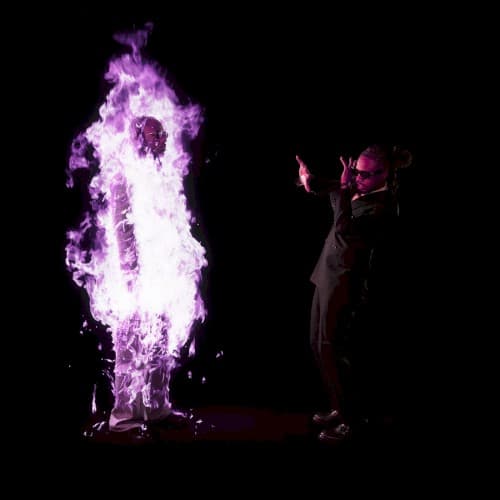
HEROES & VILLAINS in 2022 demonstrated his evolved ambitions. The album featured an expansive roster—John Legend, Travis Scott, Young Thug, Don Toliver—and showed Metro experimenting with song structure and narrative arc beyond typical trap formulas. While the project received praise for its production consistency and high-profile features, some critics noted it occasionally prioritized star power over cohesion. Still, it affirmed Metro's position as someone who could orchestrate major collaborative events and deliver commercially while maintaining his sonic identity.
His influence extends into the business side. Metro helped normalize producer album rollouts with genuine promotional campaigns, not afterthought compilations. He advocated for producer royalties and ownership in an industry that historically undervalued behind-the-boards contributions. His success opened doors for producers to build independent brands rather than remaining anonymous session workers. Metro proved that in modern hip-hop, the person making the beat could be as important as the person rapping on it.
Metro Boomin's Lasting Impact on Hip-Hop Production
Metro Boomin's legacy lives in every dark trap beat that prioritizes atmosphere over complexity, every producer tag that functions as branding, every collaborative album where the producer receives equal billing with the rappers. He didn't invent trap, but he refined its aesthetic vocabulary into something globally exportable. The "Metro sound"—that specific combination of minimalist melody, hard-hitting 808s, and cinematic space—became the default template for mainstream hip-hop in the 2010s and remains influential today.
His impact on producer culture rivals his musical contributions. Metro demonstrated that producers could build independent brands, headline festival stages, and drive album rollouts without performing a single verse. He helped shift industry economics, normalizing higher producer fees and ownership stakes. Younger producers cite Metro as proof that beatmakers can achieve artist-level recognition and compensation, changing how the next generation approaches production as a career.
Critically, Metro represents a specific moment when hip-hop's sonic center shifted decisively to Atlanta and trap aesthetics dominated mainstream conversation. His work with Future, 21 Savage, Travis Scott, and others provided the soundtrack to hip-hop's streaming explosion—music optimized for playlists, car speakers, and algorithmic discovery. Whether that optimization represents creative compromise or smart adaptation depends on perspective, but Metro's commercial success while maintaining artistic consistency suggests he threaded that needle better than most. His influence echoes through contemporary production, a reminder that sometimes the voice behind the boards shapes culture as powerfully as the voice in front of the microphone.