When Hip-Hop Collided With the Arena Rock Moment
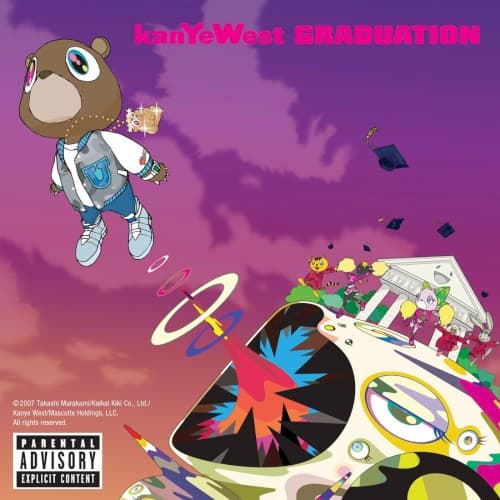
September 2007 crystallized a seismic shift in hip-hop's commercial landscape when Kanye West's Graduation outsold 50 Cent's Curtis in a media-manufactured sales battle that would ultimately redefine mainstream rap's trajectory. But the real story wasn't the chart numbers—it was how West deliberately abandoned the soul sample aesthetic that built his reputation and instead constructed something closer to electronic stadium anthems than traditional boom-bap. Graduation arrived as the concluding chapter in West's education-themed trilogy, following The College Dropout and Late Registration, yet it sounds nothing like its predecessors. Where those albums leaned into warm soul loops and ornate orchestration, Graduation pursues cold synthesizers, European electronic textures, and production maximalism designed for festival headlining sets rather than intimate listening sessions.
The sonic gamble paid off commercially and culturally, cementing Kanye West's evolution from talented producer-turned-rapper into a genuine pop culture force capable of shifting industry conversations. Working primarily with co-producer and then-emerging talent DJ Toomp alongside contributions from Jon Brion, Mike Dean, and Timbaland, West constructed an album that borrows heavily from Daft Punk's robotic funk, Portishead's melancholic electronica, and stadium rock's triumphant grandeur. The result feels simultaneously of-its-moment and forward-thinking, capturing the precise instant when hip-hop's center of gravity began shifting from street narratives toward aspirational pop crossover. That ambition comes with trade-offs—some tracks sacrifice lyrical depth for hook-driven accessibility, and the album's reach occasionally exceeds its grasp—but Graduation remains essential documentation of an artist refusing to repeat himself while the industry begged him to play it safe.
Electronic Maximalism Meets Evolving Artistic Ambition
Graduation's production philosophy represents a deliberate rupture from hip-hop convention, prioritizing synthesizer-driven soundscapes over sample-based composition. The album's sonic palette draws heavily from electronic music's European vanguard, particularly French house and electro-clash movements that West encountered during international touring. This isn't subtle homage—tracks like Stronger directly sample Daft Punk's Harder Better Faster Stronger, transforming the robotic vocoder hook into a testosterone-fueled gym anthem that dominated radio for months. The production here favors bright, piercing synth leads, compressed drums that punch through arena speaker systems, and arrangements that privilege hook repetition over dynamic progression. It's music engineered for scale, designed to translate from headphones to festival main stages without losing impact.
DJ Toomp's contributions prove crucial to this aesthetic shift, bringing the bombastic synthesizer work and dramatic drum programming that anchors multiple standout moments. The Glory showcases this approach effectively, layering triumphant horn-like synth stabs over hard-hitting percussion that builds toward an almost operatic climax. Toomp's production sensibility—honed through work with T.I. and other Southern rap artists—brings a maximalist energy that complements West's pop ambitions without completely abandoning hip-hop's rhythmic foundation. The combination yields tracks that feel simultaneously aggressive and celebratory, maintaining enough edge to satisfy rap purists while remaining accessible enough for crossover success.
Lyrically, Graduation finds West navigating the psychological territory of achieved ambition and its accompanying disillusionment. Where The College Dropout interrogated class anxiety and industry gatekeeping, and Late Registration expanded into broader social commentary, Graduation turns inward to examine what happens after you've conquered the goals that defined your identity. Can't Tell Me Nothing captures this tension perfectly, with West's deadpan delivery confessing materialism's hollow victories over stark, minimal production. The contrast between the song's austere instrumental and the album's generally maximal production philosophy makes the moment land harder—here's an artist momentarily stripping away the bombast to admit that success didn't cure insecurity or self-doubt.
Yet the album struggles with tonal consistency, lurching between introspective vulnerability and chest-beating arrogance without always earning those transitions. Barry Bonds features Lil Wayne delivering a characteristically eccentric verse, but the track feels like empty braggadocio after the emotional honesty of surrounding material. Drunk & Hot Girls attempts provocative humor but lands awkwardly, with Mos Def's sung hook failing to rescue a concept that doesn't justify its four-minute runtime. These missteps reveal the album's central tension—West's desire to be simultaneously taken seriously as an artist and embraced as a mainstream entertainer sometimes pulls the project in incompatible directions.
The feature roster reflects West's expanded industry capital and willingness to pursue unexpected collaborations. Chris Martin of Coldplay appears on Homecoming, lending the track an earnest sentimentality that could feel cloying in less capable hands. T-Pain's Auto-Tuned crooning on Good Life became a cultural touchstone, helping legitimize the vocal processing technique that would soon dominate mainstream hip-hop. These choices demonstrate West's trendsetting instincts—by 2008, nearly every rap album featured at least one T-Pain or T-Pain-adjacent hook. The album documents an artist using his platform to validate sonic experiments that the industry would soon rush to replicate.
The Tracks That Defined a Commercial Pivot
Stronger remains Graduation's most culturally penetrating moment, a track that transcended typical single success to become genuine pop phenomenon. The Daft Punk sample provides instant recognizability, but West's production transforms the source material's playful roboticism into something darker and more urgent. The lyrics toggle between motivational mantra and relationship toxicity, capturing the complicated psychology of someone using personal slights as fuel for professional achievement. The track's commercial ubiquity—it became unavoidable in commercials, sports broadcasts, and gym playlists—sometimes obscures how effectively it synthesizes West's pop instincts with legitimate production innovation.
Flashing Lights offers the album's most sophisticated composition, building a melancholic electronic soundscape around a Connie Mitchell sample that evokes driving through empty city streets at 3 AM. The production here feels genuinely cinematic, with swelling synth pads and a drum pattern that maintains hip-hop's rhythmic foundation while gesturing toward something closer to art-pop. West's lyrics examine relationship paranoia and the isolating effects of fame over a track that sounds more emotionally complex than most of Graduation's arena-ready material. The song proved West could pursue pop accessibility without completely sacrificing nuance—it became a substantial hit while sounding unlike anything else on mainstream radio.
Can't Tell Me Nothing functions as the album's emotional anchor, a moment of genuine self-examination amid surrounding tracks more focused on celebration or provocation. The production's minimalism—little more than synth drones, handclaps, and hard-hitting kick drums—forces attention toward West's lyrical content, which admits to the emptiness behind material accumulation while simultaneously defending his right to pursue it anyway. The contradiction feels honest rather than confused, capturing the precise mindset of someone who's achieved their goals only to discover that success doesn't provide the psychological resolution they expected. It's the rare Graduation moment that prioritizes artistic introspection over commercial calculation.
The Album That Redefined Hip-Hop's Commercial Center
Graduation succeeds as a document of artistic ambition even when its reach exceeds its grasp. The album's willingness to abandon the sonic template that established West's career demonstrates creative courage that mainstream artists rarely exhibit at their commercial peak. Not every experiment lands—the album's weaker moments reveal the limitations of prioritizing hooks over holistic songcraft—but the strongest material here genuinely expanded hip-hop's sonic vocabulary while achieving massive commercial success. That combination remains rare enough to warrant recognition.
The album's legacy extends beyond its own content to encompass its industry impact. Graduation's sales victory over 50 Cent's Curtis symbolized hip-hop's turn away from gangster narratives toward more varied lyrical perspectives and diverse sonic influences. The album's electronic production aesthetic became a blueprint that artists from Kid Cudi to Drake would build upon, while its pop collaboration strategy normalized crossover features that once felt like genre betrayal. Whether those developments ultimately benefited hip-hop's artistic trajectory remains debatable, but Graduation undeniably accelerated their arrival.
Listened to now, removed from its initial cultural moment, Graduation reveals both its innovations and its datedness. The electronic production that felt cutting-edge in 2007 now sounds distinctly of its era, particularly on tracks that lean heavily into electro-clash aesthetics that haven't aged gracefully. Yet the album's strongest moments—Flashing Lights, Can't Tell Me Nothing, Stronger—retain their impact because they balance production ambition with genuine emotional or conceptual content. Graduation stands as essential listening not because it's West's most cohesive work—it clearly isn't—but because it captured an artist and a genre at a genuine inflection point, willing to risk comfortable success for uncertain evolution.
Track Listing
Good Morning
▲The album's opening statement establishes the electronic aesthetic that will dominate the project, building around a synth melody that feels optimistic without being cloying. West's lyrics position the album as a fresh start, explicitly framing Graduation as a new chapter while acknowledging the journey that brought him here. The production, handled primarily by West himself, demonstrates his growing confidence with synthesizer-based composition over the sample-heavy approach of earlier work. The track functions effectively as an overture, setting sonic and thematic expectations for what follows while maintaining enough melodic hook to justify its placement as an opener rather than a brief intro.
Champion
▲Steely Dan's Kid Charlemagne provides the melodic foundation for this triumphant self-affirmation track that finds West in full victory-lap mode. The production layers the sample under hard-hitting drums and additional synth embellishments that give the classic rock source material a contemporary hip-hop energy. West's lyrics toggle between celebration of his achievements and defiant responses to critics who questioned his legitimacy as a rapper rather than just a producer. The track's anthemic quality and relatively straightforward structure made it a natural choice for sports broadcasts and motivational contexts, though it lacks the complexity of the album's more interesting moments.
Stronger
▲The album's commercial apex and most culturally penetrating single, Stronger transforms Daft Punk's playful French house into something darker and more aggressive. West's production adds distorted bass, harder drum programming, and vocal processing that emphasizes the track's confrontational energy. Lyrically, it examines toxic relationship dynamics through the lens of personal motivation, with West framing romantic conflict as fuel for professional achievement. The track's massive commercial success—it topped charts globally and became inescapable for months—sometimes obscures how effectively it synthesizes West's pop instincts with genuine production innovation. The Daft Punk sample provides instant recognizability while West's arrangement transforms the source material into something distinctly his own.
I Wonder
▲Built around a Labi Siffre sample that West previously flipped for My Way Home on Late Registration, I Wonder pursues a more introspective tone than much of Graduation's arena-ready material. The production features soaring strings and a melodic vocal sample that creates an almost dreamy atmosphere, while West's lyrics examine existential questions about purpose and direction despite external success. The track's bridge, which repeats "I wonder if you know what it means to find your dreams," captures the album's recurring tension between achieved ambition and persistent uncertainty. It's one of the album's more emotionally resonant moments, balancing accessibility with genuine vulnerability.
Good Life
●T-Pain's Auto-Tuned hook became one of 2007's most ubiquitous sounds, helping legitimize the vocal processing technique that would soon dominate mainstream hip-hop. The production, anchored by a Michael Jackson sample and propulsive drum programming, constructs pure celebration without much underlying complexity. West's verses catalog material success and romantic conquests with the kind of uncomplicated joy that's rare elsewhere on the album. The track's massive commercial performance and cultural saturation made it a defining sound of its era, though its relentless positivity lacks the nuance that makes the album's best moments more memorable. Still, it fulfills its purpose as an unambiguous feel-good anthem effectively enough.
Can't Tell Me Nothing
▲The album's emotional centerpiece strips away production maximalism in favor of stark minimalism—little more than synth drones, handclaps, and hard-hitting drums. West's deadpan delivery confesses materialism's hollow victories, admitting to buying things he doesn't need to impress people who don't matter while simultaneously defending his right to pursue wealth anyway. The contradiction feels honest rather than confused, capturing the precise mindset of someone who's achieved their goals only to discover success doesn't provide expected psychological resolution. The track's austere production makes West's lyrical content impossible to ignore, creating one of Graduation's rare moments that prioritizes introspection over commercial calculation. It became an enduring fan favorite precisely because it sounds nothing like the album's more obviously crowd-pleasing material.
Barry Bonds
●Lil Wayne's feature delivers characteristic lyrical eccentricity, but the track feels like empty braggadocio that doesn't justify its existence within the album's broader narrative. The production, built around a sample and synthesizer stabs, maintains energy without creating memorable melodic content. West's verses catalog material success and dismiss critics with standard rap flexing that lacks the complexity or humor that might elevate the relatively straightforward concept. The track title's reference to the controversial baseball player suggests commentary on success achieved under suspicious circumstances, but that potential thematic depth never fully materializes in the actual lyrics. It's serviceable as an energetic moment but represents one of the album's less essential inclusions.
Drunk & Hot Girls
▼The album's most divisive moment attempts provocative humor through a concept examining complicated nightlife encounters, but the execution lands awkwardly. Mos Def's sung hook and the Can sample that provides the melodic foundation create an unsettling atmosphere that matches the lyrical content's uncomfortable energy. West's verses describe frustrating interactions with intoxicated women at clubs, aiming for observational comedy but often feeling more mean-spirited than insightful. The track's four-minute runtime feels excessive for material that doesn't develop beyond its initial premise. It represents the album's most significant creative misfire, demonstrating the risks of West's willingness to pursue unconventional ideas without always ensuring the concept justifies the final product.
Flashing Lights
▲The album's most sophisticated composition constructs a melancholic electronic soundscape that feels genuinely cinematic. The Connie Mitchell sample and swelling synth pads evoke driving through empty city streets in the early morning hours, while the drum pattern maintains hip-hop's rhythmic foundation while gesturing toward art-pop. West's lyrics examine relationship paranoia and fame's isolating effects, creating emotional complexity that most of Graduation's arena-ready material avoids. The production here demonstrates West could pursue pop accessibility without completely sacrificing nuance. The track became a substantial hit while sounding unlike anything else on mainstream radio at the time, and it remains one of the album's most enduring moments precisely because it balances commercial instincts with genuine artistic ambition.
Everything I Am
▲DJ Premier's production provides a rare moment of traditional boom-bap aesthetic on an album otherwise committed to electronic maximalism. The track's jazzy instrumental and more grounded drums create space for some of West's more thoughtful lyrical content, examining the gap between public perception and private reality. West discusses the pressure to conform to rap's established codes while maintaining his own identity, questioning why being yourself isn't sufficient for industry acceptance. The track feels like a deliberate stylistic departure from the surrounding material, almost as if West wanted to prove he could still deliver over the kind of production that established his early reputation. It's a welcome respite from the album's generally maximalist approach.
The Glory
▲DJ Toomp's bombastic production showcases the synthesizer work and dramatic drum programming that anchors several of Graduation's most effective moments. The track builds toward an almost operatic climax with triumphant horn-like synth stabs layered over hard-hitting percussion that demands attention. West's lyrics examine the psychological aftermath of achieving long-held goals, questioning what comes after you've conquered everything you thought would provide meaning. The production's maximalism matches the lyrical content's grandiose themes, creating a track that feels genuinely epic in scope. It demonstrates how the album's electronic aesthetic could support substantive content when West balanced his pop ambitions with genuine introspection.
Homecoming
▲Chris Martin's appearance provides earnest sentimentality that anchors this extended meditation on West's relationship with Chicago. The Coldplay frontman's hook delivers genuine emotion without tipping into melodrama, while the production's piano-driven arrangement creates space for the track's nostalgic mood. West's verses personify Chicago as a romantic relationship that defined his identity before fame complicated that connection. The extended runtime allows the concept to develop naturally rather than feeling rushed, though the track's four-and-a-half minutes occasionally test listener patience. It represents one of Graduation's more successful pop collaborations, demonstrating how West could integrate unexpected features without completely abandoning his own artistic voice.
Big Brother
▲The album's most emotionally vulnerable moment examines West's complicated relationship with Jay-Z, framing it through sibling dynamics that mix admiration with resentment. The production maintains relatively minimal arrangement that keeps attention on West's confessional lyrics, which admit to feeling overlooked and undervalued despite professional success. West's willingness to publicly discuss his insecurity around hip-hop's most powerful figure demonstrates the kind of honesty that made his early work compelling. The track provides necessary emotional grounding for an album that sometimes prioritizes stadium-ready anthems over personal revelation. It's one of the few Graduation moments that feels truly intimate rather than designed for mass consumption.
Good Night
●Mos Def's soulful vocals anchor this closing statement that attempts to provide uplifting resolution after the album's emotional journey. The production features gentle piano chords and subtle string arrangements that create a warm atmosphere distinct from the electronic maximalism that dominates most of the album. The track's relatively subdued energy serves as an effective cooldown after the intensity of preceding material, though its positive messaging feels slightly generic compared to the album's more specific emotional moments. It functions well enough as a closer without being particularly memorable, providing a gentle exit rather than a dramatic conclusion.
Bittersweet Poetry
●This bonus track finds West reflecting on creative purpose over relatively minimal production that prioritizes melody over bombast. The track's inclusion as a deluxe edition addition rather than main album content suggests even West recognized it didn't fit Graduation's primary sonic narrative. The production's softer approach and more introspective lyrical content recall Late Registration's aesthetic more than Graduation's electronic ambitions. It's a pleasant enough inclusion for completists without feeling essential to understanding the album's artistic statement. The track demonstrates West's capability for more subdued material even as he pursued stadium-scale production elsewhere on the project.