Expanding the Canvas: Kanye's Orchestral Ambition
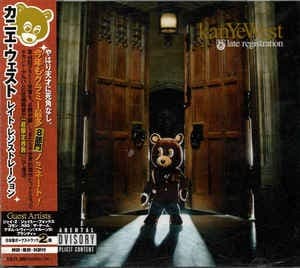
When Kanye West returned eighteen months after The College Dropout redefined mainstream rap, expectations were impossibly high. Late Registration arrived not as a safe sequel but as an artistic expansion—Kanye trading the soul sample comfort zone for something riskier and more cinematic. The decision to partner with Jon Brion, the film composer and Fiona Apple collaborator who had never worked in hip-hop, signaled ambition that bordered on reckless. Where his debut felt like a brilliant outsider crashing the party, Late Registration sounds like an artist realizing he could rebuild the room entirely.
The album's sonic palette is immediately broader: live strings cascade through beats, horns punctuate punchlines, and arrangements breathe with orchestral dynamics rarely heard in rap production. Yet this isn't fusion for fusion's sake. Kanye uses these expanded sonic tools to explore deeper emotional territory—the complications of fame, family illness, blood diamonds, and addiction. The skits featuring a fictional college lecture frame the album as education continuing, but the real lesson is watching an artist refuse to repeat himself when repetition would have been profitable.
Late Registration captures a specific moment—2005, before the Taylor Swift incident, before the MAGA hat, when Kanye's genius felt unambiguous and his vulnerability felt generous rather than weaponized. Listening now carries bittersweet weight, but the music remains untouched by future controversies. This is the sound of someone at the peak of their powers, hungry to prove the debut wasn't a fluke.
Jon Brion's Influence and Sonic Architecture
The Brion collaboration reshapes hip-hop production without abandoning its foundations. On "Heard 'em Say," the opening proper track, a melancholic piano loop from Natalie Cole's "Someone That I Used to Love" gets dressed in strings and Adam Levine's plaintive hook. The arrangement swells and contracts like a film score, creating emotional space around Kanye's observations about life's daily struggles. This isn't the triumphant soul chops of "Through the Wire"—it's something more pensive, more adult.
"Touch the Sky" demonstrates how Brion's sensibility enhances rather than overwhelms Kanye's sample-based approach. The Curtis Mayfield loop still anchors everything, but the live horns that punch through the chorus add theatrical flair. When Lupe Fiasco delivers his breakout verse, the production creates room for his technical precision before crashing back in with cinematic force. The track feels expensive in the best way—every element costs something emotionally and sonically.
The orchestration reaches its apex on "Gone," the album's sprawling closer. Over an Otis Redding sample, Kanye constructs a three-act drama featuring Consequence and Cam'ron, with string sections that rise and fall like curtains between verses. When Cam delivers his characteristically quotable lines, the strings retreat, letting his voice sit naked in the mix before sweeping back in. It's production as storytelling, using dynamics and space to create narrative arc within a single track.
Lyrically, Kanye operates with greater confidence but also greater vulnerability. "Roses" strips away bravado entirely, detailing his grandmother's hospitalization with painful specificity—the "doctors said she only got a few" line lands with devastating plainness. The second verse's anger at hospital staff feels raw and unresolved. There's no neat redemption, just the uncomfortable reality that money and fame can't fix everything. The strings here aren't ornamental—they're holding up grief.
"Crack Music" showcases Kanye's expanding social consciousness, connecting the drug epidemic to systemic oppression over a soul sample that sounds like it's crying. The Game's appearance grounds the track in street reality while Kanye zooms out to systemic critique. It's the sound of an artist realizing his platform carries responsibility, though he hasn't yet figured out what to do with that burden beyond observation. The production's darkness—no catchy hook, no radio-friendly chorus—shows artistic bravery.
Yet the album never becomes homework. "Gold Digger" is pure pop pleasure, sampling Ray Charles with shameless hook-craft and a Jamie Foxx impersonation that shouldn't work but does. Kanye's self-awareness peaks in the second verse's prenup discussion—he's rich enough now that the gold digger paranoia is personal rather than theoretical. The contradiction between the playful production and the underlying anxiety creates tension that mainstream rap rarely attempts. This is commercial music that doesn't insult anyone's intelligence.
The Tracks That Define Late Registration's Range
"Hey Mama" stands as perhaps Kanye's most emotionally direct moment on record. The dedication to Donda West, performed over a sample that sounds like Sunday morning, radiates genuine love without sentimentality. When he recounts promising her "a mansion, a spouse, and a crib," the specificity makes it personal rather than generic. The song's power comes from its simplicity—no conceptual layers, no irony, just a son honoring his mother. Knowing Donda's death would devastate Kanye two years later makes this track almost unbearable now, but the love captured here remains pure.
"Drive Slow" featuring Paul Wall, GLC, and T.I. represents Late Registration at its most texturally rich. The Hank Crawford sample gets layered with live instrumentation until it sounds like a slow-motion car commercial scored by a jazz ensemble. Paul Wall's Houston drawl and T.I.'s Atlanta precision show Kanye deliberately platforming regional voices rather than chasing homogeneity. The track's leisurely pace—unusual for mid-2000s rap radio—demonstrates confidence that the audience would meet him wherever he chose to go.
"Diamonds From Sierra Leone (remix)" with Jay-Z transforms the original's blood diamond meditation into something more complex. Kanye grapples with his own complicity in the conflict diamond trade while wearing the same chains he's critiquing. Jay's verse, all casual supremacy and quotable flexing, creates cognitive dissonance—beautiful music about ugly realities, luxury rap confronting its own moral contradictions. The tension never resolves, which makes it more honest than most conscious rap's tidy conclusions.
A Sophomore Statement That Redefined Ambition
Late Registration proved Kanye's debut wasn't accidental brilliance but the opening salvo from an artist capable of consistent reinvention. Where many rappers consolidate after breakthrough success, Kanye deliberately complicated his sound, risking alienating the audience that made him. The gamble paid off commercially—"Gold Digger" became inescapable—but the real victory was artistic. This album established that hip-hop production could be as ambitious and emotionally complex as any genre without losing its essential identity.
The album's weaknesses are mostly in pacing. At twenty-three tracks, Late Registration occasionally sprawls when it should sprint. Some skits add texture but others interrupt momentum. "We Can Make It Better" and "Back to Basics" feel like bonus thoughts rather than essential statements. Trimmed to sixteen tracks, this becomes airtight. As it stands, it rewards patience but occasionally tests it.
Yet these are minor complaints about a major achievement. Late Registration captures an artist at a pivotal moment—successful enough to take risks, hungry enough to stay dangerous, self-aware enough to interrogate his own contradictions. The orchestral production hasn't aged into dated experimentation; it sounds richer and more intentional with time. This is the album where Kanye became Kanye—not just a producer-turned-rapper, but a capital-A artist whose ambition would reshape hip-hop's possibilities. Everything bold and frustrating about his later career starts here, when the boldness still felt generous and the frustration felt like striving. Late Registration remains a landmark because it showed mainstream rap could be this musically adventurous, this emotionally honest, and this unapologetically ambitious all at once.
Track Listing
Wake Up Mr. West
This intro skit establishes the album's college lecture conceit, with DeRay Davis playing a professor welcoming students to "Late Registration." The bit is brief and functional, setting up the educational frame without overstaying its welcome. It's the sound of Kanye acknowledging expectations while signaling he won't simply repeat the formula. The classroom metaphor suggests lessons learned and wisdom shared, though the album that follows is more emotionally messy than any curriculum.
Heard 'em Say
The album's true opening statement pairs Adam Levine's aching chorus with Kanye's observations about economic struggle and daily survival. The Natalie Cole sample gets dressed in strings that swell with cinematic melancholy. Kanye's verse about "broke broke" versus "rich broke" captures class anxiety with conversational precision. The production breathes with orchestral dynamics, immediately signaling this won't sound like The College Dropout. It's introspective without being depressive, setting the album's emotional temperature at thoughtful rather than celebratory.
Touch the Sky
Curtis Mayfield's "Move On Up" gets transformed into pure triumph, with Lupe Fiasco delivering his career-launching verse about persistent dreams despite setbacks. The live horns add theatrical punch to the sample, making the track feel like a victory lap earned rather than assumed. Kanye's verses balance confidence with self-awareness—he's made it, but remembers when he hadn't. The outro's extended instrumental breakdown with horn stabs sounds expensive and joyful, capturing ambition as celebration rather than anxious striving.
Gold Digger
The album's commercial peak is also a masterclass in pop craft. Jamie Foxx's Ray Charles impersonation shouldn't work but becomes iconic, while Kanye's verses about relationship economics land as both comedy and genuine paranoia. The second verse's prenup discussion reveals someone who's accumulated enough wealth that gold digger fears are personal rather than theoretical. The production is deliberately bright and radio-friendly, but the underlying anxiety about being loved for the right reasons adds depth to the catchiness. It's Kanye's most successful balancing act between mainstream appeal and personal truth.
Skit #1
A brief comedic interlude breaks tension after "Gold Digger," featuring dialogue that transitions between the album's brighter first half and deeper material ahead. The skit is disposable but harmless, providing breathing room in what could otherwise feel like relentless sonic ambition. It's the weakest structural choice on an album that generally sequences with intention, but it doesn't derail momentum significantly enough to matter.
Drive Slow
The Hank Crawford sample gets layered with live instrumentation until it sounds like slow-motion luxury. Paul Wall's Houston drawl, GLC's Chicago perspective, and T.I.'s Atlanta precision show Kanye deliberately platforming regional voices rather than chasing homogeneity. The track's leisurely pace is unusual for mid-2000s rap radio—no rushing toward the hook, just cruising through verses. The production's textural richness rewards headphone listening, with small details emerging on repeated spins. It's Kanye flexing by slowing down rather than speeding up.
My Way Home
Common's verse over a Gil Scott-Heron sample makes this one of the album's most straightforward hip-hop moments. The production is relatively spare compared to surrounding orchestral density, letting Common's lyricism sit forward in the mix. Kanye's brief contributions frame the track as a homecoming narrative, both literal and spiritual. It's a breather before the album's heavier emotional material, serving as palate cleanser and bridge. The simplicity is intentional—not every track needs strings and complexity to earn its place.
Crack Music
The darkest production on the album matches Kanye's most pointed social commentary. The soul sample sounds like it's crying while Kanye connects the crack epidemic to systemic oppression. The Game's appearance grounds the track in street reality while Kanye zooms out to structural critique. There's no catchy hook or radio-friendly chorus—just sustained darkness and anger. The production's refusal to provide relief mirrors the subject matter's refusal to offer easy answers. It's Kanye at his most deliberately uncommercial, showing artistic bravery that The College Dropout only hinted at.
Roses
Kanye's grandmother's hospitalization gets detailed with painful specificity over production that holds up grief rather than resolving it. The second verse's anger at hospital staff feels raw and unresolved—no redemption arc, just uncomfortable reality that money can't fix everything. The strings aren't ornamental decoration but structural support for devastation. When he admits uncertainty about whether she'll survive, the vulnerability is complete. It's Kanye at his most emotionally exposed, proving mainstream rap could handle this level of unguarded honesty without collapsing into sentimentality.
Bring Me Down
Brandy's soaring chorus transforms this into a defiance anthem, with Kanye addressing critics and doubters over production that builds from restraint to orchestral triumph. The track's power comes from its refusal to engage haters point-by-point—instead, it simply asserts resilience. The strings add drama without overwhelming the core message. It's one of the album's more conventional song structures, but that clarity of purpose gives it radio potential without sacrificing the emotional stakes. The outro's extended vocal runs from Brandy feel genuinely transcendent rather than just technically impressive.
Addiction
Over production that sounds both seductive and queasy, Kanye explores dependency—substance, sexual, and otherwise—without moralizing or celebrating. The track's grooviness contrasts with the subject matter's darkness in ways that feel intentionally uncomfortable. His admission of his own addictive tendencies adds personal stakes to what could have been abstract observation. The production never fully resolves into comfort, maintaining tension throughout. It's one of the album's more subtle achievements—commercial enough for radio consideration but strange enough to resist easy categorization.
Skit #2
Another brief interlude maintains the classroom frame, this time with more urgency as the "late registration" metaphor takes on additional meaning. The skit is functional rather than memorable, serving primarily as transition between the album's emotional peaks. It's evidence that Kanye was still learning how to sequence album-length statements—the concept is clever but the execution occasionally interrupts flow. Still, it's brief enough to be forgiven as part of the album's larger architecture.
Diamonds From Sierra Leone (remix)
Jay-Z's addition transforms the original's blood diamond meditation into something more complex and conflicted. Kanye grapples with his own complicity in the conflict diamond trade while wearing the chains he's critiquing. Jay's verse is all casual supremacy and quotable flexing, creating cognitive dissonance—beautiful music about ugly realities. The tension between the lush production and the subject matter's brutality never resolves, which makes it more honest than most conscious rap's tidy conclusions. It's Kanye at his most morally complicated, refusing to separate his critique from his complicity.
We Major
Nas and Kanye trade verses over a nearly eight-minute epic built from Curtis Mayfield's "Tell Me" and dripping with orchestral ambition. The extended runtime allows the track to breathe and build, with strings that swell like a film score's climax. Nas sounds rejuvenated, delivering some of his hungriest bars in years. Kanye's production creates space for everyone to shine while maintaining forward momentum. It's an album highlight that showcases how the Jon Brion collaboration enables patient, cinematic hip-hop that still hits hard. The outro's extended instrumental breakdown feels earned rather than indulgent.
Skit #3
This brief classroom interlude features escalating tension as the semester progresses, maintaining the album's conceptual frame while providing breathing room before the emotional climax ahead. The skit is more effective than earlier ones because it's placed with greater structural awareness—it creates anticipation rather than interruption. Still, it's the concept's execution rather than any inherent brilliance that makes it work. It serves its purpose without transcending its role as transitional device.
Hey Mama
The dedication to Donda West stands as Kanye's most emotionally direct moment on record. The sample sounds like Sunday morning while Kanye radiates genuine love without sentimentality. When he promises his mother "a mansion, a spouse, and a crib," the specificity makes it personal rather than generic. There's no conceptual complexity or ironic distance—just a son honoring his mother. The song's power comes from its simplicity. Knowing Donda's death would devastate Kanye two years later makes this track almost unbearable now, but the love captured here remains pure and uncomplicated.
Celebration
This feels like a victory lap that arrives slightly too early in the sequence, with Kanye celebrating success over production that's infectious but not particularly distinctive by Late Registration's standards. The hook is catchy without being memorable, and the verses feel more like thesis statements than emotionally lived-in moments. It's the album's most skippable proper track—not bad, but surrounded by stronger material that makes its relative conventionality more apparent. Still, it serves as energy boost before the album's closing stretch.
Skit #4
The final classroom skit brings the conceptual frame full circle as graduation approaches, though by this point the device feels exhausted rather than illuminating. It's the least essential of the interludes, interrupting momentum when the album should be building toward its conclusion. The concept's limitations become clear—it worked as framing device but doesn't deepen or complicate the album's themes enough to justify this late return. It's brief enough to forgive but suggests Kanye was still learning when to let concepts go.
Gone
The sprawling closer featuring Consequence and Cam'ron is Late Registration's artistic peak. Over an Otis Redding sample, Kanye constructs a three-act drama with string sections that rise and fall like curtains between verses. Consequence's opening verse about Chicago struggles sets stakes, Kanye's middle section addresses his own departure from conventional paths, and Cam's characteristically quotable finale provides unexpected levity. The production uses dynamics and space to create narrative arc within a single track—strings retreat during Cam's verse, letting his voice sit naked in the mix before sweeping back in. It's nearly nine minutes that never drag, proof that Kanye had mastered album construction at the track level.
Diamonds From Sierra Leone
The original version without Jay-Z feels more focused on the blood diamond critique without the complications Jay's presence introduces. The sample from Shirley Bassey's James Bond theme creates dramatic tension that matches the subject matter's stakes. Kanye's solo verses can explore the moral contradictions without needing to balance another voice. While the remix became more famous, this version has its own clarity of purpose—one artist grappling with complicity rather than two artists presenting different relationships to luxury and conscience. The production is essentially identical but the emotional temperature is more consistent.
Back to Basics
This feels like a bonus thought rather than essential album statement. The production is solid but not distinctive by Late Registration's ambitious standards. Kanye's verses about returning to fundamentals ring slightly hollow on an album that succeeds precisely by refusing to stick to basics. It's pleasant enough but feels like material that could have been cut without diminishing the album's impact. Still, it offers one more moment of Jon Brion's orchestral touch before the album concludes.
We Can Make It Better
The closing proper track featuring Talib Kweli and Common aims for uplift but lands as somewhat generic inspirational rap. The message is positive but not particularly specific to Kanye's journey or Late Registration's themes. The production has the orchestral ambition that defines the album but lacks the emotional specificity that makes the best tracks land. It's thematically appropriate as closing statement—hope after struggle—but feels slightly obligatory rather than inspired. The album has already made its essential points by this track's arrival.
Late
This hidden track or bonus track provides one final moment of introspection, with Kanye reflecting on being perpetually behind schedule both literally and metaphorically. The production is stripped-back compared to the album's orchestral heights, allowing the concept to land without overwhelming production. It's a fitting closer that acknowledges the album's title as character trait rather than just release timing. While not essential to the album's core statement, it adds a grace note of self-awareness that suits Kanye's persona—even his flaws become part of the mythology.