Kanye West Yeezus — The Album That Torched Every Bridge He Built
Play the first three tracks back to back and try to name another album that hits that hard that fast. Not a radio album. Not a playlist album. Ten songs that sound like watching a luxury car get stripped for parts in real time — all chrome ripped off, engine exposed, interior gutted.
The bass hits before the melody arrives. The screams come before the hooks. Everything that made hip-hop comfortable in 2013 gets thrown through a window.
Kanye West walked away from the throne pop rap had built for him. The year before this dropped, he stood next to Jay-Z in Paris luxury stores rapping about how much leather cost. Twelve months later he hired Rick Rubin to delete half the instrumentation and Daft Punk to make the other half sound like machinery failing.
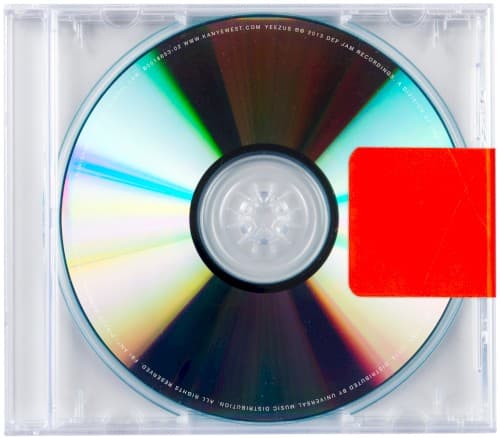
The label wanted singles. He gave them ten minutes of abrasive industrial noise before a melody showed up. Def Jam sat in meetings wondering how to sell an album with no features listed, no cover art, and a title that dared radio programmers to reject it.
What happens when the biggest rapper alive decides he would rather be the most hated? The collaborators told the story — Mike Dean, Hudson Mohawke, Arca, Gesaffelstein, Brodinski. European electronic producers who had never touched a rap album.
No sample clearances. No guest verses announced. No rollout. Just projections on buildings and a release date. The industry playbook said this was career suicide. Kanye treated it like the only move left that meant anything.
Stripped Down Until the Wires Showed
Rick Rubin walked into the studio two weeks before the deadline and heard an overproduced mess. He started deleting. Drums disappeared. Basslines got halved.
Entire instrumental sections vanished until what remained sounded skeletal. This became the philosophy — subtraction as aggression. Mike Dean handled the synth programming like someone designing alarm systems. Hudson Mohawke and Arca brought the kind of textures that made West Coast g-funk sound quaint.
The 808s did not knock, they flatlined.
The first half runs on pure antagonism. Daft Punk contributed to multiple tracks but you would never know it from the credits — their work got chopped, reversed, pitched down until it became unrecognizable. The sampling approach abandoned soul entirely.
Instead, weird Hungarian rock records, obscure prog cuts, Nina Simone processed through a wood chipper. Chief Keef showed up uncredited. Justin Vernon sang without knowing what the final song would become. God Level Feat got shelved.
Charlie Wilson got one hook. Everything else Kanye handled himself, and his voice across these ten songs sounds like a man who stopped caring whether anyone followed.
Lyrically this plays like scorched earth policy. The fame complaints, the fashion industry rejection, the media cycle, the public perception — all of it processed through the lens of someone who decided burning it down felt better than defending it. Lines about croissants next to lines about prison labor.
Jokes about bleached assholes followed by genuine rage about systemic oppression. No cohesion. No through-line. Just whatever came out when the filter broke.
Some of it lands as profound. Some of it sounds embarrassing. The album does not try to distinguish between the two.
The weakness shows in the tonal whiplash. An album this abrasive needed tighter focus, but Kanye toggles between social commentary and personal grievance without building a bridge between them. The lack of hooks makes multiple tracks feel like extended intros searching for a payoff that never arrives.
The feature list stays so minimal that certain moments beg for a second voice to break the monotony. It works as a statement. As a listening experience it demands more patience than most fans came prepared to offer. What does it mean when your boldest artistic move also becomes your hardest sell?
Forty Minutes of Controlled Demolition
The opening stretch refuses to let you settle. Three songs in a row designed to make you question whether you actually want to keep listening. No warm-up. No entry point.
The production stays caustic and the vocals stay confrontational until the fourth track introduces the first moment that resembles traditional song structure. By then half the audience already bailed, which might have been the point.
The middle section shifts into something closer to actual songs without losing the aggression. The pacing slows just enough to let the lyrics breathe, but the production remains deliberately uncomfortable. Synths that sound like factory equipment. Drums that hit off-center.
Samples that never resolve into anything melodic. This stretch contains the moments people remember years later, the tracks that worked as singles even though nothing here was built for radio.
The back half introduces the only breaths the album takes. Two tracks in the final three finally offer something that resembles warmth, though even that comes filtered through layers of distortion and irony. The sequencing saves the most accessible moment for last, which functions as both relief and insult — proof that Kanye could have made a normal album but chose forty minutes of punishment first.
The closing track stands so far outside the aesthetic of everything before it that it plays like a joke. Or a dare. Or both.
The Risk That Paid Off By Refusing to Pay Off
In Kanye's catalog this sits behind only one album, maybe two depending on how you weight ambition against execution. The fans who wanted another College Dropout never forgave it. The ones who needed rap to stay challenging have not stopped defending it. More than a decade later this still sounds like nothing else in mainstream hip-hop, which either proves its genius or its failure depending on who you ask.
The album works best for listeners who want confrontation over comfort. If you need hooks, melody, or any concession to traditional song structure, this will test your patience. If you want to hear what happens when a superstar stops caring about being a superstar, it delivers that in uncomfortable detail.
The production influenced a generation of experimental rap that followed — from Death Grips going mainstream to Travis Scott's darker moments to Playboi Carti's whole approach. Whether that influence improved hip-hop or sent it down a pretentious dead-end remains the debate.
Start with the fourth track if you want the entry point. Move to the seventh if you want the pinnacle. Skip to the tenth if you need proof Kanye still knew how to write an actual song.
Similar listeners should explore Shabazz Palaces, clipping., and early Yeezus-era Travis Scott. For the long view, this marked the moment Kanye stopped trying to be loved and started trying to be important. He succeeded at the second goal so completely that the first one became irrelevant.
The album that proved you could strip hip-hop down to its ugliest components and still call it a masterwork.
Track Listing
On Sight
▲The synth line sounds like a fire alarm designed by French robots. Daft Punk provided the sample and Rick Rubin made sure nothing else got in the way — no bassline for the first minute, no drums that make sense, no melody to grab. Just that screaming synthesizer and Kanye yelling over it about models and brands and the entire fashion industry that kept him outside. The Holy Name sample flips in for eight seconds of relief before the alarm starts again. This works as an opening statement the way a brick through a window works as a greeting. You either walk through the broken glass or you turn around. Most people turned around. The ones who stayed got an album that never let up from this exact energy. The mixing leaves space in all the wrong places — silence where a snare should hit, bass where the vocal should breathe. Intentional discomfort. A dare disguised as a song.
Black Skinhead
▲Daft Punk and Mike Dean turned a drum pattern into a chant and Kanye ran with it until it became a riot. The entire instrumental runs on maybe four elements — that pounding tom, that synth stab, that vocal sample, that bass note. Nothing else. Rick Rubin philosophy in full effect. The lyrics toggle between personal paranoia and historical rage, name-checking both 300 and the anxiety of raising a Black daughter in America, all delivered in a cadence that sounds like someone refusing to stop screaming until the room listens. This became the closest thing to a single the album offered, which tells you how uncompromising the rest of it is. The structure never builds to a traditional hook, just repeats the same hypnotic loop until it ends. Travis Scott took notes. So did every rage rapper that followed. The track works because it refuses to give you anywhere comfortable to stand — just ten million pumping blood and no resolution in sight.
I Am a God
●The title alone was enough to get think pieces written. The song itself plays more like satire of celebrity excess than actual deity complex, but the distinction gets lost in the screaming. The production from Daft Punk, Mike Dean, and Kanye strips luxury down to its mechanical components — cold synths, distant drums, a French accent demanding croissants in a Hurry. The whole thing sounds like it was recorded in a marble bathroom. Justin Vernon shows up at the end to sing the kind of pretty melody that should have appeared three tracks ago, but by then it arrives too late to save anything. The beat switch into the scream tests listener patience deliberately. This might be the weakest moment on the album — trying so hard to provoke that it forgets to justify the provocation. You can hear Kanye trying to make a statement. You cannot always hear what the statement is supposed to be.
New Slaves
▲Frank Ocean's outro became the most human moment on the entire album, which says everything about how little humanity appears before it. The song itself works as the thesis — the prison industrial complex, the fashion industry gatekeeping, the way capitalism rebrands oppression for a new generation. The production from Kanye, Che Pope, and Mike Dean stays minimal until the final two minutes, when Frank's voice and a sample flip the entire track into something orchestral and devastating. This landed as the lead single, projected onto buildings worldwide, and it made perfect sense — the most accessible song here, the one with an actual message beyond personal grievance. The lyrics still contain some of the sharpest writing Kanye ever delivered. The switch from social commentary in the verses to fashion industry frustration in the bridge should feel jarring but somehow it does not. This is the track that justifies everything around it. The rest of the album experiments. This one achieves.
Hold My Liquor
▲Chief Keef and Justin Vernon on the same song should not work. The fact that it does might be the most impressive trick on the album. The production from Young Chop and Mike Dean builds atmosphere through negative space — a guitar line that sounds drunk, drums that hit like someone stumbling, bass that barely registers. Kanye does not even show up until halfway through, letting Keef and Vernon set the tone first. The lyrics about relationship dysfunction and substance abuse hit harder because the vocal delivery sounds genuinely impaired. This might be the saddest song in Kanye's catalog, which is saying something. The guitar outro stretches past the point where most songs would end, just letting the misery sit. I played this in a car once at 2 a.m. driving through empty Chicago streets and it sounded like the only song ever written. In daylight it still holds that power. Minimalism as emotional weapon.
I'm in It
●Bon Iver contributes vocals and Assassin delivers a verse, but this one belongs to the weird Jamaica-meets-Chicago production aesthetic that should not function but somehow does. The beat from Kanye, Mike Dean, Rick Rubin and others builds from those sped-up Bon Iver samples into something genuinely alien — dancehall riddim processed through industrial filters, bass that sounds geologic. The lyrics rank among Kanye's most explicit and least defensible, oscillating between uncomfortable sexual imagery and worse. The track works as pure sonic experience and fails as songwriting. That Jamaican flow in the back half brings energy the rest of the song lacks, but it arrives too late to justify the six minutes. This needed editing. Rubin should have deleted more. What remains feels like a rough draft that got shipped because the deadline hit. The potential shows through in flashes — that sample flip at the three-minute mark, the way the bass enters — but the execution stays muddy.
Blood on the Leaves
▲TNGHT provided the horns and Kanye built a cathedral around them. The Nina Simone sample should feel sacred — instead it gets chopped into a weapon. The AutoTune vocal processing creates distance even as the lyrics describe personal betrayal and paranoia about relationships post-fame. This is the centerpiece. The moment where every risk the album takes finally pays off in full. The production moves through three distinct phases — the horn intro, the trap drums that arrive like an invasion force, the breakdown where everything drops except that sample and that processed voice. Mike Dean, Hudson Mohawke, Arca, and five other producers somehow made this sound cohesive instead of chaotic. I heard this live once and the crowd reaction at the beat drop looked religious. On record it still carries that weight. The song functions as both the peak of Kanye's AutoTune era and the bridge into his experimental future. Everything he learned from 808s and Heartbreak gets weaponized here. Flawless.
Guilt Trip
●Kid Cudi ghosts the hook and Polow da Don contributes production, but this track never finds its footing. The beat sounds like it is trying to be sinister and sexy at the same time and lands nowhere. The vocal sample that anchors the chorus needed either more prominence or less — instead it sits in this middle zone where it registers as background noise. Kanye's verses about relationship guilt and material excess repeat themes already covered better on earlier tracks. This is the clearest filler moment on the album, the one song you could delete without losing anything. The Cudi vocal brings nostalgia for 808s and Heartbreak but nothing new. The structure builds to a climax that never arrives. By Yeezus standards this sounds almost conventional, which makes it feel even more disposable. Not bad. Just unnecessary. The album would have been tighter at nine songs.
Send It Up
●The Beenie Man sample arrives like an insult after everything that came before. King Louie and Daft Punk contribute to production that finally embraces chaos instead of fighting it. This works as the last moment of pure aggression before the album exhales. The lyrics barely matter — just flexing and club energy and the kind of braggadocio the album mostly avoided. The beat sounds like it is collapsing and rebuilding itself every eight bars. Mike Dean and Gesaffelstein helped create something that should be unlistenable but somehow works on a nightclub soundsystem turned to dangerous volumes. This is what Kanye sounds like when he stops trying to prove anything and just makes noise. Thirty seconds too long and two ideas too scattered, but the energy carries it. The transition into the final track provides the biggest tonal shift on the entire album.
Bound 2
▲The soul sample that opens this sounds like Kanye trolling his own album. After forty minutes of industrial abrasion, here comes a Ponderosa Twins Plus One loop and a Brenda Lee flip that could have appeared on College Dropout. The entire song functions as either a relief or a betrayal depending on whether you wanted Yeezus to stay uncompromising until the end. The Charlie Wilson hook brings actual melody for the first time since the album started. The Wiz Khalifa reference and the Jerome line became memes before the album even finished its first week. The intentionally awkward drums and off-kilter vocal timing prevent this from sounding too conventional, but compared to everything before it this might as well be a wedding song. Which it became. I watched the music video once and understood it as satire but the internet read it as sincerity and maybe both interpretations are correct. The track works as a statement about Kanye's ability to toggle between experimental and accessible. As a closer it feels like a punchline. Mission accomplished.