The Duality at Kendrick's Core
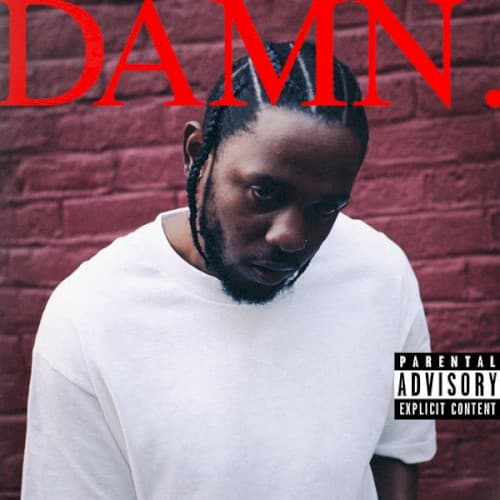
When Kendrick Lamar dropped DAMN. in April 2017, he arrived at a crossroads few artists ever reach. Following the sprawling, jazz-infused ambition of To Pimp a Butterfly and the raw introspection of untitled unmastered., he faced an impossible question: where does a generational talent go after redefining what conscious rap could be? His answer was DAMN., an album that strips away ornate instrumentation in favor of something more immediate, more confrontational, and ultimately more unsettling. Opening with a gunshot and closing with a cosmic reveal, this project asks whether Kendrick is cursed or blessed, weak or strong, damned or divine.
The album landed in a volatile moment. The Trump presidency had just begun, racial tensions simmered across America, and hip-hop's commercial landscape was shifting toward melodic trap and streaming-era minimalism. Rather than retreat into the avant-garde or chase radioplay, Kendrick built something that functions on multiple levels simultaneously. DAMN. works as a collection of hard-hitting anthems, a conceptual meditation on duality, and a Pulitzer Prize-winning artistic statement. It became the first non-classical, non-jazz work to win that honor, cementing Kendrick's position not just within hip-hop but within American cultural conversation.
What makes DAMN. so compelling is its refusal to choose sides. Where To Pimp a Butterfly wore its righteous anger openly, this album explores moral ambiguity. Kendrick questions his own motives, his relationship with fame, his faith, and his survival instincts. The production—handled primarily by Mike WiLL Made-It, Sounwave, DJ Dahi, and the returning 9th Wonder—leans into stark, aggressive soundscapes. Trap drums collide with distorted bass, gospel samples surface and disappear, and the overall sonic palette feels deliberately less comforting than his previous work. This is Kendrick at his most exposed and his most defiant.
Stripped-Down Fury and Existential Weight
DAMN. represents a calculated sonic pivot. Where To Pimp a Butterfly sprawled across seventeen tracks with live instrumentation and Afrocentric textures, this album compresses its vision into fourteen focused statements. The production aesthetic favors impact over embellishment. Mike WiLL Made-It's contributions—particularly on DNA. and HUMBLE.—bring menacing minimalism, using 808s as blunt instruments and leaving space for Kendrick's voice to dominate. There's a rawness here, a stripping away of polish that mirrors the album's thematic concerns about authenticity and survival.
The sequencing operates on dual levels. Played forward, it tells one story of a man grappling with his demons. Played in reverse—as Kendrick later suggested was intentional—it offers an alternate narrative arc. This structural innovation is not gimmickry. It reflects the album's obsession with perspective, with how context reshapes meaning. The one-word capitalized titles function as emotional states or philosophical concepts, each track a thesis statement examined from multiple angles. This framework allows Kendrick to inhabit contradictions without resolving them, to be simultaneously introspective and boastful, vulnerable and aggressive.
Lyrically, Kendrick reaches peak technical execution while maintaining emotional accessibility. His flow variations across DAMN. showcase an artist completely in command of his instrument. He shifts from rapid-fire triplets to deliberate, weighted bars, matching cadence to content with surgical precision. The writing balances street vernacular with philosophical inquiry, making complex ideas digestible without dumbing them down. When he raps about wickedness and weakness on FEAR., the abstract becomes visceral. When he explores lust and love as opposing forces, the personal becomes universal.
The album's exploration of duality extends to its musical DNA. Gospel influences surface throughout—choirs haunt several tracks, and the call-and-response tradition informs the song structures. Yet these sacred elements collide with profane trap production and unflinching street narratives. Kendrick positions himself between worlds: Compton and worldwide fame, Christianity and doubt, loyalty to his roots and distance from his past. The production reinforces these tensions by juxtaposing harsh digital sounds with organic samples, creating an unsettled sonic environment that never fully resolves.
Commercially, DAMN. proved Kendrick could dominate without compromise. HUMBLE. became a number-one single, its music video a cultural phenomenon. The album debuted atop the Billboard 200, moving over 600,000 units in its first week. Yet this commercial success did not come from pandering. Kendrick threaded a needle, creating music that satisfied both the Algorithm and the Art, giving casual listeners bangers while rewarding deep listeners with layers of meaning. In an era where hip-hop was fracturing into commercial trap and underground experimentation, DAMN. proved the two could coexist within a single vision.
The Pulitzer recognition validated what many already knew: Kendrick had transcended genre boundaries. The prize committee cited the album's "vernacular authenticity and rhythmic dynamism," language that acknowledged hip-hop's complexity without condescending to it. This institutional recognition arrived alongside massive streaming numbers and critical acclaim, positioning DAMN. as both a populist and an artistic triumph. Few albums in any genre can claim that balance.
The Songs That Define the Moment
DNA. functions as the album's mission statement, a ferocious declaration of identity that packs more intensity into four minutes than most projects achieve across entire runtimes. The Mike WiLL Made-It production is menacing and minimal, all low-end thump and negative space, giving Kendrick's multi-layered flows room to breathe while maintaining relentless pressure. The Fox News sample interpolation—using the platform's fear-mongering language against itself—adds sharp political edge. When Kendrick switches flows midway through, triggered by the "I got, I got, I got" refrain, it feels like a gear shift in a muscle car. This is technical rap at its most visceral, proof that complexity and accessibility are not opposing forces.
FEAR. stands as the album's emotional centerpiece, a sprawling seven-minute excavation of trauma and anxiety that traces Kendrick's fears from childhood through fame. The production—anchored by a sample of Gordon Lightfoot's "Sundown"—creates an unsettled atmosphere, all echoing percussion and haunting melodies. Kendrick structures the track in three acts, each addressing fears at different life stages: physical punishment from his mother, street violence and betrayal, and finally the existential dread of losing his status. The vulnerability here contrasts sharply with the bravado elsewhere on the album, revealing the cost of survival in both Compton and the music industry. This is confessional rap that refuses to offer easy catharsis, leaving listeners in the discomfort rather than resolving it.
DUCKWORTH. closes the album with a narrative masterstroke, telling the true story of how a chance encounter between Kendrick's father and Top Dawg Entertainment founder Anthony Tiffith—then a stick-up kid—changed both their lives. The decision to give free chicken rather than resist a robbery becomes the pivot point for Kendrick's entire existence. The production by 9th Wonder and Bēkon unfolds cinematically, building tension as the story progresses. When the track ends with a rewind effect that loops back to BLOOD., it completes the album's circular structure, suggesting that fate and choice are locked in perpetual negotiation. The track reframes everything that came before it, transforming personal history into mythology without losing its emotional truth.
Where DAMN. Stands in the Canon
DAMN. does not supplant To Pimp a Butterfly in terms of sonic ambition or cultural scope, but it was never trying to. This is a different animal entirely—tighter, angrier, more immediate. Where Butterfly asked us to consider systemic oppression and collective trauma, DAMN. zooms into the individual psyche, examining how external pressures shape internal realities. It trades sprawl for precision, jazz fusion for trap brutalism, and optimism for moral ambiguity. The result is Kendrick's most focused work, an album where every element serves the central themes of duality and survival.
The weaknesses are minor but present. Some may find the pop concessions on LOYALTY. and LOVE. less compelling than the album's harder edges, moments where commercial viability pulls focus from artistic cohesion. The Rihanna collaboration works but feels designed for radio in ways that the surrounding tracks do not. Yet these choices also reflect Kendrick's willingness to exist in contradictions, to make music that lives in tension rather than purity. Even the album's more accessible moments carry thematic weight, exploring partnership and vulnerability as counterpoints to the isolation and aggression elsewhere.
What secures DAMN.'s place in the upper tier of 2010s hip-hop is its refusal to be easily categorized. It operates as a commercial juggernaut and an art statement, a festival anthem collection and a meditation on mortality. The Pulitzer recognition was not a fluke—it acknowledged an artist working at the absolute peak of his powers, using every tool available to explore what it means to be human in an inhuman world. In Kendrick's discography, DAMN. represents the moment where technical mastery, conceptual ambition, and mainstream reach converged most completely. It proves that the smartest artist in the room can also be the loudest, and that popularity and substance need not be mutually exclusive. This is essential listening, a landmark that redefined what modern rap could achieve.
Track Listing
BLOOD.
This minute-long opener immediately establishes the album's tone of moral ambiguity and sudden violence. Over ominous production, a narrative unfolds of Kendrick trying to help a blind woman, only to be shot for his efforts. The Fox News sample of Geraldo Rivera criticizing Kendrick's music adds meta-commentary about how his art is perceived versus how reality operates. It's a thesis statement in miniature: good intentions matter little when survival is at stake, and perspective determines whether you're the hero or the villain of any story.
DNA.
Mike WiLL Made-It's stark, menacing production transforms into the album's most explosive moment. Kendrick delivers a masterclass in flow variation, switching cadences and intensities to embody the complexity of his identity. The track functions as both a chest-thumping assertion of dominance and a meditation on inherited trauma, acknowledging that his DNA contains loyalty, royalty, and the violence of survival. The Fox News sample interpolation is brilliantly subversive, weaponizing conservative criticism against itself while showcasing technical skill that cannot be denied.
YAH.
A minimalist, Kid Capri-produced meditation that strips away the aggression for introspection. Kendrick addresses his cousin's text about him being an Israelite, explores his complicated relationship with fame, and delivers some of the album's most quotable bars about perception versus reality. The laid-back production creates space for his conversational flow, and the track's relative simplicity allows the writing to take center stage. This is Kendrick in dialogue mode, thinking through contradictions rather than shouting over them.
ELEMENT.
The Ricci Riera and James Blake-produced banger finds Kendrick asserting his position in the game with unapologetic force. The "I don't give a fuck" refrain becomes a mantra of survival, not nihilism—he's protecting his peace in an industry designed to exploit vulnerability. The production is grimy and hypnotic, with distorted bass and minimal drums creating a menacing atmosphere. Kendrick's flow rides the pocket perfectly, balancing braggadocio with the acknowledgment that this hardness is necessary armor, not his natural state.
FEEL.
Over Sounwave's atmospheric production, Kendrick delivers one of the album's most vulnerable performances, cataloging feelings of isolation despite being surrounded by millions. Each verse addresses a different source of alienation: from family expecting financial rescue, from a culture that consumes his trauma, from a music industry that commodifies authenticity. The repetition of "I feel" transforms from assertion to pleading, revealing the emotional cost of being constantly observed and misunderstood. This track is essential for understanding the weight Kendrick carries beneath the bravado.
LOYALTY.
The Rihanna collaboration, produced by DJ Dahi and Sounwave, explores trust and partnership over minimalist, haunting production. While some might view this as the album's most commercial moment, it fits thematically—loyalty becomes another form of duality, both a strength and a potential vulnerability. Rihanna's contributions add textural contrast, and the call-and-response structure reinforces the song's exploration of reciprocity. The production's restraint allows both voices room to explore the concept without overselling it, making this a more nuanced pop moment than typical features.
PRIDE.
Steve Lacy and Anna Wise's ethereal production creates a dreamlike atmosphere for Kendrick's meditation on pride as both defense mechanism and downfall. The track floats rather than punches, its jazzy instrumentation and off-kilter rhythms creating instability that mirrors the subject matter. Kendrick acknowledges pride as the barrier between himself and spiritual peace, but he cannot fully release it—pride is what got him out of Compton, and what now isolates him. The extended outro, with its layered vocals and abstract textures, reinforces the song's refusal to resolve cleanly.
HUMBLE.
Mike WiLL Made-It's piano-driven banger became the album's biggest commercial hit while maintaining edge. The contradictions are intentional: Kendrick demands humility while flexing aggressively, critiques beauty standards while asserting dominance. The minimalist production—essentially just piano, drums, and bass—gives the track timeless quality, avoiding trendy flourishes that would date it. The music video's religious imagery sparked necessary conversations about ego and spirituality in hip-hop. This is Kendrick at his most accessible without sacrificing complexity, proof that mainstream success need not mean dumbing down.
LUST.
DJ Dahi's sultry, hypnotic production provides the foundation for Kendrick's exploration of desire as distraction and weakness. The track examines lust not just sexually but as a metaphor for chasing empty pleasures while ignoring spiritual development. Kendrick's flow is deliberately hazy and seductive, matching the production's late-night atmosphere. The juxtaposition of the sensual sonics with lyrics about wasting time and energy creates productive tension, making LUST. one of the album's most thematically rich moments despite its apparent simplicity.
LOVE.
The Zacari collaboration, produced by Sounwave, DJ Dahi, and Teddy Walton, positions romantic love as counterpoint to the album's prevailing paranoia and isolation. While it leans toward radio-friendly R&B, the track earns its place by exploring love as a rare source of stability in Kendrick's chaotic existence. The production is warm and melodic, a welcome tonal shift, and Zacari's hook provides genuine sweetness without becoming saccharine. This is Kendrick acknowledging that vulnerability in partnership is not the same weakness he guards against elsewhere.
XXX.
The U2 collaboration arrives as the album's most politically explosive moment, addressing gun violence, governmental hypocrisy, and the cycle of revenge. Kendrick inhabits multiple perspectives across its verses, from a father contemplating vigilante justice to an examination of America's selective morality. The production—by Sounwave, DJ Dahi, and Mike WiLL Made-It—is intentionally jarring, with distorted guitars and aggressive drums creating sonic chaos that mirrors the subject matter. Bono's contributions add anthemic weight without overwhelming Kendrick's vision. This is protest music that refuses easy answers.
FEAR.
The album's emotional climax, produced by The Alchemist and Bekon, excavates the roots of Kendrick's anxiety across a sprawling seven minutes. Sampling Gordon Lightfoot's "Sundown" creates an unsettled atmosphere for Kendrick's three-act structure: childhood fears of physical punishment, adolescent fears of street violence and betrayal, adult fears of losing status and divine favor. His mother's voicemail about his Deuteronomy curse adds chilling biographical context. This is confessional rap at its most unsparing, refusing catharsis while demanding witness. FEAR. is where the album's existential weight feels most unbearable.
GOD.
After FEAR.'s intensity, Cardo's production provides a moment of exhale—Kendrick celebrating his success and feeling temporarily invincible. The trap-influenced beat and triumphant energy could seem shallow after the preceding track, but that's precisely the point: this is the temporary high of achievement before reality reasserts itself. Kendrick's flows are playful and confident, and the track functions as a brief vacation from introspection. It also reinforces the album's dualities, showing how quickly one can shift from existential dread to feeling godlike.
DUCKWORTH.
9th Wonder and Bēkon's cinematic production provides the backdrop for the album's narrative masterstroke. Kendrick tells the true story of how his father's decision to give free chicken to a young stick-up kid—who would become Top Dawg Entertainment founder Anthony Tiffith—changed both their trajectories. The production builds tension expertly, drums and bass growing more urgent as the story unfolds. When the track rewinds and loops back to BLOOD., it completes the album's circular structure, suggesting that fate and choice exist in constant negotiation. This is origin-story mythology that never loses its human scale.