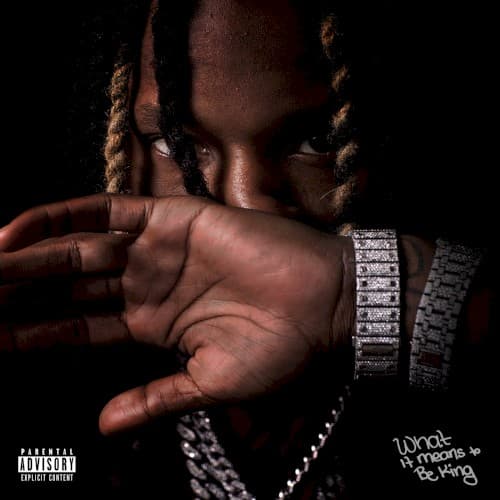
The scorecard
6.2/10 · Mixed
- Writing25%
- 6.5
- Production25%
- 6.5
- Delivery15%
- 7.0
- Cohesion15%
- 5.0
- Originality10%
- 5.0
- Replay value10%
- 6.0
Von's matter-of-fact street reporting still lands on the better verses, but the album has far fewer full stories than its predecessor and leans on trust-and-loyalty themes that repeat.
Chopsquad DJ's dark drill beats are reliable and a few outside producers add a different shape, yet the instrumentals rarely do more than carry the verses.
His flat, clipped cadence is as convincing as ever and holds its own beside 21 Savage and Fivio Foreign, even when the verses are generic.
Nineteen tracks, a long run of features and a closing run of loosely related songs make the record feel assembled rather than sequenced.
It repeats the sound and subject matter of his earlier projects without the narrative risk that set him apart.
The strongest handful of songs will stay in rotation, but the surrounding material is easy to skip, so the full album is a weaker repeat listen.
King Von What It Means to Be King: A Posthumous Album Built for the Playlist
What It Means to Be King sounds like an album assembled for the streaming era: a deep catalog of finished verses, a deep bench of guests and a running order that expects you to skip around. That is not a criticism of the songs so much as a description of the project's shape. It was released in March 2022, about sixteen months after King Von's death, and it plays as a collection of the best available material rather than an album with a plan.
My argument is that this record is a respectable but diluted entry in the King Von catalog. The voice is still sharp, the beats are still dark, and a handful of songs are as good as anything he released. But the project loses the thing that made his earlier work stand out, which is the habit of telling stories with a plot, a victim and a consequence. In place of that, the album offers a long run of general street talk, loyalty warnings and feature-driven tracks, and the effect is a project that is easier to enjoy in pieces than to endorse as a whole.
That shape makes the record hard to judge by the usual album standards. It arrived with a heavy emotional context, and its commercial reception reflected that: it debuted at number 2 on the Billboard 200, higher than his debut album, on the strength of a very large streaming total. Those numbers say something about demand and about how fans consume an artist's catalog after a loss, and they say less about the quality of what is on the record.
Compared with Welcome to O'Block, this is the looser, more commercial and less distinctive project, and it asks for a different kind of listening. The rest of this review explains where it works, where it sags and which songs are worth saving to a playlist. If you are new to King Von, start with the earlier album and come here for the extras.
Dark Beats, Deadpan Delivery and a Feature List That Dilutes the Voice
The sound is familiar by design. Chopsquad DJ produces a large share of the record, and his formula of cold piano, sparse percussion and heavy bass is still effective, giving Von a stable surface to rap over. A long list of outside producers, including Hitmaka, Kid Hazel, Touch of Trent and TM88, adds some variation in texture, and a few of those beats are noticeably more melodic or bouncy than the core drill sound. The variety helps the record in places, but it also underlines how little the central beat style has changed since Von's earlier projects.
Von's delivery remains the best thing about the album. His voice is clipped and unhurried, with the confidence of someone who does not need to raise the volume to be threatening, and that tone is consistent across the project. It works especially well when the writing is specific, because the flat cadence makes details sound like testimony. Even on the weaker songs, the voice is distinctive enough to keep them from sounding anonymous, which is more than can be said for many of the guests who share space with him.
The guest list is long and varied. G Herbo, 21 Savage, Fivio Foreign, Moneybagg Yo, Lil Durk, Tee Grizzley, A Boogie wit da Hoodie, Dreezy and several others appear, and several of the pairings are well chosen. A Boogie and Dreezy bring melody and a different register, while 21 Savage and Fivio Foreign match Von's aggression with their own style. But the sheer number of features is a problem, because it turns a solo statement into a compilation and keeps Von's own writing from building any momentum.
The weaknesses are concrete. The writing is the biggest issue: where Welcome to O'Block used scenes and characters, this record relies on themes of mistrust, loyalty and threats, and those repeat across a dozen songs. The beats, too, begin to blur, because many of them use the same dark piano loops and the same bass patterns, and by the second half of the album the effect is of one long track divided into pieces. There is also a lack of risk. Von rarely tries a new structure or a new subject, and the few moments where he does stand out for that reason.
It also matters that the record is a posthumous release. The songs were finished or arranged after the fact, and the process shows in the uneven quality: some tracks feel complete and sharp, while others feel like sketches that were built out to fill a running order. That is not a failure of Von's or of the people who prepared the project, but it explains the sense of an album that was gathered rather than designed.
Nineteen Tracks, a Strong Opening and a Back Half That Runs on Autopilot
As a sequence, the album is front-loaded. The first stretch is the most coherent part of the record: short songs, hard beats and a clear sense of purpose, with Von setting the tone before the guests take over. The opening run also includes the singles, which is a familiar streaming-era strategy that puts the most playlist-friendly material where casual listeners will hear it first.
The middle of the record is where the pacing starts to wobble. A long run of guest features, each with its own style and tempo, breaks the momentum, and the sequence becomes a series of separate songs instead of a build. Individual tracks are solid, and a few are among the better ones on the album, but the arrangement lacks the discipline of a tighter project and feels designed for skipping.
The back half drifts further. Songs that were clearly written as separate pieces are placed side by side without much attention to flow, and the beats run together enough that the order feels arbitrary. The album does not so much end as run out of material, and the closing songs work more as a tribute than as a conclusion. The final track is a family dedication, which is a human touch but not a musical one.
At nineteen tracks and nearly fifty minutes of music, the length is not earned. The runtime is not long by the standards of a modern streaming release, but the density of strong material is lower than in the earlier part of the catalog, and the project would have been better with five or six songs removed. A tighter selection would have kept the strongest songs and the best features and cut the filler.
In practical terms, this is an album to explore through playlists rather than to play from start to finish. The strongest songs work well on their own, and the record is best treated as a source of singles and highlights, not as a unified statement. That is a reasonable way to use a posthumous collection, and it is also an honest description of what the project is.
A Good Collection, Not a Great Album
What It Means to Be King is a good collection of King Von songs and a weaker album than Welcome to O'Block, and that is where it ranks in this catalog. The earlier record has a stronger narrative core, a tighter sequence and a clearer sense of purpose. This one has more guests, more variety and more polish, but it lacks the storytelling that made Von stand out, and the added features make the project feel less personal.
Who is it for? Fans who want more of Von's voice, and listeners who enjoy the guest-heavy format of modern drill and street rap. The best songs are worth hearing even if you do not plan to play the whole album. Skip it if you are new to Von and want to understand why he was considered a storyteller, because the record is not the best evidence for that case. It is also a poor fit for anyone who wants a short, focused album, since the length and the guest list work against that.
How it will age depends on how much the context matters. The strongest songs will probably hold up, since they rely on voice and delivery rather than on a moment. But the project as a whole is closer to a catalog item than to a statement, and it is likely to be remembered more for its role in the story than for its place in the genre. The streaming numbers show that listeners wanted it, and that demand does not require the album to be better than it is.
Start with Don't Play That for the 21 Savage pairing, Get It Done for the OMB Peezy chemistry and Grandson for President for the sample-driven energy that stands apart from the rest of the record. Those three songs show the range of what the album can do, and they are the best argument for hearing it at all.
For what to hear next, return to Welcome to O'Block for the stories this album mostly lacks, and then try Lil Durk for a fellow Chicago voice who shows up here and works in a more melodic, confessional mode. The most useful thing to say about this record is that it works as a playlist of eight or nine good songs and falls apart as an album of nineteen.
Track by track
Track Listing
Where I’m From
SolidA short opening statement from Chopsquad DJ's production, under two minutes. It sets a tone of defiance and local pride, but it works more as an introduction than as a full song.
War
StandoutThe third single and one of the album's strongest tracks, with a hard Chopsquad DJ beat that gives Von a firm platform. His delivery is aggressive and controlled, and the song has a clear sense of momentum that many of the surrounding tracks lack. It reached the Billboard Hot 100, and it earns its place as one of the more convincing statements on the record, even if the writing is more about posture than story.
Facetime
SolidA collaboration with G Herbo over a Hitmaka and Tee Romano beat that is brighter and more melodic than the core drill sound. The guest fits and the song has some bounce, but it is a lighter, more generic track than the best of the album.
Don’t Play That
StandoutThe second single, with 21 Savage over a Kid Hazel beat, and a key track. The two rappers share a cold, deadpan style, and the pairing sounds natural rather than forced. The beat gives them room to work, and the short runtime keeps the song tight. It reached number 40 on the Billboard Hot 100, and it is the clearest example of a guest feature that adds something to the album rather than just a name.
Straight to It
SolidA Fivio Foreign feature that leans into the Chicago and New York drill connection. The energy is high and the voices contrast well, though the lyrics are standard and the track blends into the run of similar songs around it.
Trust Nothing
SolidA Moneybagg Yo collaboration built around the album's recurring theme of mistrust. The beat is dark and the guest fits the mood, but the song covers ground that the record explores several times, which weakens its impact.
Evil Twins
StandoutA short track with Lil Durk produced by Touch of Trent, and one of the album's best pairings. The two voices have a natural chemistry from their shared label history, and the beat is leaner and slightly more melodic than the Chopsquad template. At under two minutes it makes its point and leaves, which is a quality the longer songs on the album would benefit from.
Too Real
StandoutA key track with a video released shortly after the album. The production comes from DJ Bandz, DJ FMCT and Glaazer, and the beat has a darker, more reflective tone than much of the record. Von's delivery is introspective rather than aggressive, and the song is one of the few where his writing leaves the standard street material and moves toward something more personal. It is short, focused and one of the more memorable songs on the record.
Rich Gangsta
SolidA Tee Grizzley feature with a production team that includes Hitmaka. The guest is energetic and the beat is polished, but the song is mostly about money and status, and it adds little to what the album has already said.
Mad
SolidA short Chopsquad DJ track that works as a quick shot of aggression. It is fine on its own terms but sounds like a sketch beside the album's stronger songs.
My Fault
StandoutA collaboration with A Boogie wit da Hoodie that brings a more melodic, emotional feel to the album. The pairing is an interesting contrast to Von's flat delivery, and the song is one of the more varied on the record, though the writing is more conventional than the premise suggests.
Change My Life
StandoutA reflective Chopsquad DJ track in which Von looks at the changes in his circumstances. It is more introspective than most of the album and has a sincerity that stands out, although it does not develop the idea very far.
Hard to Trust
SolidA Dreezy feature produced by TM88 and others, with a smoother, more melodic sound than the rest of the album. The song revisits the theme of mistrust from a relationship angle, and it works better as a mood piece than as an argument.
Get Back
SolidA posse-style track with Boss Top and DqFrmDaO. It has energy but little structure, and with three voices competing it sounds more like a group exercise than a vehicle for Von.
Get It Done
StandoutA collaboration with OMB Peezy over a Chopsquad DJ beat, and a solid late highlight. The two voices work well together, the pacing is steady and the song has a confident, no-nonsense feel. It received a video on what would have been Von's birthday, and it is one of the stronger guest tracks in the back half.
Chase the Bag
SolidA short track about the hustle, produced by Geraldo Liive and CGM Beats. It is functional and moves quickly, but the subject matter is standard and the song does not stand out from the rest of the late section.
Go n Get Em
WeakA Boss Top feature that continues the same energy as the tracks around it. It is competent and forgettable, and it is one of the places where the album's length begins to show.
Grandson for President
StandoutA key track and the album's lead single, originally released in 2020 and later folded into the project. It samples a Crime Mob track and has a bouncier, more playful energy than most of the record. Von sounds relaxed and confident, and the song stands out because it is more fun than the rest of the material. It is one of the best tracks on the album and a good reminder of the looser side of his style.
Family Dedication Outro
SolidA closing tribute with a Raw Equity production. It is a human gesture rather than a musical highlight, and it works as a sincere ending more than as a song.
Frequently Asked Questions
Is What It Means to Be King a good album?
How did What It Means to Be King perform on the charts?
Who is featured on What It Means to Be King?
Is What It Means to Be King better than Welcome to O'Block?
Genres
Styles