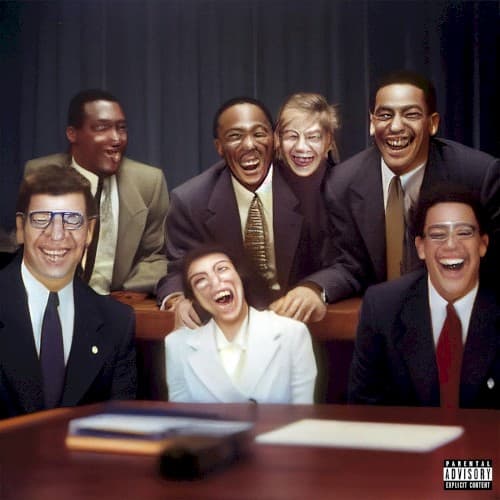
The scorecard
7.3/10 · Good
- Writing25%
- 6.5
- Production25%
- 8.0
- Delivery15%
- 6.5
- Cohesion15%
- 7.5
- Originality10%
- 8.0
- Replay value10%
- 7.5
Failure and Reach the Sunshine reach for honest self-assessment and the album's ideas about ambition and heartbreak cohere, but many lines are plainspoken to the point of blankness.
The sound is the album's greatest strength, with Patrick Wimberly's team building a live-feeling psychedelic funk and rock world of weighty drums, moving bass and shifting guitars, though some of the textures lean on familiar references and the polish blurs several mid-tempo tracks.
Yachty's wobbling, Auto-Tuned falsetto sits naturally in the new setting and carries the hooks, but his voice is a limited instrument, and the best vocal moments belong to the guests.
The sequencing is a real strength, with songs flowing into one another and moods shifting by design across about 57 minutes, but the late album flattens into similar mid-tempo material that a tighter second half would have fixed.
A rapper rebuilding his sound as a psychedelic funk and rock record was a clear swerve, though the audible debts to The Dark Side of the Moon, Tame Impala, Frank Ocean and Tyler, the Creator keep it from sounding like a singular voice.
The sound is immediately appealing and the best songs reward return visits, though the novelty fades and some tracks dull with repetition; this is a projection.
Lil Yachty Let's Start Here. — The Rapper Who Packed Away the Trap Drums
Let's Start Here. opens with almost seven minutes of guitar, drums and wailing vocals, and Lil Yachty does not rap on it in any conventional sense. That choice is the thesis. This is not a rap record with a few live instruments added; it is a psychedelic funk and rock album by an artist who decided that he wanted to be taken seriously, and who rebuilt his sound from the studio floor to prove it.
My argument is that the album works because its commitment is total and its ear for arrangement is better than its pen. Yachty's lyrics are plain, sometimes thin, and his voice is a limited instrument. But the production around him is lavish and well considered, and his melodic instincts, which were always the best part of his work, turn out to fit psychedelic pop better than they ever fit trap. The sound is the star, and the voice is a charming guest in its own house.
The context supports the reading. Yachty has said he made the album because he was unhappy that his output did not match the music he listened to, and that he wanted respect as an artist. He named Pink Floyd's The Dark Side of the Moon as the model, and the influence is audible in the opening track's scale and in the way songs flow into one another. The reach occasionally exceeds the grasp, but the ambition is the reason to care.
Critics were generally positive, with an aggregate score in the low seventies, and several named it among the best albums of its year. The more qualified reviews had a point: some of the sound is borrowed, and some of it dulls with repetition. Even so, few artists have changed lanes this completely and landed this well.
Live Players, Borrowed Dreams, and a Voice in the Mix
The production is the album's greatest strength. Patrick Wimberly leads a team that includes Justin Raisen, SadPony, Jacob Portrait, Jam City, Magdalena Bay and Teo Halm, and together they construct a sound that feels played rather than programmed. Drums have weight, bass lines move, and guitars shift from jazzy chords to hard rock riffs without sounding pasted on. The influences are easy to hear, from 1970s funk to 1980s synth pop to modern psychedelic rock, and the mix keeps them from collapsing into pastiche.
Yachty's voice sits inside this world rather than on top of it. He sings in a wobbling, Auto-Tuned falsetto that connects his earlier melodic work to the new setting, and the effect is surprisingly natural. The guest vocalists, including Diana Gordon, Teezo Touchdown, Fousheé, Justine Skye and Daniel Caesar, give the record extra texture and a sense of ensemble. Many of the best moments belong to them: Gordon's wailing lines on the opener and her falsetto on Drive Me Crazy! lift those songs beyond what Yachty could manage alone.
The writing is the weakest part. The themes are ambitious, covering lust, ecstasy, overdose, love, suicidal ideation, racism and heartbreak, but the lines are often plain and the images are generic. A song about failure or loneliness lands because of its mood and its honesty rather than because of anything particularly memorable in the language. For an album with a title like this one, the lyrics do not always match the scale of the sound.
There is also the question of borrowing. The shadow of The Dark Side of the Moon is long, and several songs lean on well-known textures from Tame Impala, Frank Ocean and Tyler, the Creator. The album is more than a collage, since the arrangements are inventive and the transitions are smooth, but it does not always sound like it came from a singular voice. A listener who knows the references may find the album more derivative than adventurous.
The final weakness is repetition. Several mid-tempo tracks share a similar groove and tone, and the effect of the album's polish is to make some of them blur. The first half is more varied and more daring than the second, and the album's novelty fades somewhat on repeat listens. These are real flaws, but they are small against the achievement of the sound. Taken together, the sound is the argument, and the lyrics are only its footnotes.
Fifty-Seven Minutes That Play Like One Long Song
The album's sequencing is its other great strength. It begins with a long, ambitious statement, then moves into a run of shorter songs that flow together with minimal breaks, and the effect is of a single, shifting piece rather than a collection of singles. The transitions are smooth and the changes in mood, from spacey to funky to tender, feel planned. This is a record meant to be heard from beginning to end, which is rare in an era built on playlists.
The peak arrives early. The opener, at nearly seven minutes, is the most ambitious song on the album and sets the highest bar for everything that follows. The next several songs sustain that level through contrast: a ballad, a groove, a spoken-word interlude and a hard-edged guitar number. By the midpoint, the record has displayed most of its range, and the pacing is nearly flawless.
The late album is where the energy flattens. Several songs sit at similar tempos and rely on similar textures, and the sense of discovery that drove the first half gives way to a more settled, atmospheric mood. It is not bad, and the music remains pleasant, but it lacks the spark of the opening stretch. A slightly tighter second half would have kept the momentum going.
The finale restores some of the album's ambition. Reach the Sunshine builds slowly to its payoff and gives the record a sense of release, and the move from the heavier songs to a warmer, more hopeful close feels earned. At about 57 minutes the length is justified by the ambition, but not every minute is essential. A little trimming of the late-album mid-tempo material would have sharpened an already strong sequence.
A Great Detour That Earns Its New Direction
Let's Start Here. is a great album that works as both a statement of intent and a collection of strong songs. The catalog context lists no other Lil Yachty albums on this site yet, so the ranking is against the genre, but it is clearly his most ambitious and most coherent work, and it sits well above the average rap-adjacent release of its year for production and originality. It is not flawless, since the writing and the borrowed references limit it, but the commitment is real and the result is convincing.
It is the right album for listeners who enjoy psychedelic rock, funk and soul and are open to hearing a rapper work in those genres. It is also a strong entry point for anyone who dismissed Yachty based on his earlier music, because it demonstrates a different side of his talent. Skip it if you want sharp lyricism or hard-hitting rap; there is little of either, and the album makes no apology for that.
It has aged well so far. The sound remains immediately appealing, and the best songs still feel fresh, though some of the music dulls with repetition and the references feel more familiar over time. Its reception, with praise from critics and fellow musicians and placement on several year-end lists, suggests that it will be remembered as a turning point in his career.
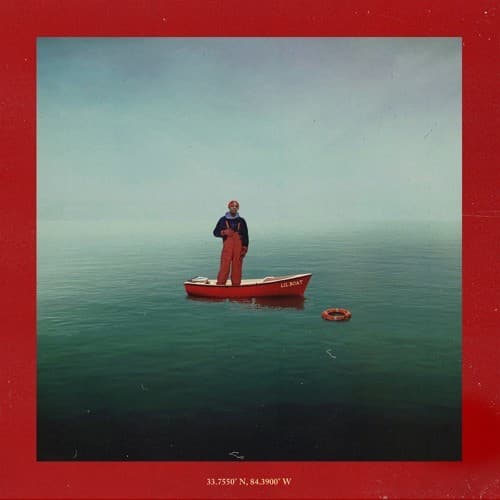
For first plays, start with The Black Seminole for the scale, Drive Me Crazy! for the hook and Reach the Sunshine for the finale. For what to hear next, Teenage Emotions shows the earlier, pop-minded Yachty in a sprawling debut format, while Lil Boat captures the playful, melodic voice that this record later refined. If you only play one song to decide, make it the opener: if the guitars and drums grab you, the rest of the album will keep its promise.
Track by track
Track Listing
the BLACK seminole.
StandoutA nearly seven-minute opener that sets the album's ambition and its model. It begins with guitar chords and drums, moves into wailing vocals from Diana Gordon over a wall of sound, and builds to a rapturous finish. The scale echoes The Dark Side of the Moon, and the arrangement shifts enough to hold attention across its length. It is the album's best statement, and the clearest argument that Yachty meant this.
the ride-
StandoutA soft, syrupy pop ballad with Teezo Touchdown that reflects on Yachty's journey in rap. The melodies are gentle, and the production leans toward Tame Impala. It is pleasant and well made, if less striking than the opener. Teezo Touchdown's vocal adds a slightly warped sweetness that keeps it from drifting into background music.
running out of time
StandoutA jazzy introduction slides into a 1970s-style dance groove with a funk bass and 1980s synths. Male and female voices trade lines, and the arrangement is polished and fun. A strong early highlight with a great rhythm section. The long jazz intro is a confident way to tell the listener that this is not a trap album.
pRETTy
StandoutFousheé joins for a romantic, warbled song that shows a softer side of Yachty. The vulnerability is real and the melody is lovely, though the writing stays simple. One of the album's more tender moments. It also marks the first place the album makes romance feel like the center of a song instead of an accessory.
:(failure(:
SolidA spoken-word, ambient track in which Yachty reflects on the ups and downs of success. It is honest and quiet, and it gives the album a human center in the middle of its sonic experimentation. The delivery is plain, but the plainness suits it. It is less a song than a pause, and the album is better for having one.
THE zone~
StandoutA grunge-and-funk groove that keeps blooming, with Justine Skye's sweet, unhurried melodies as the highlight. The beat is thick and the transitions are smooth. It is a good showcase of how the album handles heavy rhythm and soft vocals in the same song. Its repeated blooming gives the song a hypnotic quality that rewards a good pair of headphones.
WE SAW THE SUN!
SolidA meditative track with a long, drawn-out intro and outro, plenty of reverb and a Bob Ross sample at the end. It is atmospheric and calming, though it asks for patience. It works as a breather, and it is more about mood than melody. The Bob Ross sample is a charming touch, though it risks tipping the track toward novelty.
drive ME crazy!
StandoutA disco-influenced, falsetto-led funk song that reviewers compared to Marvin Gaye and Silk Sonic. Diana Gordon returns, and Yachty's wobbling, Auto-Tuned falsetto links his bubblegum-trap past to this new sound. The groove is irresistible and the hook is among the album's strongest. It was recorded in a studio run by Mac DeMarco, and the playful, loose feel shows.
IVE OFFICIALLY LOST ViSiON!!!!
StandoutA psychedelic garage-rock song that opens with echoed screams over a vinyl-scratched choir sample, then builds into thundering guitars and a trippy groove. It is loud, strange and the most aggressive moment on the album. A bold choice, even if the shifting sections are messier than elsewhere.
sAy sOMETHINg
StandoutA downtempo R&B track with shimmering 1980s-style synths and echoing drums, and the song that received the album's music video. It is smooth and atmospheric, with a hook that grows on repeated listens. A strong, accessible highlight. The glossy synth pads give it a late-night sheen that fits the album's romantic side.
paint THE sky
SolidAn atmospheric track that evokes the Weeknd and M83, with wide synths and a dreamy mood. It is pretty and well produced, though it leans on familiar sounds. It is a pleasant place to stop and breathe, not a place to stay. Comparisons to the Weeknd and M83 are apt, which is both its charm and its limit.
sHouLd i B?
StandoutA plainspoken, harder-edged song that one outlet called ungodly catchy. The hook is simple and sticky, and the writing is direct. A good late-album lift. At under three minutes it is also one of the most efficient songs on the record.
The Alchemist.
SolidA grunge-flavored track with a steady crescendo. It builds well and gives the late album a jolt of energy, though it does not add much new. It is a decent setup for the finale and a modest song on its own. The crescendo is the most memorable part, and the verses leading to it are largely functional.
REACH THE SUNSHINE.
StandoutA climactic finale that builds slowly toward vocals from Daniel Caesar. The long build is patient and the payoff is warm, and the move from heavier songs to a hopeful close feels earned. It is a satisfying ending that gives the record a clear emotional arc, and it is the best argument for the album as a complete piece.
Frequently Asked Questions
Is Lil Yachty Let's Start Here a good album?
What genre is Lil Yachty Let's Start Here?
What are the best songs on Let's Start Here?
Who produced Lil Yachty Let's Start Here?
Styles