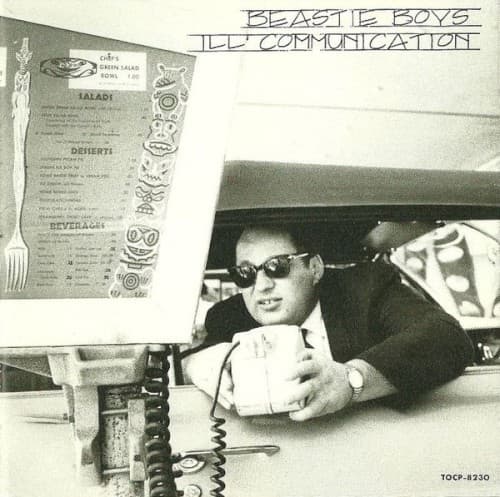
The scorecard
7.6/10 · Great
- Writing25%
- 7.5
- Production25%
- 8.5
- Delivery15%
- 7.0
- Cohesion15%
- 6.5
- Originality10%
- 8.0
- Replay value10%
- 7.5
The verses blend absurdist humor with sharper political gestures than before, though the joke tracks still outnumber the ones with something to say
Live funk and punk recorded with the confidence of a band that knows how to lock in, from the fuzz bass on Sabotage to the jazz drift of Eugene's Lament
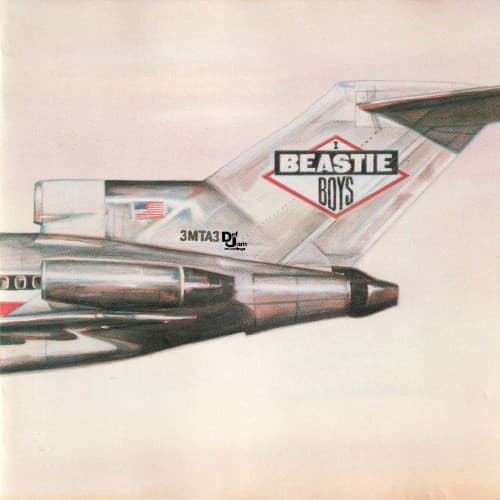
The three-way interplay is tighter than Licensed to Ill but the voices still favor personality over technique, with Q-Tip and Biz Markie lifting the songs they appear on
Twenty tracks with too many minute-long instrumentals that break momentum rather than build it, making the album feel longer than its best ideas can support
The pivot from sample collage to live jazz-funk hybrids was radical in 1994, even if the punk interludes and beatnik skits leaned on ideas the group had explored before
The singles hold up and the deeper funk cuts reward repeat listens, but the instrumental detours and novelty tracks wear thin faster than the keepers
Beastie Boys Ill Communication — The Album That Proved the Reboot Wasn't a Fluke
The Beastie Boys had one job after Check Your Head brought them back from the Licensed to Ill hangover: prove they could do it again without repeating themselves. Ill Communication is the sound of a group that believed the answer was more, not tighter. More live instruments, more jazz detours, more punk rants, more minute-long ideas stretched across twenty tracks when twelve would have made a sharper case. What it loses in focus it gains in ambition, building on the live-band template of Check Your Head with a clearer sense of how to make funk and punk serve actual songs instead of just vibes. The problem is that the Beastie Boys in 1994 still could not tell the difference between a good idea and a recording-studio lark worth keeping.
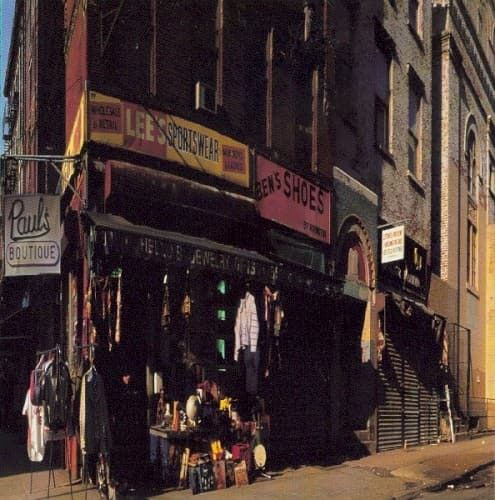
The thesis is that Ill Communication is the best version of what Check Your Head started, even if it is not the best Beastie Boys album. The writing is sharper when it wants to be, the production is more confident, and the handful of tracks that justify the live-band pivot—Sure Shot, Sabotage, Root Down, Get It Together—are among the best things they ever recorded. But the album is also padded with instrumental detours that go nowhere and joke tracks that were already tired on Licensed to Ill. The result is an album that sits between Paul's Boutique and Check Your Head in the catalog: more accomplished than the former as a band performance, less inventive than the latter as a piece of hip-hop construction, and too long to be either.
How Three Rappers Became a Funk Band Without Forgetting How to Rap
The production on Ill Communication is what happens when a group stops borrowing other people's sounds and commits to building their own. Mario Caldato co-produced again, and the influence of Miles Davis's On the Corner and Agharta is audible in the way the album uses jazz as a texture rather than a reference point. The funk is live and loose, with Money Mark on keyboards and Eric Bobo on percussion filling out a sound that pivots between breakbeat hip-hop, garage punk, and instrumental drift without ever losing the groove. The fuzz bass that drives Sabotage, the flute sample on Sure Shot, the locked-in rhythm section on Root Down—all of it sounds like a band that knows how to play, which was still a rare thing in hip-hop in 1994.
The writing is uneven in the way Beastie Boys writing has always been uneven, but the best tracks here are more focused than anything on Check Your Head. Sure Shot opens with a clear statement about respecting women, which would mean more if the joke tracks did not still traffic in the same frat-house humor that aged poorly by 1994. Get It Together works because Q-Tip's verse does half the heavy lifting, and the track is smart enough to let him. The Update and Futterman's Rule show the group willing to slow down and let a groove breathe, which is new. The problem is that for every track with a point, there are two that sound like the group recorded it because the tape was rolling and no one stopped them.
The punk tracks—Tough Guy, Heart Attack Man, The Scoop—are short and loud and mostly pointless, relics of a sound the group had already moved past but kept around out of loyalty. Amery Smith drums on Tough Guy and Heart Attack Man, and the performances are fine, but the songs themselves do not add anything that Sabotage does not do better. The jazz instrumentals—Bobo on the Corner, Eugene's Lament, Ricky's Theme, Shambala—are more successful as mood pieces, but they also kill the album's momentum every time one appears. Eugene's Lament features Eugene Gore on violin and drifts like a sketch, not a composition. Ricky's Theme is a drum display for Eric Bobo that works as a break but not as a reason to keep listening. The group was clearly in love with the idea of being a band, but they had not yet learned that being a band means knowing when to cut a take instead of keeping it because it felt good in the room.
An Album That Peaks Early and Then Wanders
Ill Communication frontloads its best ideas and then spends the back half searching for a reason to keep going. The opening run sets a pace the album never sustains, establishing a blueprint the rest of the record can't follow. The middle section delivers a reminder that the group works better with guests who can actually rap, but after that, the album sags under the weight of its own length.
Instrumentals and joke tracks break up whatever momentum the occasional strong cut builds. The sequencing is a problem throughout, with ninety-second instrumental interludes doing nothing but interrupting stronger material that would have worked better back-to-back. Sincere meditations arrive too late in the tracklist to register as anything other than afterthoughts. The closing run ends with a minute of studio chatter that suggests the group thought the journey mattered more than the destination, which is generous.
At twenty tracks, Ill Communication feels like a band that recorded everything and then decided that cutting half of it would be a betrayal of the creative process. The result is an album that works as a vibe but not as a sequence. It earns its length only if you are willing to skip past the filler.
The Album That Proved the Comeback Was Real, Even If It Didn't Need to Be This Long
Ill Communication sits third in the Beastie Boys catalog behind Paul's Boutique and Check Your Head, ahead of Licensed to Ill and everything that came later. It is a better album than Check Your Head in terms of craft and ambition, but it is not a better listen because it does not know when to stop. The singles are essential—Sabotage and Sure Shot are top-tier Beastie Boys, and Root Down is not far behind—but the deep cuts require patience that the album does not always earn. The group's decision to record live and embrace jazz-funk hybrids was radical for 1994, and the production here is the most confident they ever sounded as a band. The problem is that confidence without editing is just indulgence.
This album is for fans who want to hear the Beastie Boys at their most ambitious, even when that ambition leads them into instrumental cul-de-sacs and joke tracks that should have stayed on the cutting-room floor. Casual listeners should start with Sure Shot, Sabotage, Root Down, and Get It Together, then decide if the rest is worth the detours. Skip this if you want the group at their sharpest; that album is Paul's Boutique. Skip this if you want the live-band idea without the filler; that album is the tighter half of Check Your Head. Play this if you want to hear a group that figured out how to be a band and then recorded everything they could think of to prove it. The Beastie Boys in 1994 were good enough to make twenty tracks listenable, but they were not disciplined enough to make twenty tracks necessary.
Track by track
Track Listing
Sure Shot
StandoutThe flute sample from Jeremy Steig's Howlin' For Judy anchors the cleanest hip-hop track on the album, with verses that actually have something to say about respect and evolution. The production is economical in a way the rest of the album is not, letting the loop and the drums do the work while the three voices trade lines without stepping on each other. This is the Beastie Boys at their most focused, which makes it the exception rather than the rule.
Tough Guy
WeakFifty-seven seconds of punk noise with Amery Smith on drums, serving no purpose except to prove the group still remembered how to play loud and fast. It breaks the momentum Sure Shot built and sets a pattern the album will repeat too many times.
B‐Boys Makin’ With the Freak Freak
StandoutA funk workout that leans into the groove Money Mark and Eric Bobo build, with verses that prioritize rhythm over content. The track works because it knows what it is—a showcase for the live band—and does not pretend to be more. The interplay between the three voices is tighter here than on most of the album, and the production has enough swing to justify the length.
Bobo on the Corner
SolidAn instrumental interlude that drifts without landing, named for percussionist Eric Bobo but not memorable enough to justify the detour.
Root Down
StandoutThe best pure hip-hop track on the album, built on a breakbeat and a groove that locks in harder than anything on Check Your Head. The verses are sharp without trying to prove anything, and the production gives the track enough space to breathe while keeping the energy high. This is the sound of a group that figured out how to make live instruments serve a rap song instead of the other way around, and it holds up as well as anything they recorded in the nineties.
Sabotage
StandoutThe fuzz bass that drives this track sat unused for a year before the group added a fictitious rant about their producer holding them back, and the result is the most visceral two minutes and fifty-eight seconds they ever recorded. The verses are absurd and the energy is pure aggression, with no attempt to justify the anger beyond the fact that it sounds good when channeled into a riff this heavy. The Spike Jonze video turned it into a cultural moment, but the track works on its own as a distillation of everything the live-band pivot was supposed to accomplish.
Get It Together
StandoutQ-Tip's verse is the best thing on the album that the Beastie Boys did not write, and the track is smart enough to recognize it. The sample from The Moog Machine's cover of Aquarius/Let the Sunshine In gives the production a psychedelic tint that plays well against the straight hip-hop structure, and the group's verses stay out of Q-Tip's way. This is what the album sounds like when the Beastie Boys let someone else do the heavy lifting, and it works better than most of the tracks where they try to carry it themselves.
Sabrosa
SolidAn instrumental that drifts between jazz and funk without committing to either, serving as a breather after Get It Together but not offering much reason to return to it. The performance is solid, but the composition is a sketch.
The Update
StandoutA slower funk track that lets the groove sit and gives the verses room to wander. The writing is not as sharp as Sure Shot or Root Down, but the production is confident enough to make the track work as a vibe. Money Mark's keyboards anchor the sound, and the rhythm section stays locked in without overplaying. This is the album at its most patient, which is also its most mature.
Futterman’s Rule
SolidAnother mid-tempo funk track that prioritizes feel over content, with verses that coast on rhythm rather than saying much. The production is clean and the groove is solid, but the track does not distinguish itself enough to stand out in a tracklist this long. It works as part of the flow but not as a destination.
Alright Hear This
SolidA track that splits the difference between the punk energy of Sabotage and the funk experiments that dominate the album, with verses that lean into wordplay without landing anything memorable. The production is busy in a way that works against the groove, and the track feels like an idea the group could not quite finish but decided to keep anyway.
Eugene’s Lament
SolidAn instrumental featuring Eugene Gore on violin, drifting through a jazz sketch that never develops into a full idea. It serves as a mood piece but contributes nothing to the album's argument or momentum.
Flute Loop
WeakNinety-four seconds of a looped flute sample with no development, no payoff, and no reason to exist as a standalone track. Pure filler.
Do It
SolidBiz Markie's appearance is the only reason this track registers, and even then it feels like a throwback to an earlier version of the Beastie Boys that the album had already moved past. The beat is serviceable and the vibe is loose, but the track does not add anything that the stronger cuts have not already accomplished. It works as a moment of levity, but it is not a reason to keep listening.
Ricky’s Theme
SolidA drum showcase for Eric Bobo that works as a technical display but not as a composition. The performance is tight and the production gives the drums room to breathe, but the track ultimately feels like a studio exercise that made it onto the album because no one had a reason to cut it.
Heart Attack Man
WeakAnother short punk blast with Amery Smith on drums, louder and faster than Tough Guy but just as pointless. The energy is real but the song is not, and it arrives too late in the tracklist to function as anything other than a reminder that the group still had not learned when to stop.
The Scoop
SolidA longer punk track that tries to build on the energy of Sabotage but lacks the riff or the focus to pull it off. The verses are fast and the guitars are loud, but the track does not go anywhere, and the production is muddier than it needs to be. This is what happens when a good idea gets stretched past its breaking point.
Shambala
SolidAn instrumental that drifts through jazz and funk textures without landing on a melody or a groove worth remembering. The performance is fine, but the track is another example of the group recording because they could, not because they should.
Bodhisattva Vow
SolidA sincere meditation on Buddhism that arrives too late in the tracklist to register as anything other than an afterthought. The verses are earnest and the production is subdued, which makes the track feel like an outlier in a sequence that has already worn out its welcome. It works as a statement of intent, but not as a song.
Transitions
WeakA minute of studio chatter that closes the album on a note of casual indifference, as if the group thought the journey mattered more than the destination. It does not work as a closer and it does not add anything, but it does confirm that the album could have been shorter.
Frequently Asked Questions
Is Beastie Boys Ill Communication better than Check Your Head?
What are the best songs on Ill Communication?
Why is Sabotage the most famous song from Ill Communication?
Styles