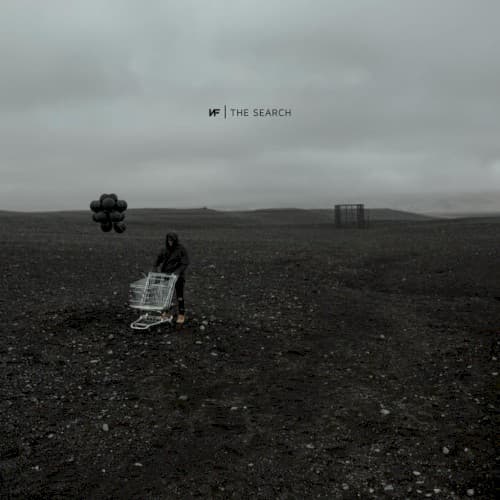
The scorecard
5.8/10 · Mixed
- Writing25%
- 5.5
- Production25%
- 6.5
- Delivery15%
- 6.5
- Cohesion15%
- 5.0
- Originality10%
- 5.0
- Replay value10%
- 5.5
The album is relentlessly specific about its subject, mental struggle, but the lyrics circle one theme through abstract statements instead of scenes.
The Feuerstein and Profitt arrangements are dense and well made, with the snare-heavy drive that critics described, and few tracks vary the dynamic enough to reward the density.
NF's fast, forceful rapping is technically strong, yet the snarl-and-yell register is applied so broadly that quieter moments lose their contrast.
Nineteen tracks at near-identical intensity, with the album's best hooks front-loaded, make the back half feel like a repeat.
It sharpens the formula of the previous album without adding a new idea, and the one guest feature is a small variation at best.
The singles hold up on repeat, but the full-length sequence is draining enough that the album is a poor candidate for casual re-listening.
NF The Search — A Number One Album Built for Fans, Not Playlists
The Search is a record that wins the argument its critics started and still loses the one that matters at album length. The case against it is familiar: it is loud, it is draining, and it never varies. The case for it is stronger than the reviews allowed, because within its narrow range NF is an unusually committed rapper, and the singles are among the most effective of his career. The honest verdict sits between those positions, and the album earns it by being excellent in pieces and exhausting as a whole.
It arrived in July 2019 as NF's fourth studio album, released through NF Real Music and Caroline, and it was preceded by four singles. Metacritic averaged six reviews to 58, a mixed result, and the most pointed pushback came from critics who found the record relentless or hard to sit through. Pitchfork called it an unpleasant ride and objected to the overbearing snarl-yell delivery, while the New York Times found NF objectively strong but wrote that the record alternated between thrilling and draining. Stereogum was kinder, arguing that the gothic heaviness sometimes smothers a real pop gift, and that argument is closest to what the record sounds like.
The stakes are about what an album is supposed to be in 2019. The streaming era rewards individual tracks, and a nineteen-song album with the same mood throughout is a bet against the way most people listen. NF made that bet and won the charts anyway: the album debuted at number one with 130,000 units, well above the 95,000 that was predicted, and it did so partly through sales, bundles and ticket offers rather than through streaming alone. That tells you the audience is real and devoted, but it does not tell you the album is good.
The argument here is that The Search is a strong collection of songs and a weak album. It does not need to be nineteen tracks, it does not need to be one tone, and the evidence is in the shorter, sharper stretch late in the sequence that proves he can do more with less. Fans will not mind. Anyone else should sample it and stop.
Loud, Dense and Sure of Itself
Start with what the album does that most rap in this lane does not: it commits. NF writes about mental health and personal pressure with no irony and no protective persona, and the writing is direct enough that a listener never has to guess what he means. That clarity is a real strength, and it is a large part of why the audience around him is so loyal. The Stereogum line about hurting listeners finding something here is a fair description of what the record offers.
The writing is also the album's clearest limit. The lyrics return to the same few ideas, and they do so through general statements of struggle rather than through scenes, names or small observed details, which is how great confessional rap makes pain specific. The reviews that described the record as reading like a suicide note, or as a long document of insecurity, are describing a real quality, even if they are harsher than the evidence strictly needs. Where a verse pushes into something new, as the title concept implies it should, the album is at its best. Where it restates, it is repetitive.
Production is led by Feuerstein and Tommee Profitt, with Walowac credited on several tracks and David Garcia and Cameron Doyle on a late handful. The result is dense and dramatic: big drums, heavy low end, layered strings and choir-style textures that give each track an immediate sense of scale. The New York Times image of living inside a snare drum at a marching band's halftime show is unkind, but it describes the density accurately. The production is skilled and it is almost never quiet, which is the problem. A beat that is always at maximum has nowhere to go for the hook.
Delivery is where the album is most polarizing, and where a contrarian reading helps. The pushed, aggressive register that some critics heard as a snarl is also a technical achievement: clear diction, fast cadence and sustained breath over long verses. NF is better at this than most of his imitators, and the praise from critics who called him an objectively strong rapper is earned. The flaw is that the register has no counterweight. Even the sung hook elsewhere sounds like another push at the same loudness.
The album does include one guest, Sasha Sloan on Only, and it is the best example of what more variety would have done. The track gives the ear a different voice and a softer edge, and the album sounds more alive for it. A record this long needed two or three more moments of that kind.
Nineteen Tracks and One Mood
The first third is the strongest part of the sequence. The title track opens with the most focused statement of purpose, the singles are placed early, and the ear is still fresh enough to hear the arrangements as dramatic rather than relentless. If you stop after six or seven songs you will have heard the album at its best, and there is no shame in that. In a playlist world, this is also how most people will actually hear it.
The middle of the record is where the sequencing becomes a problem. Several songs run past four or five minutes, the mood does not move, and the pattern of build, push and release repeats from one track to the next. An interlude arrives under a minute long, but it is too slight to reset the ear. By the second half, a listener can predict the shape of each song, and prediction is the opposite of drama.
The late stretch is the surprise. The final tracks are shorter, mostly around three minutes, and several of them use a different group of producers than the early material. The tighter structures and lighter touch are the best argument for what this album could have been at around thirteen tracks. The sequence closes with a longer track that returns to the scale of the opening, which gives the record a sense of shape even if the shape was not earned by the middle.
So is the length earned? It is not. The commercial result shows that the audience wanted all of it, with bundles and sales driving a number one debut, but a tighter edit would have lost almost nothing that mattered and gained a great deal of clarity. In an era of long albums built to feed streaming totals, this one is a rare case where length hurt a project that had no streaming-first incentive to be long in the first place. It is a record that mistakes volume for depth.
Strong Songs, Weak Album, Loyal Audience
There is no other NF album on this site to rank it against yet, so the comparison that matters is to the genre. Against a broad field of rap albums, The Search lands in the mixed range: strong in production and delivery, weak in cohesion and originality, and consistent in a way that works against it. The scores put the overall rating just under six, and the verdict agrees with the critics who found it exhausting without agreeing that it is empty.
The album is for listeners who want intensity and who already know they like NF's approach. If the previous record worked for you, this one gives you more of it, with sharper singles. It is also for people who use albums as emotional release rather than as listening experiences, because its mood is consistent and its honesty is real. People looking for variety, humor, storytelling or musical range should skip it, and so should anyone who finds a constant pushed vocal tiring within the first five songs.
How it ages is a fair question. The singles will last because they are focused and hook-led, and they are the part of the album that streaming rewards best. The full running order will age worse, because the argument for a nineteen-track mood piece is weaker every year that playlist listening dominates. It is a record that sounds better in pieces than in sequence, and that is a damaging verdict for an album.
Start with The Search, When I Grow Up and Time, the three singles that make the case for his skill most efficiently. After that, try Only for the change of texture and Like This for the shorter, lighter late-album sound. For what to hear next, go to Perception, the earlier album that did the same thing with more variety and a better balance of hooks and heaviness. The most useful way to sum it up is that The Search is the sound of an artist who found a loyal audience and decided not to edit for anyone else.
Track by track
Track Listing
The Search
StandoutThe title track opens the album and was released as a single, announced as an expression of the hard quest NF had been on, with rapid-fire verses. It is the clearest statement of the album's purpose and uses the full weight of the production from the first bar. The delivery is fast and committed, and the arrangement builds with purpose across just over four minutes. It is also a fair preview of the album's limit, since the intensity is high from the start with little room left to grow. As an opener it works, and as a single it makes sense.
Leave Me Alone
SolidA five-minute track with an additional producer credit, and one of the longer early cuts. It sets the defensive tone that runs through the record. The performance is strong, but the length starts to expose the repetition.
Change
SolidA mid-length track at just under four minutes, in the album's usual register. It is competently built and sits comfortably in the early stretch without adding a new angle.
My Stress
SolidAnother dense, heavy cut that continues the mood. The delivery is energetic and the beat is full, but it does not do much that earlier tracks have not already done.
Nate
SolidAt just over five minutes, this is one of the longer songs, and the title suggests a personal address. It is a more reflective track than several around it, and the length gives it room to build. The performance is committed and the arrangement is large, but it asks for more patience than its single idea can repay.
Time
StandoutA single, and one of the strongest cuts on the album. Four minutes of focused, hook-driven rapping where the arrangement serves the chorus and the verse structure avoids the drag of the longer tracks. It was important enough to get a shorter edit as a digital bonus track, which is a good sign that the label saw it as a core song. The production is full without being suffocating, and NF's delivery shows control as well as force. It is one of the places where the album's formula works at full strength.
Returns
SolidA shorter track at under four minutes with a three-producer credit. It is competent and fast, though it blends into the stretch around it.
When I Grow Up
StandoutA single and the shortest of the early cuts at barely over three minutes. It is tighter and more hook-forward than most of the record, and the brevity helps. The title points to a more reflective angle and the arrangement gives the chorus enough lift to stick. It is a good example of the album working at a scale that keeps the intensity from turning into noise, and it is among the best entry points for new listeners.
Only
StandoutThe album's one collaboration, with Sasha Sloan. Her voice gives the record its clearest change of texture, and the track breathes in a way the surrounding songs do not. It is the best argument that variety would have helped, and it deserves to be better known.
Let Me Go
SolidA four-and-a-half-minute track with an additional producer credit that continues the heavy mood. Strong performance, but the structure is predictable.
-Interlude-
SolidUnder a minute long, and too brief to reset the ear. It is filler in the best sense, a pause that does not interrupt, but it does not do much work either.
Hate Myself
SolidA mid-length track in the album's confessional core. The title tells you where it is going and the delivery follows through with force. It is effective but does not extend the record's range.
I Miss the Days
SolidA four-and-a-half-minute track with a nostalgic angle, at least by its title. It is a small change of tone from the aggression around it, and a little more reflective, but the arrangement still leans on the familiar build.
No Excuses
StandoutA shorter track at just over three minutes, with a tighter structure than much of the middle. The pace picks up and the delivery is sharp. It is a small reset after a long stretch.
Like This
StandoutThe first track with David Garcia in the producer credits instead of Profitt, and it moves faster and lighter. The shorter running time helps and the sound feels slightly fresher than the material before it. It is a useful sign of what a tighter, more varied album could have sounded like.
Options
StandoutA short cut with Garcia and Cameron Doyle among the producers. It runs under three and a half minutes and moves briskly. It is solid and unfussy, a good example of the late-album energy.
Why
StandoutA single released ahead of the album, at just over three minutes. It is compact, direct and hook-led, which is the right shape for a lead single. It stands out because it makes its point and stops, a discipline the album does not always show.
Thinking
SolidThe shortest of the full tracks apart from the interlude and the single, at barely over three minutes, with a leaner production credit. It is brisk and unfussy and does not outstay its welcome.
Trauma
SolidThe closer, at just over four minutes, and the late return to the album's larger scale. The title promises weight and the arrangement delivers it. It gives the sequence a sense of ending, but it repeats the record's gestures instead of resolving them.
Frequently Asked Questions
Is NF The Search a good album?
What did critics say about NF The Search?
How did NF The Search do on the charts?
Where should I start with NF The Search?
Styles