The scorecard
5.7/10 · Mixed
- Writing25%
- 5.0
- Production25%
- 6.5
- Delivery15%
- 6.0
- Cohesion15%
- 5.5
- Originality10%
- 5.5
- Replay value10%
- 5.5
The drug, family and industry subjects are real, but the language stays general, the weaker verses read like first drafts of the choruses, and NME's charge of apathetic lyricism, though overstated, lands often enough to put the writing on the weak side.
The guitars, trap hi-hats and live-sounding pop-punk drums hold together across a large team of producers, though the approach is more a smart inversion of familiar ingredients than anything that stands out as a standout sound.
His clipped verses and shouted hooks are committed and the guests fit the mood, but the emotional register stays narrow and the performance rarely surprises, so strengths and weaknesses roughly cancel out.
The short running time, spread-out singles and two interludes give it the feel of a descent through a building, but the back half sags into similar melodic-misery songs and the album never takes the one risk that would give the pacing a real surprise.
The album is a disciplined refinement of rap-rock ingredients that were already lying around by 2019, so it adds little beyond better organization, which roughly balances its confident sense of style.
The short songs and big hooks still sound efficient on repeat, but the uniformly angry or sad mood and thin writing limit how much the album gives back once the first listens pass.
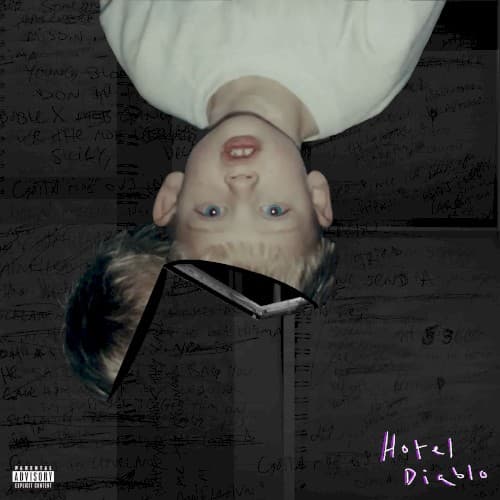
Machine Gun Kelly Hotel Diablo: Rap-Rock Finds Its Short, Loud Form
Hotel Diablo is the album where Machine Gun Kelly stopped negotiating with rap radio and built a house for himself instead. It runs about thirty-eight minutes, it hurries through most of its songs in under three and a half minutes, and it treats guitars not as seasoning but as the frame. That compression is the argument. A rapper who had spent years being told he did not belong anywhere decided to be brief, loud and certain, and the record is better for it than the critics who called it bland would admit.
The claim here is that Hotel Diablo is MGK's best-organized album and the first one that sounds like a decision rather than a drift. It follows the Binge EP by less than ten months, and a reviewer at the Cornell Daily Sun pointed out the difference: gone are the odd hooks and off-beat rapping, replaced by a more cohesive sound. I would go further. This is the record where the rap-rock hybrid stops sounding like a novelty and starts sounding like a house style, with the confessional writing about drugs and childhood problems giving the guitars something to push against.
The culture around it matters. By 2019 the emo-rap wave had already made melodic misery a mainstream currency, and NME made the fair point that peers like Juice WRLD and Post Malone were pushing sounds forward while MGK stuck to a familiar formula. That criticism is accurate about novelty and wrong about execution. Hotel Diablo does not reinvent anything. It takes ingredients that were all lying around, the pop-punk drum fill, the trap hi-hat, the sung hook, the shouted bridge, and arranges them with more discipline than most of the artists who inspired it.
The lineage runs through Cleveland and Los Angeles at once. The Bone Thugs-n-Harmony instinct for melody is audible in the hooks, the Travis Barker drumming on the closing single ties the record to the pop-punk generation, and the album's pointed response to the feud with Eminem shows a rapper still defining himself against the genre's old guard. The record is less a leap than a settling, and that is exactly why it works.
Pop-Punk Drums, Trap Hi-Hats, and a Voice That Finally Commits
The sound of Hotel Diablo is assembled by a large team, and the credits show it: BazeXX and SlimmXX appear on almost every song, Foster the People's Mark Foster contributes to the opener, and Ronny J, Cook Classics, Tommy Brown and JP Did This 1 each take a turn. What could have become a patchwork instead holds together because the drums are consistently live-sounding and the guitars are consistently loud. The trap-era snares and hi-hats are still present, but they now sit underneath a pop-punk skeleton rather than on top of it. That inversion is the record's most important production choice.
It also changes how MGK sounds. On earlier records he sounded caught between rapping and singing. Here he commits to both, using a clipped, aggressive cadence for verses and a ragged, shouted melody for hooks. The cadence is more disciplined than before, and the Cornell Daily Sun critic was right to hear intricate flows where earlier work had awkward ones. The shouted hooks are the album's bait: simple, repeatable, and built for a crowd. Naomi Wild, Lil Skies, Trippie Redd and Madison Love each get a lane without breaking the mood.
The writing is where the album's limits are clearest. MGK deals with drugs, family struggles and the pressures of the music business, and the subjects are real. A line of thought about the industry manipulating artists drives one single, and another is addressed to the doubters who thought his career was falling apart during the Eminem feud. But the language is general. He tells you he is hurting, he tells you he is alone, he tells you he does not trust the people around him, and he rarely gives you a scene that makes it hit. NME called the lyricism apathetic, and while that overstates it, the verses on the lesser songs do read like first drafts of the choruses.
There is also a sameness in the emotional register. Almost every song is angry, sad or both, and the few attempts at lighter material are brief. The album is short enough that this does not become a real problem, but it does limit the range. A stronger sense of humor or one genuinely surprising song would have made the dark mood feel more earned.
Still, the combination works. The hooks are strong, the performance is committed, and the production never sounds cheap. As a statement of intent, Hotel Diablo is more convincing than anything he had released before it. As an example of how far rap-rock can go, it is a competent refinement of a formula that was already established. That is a respectable achievement, and it is not the same as a breakthrough.
Fourteen Tracks, Thirty-Eight Minutes, No Wasted Floors
Sequencing is the quiet strength of Hotel Diablo. The album opens at speed with a two-minute blast and does not let up for the first third, which gives it the feel of a live set rather than a studio sprawl. Singles are spread through the tracklist instead of clustered, so the energy rises and dips on purpose, and the running time keeps any one mood from overstaying.
The two interludes do real work. A Message From the Count is under a minute long, and the second interlude arrives at a point where the album needs a change of texture. Neither is a destination, but both help the record feel like a descent through a building rather than a playlist. That architectural idea is what the title promises, and the album delivers it better than most concept-leaning records of its era.
The record peaks in the first half. Early songs are loud, direct and hook-forward, and the middle stretch has the best balance of rapped verses and sung choruses. The back half is more uneven. A couple of songs lean harder on the melodic-misery formula and sound closer to each other than they should, and the sequence loses a little momentum before the closing single arrives to restore it. That ending is smart: ending on the collaboration with Travis Barker and Yungblud sends listeners out on the album's most pop-leaning and most shareable song, which is both a strength and a small compromise.
The length is earned. At under forty minutes, there is no room for the sagging middle that undermined his earlier work, and the short songs mean that even the weaker ones pass quickly. If anything the album could have taken one more risk. A longer, stranger track in the center would have given the pacing a real surprise. As it stands, it is a well-built, well-timed record that plays smoothly from first song to last and never forgets that it is meant to be performed.
The Version of MGK That Could Actually Last
Within Machine Gun Kelly's catalog, Hotel Diablo is the point where the experiment becomes a style. It is more focused than the earlier records, more confident than the Binge EP before it, and more disciplined than the sprawl that preceded it. The Billboard 200 debut at number five was his fourth top-ten album, and the sharp second-week drop suggests this was a record for committed fans, not a crossover breakthrough. That is the right frame for it. It is a very good album for people already invited in.
The case against it is real. NME called it formulaic and stuck in a 2012 timewarp, and the writing supports that complaint on the weaker songs. If you want lyrical density, sharp storytelling or a rapper pushing the genre's boundaries, this is not the album for you. Skip it if you came for technique.
Who should start here? Anyone who likes loud, melodic, guitar-heavy rap with a confessional streak: fans of the late emo-rap wave, pop-punk listeners curious about hip-hop, and anyone who wants to see how MGK settled into his sound. It has aged as a good example of that crossover, and it plays better now than it did in the shadow of bigger names, because the short songs still sound efficient and the hooks still hit.
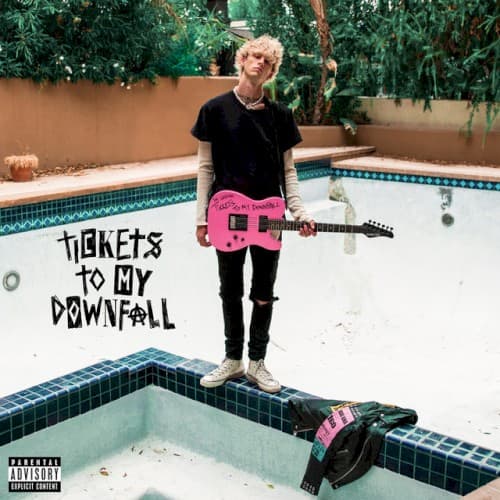
For three songs to start with, play El Diablo, Glass House and I Think I’m OKAY. They show the aggression, the vulnerability and the pop instinct in turn. After that, go back to General Admission to hear the darker, more rap-leaning version of the same artist, and then forward to Tickets to My Downfall to hear what happens when the guitars take over completely. Of the three albums, Hotel Diablo is the sharpest bridge between them.
Hotel Diablo does not change rap, but it proves that a short, loud and honest record can make a formula feel fresh for thirty-eight minutes.
Track by track
Track Listing
Sex Drive
StandoutA two-minute opener with Mark Foster among the producers, built to hit hard and get out. It sets the album's template: clipped verses, a shouted hook and live-sounding drums. Short, loud and effective.
el Diablo
StandoutRonny J produces the second single, the album's sharpest piece of aggression. MGK addresses the people who counted him out during the feud with Eminem and the ones he believes took credit for his work, and the delivery is tight, bitter and fast. It is not subtle, but the beat does the heavy lifting, and at under two and a half minutes it never wears out its welcome. One of the album's best starting points and a clear statement of how he wants to be heard.
Hollywood Whore
StandoutThe first single is a critique of how the music industry handles artists, and it plays like a manifesto for the record. The guitars are loud, the hook is built for crowds, and the mood is defiant. The lyrics are more general than the topic deserves, but the energy carries it. A strong early single.
Glass House
StandoutNaomi Wild gives the chorus a clean, melodic lift while MGK describes mental strain and drug problems from inside a house with no privacy. This is the record at its most vulnerable and most convincing, because the hook and the subject match. The production is polished without being slick, and the contrast between Wild's smooth voice and MGK's rasp is the song's best idea. It is among the album's top three.
Burning Memories
SolidLil Skies brings a melodic guest verse to a song about trying to burn away the past. The beat is effective and the hook sticks, though the writing leans on familiar images. Solid, and a good example of how the album handles features.
A Message From the Count
SolidA brief interlude of under a minute that works as scene-setting rather than a real song. It helps the hotel idea but adds nothing on its own.
Floor 13
StandoutA promotional single with a closing cameo from MGK's daughter, which gives the track a personal turn that the rest of the record rarely reaches. The production is heavy and the hook is built for live shows. The cameo is the emotional anchor, and the song is more affecting for it. A good mid-album highlight.
Roulette
SolidCook Classics and Jacob Troth supply a slightly looser, more atmospheric beat, and MGK uses the extra space for a more melodic delivery. It is competent and pleasant, but it sits in the shadow of the singles around it.
Truck Norris Interlude
SolidA short comic break that gives the album a moment of levity. It is the closest the record comes to humor, and it works because it does not last.
Death in My Pocket
StandoutA dark, mid-tempo cut about danger carried close, with a brooding beat and a controlled delivery. It fits the album's mood and offers a little more menace than the surrounding songs. A solid deep cut.
Candy
SolidTrippie Redd brings his sing-song style to a track with Tommy Brown among the producers, and the pairing makes it the album's most pop-leaning feature. It is catchy and breezy, but the lightness feels slightly out of step with the rest of the sequence. Fun, not essential.
Waste Love
SolidMadison Love supplies a soft hook over Cook Classics production, and the song reaches for romance and regret. It is pleasant and well-made but less distinctive than the stronger tracks, and the lyrics rely on familiar phrases about heartbreak.
5:3666
WeakPhem sings the hook on a slow, moody late-album track about the hours after midnight. The mood is convincing, but the song is one of the more forgettable stretches and shares too much with the songs around it. Filler by this album's standards.
I Think I’m OKAY
StandoutThe closer pairs MGK with Yungblud and Travis Barker for a pop-punk-leaning single that has the album's most direct hook. Barker's drumming ties the record to the pop-punk generation, and the three voices fit each other well. It is the most shareable song here and a fair preview of the direction his sound would take next. The writing is simple and the chorus is the point, but the song works exactly as a closer should, sending the listener out on the biggest hook.
Frequently Asked Questions
Is Machine Gun Kelly's Hotel Diablo good?
What are the best songs on Hotel Diablo?
How did Hotel Diablo perform on the charts?
Styles