The scorecard
5.8/10 · Mixed
- Writing25%
- 5.5
- Production25%
- 6.5
- Delivery15%
- 6.5
- Cohesion15%
- 5.0
- Originality10%
- 5.0
- Replay value10%
- 5.5
The title promises self-examination, but Ballin and Regular spend their time on flexing and romance rather than any real reckoning.
The polished, expensive finish keeps the record glossy and consistent, with warm keys, crisp drums and room for the vocals, though the template rarely changes and the variety lives mostly in the details.
His melodic voice still carries the hooks, but the performances on Take Shots and Come Here sound more routine than inspired.
Despite being split into two labeled sides, the album's sound barely changes between them, and at twenty-two tracks the length is earned by quantity rather than variety, so the middle stretch fades into a steady, pleasant glow.
The two-sided concept is clever on paper, but it is mostly a decorative framework, and the music largely repeats the melodic formula that made him popular without adding much to it.
As a projection, the strong-hooked singles should hold up, but the deeper cuts will likely blend into the background of a long tracklist, which balances the lasting appeal against the filler.
A Boogie wit da Hoodie Me vs. Myself — A Great Title Wrapped Around a Safe Record
Me vs. Myself has the most interesting idea of any A Boogie wit da Hoodie album and the least interesting follow-through. The record splits itself into two labeled sides, one for the Artist and one for the person named A Boogie, and the pitch is a portrait of a man arguing with his own public image. That is a strong premise for a rapper whose whole appeal is emotional openness. The music on the other side of that premise is polished, melodic and comfortable, and it rarely argues with anyone.
The thesis is that this album is a competent, enjoyable return to the sound that made him popular, but it mistakes a concept for a statement. The two-sided structure is a marketing device more than an artistic one, and the songs on each side sound remarkably alike. Critics who expected a soul-searching record found a party soundtrack, and that reading is mostly right. The album is pleasant, but it is not especially revealing.
Still, there is a case for its approach. After a record that divided listeners, this one leans back into the melody and the hooks that carried his early work, and it is more consistent than its predecessor. The singles are strong, the production is expensive and the voice is intact. In that sense it is a recovery, even if it is a cautious one.
The identity theme also gives the album a framework that earlier records lacked. It lets him comment on fame, loyalty and the distance between public and private selves, and a few songs make good use of it. The problem is that the framework is mostly decorative, and the length of twenty-two tracks works against the focus the concept needs.
Glossy Hooks, Shallow Self-Portraits
The production is the album's most reliable asset. The credit list is long and varied, with Wheezy, Boi-1da, OG Parker, Smash David, Don Cannon and A Boogie himself among the names, and the sound is consistently polished. Beats lean on warm keys, crisp drums and low, rolling bass, and they leave plenty of room for the vocals. The sound has the clean, expensive finish of a record built for streaming playlists, which is both its strength and its limit. The variety is mostly in the details, since the overall template rarely changes.
The voice remains the main draw. A Boogie sings in a cracked, slightly strained tone that gives simple lines a human texture, and his melodic instincts are still sharp. Hooks arrive quickly and stick, and the best songs rely on that gift rather than on any technical display. The weakness is that the performances sound slightly more routine than before, as though the voice is being asked to carry songs that do not give it much new to say.
The writing is where the concept should pay off and does not. A record titled Me vs. Myself invites a degree of self-interrogation, but most of the songs return to familiar subjects: money, relationships, loyalty and nightlife. The best lines carry a note of weariness or doubt, and a few songs touch on the cost of success, but the album rarely pushes past that surface. Several critics made the same point, and it is the most persuasive complaint against the record.
The guest list is broad, with Roddy Ricch, Tory Lanez, Kodak Black, G Herbo, Lil Durk, Don Q and H.E.R. among them. Most of the collaborations are well matched to the material, and they help keep the album from sounding like a single long mood. At the same time, they contribute to the sense of a record built to maximize streaming numbers. The album works as a high-quality playlist and falls short as a coherent work.
The two-sided concept deserves one more note. Labeling songs as belonging to one persona or the other is clever, but the sound does not change enough for the labels to matter. A listener could ignore the divisions entirely and hear the same record. That gap between idea and execution is the album's central flaw.
Twenty-Two Songs, Two Sides, One Mood
As a sequence, Me vs. Myself opens with confidence. The first stretch moves between the two labeled sides without friction, and the early singles give the album momentum. The pacing is brisk, the hooks land and the guest verses arrive at the right moments, so the opening run suggests a stronger record than the one that follows.
The middle is where the concept stops helping. Songs from both sides sit next to one another, and the transitions barely register, since the tempo, the production style and the vocal approach stay the same. Several tracks occupy space without adding a new idea, and the sense of a divided self disappears into a steady, pleasant glow. This is the section where a stricter edit would pay off the most.
The back half recovers in part. A few late songs bring different guests and slightly different textures, and a pair of earlier EP tracks near the end give the album a more personal edge. The closing run ends with the lead single, which makes sense commercially but leaves the finale feeling more like a victory lap than a conclusion. At twenty-two tracks, the length is not earned by variety, only by quantity. The album would have been stronger at fifteen songs, with the two-sided idea given room to mean something.
A Safe Comeback That Never Settles the Argument
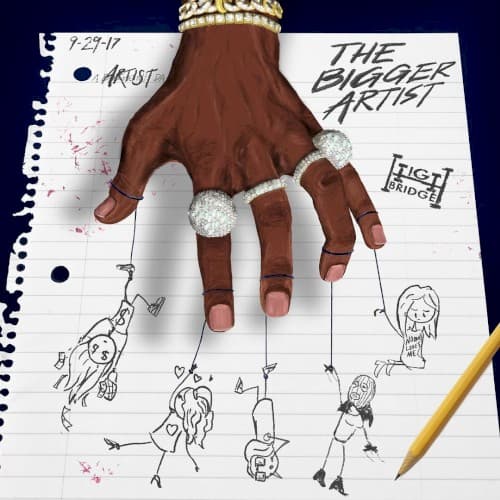
Me vs. Myself is a mixed-to-good album that restores some of the melodic confidence of his early work without adding much to it. It ranks above Artist 2.0 for its stronger consistency and cleaner hooks, and below The Bigger Artist for its lack of emotional specificity. The reasons are concrete: the production and the voice are strong, but the writing rarely lives up to its own title. Reviews were generally favorable, though the aggregate score reflects a record that few critics found essential.
It is for listeners who like his polished, melodic style and want a long, easy playlist of new songs. Fans of Roddy Ricch, Lil Durk and H.E.R. will find enough in the guest slots to justify a listen. It is not for listeners who want the introspection the title suggests, or a tightly edited album. If you are new to him, start with the debut, where the sincerity is more convincing.
As for aging, the singles should hold up because they are built on strong hooks and clean production. The deeper cuts will likely blend into the background of a crowded catalog. The two-sided concept will probably be remembered as a missed opportunity, since the idea is stronger than anything the music does with it.
Start with Playa, B.R.O. (Better Ride Out) and Man In The Mirror, which show the album's pop-melodic side, its hard-edged side and its most reflective side. For what to hear next, go to The Bigger Artist for the more focused and more affecting version of this sound, and to Roddy Ricch for a melodic rapper who covers similar ground with a sharper edge. The album's cleverest idea is its title, and its biggest shortcoming is that the rest of the record never argues back.
Track by track
Track Listing
Food For Thought
SolidA smooth, reflective opener from Mitch Mula that sets the album's tone. It is competent and pleasant, but it does not make a strong case for the concept.
B.R.O. (Better Ride Out)
StandoutRoddy Ricch joins for a confident, melodic single produced by S.Dot and A Boogie himself. The beat is clean and bouncy, the chorus is easy to remember, and the two voices complement each other. It was the second single, and it earns the placement as one of the album's strongest collaborations.
Take Shots
SolidThe longest solo-feeling track in the first half, with Tory Lanez on the hook, runs past four and a half minutes. P2J and Kofo supply a smooth, mid-tempo beat, but the song stretches its idea beyond what it can support.
Water (Drowning Pt. 2)
SolidA sequel to an earlier hit, with Kodak Black returning as a guest. The beat from 254Bodi and S.Dot is moody and spare, and the song revisits a familiar emotional space. It is pleasant and well made, though it does not match the original's impact.
Money Conversations
SolidA confident track with an expensive-sounding beat from a trio of producers, including Boi-1da. The delivery is sharp, but the lyrics stay within familiar territory.
Turn Off The Radio
SolidA brisk, melodic cut that plays with the idea of escaping the noise. The hook is catchy, but the song is typical of the album's mid-tempo material.
Last Time
SolidG Herbo adds a harder verse to a song with a long list of producers. The contrast works well, and the beat gives both rappers a solid surface. A decent but unremarkable collaboration.
I Need It
SolidA confident, upbeat song from 30 Roc and ZenTachi that leans on a simple hook. It is easy to enjoy and easy to forget.
Ballin
SolidThe promotional single is a bright, polished flex produced by Wheezy and a crowd of collaborators. The hook is infectious, and the sound is built for playlists. It is one of the album's catchiest songs, but also one of its most superficial.
Emotions
SolidA romantic, melodic cut with a smooth beat from Travis Marsh and Nova Wav. It is competent and fits the album's mood, but it adds little.
Bounce Back
StandoutA brisk, confident song about resilience, with four producers behind it. The energy is higher than on much of the middle, and the hook is strong.
Come Here
WeakA romantic song that stretches to nearly four minutes and leans on a patronizing tone in places. The production from OG Parker and others is polished, but the writing is among the album's weaker moments.
Damn Homie
StandoutLil Durk joins for a harder, loyalty-themed song with a moody beat from Nick Mira and others. The two voices work well together, and the song is one of the stronger collaborations in the back half.
Friends With Benefits
SolidA short, smooth song at just over two minutes. It is catchy and slight, and it ends before it develops.
Chanelly
SolidDon Q joins for a brisk, street-oriented cut from DLo Beatz and JoeFromYO. It is short, direct and energetic, though not especially memorable.
February
StandoutA reflective, melodic song with a spare beat from Dasda and S.Dot. It is one of the quieter moments on the record, and a welcome change of pace.
Regular
SolidA bright, pop-leaning cut that leans on a charming hook. It is slick and inoffensive, but it is the kind of song that makes the album feel built for playlists.
Soul Snatcher
SolidA moody, melodic song with a crowd of producers behind it. The delivery is committed, but the track blends into its neighbors.
24 Hours
StandoutLil Durk returns for a melodic, reflective collaboration that originally appeared on an earlier EP. The beat is spacious, and the two voices sit together comfortably. One of the better guest pairings on the record, though it feels carried over rather than new.
Man In The Mirror
StandoutAlso taken from the earlier EP, this is the album's most direct engagement with the title's theme. The beat from S.Dot, Dez Wright and others is moody and spacious, and the delivery is among the most reflective on the record. It is the clearest example of what the whole album could have been if it had taken its concept seriously. A highlight, and the best place to hear the premise pay off.
Back It Up
WeakA confident, mid-tempo cut that adds little to the late sequence. It is competent filler, short on ideas.
Playa
StandoutH.E.R. joins for the lead single, a smooth, polished song built by Wheezy and Sean Momberger. Her vocal adds a richer texture, and the hook is easy to remember. It is a fitting finale commercially, and the strongest argument for the record's pop sensibility, though it ends the album on a lighter note than the title promised.
Frequently Asked Questions
Is Me vs. Myself good?
What are the best songs on Me vs. Myself?
How did Me vs. Myself perform on the charts?
What are the two sides of Me vs. Myself?
Styles