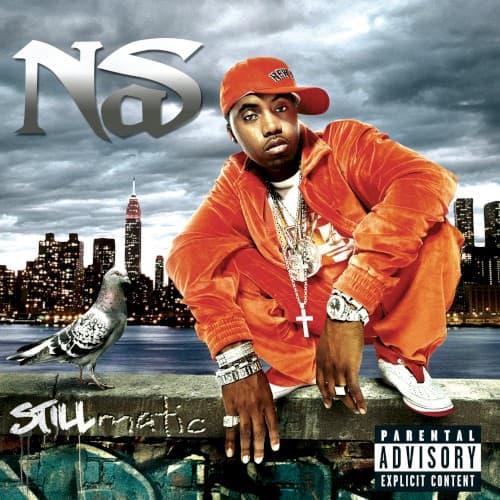
Nas Stillmatic — The Album That Made Queens Matter Again
Queensbridge had been written off. The narrative was set: Nas peaked at twenty, dropped two bloated follow-ups, signed a bad deal, watched his marriage collapse in public. Jay-Z owned New York. The Roc wore the crown.
Then December arrived and every assumption exploded. This was not a defensive counter-punch. This was a declaration that the best rapper alive had been sleeping and the wake-up call just shattered every window in Manhattan. The hunger that built Illmatic — that specific kind of rage that comes from being underestimated — returned with compound interest.
Context matters here. Radio belonged to Ja Rule and Nelly. The South was rising. New York rap felt old, defensive, nostalgic.
Roc-A-Fella had modernized the sound while Nas seemed stuck rewinding his own tapes. His previous album moved units but satisfied nobody. Critics smelled blood. Fans started hedging their bets.
What does a resurrection sound like?
Sparse drums. Hungry bars. No guests crowding the frame. No pop concessions. Just a thirty-year-old man from the projects reminding everyone why they fell in love with New York rap in the first place. This album does not ask for your respect. It takes it back.
The Sound of Someone Fighting for Their Career
Large Professor returns. So does L.E.S. Salaam Remi brings soul. Megahertz brings aggression.
The production philosophy strips away every mistake from the previous three years — no Timbaland chasing, no radio pandering, no Trackmasters overproduction. The sound reaches back to the raw simplicity that made Illmatic dangerous while acknowledging that 2001 demands harder drums and sharper sequencing.
The sonic palette splits between dusty loops and stark minimalism. When the beats breathe, they breathe tension. Piano stabs feel confrontational. Bass lines rumble with purpose.
Even the smoothest moments — the gospel-tinged stretches, the jazz flips — carry underlying menace. This is not music for headphone purists sipping herbal tea. This is music for driving through your old neighborhood at three in the morning, windows down, daring someone to test you.
Vocally, Nas sounds reborn. The lazy cadences that plagued his late-nineties work vanish. His delivery tightens. Breath control sharpens.
Wordplay cuts deeper. He rides pockets he ignored for years, switching flows mid-verse like a boxer changing angles. When he wants to hurt you, every syllable lands. When he wants to paint a scene, the details stack so fast you need three listens to catch everything.
Lyrically, the album oscillates between street journalism, battle raps, and introspective storytelling. He revisits the Queensbridge narratives but aged them up — these are not teenagers on corners but grown men watching their world decay. He name-checks Scarface and Roc-A-Fella with equal reverence and venom.
He dissects fatherhood, fame, and paranoia without ever sounding preachy. The writing feels urgent, unfiltered, alive.
Does the album stumble?
Twice. One radio grab sounds exactly like what it is. One posse cut with too many voices disrupts the momentum.
But these are minor infractions on an otherwise bulletproof statement. The sequencing falters slightly in the back half where two slower tracks stack back-to-back, but the closing stretch recovers with force. For an album rushed to market mid-beef, the consistency borders on miraculous.
The Architecture of a Comeback
The opening salvo sets the mission statement, then Ether immediately delivers the killshot that rewrote hip-hop hierarchy overnight. That one-two punch establishes the tone: this is personal, this is war, and no one is safe. The sequencing gambles by placing the most explosive moment second, but the confidence pays off — the rest of the album does not retreat into safety.
The first stretch moves with predatory focus. Even the commercial concession that arrives third cannot derail the momentum because it is surrounded by venom. The middle section shifts gears into conceptual territory and introspection without losing intensity. When Nas wants to experiment, he earns the detour.
The back half stumbles only once, when two mellower tracks create a brief lull. But the album recovers with street anthems and posse energy that remind you why Nas owns New York winter nights. The sequencing could have been tighter here — swapping one reflective track deeper into the runtime would have maintained momentum — but the material itself never disappoints.
The closing run balances conscious commentary with raw aggression. This is not a victory lap. This is a reminder that the fight continues beyond the beef, beyond the charts, beyond anyone's expectations.
The final moments do not offer resolution. They offer a warning. Press play again or get left behind. The choice is yours, but the terms are his.
The Album That Saved New York Rap
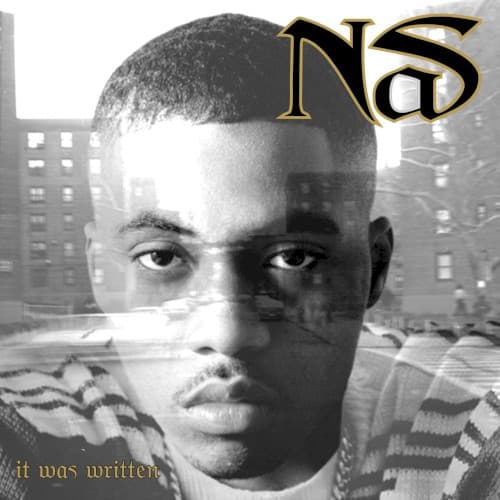
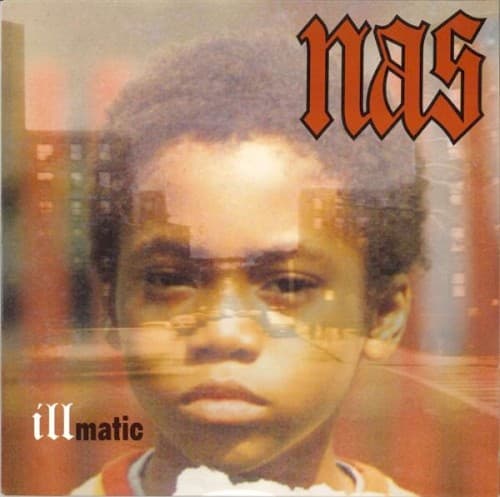
In the Nas discography, this sits second. Only Illmatic ranks higher, and the gap is closer than anyone wants to admit. It Was Written had the hits. The post-Stillmatic run had moments.
But nothing else in his catalog carries this level of focus, hunger, and flawless execution. This is the album that justifies every greatest-rapper argument, the project that proved the debut was not a fluke.
Who should listen? Anyone who believes lyrics still matter. Anyone who remembers when New York ran hip-hop.
Anyone who wants to understand how a single album can shift power in an entire city. New fans should start here before attempting Illmatic — this bridges the gap between classic boom-bap and modern street rap in ways the debut cannot.
Who might skip it? Listeners who need melodic hooks and polished pop production. Fans who prefer Travis Scott and Playboi Carti will find this too dense, too verbal, too rooted in a New York that no longer exists.
The sound is intentionally raw. The subject matter is uncompromisingly street. If you need Auto-Tune and 808s, this is not your entry point.
How did it age? Perfectly. The minimalist production sounds timeless because it never chased trends. The lyricism remains untouchable because wordplay does not expire.
Twenty-five years later, this still hits harder than ninety percent of modern rap. The cultural moment — the beef, the comeback, the redemption — only grows more legendary as time passes.
Essential tracks to try: the opening intro to understand the mission, the second track for the most famous diss in rap history, and the seventh track for proof Nas could still craft all-time classics. From there, dive into the conceptual sixth track and the introspective eighth track.
If you love this album, explore: The Blueprint by Jay-Z for the other side of the coin, Supreme Clientele by Ghostface Killah for raw New York energy from the same era, and The Cold Vein by Cannibal Ox for another 2001 triumph. Also revisit Illmatic if you have not already — that album birthed this one.
The long-term influence shaped an entire generation of New York revivalists. Without this comeback, there is no Diplomatic Immunity, no early Jadakiss solo run, no proof that lyrical density could still move units in the Roc-A-Fella era. This album reset the standard for what a comeback could sound like. Every rapper who ever fell off and clawed back to relevance studied this blueprint.
Play this in winter with the heat off and the lights low, and you will understand why Queensbridge never died.
Track Listing
Stillmatic (The Intro)
▲Large Professor delivers a menacing piano loop over stripped drums while Nas declares war on everyone who counted him out. No hooks, no structure, just two minutes of spite aimed at critics, former friends, and rival rappers. The writing stacks so many subliminals and direct shots that you need a scorecard. This is not an intro. This is a threat. The rawness in his voice — the barely controlled rage simmering under every bar — sets the tone for everything that follows. He name-checks his daughter, his mother, his block, and his enemies in the same breath, reminding you that this is personal. The beat never expands or softens. It just rumbles forward while Nas rebuilds his legacy one bar at a time. By the time it fades, the mission is clear: everyone who disrespected Queensbridge is about to pay for it.
Ether
▲Ron Browz samples Tupac screaming over a grimy loop, and Nas proceeds to dismantle Shawn Carter's entire existence across four and a half minutes. This is the most famous diss track in hip-hop history, and listening to it now — decades removed from the battle — the viciousness still lands. Every line targets a weakness: the biting, the style theft, the fake Mafioso act, the corporate sellout moves. Nas does not just attack the music. He attacks the man. The delivery drips with contempt. He is not yelling. He is surgically dismantling someone he once respected. The genius is in the details. Calling someone's girl a
Got Ur Self A...
●This is the commercial concession, and it works better than it should. Megahertz loops a recognizable sample over hard drums, giving Nas a radio-friendly platform without neutering his content. The hook aims for sing-along status, and the verses still carry weight — he is not dumbing down the wordplay, just packaging it for broader consumption. The subject matter tackles materialism and street economics without preaching. It is a hustler's anthem disguised as a club record. Does it feel slightly out of place after the opening fury? Yes. But sequenced here, it provides breathing room before the album deepens into darker territory. This is Nas proving he can still craft a single without compromising his pen. The beat knocks. The flow is effortless. And it did exactly what Columbia needed: it kept the album on radio while the controversy raged.
Smokin'
▲Large Professor flips a hypnotic loop, and Nas dives into paranoia, violence, and the psychology of street survival. This is battle rap as character study. He is not just flexing technical skill; he is explaining why Queensbridge breeds killers. The imagery is vivid and ugly — guns, drugs, bodies, and the mental toll of watching your friends disappear. His flow rides the pocket with a relaxed menace that makes every threat feel inevitable. The second verse switches cadences mid-thought, showing off the technical skill that disappeared on his late-nineties work. There is no hook. The beat never changes. It just circles for three and a half minutes while Nas reminds you that he came from a place where survival is not guaranteed. This is the Nas that terrified people in 1994, fully reawakened and angrier than ever.
You're da Man
▲Large Professor loops a smooth jazz sample over crisp drums, and Nas dissects political corruption, economic inequality, and institutional racism with the precision of an investigative journalist. This is conscious rap without the preachiness — he is not lecturing, he is reporting from the frontlines. The storytelling unfolds in first person, putting you inside the mind of a hustler navigating a rigged system. The hook samples a classic soul vocal, giving the track a melodic anchor without softening the message. Nas namedrops politicians, police, and corporate criminals with equal disdain, connecting street-level crime to the white-collar theft that funds it. The writing is dense but never cluttered. Every line adds detail. The flow is conversational but controlled. This is Nas at his most intellectual, and the beat gives him room to breathe. One of the most underrated tracks in his entire catalog.
Rewind
▲L.E.S. provides a minimal backdrop, and Nas delivers a murder mystery told backward from the funeral to the killing. This is a technical showcase disguised as a storytelling exercise. Every line reverses chronology while maintaining narrative clarity — he starts with the aftermath and rewinds through the confrontation, the setup, and the motive. The concept alone is impressive. The execution is flawless. His flow never stumbles despite the structural complexity. The imagery stacks in reverse order: the body, the gunshot, the argument, the misunderstanding, the initial slight. By the time he reaches the beginning, you understand how a small disrespect spiraled into murder. The beat stays sparse, letting the words dominate. No hook. No distractions. Just Nas proving he can out-write anyone in any format. This is the kind of track that earns a standing ovation in a college writing seminar.
One Mic
▲Large Professor strips the beat down to a whisper — finger snaps, a subtle guitar loop, and eventually a volcanic crescendo. Nas matches the production's dynamic range, starting in a near-whisper and building to a scream. This is not just a song. This is a manifesto about artistic purity, freedom, and the power of words. The opening verse reflects on legacy and mortality. The second verse escalates into defiance. The third verse explodes into revolution. The brilliance is in the restraint. The beat does not rush to the climax. It builds slowly, tension mounting with every bar. When the drums finally crash in, the release feels earned. Nas's delivery mirrors the production — he starts calm, almost meditative, then unleashes fury. The hook is minimal, just a repeated phrase that becomes a mantra. This is Nas at his most vulnerable and his most powerful, willing to strip away every crutch and prove that all he needs is one mic. This is the greatest song on the album and one of the greatest rap songs ever recorded.
2nd Childhood
▲Large Professor loops a melancholy piano sample, and Nas delivers a tragic character study of men who never grew up. The concept is simple: grown men still acting like teenagers, chasing the same dreams and making the same mistakes they made at sixteen. The imagery is devastating — thirty-year-olds still on corners, still fantasizing about rap deals that will never come, still living with their mothers. This is not a punchline. This is mourning. Nas's delivery carries genuine empathy. He is not mocking these men; he is documenting a specific kind of inner-city stagnation. The details are precise: the outdated slang, the outdated fashion, the outdated ambitions. He never preaches about making better choices. He just paints the picture and lets the sadness speak for itself. The hook repeats a simple phrase, driving home the futility. This is Nas as social critic, using his platform to highlight a problem most rappers ignore. The writing is among his sharpest. The concept is airtight. And the emotional weight lingers long after the track ends.
Destroy & Rebuild
●A posse cut that disrupts the album's momentum. The beat is solid, but three voices dilute the focus. This is a pure cipher track — everyone taking turns flexing — and it feels like a leftover from a different project. The guests are fine, but after eight tracks of Nas operating alone, the shift in format feels jarring. The writing is competent but not essential. The sequencing choice is questionable. Placed this deep into the runtime, it halts the emotional build that carried the middle section. A stronger beat or tighter editing might have saved it, but as is, this is the first true skip. Not bad, just unnecessary.
The Flyest
●A Roc-A-Fella jab disguised as a victory lap. The production is clean, the hook is catchy, and Nas sounds confident. But this is the second-weakest moment on the album. The writing is solid, the flow is effortless, but nothing here feels essential. It is a competent album track that exists to pad the runtime. After the conceptual depth and emotional intensity of the previous stretch, this feels like a step backward into conventional rap flexing. The beat knocks, but it does not linger. The bars are quotable, but they do not cut deep. This is Nas on autopilot, which is still better than most rappers at full focus, but compared to the rest of this album, it feels like filler.
Rule
▲Another posse cut, but this one works. The energy is high, the beat is menacing, and the competitive tension elevates everyone involved. This is New York street rap at its purest — raw, aggressive, and unapologetic. Nas opens with a furious verse that reasserts dominance after the previous track's lull. The guests match his intensity, and the chemistry feels natural. The hook is minimalist, just a repeated chant that fuels the momentum. This is the sound of a crew reminding the industry that Queensbridge still runs New York. The sequencing here makes sense — after two slower moments, the album needed a jolt of adrenaline. This delivers. The beat rides a hypnotic loop that never gets boring. Everyone sounds hungry. This is what posse cuts should sound like.
My Country
▲A political commentary that tackles American hypocrisy, war, and systemic oppression. The beat is stark, almost industrial, giving Nas a confrontational backdrop to unload his frustrations. The writing is sharp and angry — he connects domestic inequality to foreign policy, questions patriotism, and refuses to soften his critique. This is not flag-waving rap. This is protest music. The hook samples a haunting vocal that underscores the bleakness. Nas's delivery is measured and deliberate, every word chosen for maximum impact. The subject matter is heavy, but he never loses the listener. The sequencing this late in the album is bold — most artists would bury political content mid-tracklist, but Nas doubles down on substance as the runtime extends. This is the kind of track that ages better every year as American contradictions deepen.
What Goes Around
▲A street karma tale over a soulful beat. Nas reflects on betrayal, revenge, and the cyclical nature of violence. The writing is vivid and moralistic without being preachy — he is not offering solutions, just observing patterns. The production is warm but ominous, the kind of beat that sounds beautiful until you absorb the lyrics. His flow is conversational, almost confessional, like he is speaking directly to someone who wronged him. The hook is melodic and haunting, a rare moment of vulnerability this deep into the album. This is Nas processing loss and anger in real time, and the honesty cuts deeper than any punchline. The sequencing after the political rage of the previous track creates a personal cooldown. Not essential, but emotionally resonant and well-executed.
Every Ghetto
▲The closing track loops a soaring vocal sample and delivers a message of hope to struggling communities. This is Nas at his most optimistic, painting a vision of escape and redemption. The production is uplifting without being saccharine, the kind of beat that inspires without pandering. His writing balances realism with aspiration — he acknowledges the struggle but refuses to accept defeat. The hook repeats a simple, empowering phrase that lands like a prayer. After thirteen tracks of war, paranoia, and introspection, this offers a moment of light. It is not a weak ending. It is a necessary exhale. Nas is reminding himself and his audience that survival is possible, that Queensbridge produces more than bodies and grief. The sequencing is perfect. The message is clear. And the album ends not with anger, but with defiance that sounds like faith.