Scorecard: 7.5/10 · Great
How we score- Writing(25%)
- 8.5
Nas delivers some of his most personal and emotionally resonant verses, from the introspective grief of "Dance" to the self-aware rhyme archaeology of "Book of Rhymes," though commercial concessions like "Hey Nas" show where the pen weakened.
- Production(25%)
- 7.0
Salaam Remi's sample flips on "Made You Look" and "I Can" hit hard, but the album suffers from inconsistency: Eminem's haunting work on "The Cross" and Chucky Thompson's spare "Dance" sit alongside flat radio attempts that drag the sound down.
- Delivery(15%)
- 8.0
Nas raps with renewed conviction and technical precision throughout, riding Remi's drums with the timing that made Illmatic essential, though guests like Kelis on "Hey Nas" add little and the Bravehearts feature on "Zone Out" feels obligatory.
- Cohesion(15%)
- 6.5
At fifteen tracks the album sags in the middle with filler like "Zone Out" and "Hey Nas," and the tonal shifts from grief to battle raps to youth inspiration never settle into a unified statement despite the personal framing.
- Originality(10%)
- 7.0
The album strips back the commercial gloss of his late-90s work and returns to sample-based boom bap, but the approach itself echoes Stillmatic's back-to-basics move rather than breaking new ground for Nas or the genre.
- Replay value(10%)
- 7.5
The best tracks—"Made You Look," "The Cross," "Book of Rhymes," "Dance"—hold up two decades later as evidence of Nas at his most focused, but the weaker material makes front-to-back listens a chore rather than a pleasure.
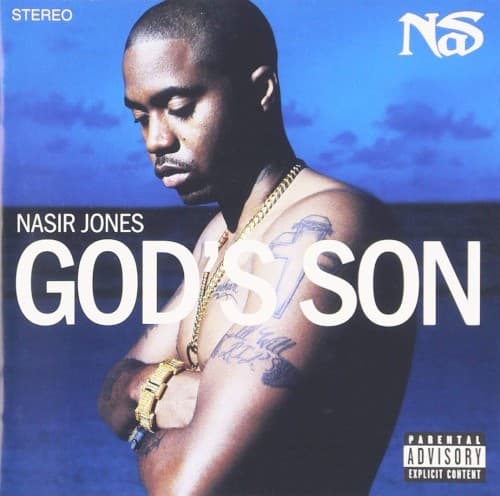
Nas God's Son — The Album That Proved Grief Could Sharpen the Pen
God's Son is the album where Nas turned his mother's death into the sharpest writing of his post-Illmatic career. Released in December 2002, eight months after Ann Jones died of breast cancer in his arms, it strips away the crossover miscalculations that cluttered his late-90s records and returns to the sample-heavy boom bap and unguarded introspection that made Stillmatic feel like a reclamation. The thesis is in the title: this is Nas reborn, writing from grief and the feud with Jay-Z that ran parallel to his mourning, trying to prove he could still carry New York on his back. What he proves instead is narrower and more valuable: that he is still one of the best writers in rap when he stops chasing radio and writes from what he knows.
The album works when it leans into that mourning. Direct addresses to his mother appear over spare bass and faint drums, biblical metaphors frame his own resurrection, and the camera turns to old notebooks where he laughs at his own weak bars from years past. These are the tracks where Nas sounds necessary again, where the writing has the specificity and emotional weight that Illmatic had and that albums like Nastradamus abandoned.
But God's Son never commits fully to that introspection. It bogs down in the middle with generic guests and radio grabs, and the sequencing never decides whether this is a grief album, a battle record, or a crossover bid. At fifteen tracks it is too long by at least three, and the filler makes the whole thing feel less urgent than the best moments deserve. The question is not whether Nas can still write at the highest level—he proves he can. The question is whether he can build a full album that earns it.
When the Samples Do the Work the Writing Needs
The production on God's Son is built on samples, with Salaam Remi handling five tracks and pulling from sources as varied as Beethoven and the Incredible Bongo Band. Remi is the album's anchor: his work on "Made You Look" flips "Apache" into a trunk-rattling loop that sounds like it could have come from a Marley Marl session in 1986, and "I Can" takes "Für Elise" and "Impeach the President" and turns them into a kids' singalong beat that somehow works despite itself. Those two tracks are the album's commercial center, and they succeed because Remi knows how to build a beat that gives Nas room to breathe without overwhelming the verses. "Get Down" layers James Brown's "The Boss" and "Funky Drummer" into a funky, reggae-tinged opener that sets the tone, and the sample work across the album generally serves the rapping rather than competing with it.
But the production is inconsistent in ways that hurt the album. Eminem's beat on "The Cross" is eerie and minimal, dominated by keys that sound like a cheap Casio, and it works because it gives Nas space to pile up biblical references and build the resurrection narrative. Chucky Thompson's "Dance" is even sparser—just a bass riff and faint drums, no samples—and it is the album's most affecting moment because the production stays out of the way and lets the grief come through. But "Hey Nas," also produced by Remi, is a flat radio track with a generic hook from Kelis and Claudette Ortiz that adds nothing, and "Zone Out" wastes a Remi beat on a Bravehearts feature that feels like label obligation. The Alchemist contributes three tracks, including "Book of Rhymes" and "Mastermind," and his work is solid but not memorable—functional boom bap that does not distract but does not elevate either.
The album's most surprising production choice is "Thugz Mansion (N.Y.)," a posthumous duet with 2Pac built around an acoustic guitar riff with no samples. The beat is soft and almost country, and it gives the track a mournful feel that fits the subject matter, though the song itself is a cliché meditation on heaven for gangsters that Nas does not bring much new insight to. The production across God's Son is strong enough on the peaks to carry the album's best moments, but the valleys are generic and uninspired, and the lack of a single sonic vision makes the record feel like a compilation of good ideas rather than a unified statement. Ron Browz's simplistic keys on "Last Real Nigga Alive" work because Nas uses the space to unload five minutes of subliminals and score-settling, but too many of the beats feel like they were chosen to cover multiple bases—street, radio, introspective—rather than to build toward one argument.
Fifteen Tracks and Too Many Detours
God's Son runs fifteen tracks deep and the sequencing never earns the length. The album opens strong with a funky statement of intent, then moves into back-to-back highlights, and by track four it has established momentum. But after a five-minute diss track that works as a document of the Jay-Z feud but drags as a listening experience, the album stalls. Back-to-back filler tracks break the flow and make the middle third feel like padding.
The album's biggest single is a Beethoven-sampling youth anthem with a children's chorus that either lands as inspirational or reads as corny depending on your tolerance for message rap. It is sequenced in the middle of the album, and it disrupts the tonal arc because it has nothing to do with grief or the feud or anything else God's Son is supposedly about. The surrounding stretch includes radio concessions that make the record feel unfocused.
The back half of the album recovers. A self-aware track where Nas raps old verses from his notebooks and comments on his own writing stands as a highlight, and the emotional center of the record is placed late enough that it feels earned. But the album ends weakly: a Lake feature adds nothing, a drum-and-bass influenced attempt does not quite work, and the bonus remix is unnecessary. If Nas had cut four tracks and tightened the sequencing to ten or eleven songs, God's Son would be in the conversation with Stillmatic as a true return to form. As it stands, the album sags in the middle and overstays by ten minutes, and the peaks have to carry too much weak material to make the whole thing cohere.
Where It Ranks and Who It Is For
God's Son is Nas's fourth-best album, behind Illmatic, Stillmatic, and It Was Written, and ahead of the King's Disease records and everything else he released in the 2000s. It is the album where he proved he could still write at the level that made him essential, and it contains some of his most personal and technically accomplished work. But it is not a classic because it never commits to being one thing. The grief tracks are strong, the battle raps are sharp, the radio songs are mostly weak, and the sequencing never decides which of those modes matters most. The result is an album that works in pieces but not as a whole, and that asks you to skip past the filler to get to the songs that justify the runtime.
This album is for fans who want to hear Nas write from a place of real emotion rather than chasing trends, and for anyone who thinks Stillmatic was a fluke. It is not for casual listeners who want a tight ten-track statement, and it is not the place to start with Nas unless you have already heard Illmatic and It Was Written. Start with the opening stretch and the closing emotional core—those tracks show what the album does best.
Skip the radio concessions and bonus material unless you are a completist. If you want to hear where Nas went next, Stillmatic is the album that set this up, and the King's Disease records show him twenty years later still writing well but with less fire. God's Son is proof that grief sharpened his pen, but it is also proof that he still had not learned to cut the fat and leave only what mattered. The album has aged well in the tracks that were already good, and the weak ones were always going to be skips. It is a flawed record by one of the best writers in rap history, and the flaws do not erase the peaks.
Track Listing
Get Down
▲A funky, reggae-tinged opener that samples James Brown twice and sets the tone for an album trying to balance street narratives with broader ambition. Nas tells three loosely connected crime stories—a courtroom shooting in New York, a laced blunt in Tennessee, a Crenshaw funeral that ends in bodies—and Salaam Remi's speech linking the vignettes tries to tie them to a larger point about black self-destruction, but the moralizing feels tacked on. The production is strong, the writing is vivid in flashes, and it works as an opening statement, but the song does not build to anything and the stories feel like exercises rather than arguments.
The Cross
▲Eminem's beat is minimal and eerie, just ghostly keys that sound cheap but work because they give Nas space to layer biblical metaphors. He casts himself as a resurrected king, references Stillmatic's success, and positions the album as a rebirth after mourning and battle. The writing is dense and self-mythologizing in the way Nas does best, and the hook—"I carry the cross, if Virgin Mary had an abortion I'd still be carried in a chariot by stampeding horses"—is one of his most striking images in years. The track sets up the album's stakes: this is Nas trying to prove he is still the king, and he sounds like he believes it.
Made You Look
▲The album's defining track, built on the Incredible Bongo Band's "Apache" and produced by Salaam Remi to sound like a 1986 Marley Marl session. Nas rides the drums with the timing and precision that made Illmatic essential, and the writing is sharp and confrontational: no hooks, no concessions, just two and a half minutes of rapping that announces his return with force. The beat rattles trunks, the flow is locked in, and the song works as both a technical showcase and a middle finger to anyone who thought he was washed. This is the track that carries the album's reputation, and it earns it.
Last Real N**** Alive
●Five minutes of score-settling over a Ron Browz beat dominated by simplistic, eerie keys. Nas uses the space to address the Jay-Z feud directly, calling out the "sneak attacks" while his mother was dying and tracing the roots of the beef back to Biggie. The writing is specific and personal, and as a document of the moment it matters, but as a song it drags. The beat is too minimal to sustain the runtime, and the subliminals pile up without building to a climax. It is necessary for fans who followed the feud, but it is a chore to sit through now.
Zone Out
▼A Bravehearts feature over a Salaam Remi beat that goes nowhere. The hook is generic, the verses are forgettable, and the song feels like label obligation—Nas giving his crew a spot without caring whether the track justifies it. Skip it.
Hey Nas
▼A flat radio grab with Kelis and Claudette Ortiz on the hook, produced by Salaam Remi but sounding like a leftover from a different, worse album. The beat is uninspired, the sung chorus adds nothing, and Nas phones in a verse that could have been written for anyone. This is the kind of crossover concession that cluttered his late-90s work, and it has no place here.
I Can
●The album's biggest single, a Beethoven-sampling youth anthem with a children's chorus and verses encouraging kids to stay in school and learn African history. Salaam Remi flips "Für Elise" and "Impeach the President" into a beat that is both corny and undeniably catchy, and Nas delivers the message with conviction even if the singsongy hook makes it feel like an after-school special. The track went to number twelve on the Hot 100, and it works as inspiration even if it sits awkwardly in the album's tonal arc. Critics called it silly, but it is one of Nas's most successful attempts at socially conscious pop rap, and it has aged better than it should have.
Book of Rhymes
▲The album's most inventive track, produced by the Alchemist. Nas raps old verses from his rhyme book and then stops to comment on his own writing, laughing at weak bars and explaining the context for others. It is self-aware in a way Nas rarely allows himself to be, and it works both as a technical showcase and as a glimpse into his process. The Alchemist's beat is solid boom bap that stays out of the way, and the concept carries the song without feeling gimmicky. This is the kind of creative risk that God's Son needed more of.
Thugz Mansion (N.Y.)
●A posthumous duet with 2Pac, built on an acoustic guitar riff with no drums. Nas and Pac trade verses imagining heaven as a place where thugs can finally rest, and the song is mournful and soft in a way that fits the subject matter. But the concept is a cliché that neither artist brings new insight to, and the track feels like a concession to Pac's fanbase rather than a song Nas needed to make. The production is pretty, the performances are fine, and it is skippable.
Mastermind
●The Alchemist provides a solid beat, and Nas raps about the King of New York title with a weary tone that suggests he is tired of the fight. The writing is sharp in moments—"This King of New York shit only last 15 minutes"—but the track does not build to much, and it feels like an interlude stretched to four minutes. Decent filler.
Warrior Song
●Alicia Keys produces and sings the hook on a track that tries for inspirational and lands somewhere between sincere and overwrought. Nas references his mother and positions himself as a warrior still fighting, and the sentiment is earned, but the execution is too polished and the hook too broad to hit as hard as "Dance" does. It is fine, but it is not essential.
Revolutionary Warfare
▼A Lake feature over an Alchemist beat that does nothing to justify its place on the album. The writing is generic conscious rap, the guest verse is weak, and the track feels like it was included to pad the runtime. Skip it.
Dance
▲The album's emotional center, a requiem for Nas's mother over Chucky Thompson's spare production—just a bass riff and faint drums, no samples. Nas addresses his mother directly, asking for one more day, and the writing is vulnerable and specific in a way that cuts through the album's other modes. The track is placed late enough in the sequencing that it feels earned, and it works as the thesis statement for the grief that supposedly fueled God's Son. This is Nas at his most affecting, and it is the track that makes the album's personal framing feel real rather than promotional. One of his best songs, period.
Heaven
▼A drum-and-bass influenced track with Jully Black and Saukrates, produced by Agile. Nas imagines heaven as a place with no rules or pain, and the concept is fine, but the execution is muddled. The beat never settles into a groove, the guests add little, and the track feels like an experiment that did not pan out. Weak closer.
One Mic (Brainpower remix - explicit)
▼A bonus remix that adds nothing to the Stillmatic original. Unnecessary.