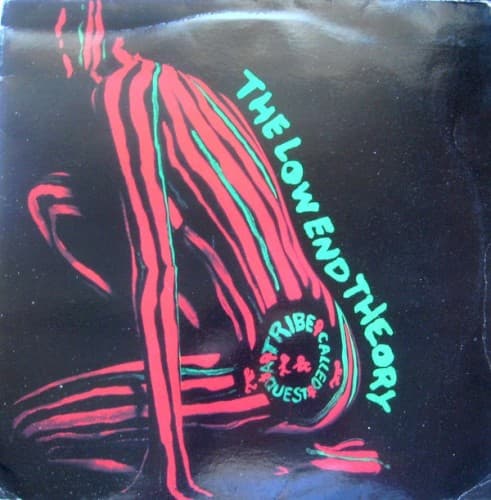
A Tribe Called Quest The Low End Theory — The Album That Made Jazz Rap Stop Apologizing
No other album stripped hip-hop down to bass and drums and made it sound like the future. The Low End Theory arrived when golden age rap was drowning in its own layers — horn stabs everywhere, samples fighting for space, producers trying to pack every available second with sound. Q-Tip and Ali Shaheed Muhammad did the opposite. They gave the bass room to breathe. They let Ron Carter's upright walk through the mix like it owned the block. They proved that less could hit harder than more.
This was Native Tongues at the exact moment the movement stopped being a curiosity and became a blueprint. The Jungle Brothers had the Afrocentric vision. De La Soul had the humor and the sampling imagination. Tribe took those elements and built something leaner, meaner, tighter. What makes The Low End Theory untouchable is not just what it includes but what it refuses to carry — no skits, no filler, no apologies for choosing jazz over James Brown. Forty-five minutes that move like one extended cipher.
Does any debut-to-sophomore leap in hip-hop history go this far this fast? People's Instinctive Travels introduced the crew as playful outsiders. One year later they returned sounding like architects. The shift is not just musical — it is philosophical. This is the album where Tribe stopped explaining themselves and started defining the terms. They made jazz rap sound tough. They made minimalism sound full. They made the low end theory actual theory, cementing their place in A Tribe Called Quest's discography as a defining moment.
The Philosophy of Space and Weight
Ali Shaheed Muhammad's production approach here functions like architecture — every element earns its placement. The bass does not simply anchor the tracks. It drives them. Ron Carter's upright on multiple cuts provides a texture most producers in 1991 were not even considering. The decision to feature that acoustic presence alongside drum programming created a sonic pocket that has never been replicated. You hear it immediately on the opener and it defines the entire listening experience. The bass moves, bends, walks. It refuses to sit still.
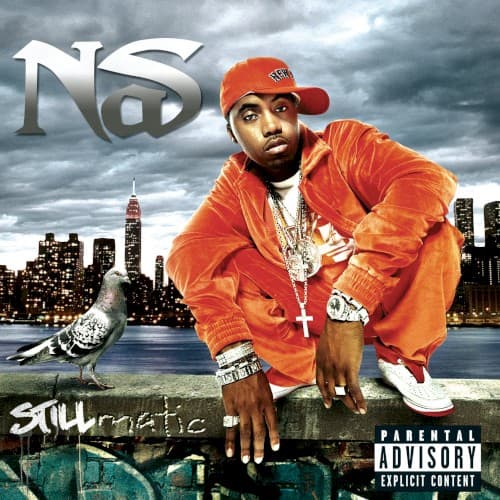
Q-Tip's production contributions work in perfect tandem — the samples are minimal, the drums hit without clutter, the loops repeat without becoming boring. What sounds simple on the surface reveals depth after multiple listens. The kick and snare patterns lock into grooves that feel effortless but are actually surgical. Nothing is off by even a sixteenth note. Nothing overstays its welcome. This is boom bap refined to its purest form — no excess, no decoration, just the essentials executed flawlessly, an approach that would influence albums like Nas's Illmatic and later The Roots' Things Fall Apart.
Phiife Dawg emerges here as Q-Tip's true counterpart. His voice is lower, his tone more confrontational, his punchlines sharper. Where Tip floats, Phife punches. That contrast provides the entire album with its dynamic tension. Tip delivers abstractions and metaphors. Phife delivers geography and hunger. Together they create the most balanced MC pairing in Native Tongues history. When they trade bars it feels less like competition and more like conversation — two voices from the same world offering different perspectives.
The album is not flawless. A few cuts in the back half feel like sketches rather than fully realized songs. One track about a sensitive subject relies on a tone that has not aged gracefully. But these are minor blemishes on an otherwise immaculate body of work. The sequencing ensures that even the weaker moments do not disrupt the momentum. The Low End Theory moves with the confidence of a crew that knows exactly what they are building. It sounds like nothing that came before it and somehow still sounds like the foundation for everything that followed.
The Unbroken Cipher
The opening stretch establishes the sonic thesis immediately. You know within ninety seconds that this album operates by different rules. The bass enters first. The drums follow. The vocals arrive last. That sequencing is intentional — the music dictates the terms and the MCs respond. By the time the third track fades you have already been converted or you have already left. There is no middle ground.
The midsection contains the album's most iconic moment and its most uncomfortable one. The former is a posse cut that still ranks among the greatest in hip-hop history. The latter is a cautionary tale that mistakes lecture for insight. The tonal whiplash is jarring, and the sequencing does the album no favors here. But Tribe recovers quickly. The back-to-back stretch that follows might be the strongest two-song run on the entire record — the first is a lyrical exhibition, the second is pure kinetic energy.
The back half shifts focus slightly. The jazz influences become more explicit rather than implied. One track feels like an actual jam session. Another addresses the industry with more bite than anything on the first album. The penultimate song brings the tempo down without losing intensity. The final cut ends the album on a question mark rather than a statement — fitting for a record that refuses to provide easy answers. The sequencing ensures that the album never drags. Even the slowest moments feel purposeful. The Low End Theory does not waste a single bar.
The Standard That Still Has Not Been Matched
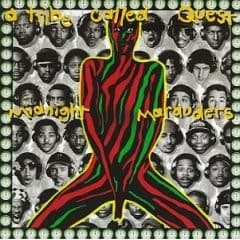
This is Tribe's masterpiece. People argue about whether Midnight Marauders is more consistent or whether the reunion album is more ambitious, but The Low End Theory is the one that moved the entire culture. It proved that jazz rap could be street without being aggressive. It proved that minimalism could be powerful without being empty. It proved that two MCs with completely different styles could share space without stepping on each other. Every album Tribe released after this one exists in its shadow.
Who should listen? Anyone who cares about production as much as lyrics. Anyone who wants to understand why the early nineties are considered hip-hop's golden age. Anyone who thinks rap peaked in 1994 needs to hear what was already perfected by 1991. Who might not connect? Listeners who need constant energy shifts or aggressive delivery. This album rewards patience. It demands attention. It does not chase you — you have to meet it halfway.
How has it aged? Better than almost anything from its era. The bass-heavy mix sounds modern. The drum programming still knocks. The lack of dated references means the album exists outside of time. You can play this in 2026 and it sounds fresh. You could have played it in 1985 and it would have sounded ahead of schedule. That is the mark of true innovation — the work does not belong to its moment. It creates its own moment.
Essential tracks for first-time listeners: the opener for the thesis statement, the posse cut for the energy, the back-to-back lyrical showcases for the craft. Similar albums worth exploring: De La Soul's three-foot masterpiece, the Pharcyde's debut, the Roots' second album, Common's resurrection. Long-term influence: every jazz-rap album since 1991 is either imitating this or arguing with it. The Roots built a career on this foundation. Madlib studied this sequencing. Kendrick Lamar's live band approach traces back to these grooves. The Low End Theory did not just succeed — it wrote the manual and then hid the answers.
Track Listing
Excursions
▲The thesis statement arrives in the first ten seconds. Ali Shaheed Muhammad's bassline does not knock — it walks. It strolls. It announces that this album operates on a different frequency than anything else in 1991. Q-Tip opens by declaring that rap is not just rhythm and poetry but movement and grove. He spells it wrong on purpose. That is the point. This is not academic — it is felt. The Art Blakey drum break underneath gives the track a live feel even though every element is carefully constructed. Tip's flow here is looser than anything on the first album, more confident, less concerned with proving itself. He is not asking for permission anymore. The way the bass and drums lock together creates a pocket so deep you could lose hours inside it. This is not just an album opener. It is a mission statement. Everything that follows builds on the foundation established here. No hooks, no guest verses, no decoration. Just Tip, the bass, and the drums having a conversation.
Buggin' Out
▲Phife Dawg announces his arrival as a true co-pilot. His voice sits lower in the mix than Tip's, more nasal, more New York. The contrast is immediate and essential. Where Tip operates in abstractions, Phife grounds everything in geography and hunger. He name-drops neighborhoods. He disses wack MCs directly. He makes it clear that Native Tongues philosophy does not mean soft bars. The production strips the template even further — the bass is almost monolithic, the drums hit in steady four-bar loops, the sample barely registers as melody. It is all rhythm and pocket. The chorus is just the title repeated with slight variations. It should not work. It works perfectly. This is the track that proved Tribe could make minimalism sound aggressive. No screaming, no threats, just two MCs calmly dismantling anyone who steps wrong. The back-and-forth between Tip and Phife here set the template for every collab track they would ever record. They do not compete. They complete.
Rap Promoter
●The first stumble. Tip and Phife address the shady industry figures who exploit rappers, and the sentiment is valid, but the execution feels like a sketch rather than a finished song. The beat is solid — another bass-heavy groove with minimal ornamentation — but the verses meander. The complaints are specific enough to feel personal but too inside-baseball to resonate beyond the immediate moment. You can hear Tribe working through their frustration with the business side of the game, but the track lacks the lyrical sharpness that defines the album's best moments. It is not a skip, but it is the first time the momentum dips. The sequencing does not help — sandwiched between two of the album's most iconic tracks, this one feels slight by comparison. Still, even Tribe's minor moments have more craft than most crews' peak efforts. The bass alone carries the track further than the verses do.
Scenario
▲The posse cut that has never been topped. Leaders of the New School join Tribe for what should have been a standard collab and instead create a five-minute masterclass in chemistry and competition. Everyone comes correct, but Busta Rhymes' closing verse rewrote the rules for what a guest appearance could accomplish. His energy is manic, his flow is percussive, his presence is undeniable. He does not just steal the track — he detonates it. Q-Tip's opener sets the tone with effortless cool. Phife follows with his sharpest punchlines on the album. Dinco D and Charlie Brown hold their own without getting overwhelmed. Then Busta enters and the entire song shifts into a different gear. The way he rides the beat, the way his voice cracks and bends, the way he turns ad-libs into entire hooks — it is a clinic. The production stays minimal throughout, letting the MCs drive everything. No crazy beat switches, no dramatic samples, just a relentless drum loop and a bassline that refuses to quit. This is the track that proved rap posse cuts could be art instead of marketing. Every MC feeds off the energy of the previous verse. No one coasts. No one phones it in. This is what a cipher sounds like when everyone involved is operating at their absolute peak.
The Infamous Date Rape
▼The most awkward moment on an otherwise flawless album. Tribe attempts to address sexual assault with a narrative approach, and while the intention is clearly to condemn the act, the execution feels clumsy. The tone wavers between cautionary tale and punchline, and the framing suggests that the real crime is the woman not knowing the man's intentions rather than the assault itself. It has not aged well. The beat is minimal to the point of being skeletal, which makes the verses feel even more exposed. Q-Tip's storytelling skills are evident, but the perspective chosen undermines the message. This is the rare Tribe track where the concept overpowers the craft, and not in a good way. It disrupts the album's flow significantly — coming directly after the highest peak on the record, it creates a jarring tonal shift that the sequencing never fully recovers from. Credit to Tribe for attempting to tackle a serious subject, but this one needed more drafts.
Check the Rhime
▲The rebound is immediate and total. Q-Tip and Phife trade verses like sparring partners who know each other's moves by heart. This is pure lyrical exhibition — no concept, no narrative, just two MCs proving they can outrap anyone in their weight class. The Minnie Riperton sample provides the melodic foundation, but it is used so sparingly that it feels like punctuation rather than decoration. The bassline does the heavy lifting, as always. Phife's opening verse might be his best on the album — every bar is a punchline, every line has a quotable. Tip responds with a clinic in breath control and internal rhyme schemes. The back-and-forth chorus where they finish each other's sentences captures the chemistry perfectly. This is the track that younger listeners should start with if they want to understand what made Tribe essential. No dated references, no context required, just two all-time great MCs at the peak of their powers working in perfect sync. The groove is infectious, the verses are untouchable, the vibe is immaculate. This is Tribe at their purest.
Everything Is Fair
▲Pure kinetic energy. The tempo picks up slightly, the drums hit harder, and Tip and Phife sound hungrier than anywhere else on the album. This is the closest Tribe gets to traditional braggadocio, and they make it work without abandoning their core philosophy. The bass is less melodic here, more rhythmic, almost percussive. It functions as a second snare. Phife opens with one of his most aggressive verses, calling out rappers by style if not by name. Tip follows with a verse that is all momentum and no pause — he barely stops for breath. The chorus is minimal, almost tossed off, which keeps the focus on the bars. This is the track that proves Tribe could compete in any lane they chose. They do not need to scream or threaten. They just need to step in the pocket and outrap you. The sequencing places this right after the album's best lyrical showcase, which could have been a mistake, but the energy shift is enough to justify the placement. This is Tribe in competition mode, and they are undefeated.
Jazz (We've Got)
▲The title track that is not really a title track. This feels more like an interlude than a full song — a jam session that Tribe decided to include because the vibe was right. The bass and drums loop endlessly while Tip delivers stream-of-consciousness bars about hip-hop, jazz, and the connection between the two. There is no real structure, no chorus, no hook. It is just a groove that happens to have rapping on it. That sounds like a criticism but it is not. The looseness is the appeal. This is Tribe letting the music breathe, proving that their aesthetic works even when there is no formal song structure. The track serves as a thesis statement for the album's entire approach — jazz is not a sample source, it is a philosophy. The way the bass and drums interact here sounds more like a live band than a programmed beat. That is the magic. Tribe is not imitating jazz. They are translating it into hip-hop vocabulary. This track is proof of concept.
Showbusiness
▲The industry critique that works where the earlier attempt faltered. Tip and Phife address the same subject — the music business and its exploitation of artists — but this time the bars are sharper and the frustration is more controlled. The beat is minimal even by this album's standards, almost stark. The bass barely moves. The drums hit in steady loops. Everything sits back and lets the verses do the work. Phife's verse is particularly biting, calling out label executives and shady managers with specificity. Tip's verse is more philosophical, addressing the tension between art and commerce without losing his cool. The sequencing places this late in the album, which makes sense — by now the listener understands Tribe's worldview enough to appreciate the nuance. This is not yelling. It is documentation. Brand Nubian's contributions on the chorus add weight without overwhelming the track. This is the sound of artists who have been burned but refuse to be broken.
Verses From The Abstract
▲Pure lyrical exercise. No concept, no story, no theme beyond proving that Q-Tip can construct verses that work on multiple levels simultaneously. The production is almost bare — a simple bassline, a steady drum pattern, and nothing else. It is the most stripped-down moment on an album defined by minimalism. That is the point. Tip's flow here is hypnotic, almost meditative. He is not trying to impress with punchlines or wordplay. He is demonstrating pocket, rhythm, breath control. Every line lands exactly where it should. Every pause is intentional. This is the track that producers study to understand how an MC and a beat can lock together so tightly that they become inseparable. It should be boring. It is mesmerizing. The lack of a chorus means the groove never breaks. The lack of a guest verse means Tip never has to adjust his approach. This is seventy seconds of pure focus. It feels longer in the best way — you get lost in the repetition, in the way the bass and the voice move together, in the refusal to do anything besides exist in the pocket.
Butter
▲Smooth in every sense. The bassline here is the most melodic on the album, almost pretty, and it gives the entire track a warmth that contrasts with the harder-edged moments elsewhere. Q-Tip's flow matches the production perfectly — relaxed, confident, unhurried. He is not proving anything here. He is just existing in the groove. Phife's verse picks up the energy slightly but never disrupts the vibe. The chorus is minimal, just the title repeated with slight variations, but it works because the track does not need decoration. This is Tribe operating in their comfort zone, making effortless-sounding music that is actually meticulously constructed. The sequencing places this early in the album, which serves as a palate cleanser after the harder-hitting opener. It is a necessary shift — the album cannot sustain that intensity for forty-five minutes, and Tribe is smart enough to know when to pull back. This is not a standout, but it is essential to the album's overall balance. It gives the listener room to breathe before the next peak arrives.
What?
▲The question mark ending. Tribe closes the album not with a triumphant statement but with a shrug and a challenge. The beat is minimal, almost sparse, with a bassline that feels unfinished. Q-Tip and Phife trade short verses that feel more like thoughts than fully developed ideas. It is disorienting in the best way — just when you expect a grand finale, Tribe offers ambiguity instead. The track title is repeated throughout, sometimes as a question, sometimes as a dare. What are you expecting? What did you think this was? What comes next? The refusal to provide closure is bold. Most albums try to tie everything together in the final moments. Tribe walks away mid-sentence. It feels like the end of a conversation where both people know they will pick it up again later. The production stays true to the album's aesthetic — bass, drums, space. Nothing is forced. Nothing is overstated. The Low End Theory ends the same way it began: on its own terms, unconcerned with convention, confident that the work speaks for itself. It does.