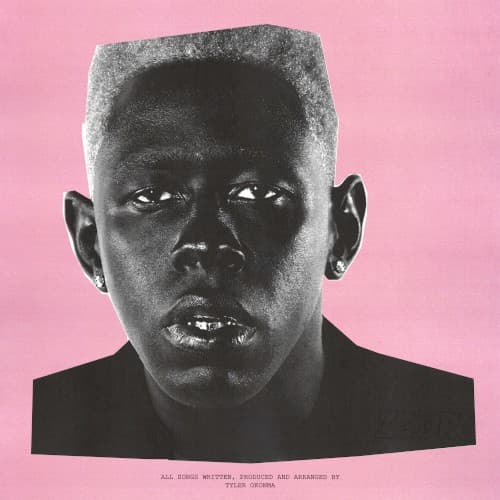
Tyler, The Creator IGOR — The Synth Maestro Who Stopped Rapping
Tyler Okonma spent a decade telling everyone who he was before he finally admitted what he felt. The shock is not that he made a heartbreak album. The shock is that he made the heartbreak album sound like a Moog synthesizer caught fire in a studio where Pharrell and Stevie Wonder were arguing about chord progressions.
No bars about gore, no Odd Future chaos worship, just forty minutes of someone falling apart in key changes.
By 2019, Tyler, The Creator had earned the right to pivot. *Flower Boy* two years earlier proved he could write vulnerable without embarrassment. But *IGOR* does not extend that blueprint. It detonates it.
This album barely qualifies as rap. Tyler's voice appears processed, pitched, distorted, sometimes unrecognizable. The synths dominate. The bass lines move like *Voodoo*-era D'Angelo slowed to half speed.
The drums snap with the crispness of West Coast funk filtered through bedroom pop production. What happens when the guy who built his career on shocking people decides the most shocking thing he can do is be honest about being in love with someone who does not love him back? You get an album that sounds like nothing else Tyler made and nothing else that dropped that year. This is not experimental for the sake of experimentation.
When the Synths Do All the Talking
The production on *IGOR* operates under one rule: if Tyler can hide behind a sound, he will. The synths are not texture. They are the entire emotional architecture. Track after track, analog warmth competes with digital coldness.
Basslines pulse like heartbeats. Drums arrive delayed, off-kilter, hesitant. The album sounds expensive and DIY at the same time, like Tyler recorded it alone in a mansion studio with vintage gear he taught himself to use on YouTube.
Tyler handled nearly all production himself. He does not sample in the traditional sense. He interpolates. He lifts melodies from soul records, chops them into unrecognizable fragments, then rebuilds them as new compositions.
The influence is clear: Pharrell's *In My Mind*, Kanye's *808s & Heartbreak*, Frank Ocean's *Blonde*. But the execution is distinctly Tyler. No one else in 2019 was making music this melodically dense while also this rhythmically sparse.
Lyrically, the album circles one idea: wanting someone who wants someone else. Tyler does not name names. He does not provide backstory. The pronouns shift.
The details stay vague. What is not vague is the emotional spiral. Obsession, jealousy, anger, acceptance. The arc is messy because feelings are messy.
Vocally, this is where Tyler makes his riskiest choice. He processes his voice until it becomes another instrument. Pitch-shifted crooning, vocoders, harmonies stacked six deep. On some tracks, you cannot tell it is him.
Is that cowardice or genius? Maybe both. The vocal manipulation allows Tyler to express feelings he could never deliver in his natural register without sounding corny. It works because the production supports it.
Strip away the synths and half these songs collapse.
The flaw is accessibility. *IGOR* demands full attention. It does not reward casual listening. The sequencing is rigid.
Tyler intended this as a front-to-back experience, which is admirable and occasionally exhausting. Some interludes feel like they exist to maintain the concept rather than serve the music. The album also lacks the hooks that made *Flower Boy* connect with a wider audience. This is not a pop album pretending to be weird.
The Journey from Denial to the Door
The album opens with a statement of intent and never lets you forget the rules. First stretch establishes the sonic palette: heavy bass, jittery synths, processed vocals. You either accept that this is not a rap album in the traditional sense or you bail early.
No hand-holding, no familiar reference points, and Tyler designed the opening to alienate anyone expecting *Flower Boy Part Two*.
The middle section is where the emotional weight lands heaviest. The sequencing here is ruthless. Tyler stacks the most direct confessions back-to-back, then immediately undermines them with paranoia and self-destruction.
You never settle into one feeling. The pacing mirrors the experience of being in love with someone unavailable. Brief euphoria followed by long stretches of anxiety.
Can an album feel claustrophobic and expansive at the same time? The production is maximalist while the emotional space is a single room with no windows. Tyler traps you inside his headspace and refuses to provide an exit until the final two tracks.
That is when the album shifts from obsession to something closer to acceptance. Not peace, just exhaustion. The outro does not resolve the tension. It acknowledges that some things do not get resolved.
The Album That Rewrote the Scorecard
This ranks second in Tyler's discography behind *Flower Boy*, and the gap is narrow. *IGOR* is the bolder artistic statement. *Flower Boy* is the better collection of songs. Both are essential.
Who should listen to this? Anyone who wants to hear what happens when a rap producer decides rapping is optional. Fans of Pharrell's *In My Mind*, Frank Ocean's *Blonde*, or Kanye's *808s & Heartbreak* will recognize the lineage. If you need bars and traditional song structure, this will frustrate you.
The album aged beautifully. Three years later, half the alternative R&B scene was chasing the sound Tyler locked in here. The influence is hard to argue with on everyone from Steve Lacy to Brockhampton to Childish Gambino's *3.15.20*. Tyler proved you could make a hip-hop album without rapping and still have it feel essential to hip-hop.
Standout tracks to try first: EARFQUAKE for the accessibility, NEW MAGIC WAND for the aggression, GONE, GONE / THANK YOU for the catharsis. Similar albums: Kanye West *808s & Heartbreak*, Frank Ocean *Blonde*, Pharrell *In My Mind*. Long-term influence: this album gave an entire generation of rap-adjacent artists permission to stop rapping.
Press play in 2026 and the first thing that hits you is how little this has aged. The second thing is Tyler Okonma finally figured out that the scariest thing he could say was "I love you."
Track Listing
IGOR'S THEME
▲An overture disguised as a song. Tyler layers marching band drums over synth swells that sound like they belong in a Kubrick film. No bars. Just vibes and a statement of intent: abandon all expectations. The vocal sample chant builds momentum without revealing anything about the emotional arc ahead. This is setup, pure and simple. Fifty seconds in, the synths explode and you either submit to the concept or check out. I heard this first time driving PCH at night and nearly missed my exit because I was too locked into the sound design. The production is immaculate but the track functions better as an opener than a standalone piece. You would never put this on a playlist.
EARFQUAKE
▲The only song here that could survive on pop radio, and it did. Tyler built this around a Playboi Carti feature that sounds more like a hook than a verse, which is exactly the point. The bassline pulses with the same rhythm as a panic attack. The synths bubble and recede. The lyrics are direct for once: "Don't leave, it's my fault." No metaphor. No clever wordplay. Just begging set to the cleanest groove on the album. The vocal melody lodges in your brain and refuses to leave. This is Tyler at his most accessible without sacrificing the sonic identity of the project. Charlie Wilson's background vocals add soul without overwhelming the track. The song works because it sounds desperate and confident at the same time, which is a hard balance to strike. This is the entry point. Play this first.
I THINK
●Solange Knowles and Jerrod Carmichael show up to deliver the hook while Tyler processes his voice into oblivion. The production here is looser, more live-sounding, with drums that snap instead of thud. Lyrically, this is Tyler admitting feelings he spent the previous track trying to suppress. "I think I'm falling in love, this time I think it's for real." The vulnerability is undercut by how buried the vocals are in the mix. You have to lean in to catch what he's saying. Is that intentional distance or production overcorrection? Probably both. The groove is infectious but the song never quite peaks. It builds toward a climax that never arrives, which might be the point. The emotional arc is all buildup and no release. Still, the melody is strong enough to carry it.
EXACTLY WHAT YOU RUN FROM YOU END UP CHASING
●A minute-long interlude that exists to reset the mood. Spoken-word sample over minimal synth hum. Tyler lets someone else speak the thesis of the album out loud so he doesn't have to. The title says everything the track doesn't. This is filler in the best sense: short, atmospheric, thematically necessary. It works as a bridge but you would skip it on a second listen.
RUNNING OUT OF TIME
▲Tyler channels Pharrell so directly here that you could convince someone this is a *Neptune's* production from 2004. The drums shuffle. The bassline bounces. The vocal melody is pure *In My Mind* worship. Lyrically, it is about running out of time to make a move on someone before they leave for good. The urgency in the production matches the theme. Tyler's voice sits higher in the mix here, less processed, more direct. The song feels like a moment of clarity in the middle of all the chaos. The hook is simple and devastating: "Running out of time, running out of time." No elaboration needed. This is one of the most straightforward songs on the album and it benefits from that simplicity. The outro stretches too long but everything before it hits perfectly.
NEW MAGIC WAND
▲The angriest song Tyler ever made that still sounds like a dance track. The production is abrasive: distorted bass, harsh synths, drums that feel like they are trying to break through the speakers. Lyrically, this is obsession turning into something dangerous. "I'm gonna make sure you never forget my name." Sanaa Lathan delivers a spoken-word verse that raises the tension even higher. Tyler does not hide behind processing here. His voice is raw, frantic, barely controlled. The song captures what it feels like when jealousy metastasizes into rage. The beat switch halfway through shifts from aggression to paranoia. The whole track vibrates with unhinged energy. I played this once in a car full of people who did not know the album and had to explain why I was grinning like an idiot while Tyler screamed about obsession. This is the hardest moment on *IGOR* and one of Tyler's best songs, period. Pure controlled chaos.
A BOY IS A GUN*
●The most unsettling production on the album. Dissonant chords. Drums that arrive a half-beat late. Tyler's voice pitched down into something unrecognizable. The song is about being in love with someone who might destroy you. The metaphor is a loaded gun. The execution is suffocating. There is no groove here. Just dread. The track never resolves. It just ends. Some people call this the best song on *IGOR*. I think it is the most challenging. It does not want to be liked. It wants to make you uncomfortable. Mission accomplished.
PUPPET
▲Kanye West shows up and does not waste the feature. His verse feels like a conversation with Tyler rather than a guest appearance. The production is lighter here, almost playful, with keys that sound like a music box winding down. The lyrics explore manipulation and control in a relationship. Who is the puppet? The answer keeps shifting. Kanye's presence elevates the track without overshadowing Tyler. The interplay between their voices works because neither is trying to dominate. This could have been a throwaway moment. Instead, it is one of the most emotionally intricate songs on the album. The outro drags slightly but the core of the song is rock solid.
WHAT'S GOOD
▲Tyler spent the entire album being vulnerable and then drops the hardest beat on the project just to remind you he can still rap when he wants to. The production is militaristic: snare rolls, booming bass, synths that sound like air raid sirens. Lyrically, this is Tyler flexing about success and creative control. It is the only true rap song on *IGOR* and it feels out of place in the best way. After nine tracks of emotional spiral, Tyler takes a victory lap. The aggression is cathartic. The flow is sharp. This is him proving that choosing not to rap on most of the album was a creative decision, not a limitation. The song exists to reset the energy before the emotional climax. It works.
GONE, GONE / THANK YOU
▲The emotional peak of the album. Two songs stitched together that tell the full story of acceptance. The first half is Tyler realizing the relationship is over. The second half is him thanking the person anyway. The production is gorgeous: warm synths, live drums, bass that feels like it is holding you up. CeeLo Green's voice floats over the outro uncredited and perfect. This is where Tyler stops hiding. No vocal tricks. No processing. Just raw feeling. "I don't know where I'm going but I know what I'm showing, feelings." The most direct line on the album. I have watched people cry to this song in real time. It earns every second of its runtime. The way the two halves connect is seamless. This is Tyler at his absolute best.
I DON'T LOVE YOU ANYMORE
●A brief exhale after the emotional devastation of the previous track. Minimal production. Tyler's voice almost a whisper. The title says it all. This is him trying to convince himself he is over it. Whether he believes it is beside the point. The track functions as a necessary pause before the finale.
ARE WE STILL FRIENDS?
▲The closing statement. Tyler ends the album not with resolution but with a question. The production is lush: strings, keys, bass that rumbles underneath everything. Pharrell's fingerprints are all over this. The song is about trying to salvage a friendship after a relationship fails. "Can't say goodbye, can't say goodbye." The repetition is intentional. Tyler does not have an answer. He just has the question. The song stretches past five minutes and never drags. The arrangement builds slowly, adding layers until the final minute when everything drops out except the vocals. It is a perfect ending because it does not wrap anything up neatly. Some relationships do not get closure. Some questions do not get answered. Tyler lets the ambiguity sit there. I played this on repeat for a week straight the first time I heard it. Still hits the same.